Letter from Scientist, George Downing Liveing to Capt. Donnelly of the Royal Engineers (1863)
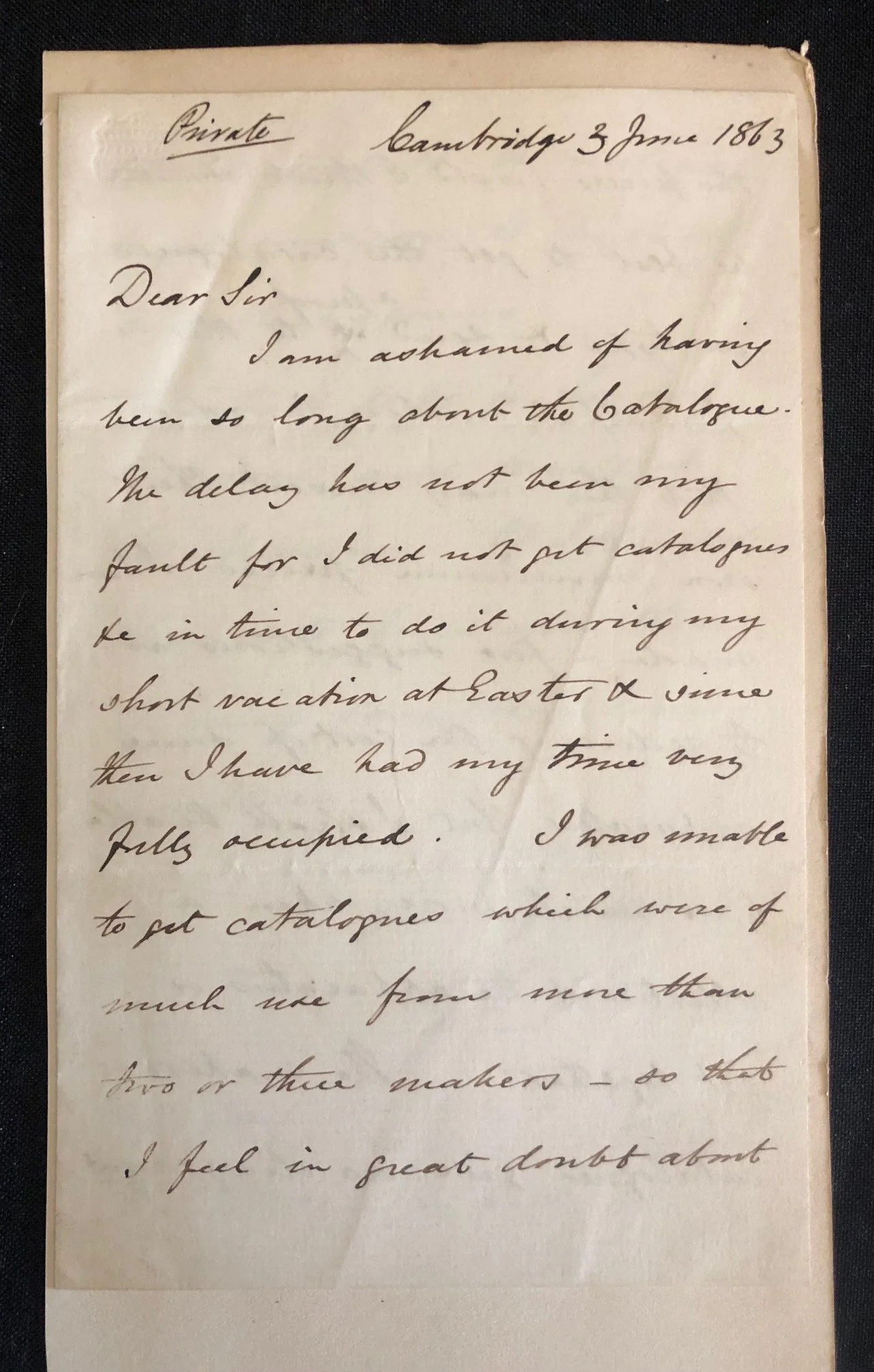
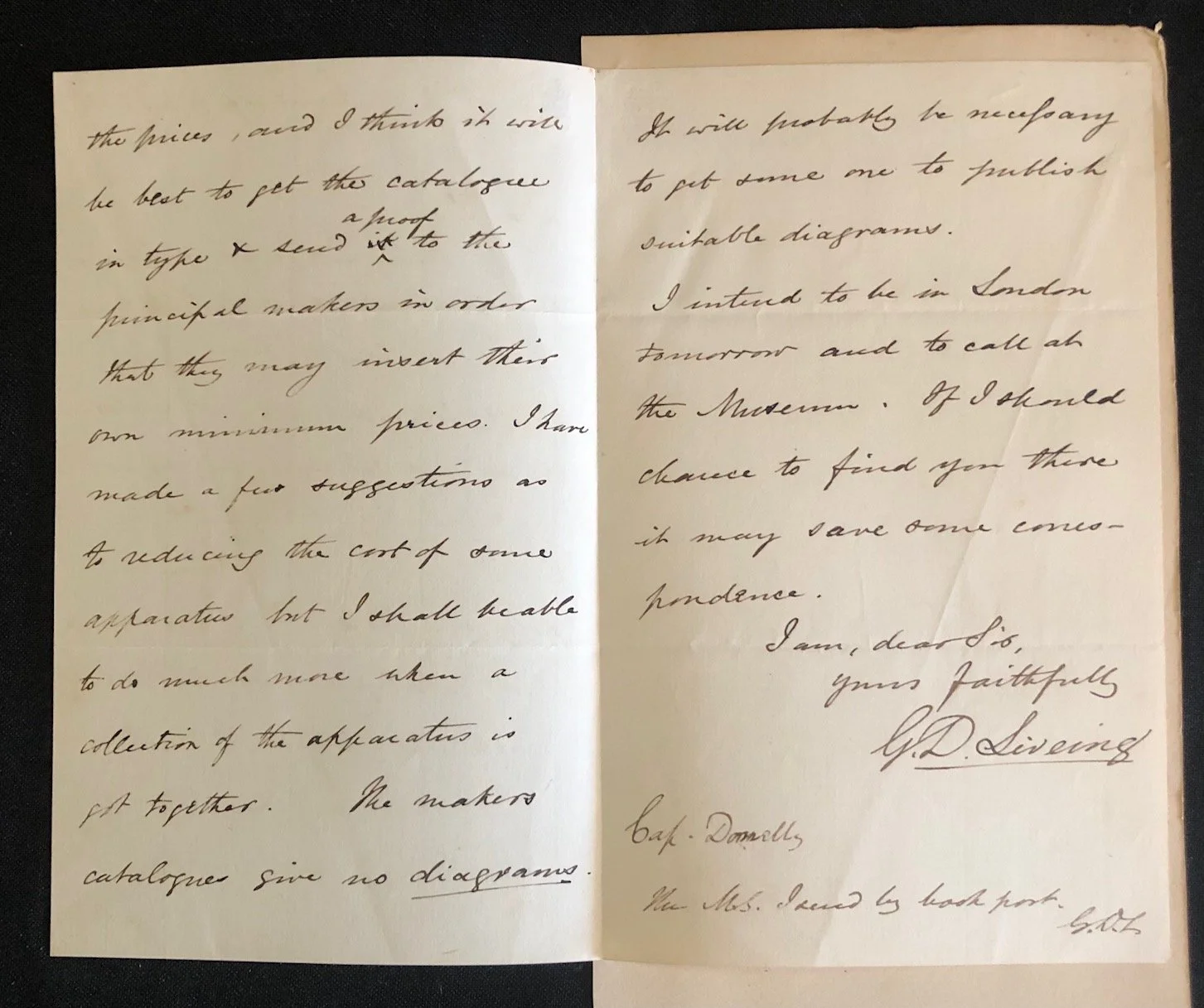
A three page manuscript letter, laid down onto card.
This correspondence captures a behind-the-scenes moment in the mid-Victorian revolution of scientific education, written by one of the eras most influential chemists to a key architect of British educational policy.
The Author: A Pioneer of Modern Chemistry Instruction
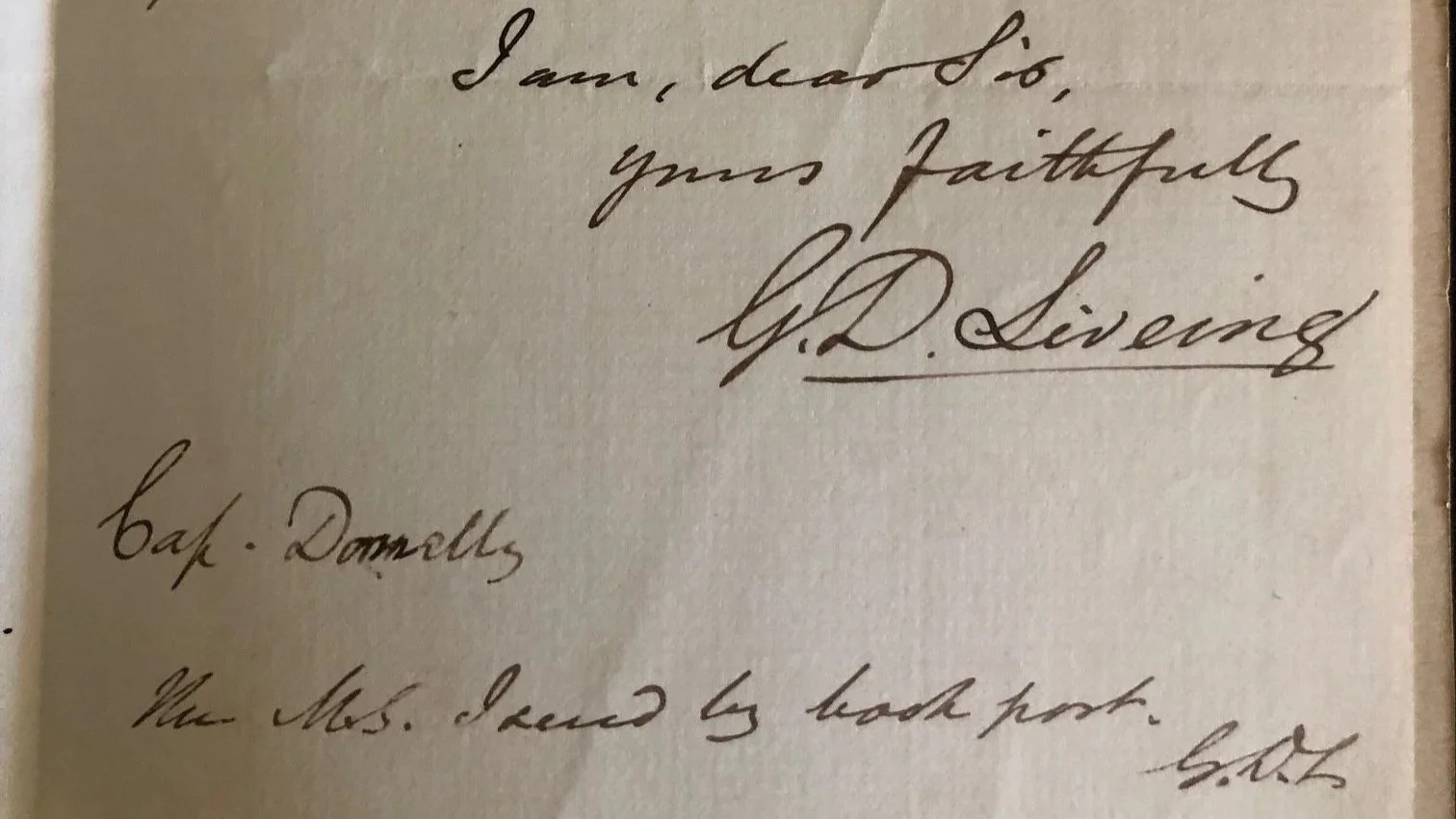
The letter is signed by George Downing Liveing (1827–1924), written from Cambridge on June 3, 1863. Liveing had just been appointed the Professor of Chemistry at Cambridge University in 1861, a post he would hold for 47 years.
Liveing is historically celebrated for a massive paradigm shift: he fiercely championed practical, hands-on laboratory work for undergraduates rather than just theoretical lectures. He built Cambridge’s very first university chemical laboratory at his own expense. When this letter was written, he was actively working to standardize what kind of laboratory equipment and "apparatus" students should be using.
The Recipient: The Architect of the South Kensington System
The letter is addressed to Captain John Fretcheville Dykes Donnelly (1834–1902) of the Royal Engineers. Donnelly was a towering figure in Victorian state education. He was the driving force behind the government’s Science and Art Department, headquartered at what was then the South Kensington Museum (now the Victoria and Albert and Science Museums).
Donnelly’s mission was to industrialize and democratize science education across the British Empire by creating a nationwide system of science schools, curricula, and subsidized equipment grants.
The Context: Standardizing the Tools of Science
In the letter, Liveing apologizes for the delay in compiling a "Catalogue" of scientific apparatus and mentions that the draft manuscript ("The MS") is being forwarded by book post.
During the early 1860s, the Science and Art Department tasked top experts like Liveing with creating official, state-approved catalogs of scientific instruments (for chemistry, physics, and mechanics). The government used these catalogs to provide subsidized "kits" to impoverished schools. Liveing’s struggle to pin down "minimum prices" from trade makers highlights a transition period when scientific instrument making was shifting from bespoke, expensive artisanal craftsmanship to standardized, mass-produced commercial manufacturing.
Bypassing the Lack of Visual Aids
Liveing notes a significant hurdle of the Victorian trade: "The makers catalogues give no diagrams. It will probably be necessary to get some one to publish suitable diagrams."
Because high-quality textbook illustrations and technical schematics were costly to engrave, teaching students how to safely assemble fragile glass chemistry sets, retorts, and galvanic batteries without visual aids was incredibly difficult. Liveing’s push for a catalog with "suitable diagrams" directly contributed to the beautifully illustrated science manuals and educational catalogs that became a hallmark of late-Victorian schoolrooms.
115mm x 180mm
R1,000