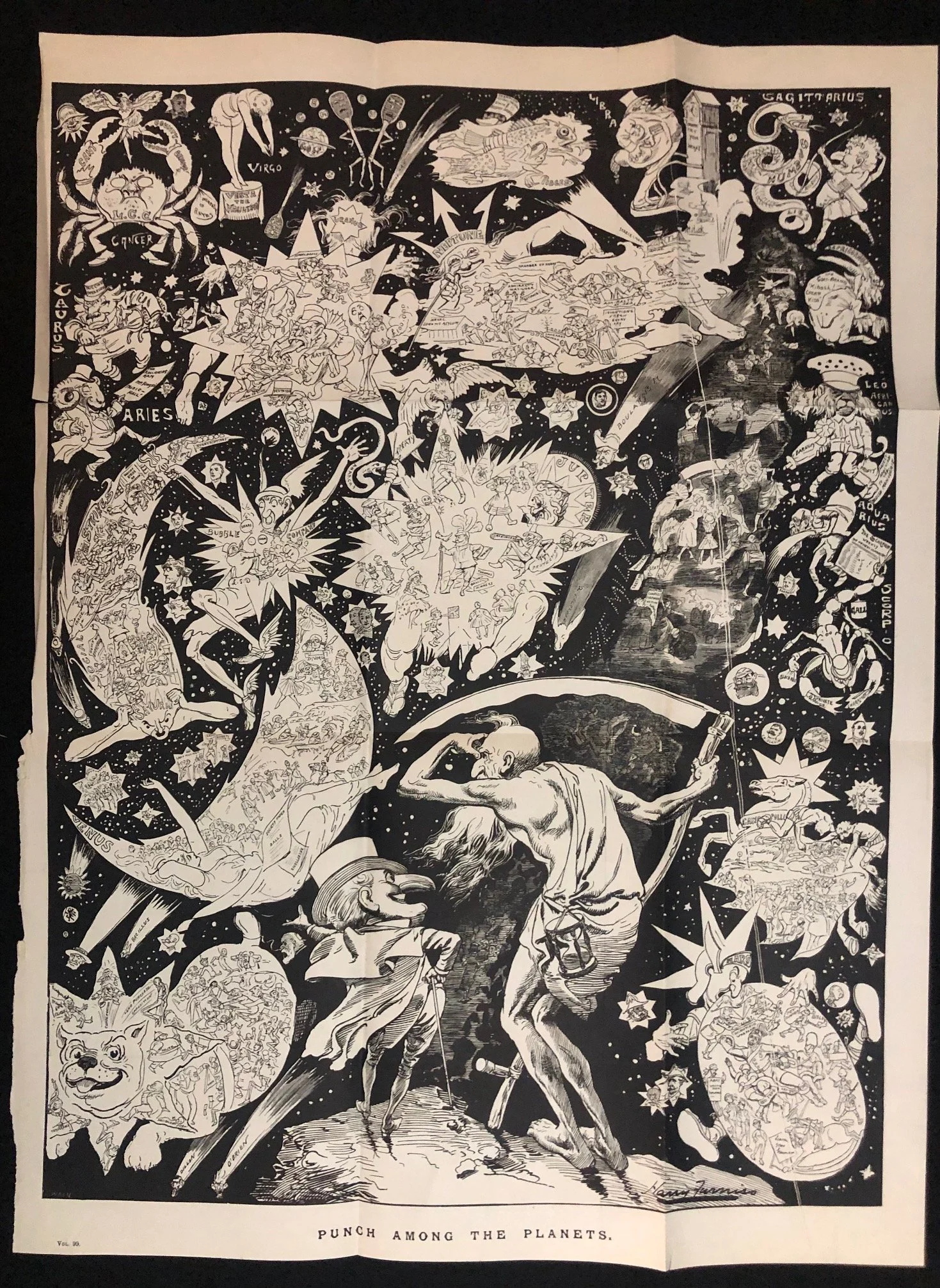
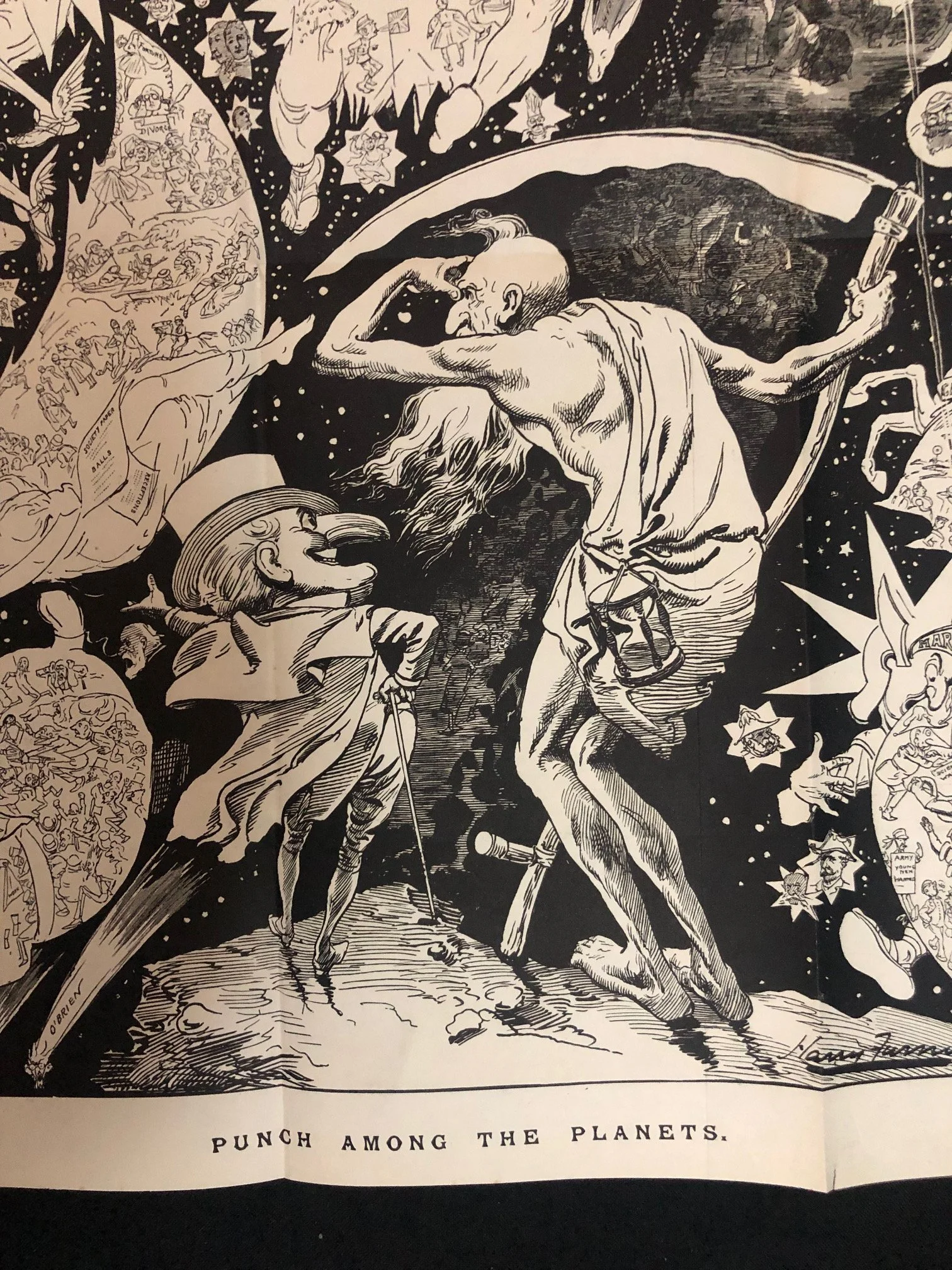
Punch Among the Planets by Harry Furniss, December 1890
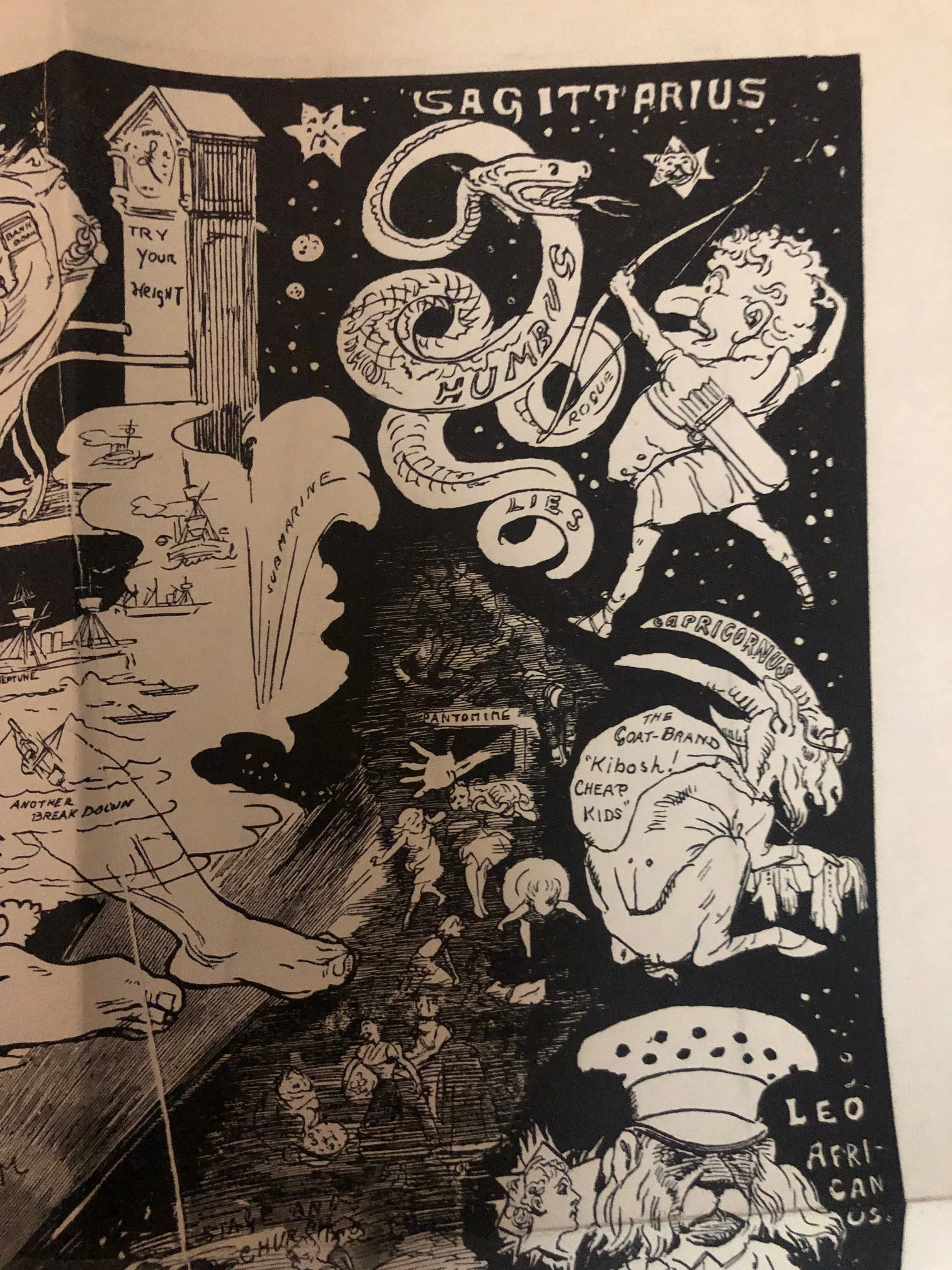
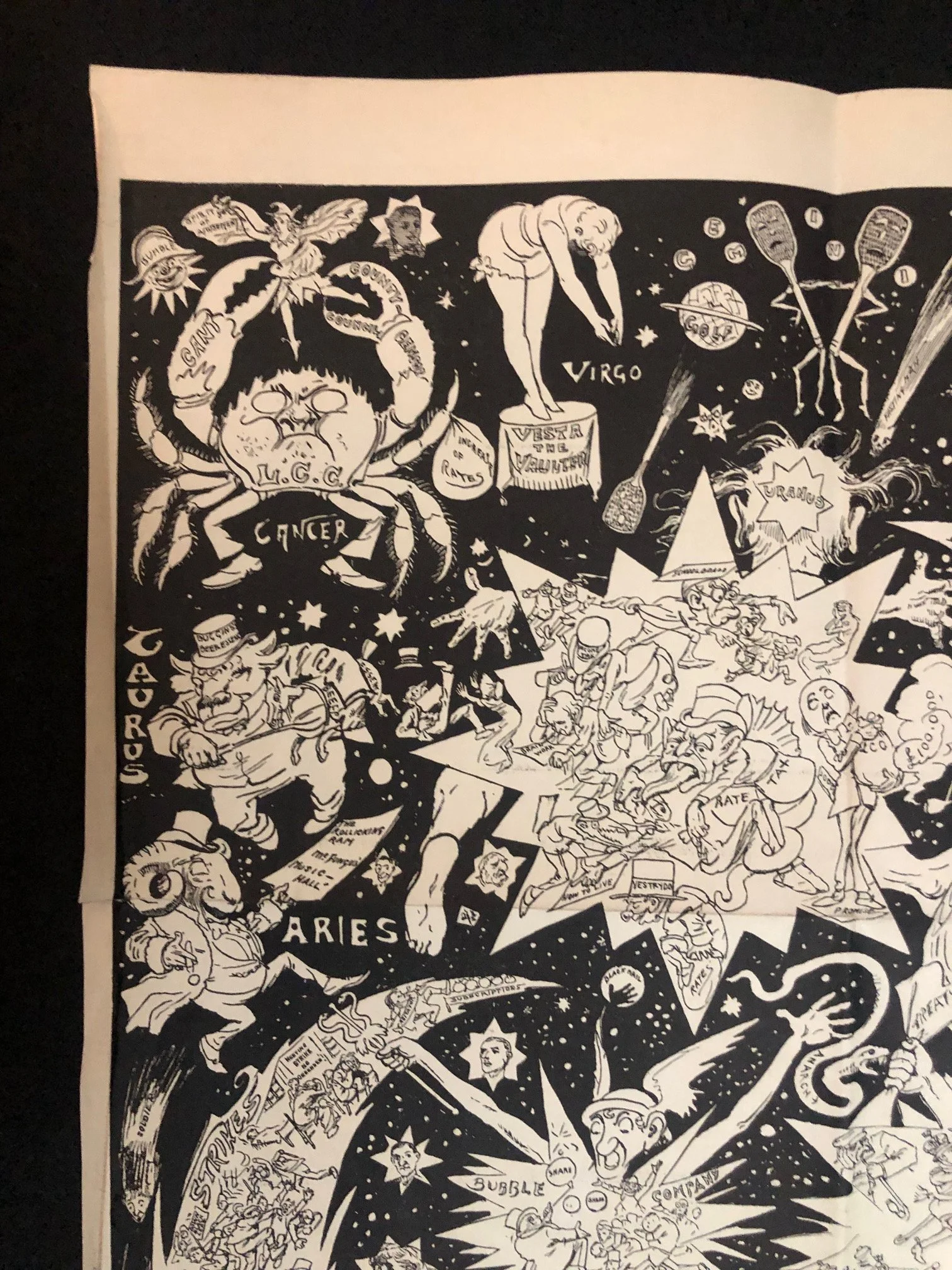
The elaborate, densely packed satirical double-page spread is titled "Punch Among the Planets". It was illustrated by the celebrated Victorian artist and caricaturist Harry Furniss for the Christmas Number of Punch magazine in December 1890 (Volume 99).
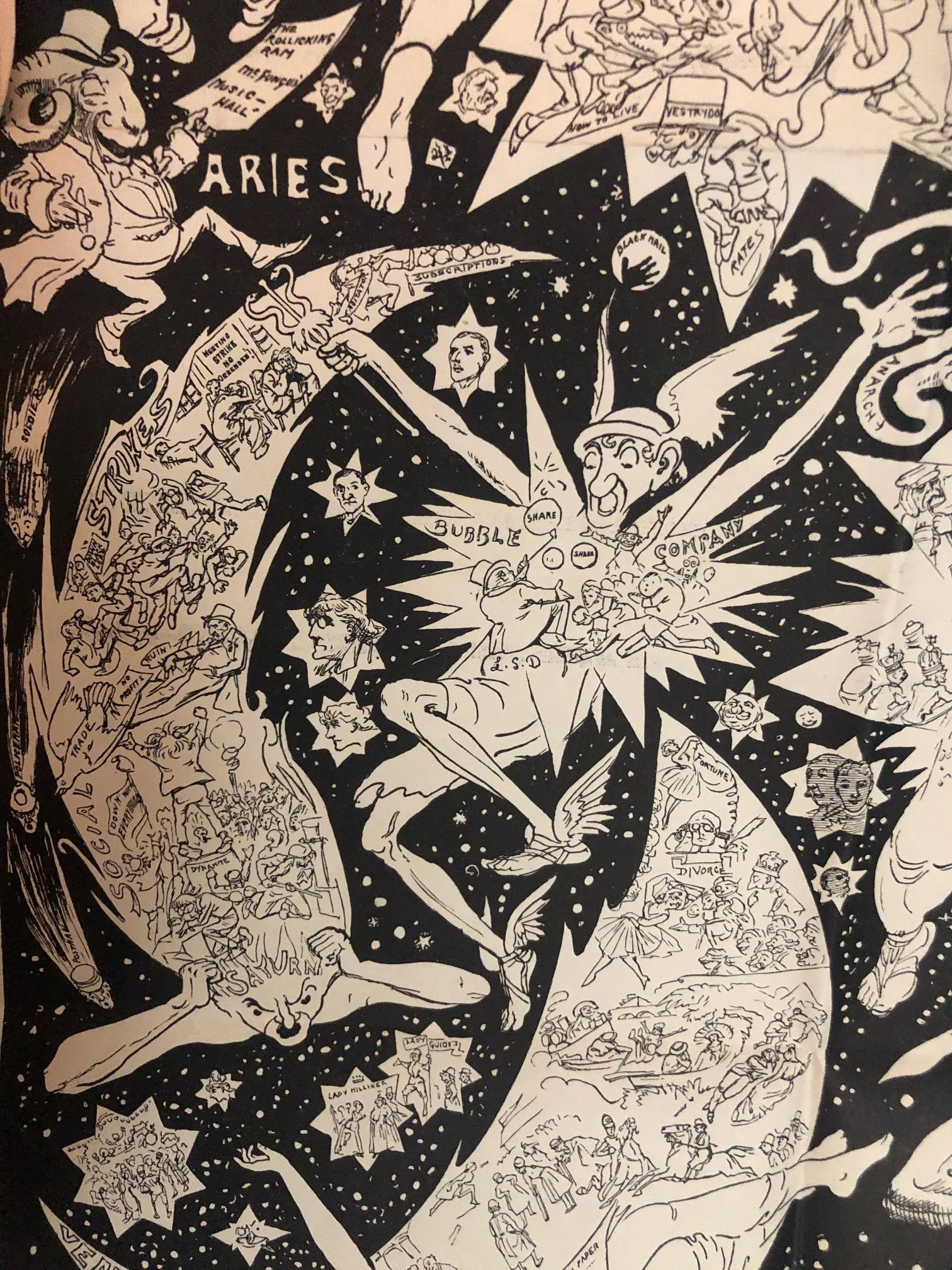
At first glance, it looks like a whimsical, cosmic fantasy, but it is actually a deeply layered political time capsule. Several fascinating historical and literary threads define this piece:
Pre-Sci-Fi "Space Travel" as Political Satire
Published long before H.G. Wells’ The War of the Worlds (1897) or the birth of modern science fiction, this issue used the concept of space travel as a framing device. The narrative follows the magazine's mascot, Mr. Punch, taking Father Time by the forelock to escape the gloom of a London winter and tour the solar system.
Furniss maps out the 12 signs of the zodiac and various planets, transforming each into a satirical commentary on late-Victorian British society. For instance, "Leo" at the top right is labeled "Leo Africanus," a direct nod to the fierce colonial "Scramble for Africa" that dominated headlines in 1890.
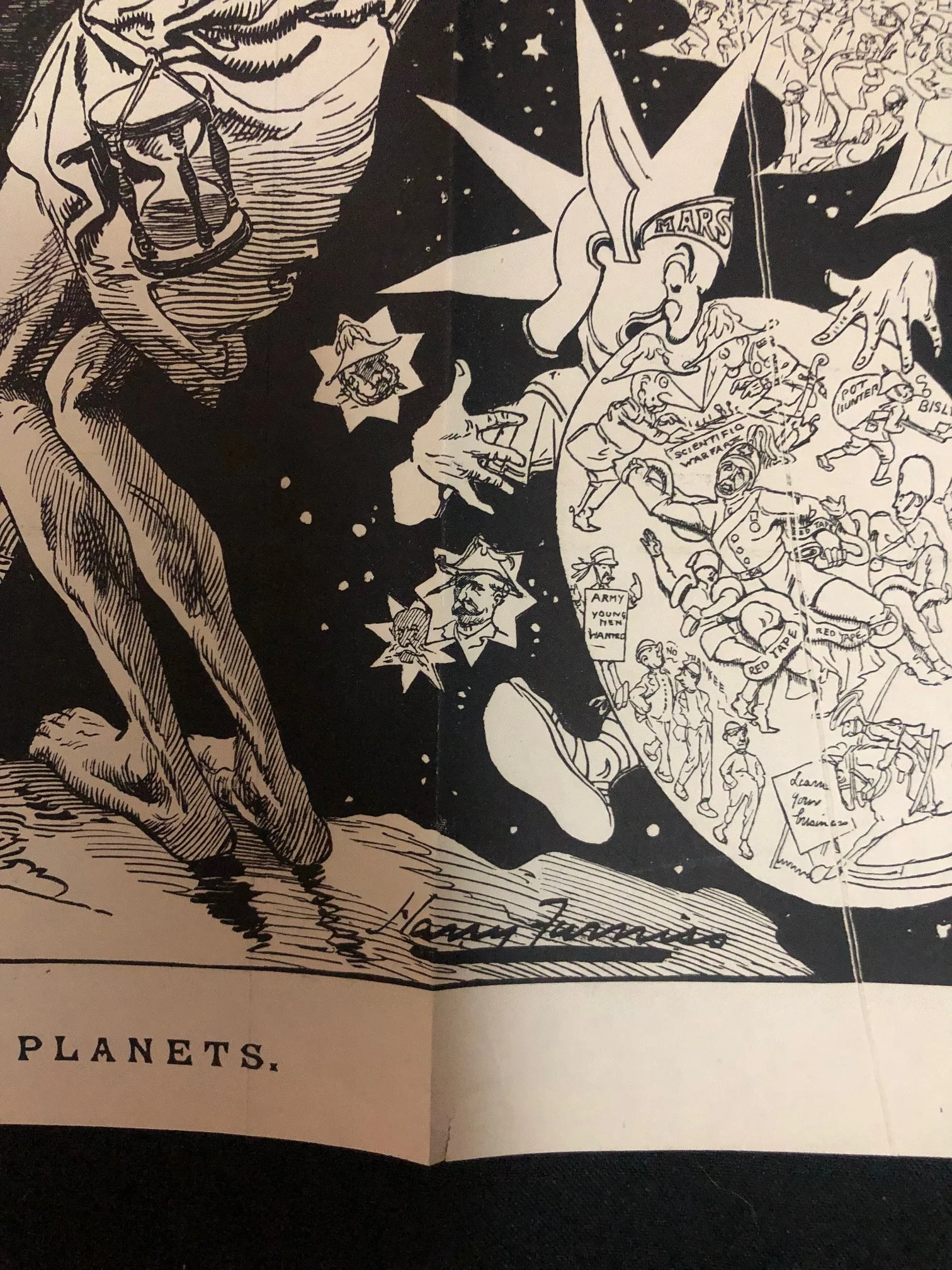
The Close-Up on Mars: Critique of "Scientific Warfare" and Red Tape
There is the planet Mars, the Roman god of war. Instead of glorious, heroic battle, Furniss uses the Martian orb to fiercely mock the British War Office and military bureaucracy.
Look closely at the figures trapped inside the circle: a central British officer is literally tied up and strangled by ribbons explicitly labeled "Red Tape."
Next to him, a banner ironically proclaims "Scientific Warfare," mocking the transition from traditional combat to modern, industrialized, and heavily bureaucratized late-19th-century warfare.
Nearby, figures of politicians and generals are satirized as "Pot Hunters," and a sign reads "Army: Young Men Wanted," critiquing British recruitment policies and the mismanagement of military campaigns during the height of the British Empire.
The Illustrator: Harry Furniss and Lewis Carroll
The artist behind this chaotic masterpiece, Harry Furniss, was one of the most prolific and commercially successful illustrators of the late Victorian era.
Right around the time he was drawing this dizzying page for Punch (1890), he was heavily engaged in a famous, high-profile collaboration with Lewis Carroll, providing the intricate illustrations for Carroll's final long novels, Sylvie and Bruno (1889) and Sylvie and Bruno Concluded (1893).
Note the distinct "Carrollian" influence in the dreamlike, chaotic scale shifts of this piece—where massive astrological monsters collide with tiny, surreal political figures.
A Landmark "Almanac" Publication State
Double-page centerfolds ("cartoons" or "splendid wrappers") from the Punch Christmas Numbers are highly prized by graphic arts historians. Because they were issued as a special year-end bonus separate from the regular weekly black-and-white printings, artists like Furniss were given total freedom to push printing technology to its absolute limit, resulting in these incredibly dark, ink-heavy, wood-engraved cosmic nightscapes that are rarely seen in standard weekly Victorian periodicals.
425mm x 560mm
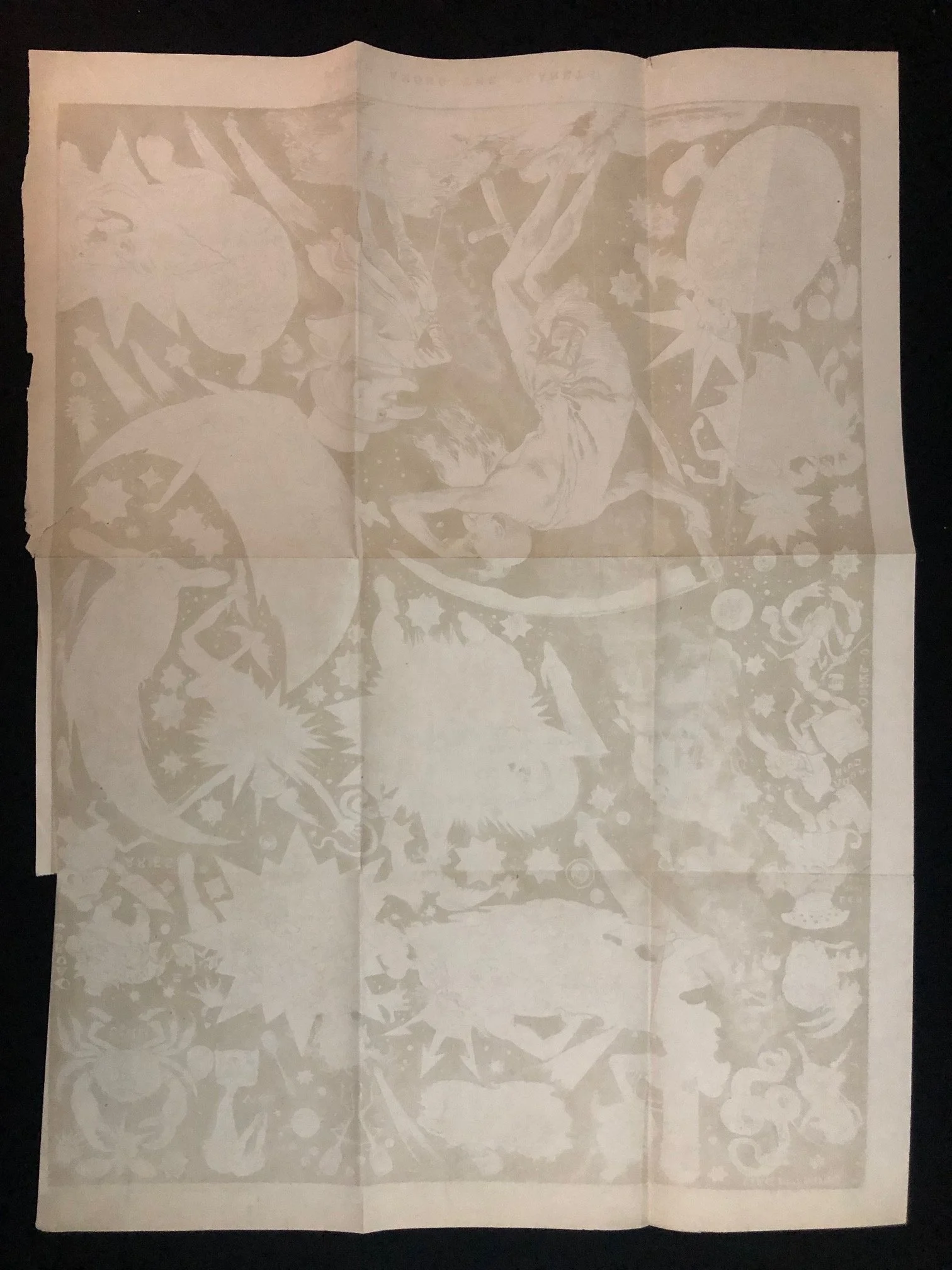
Creased; small tears at the edges.
R1,500