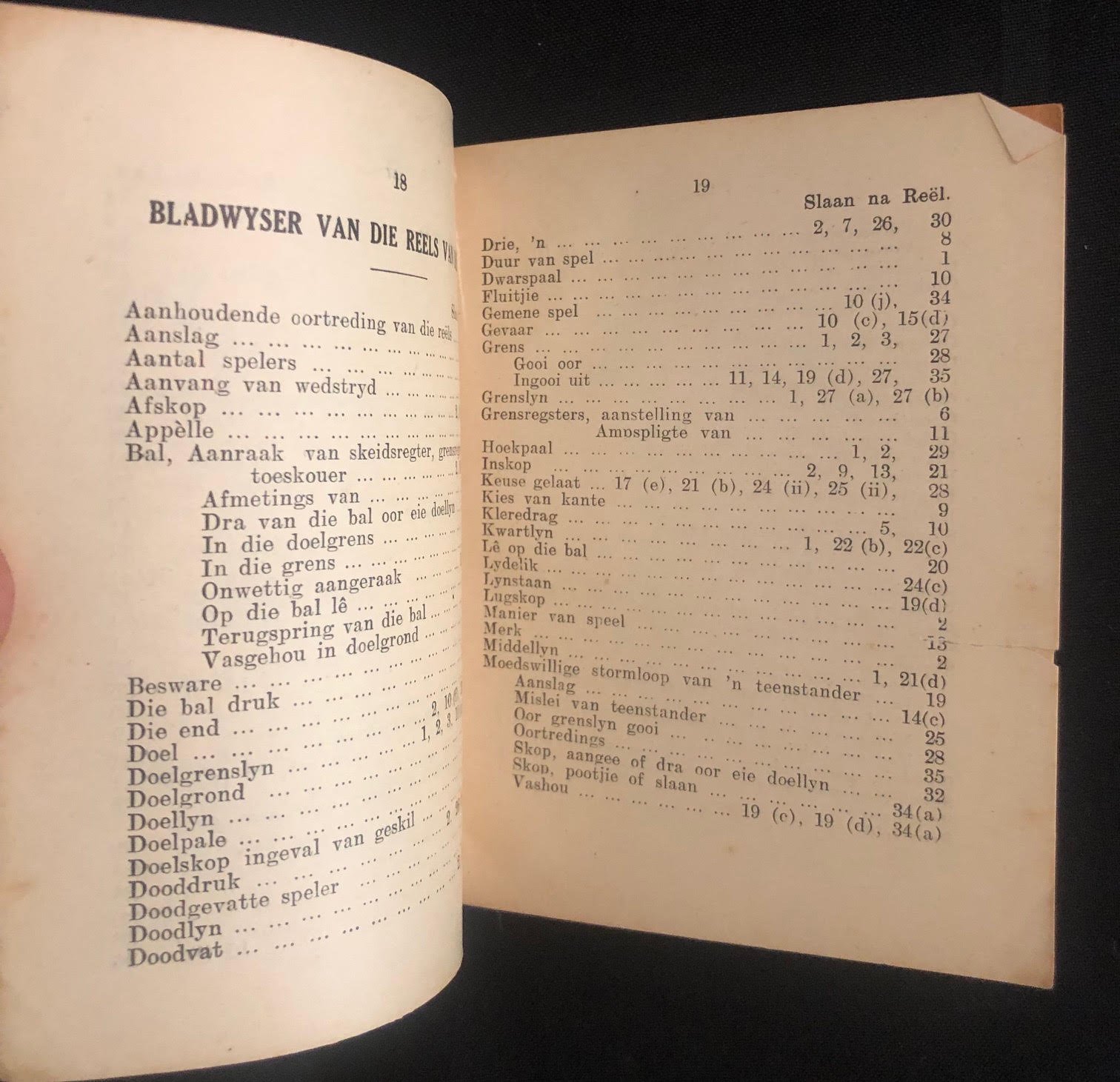
1936 bilingual rulebook, published by The South African Rugby Football Board
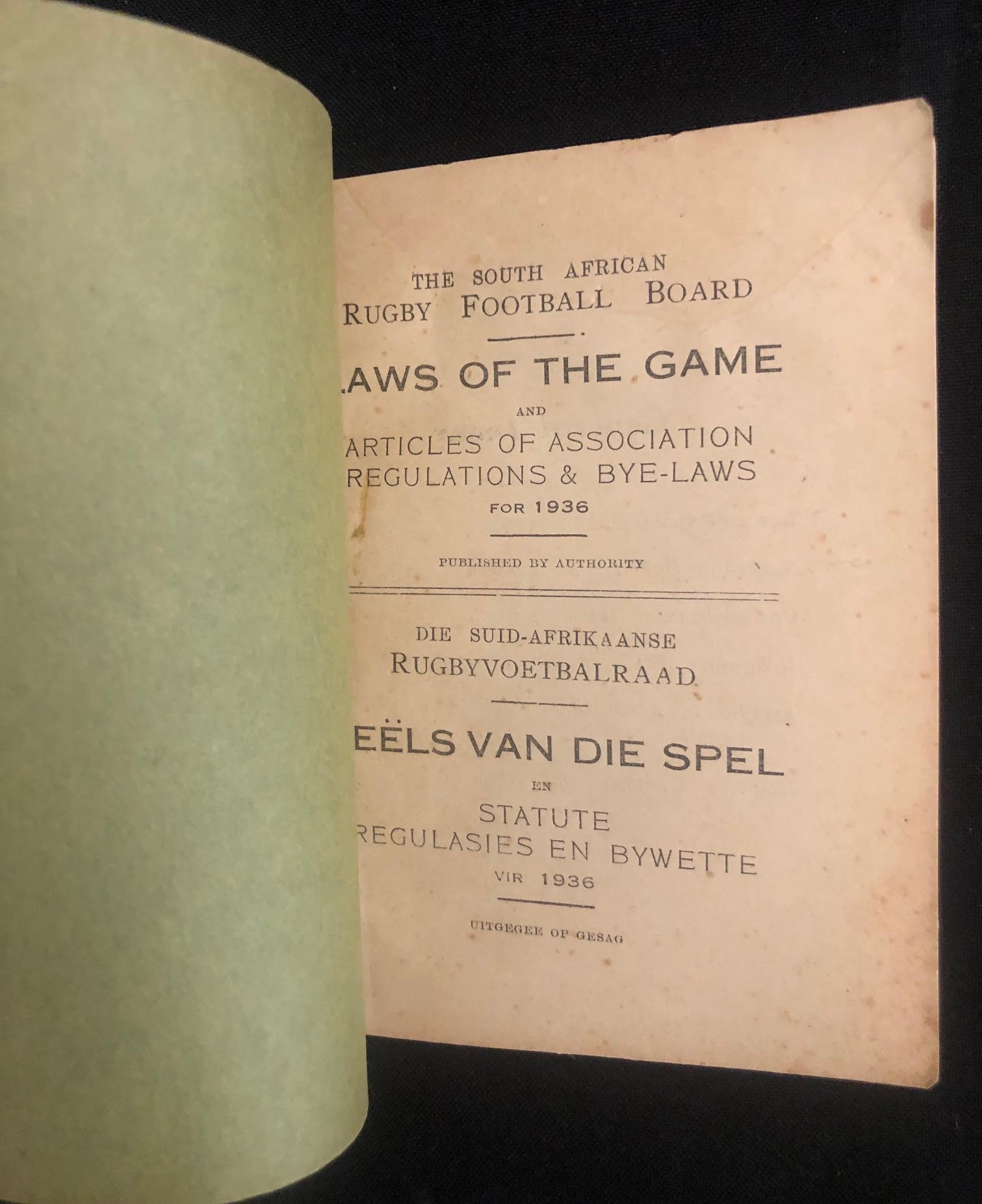
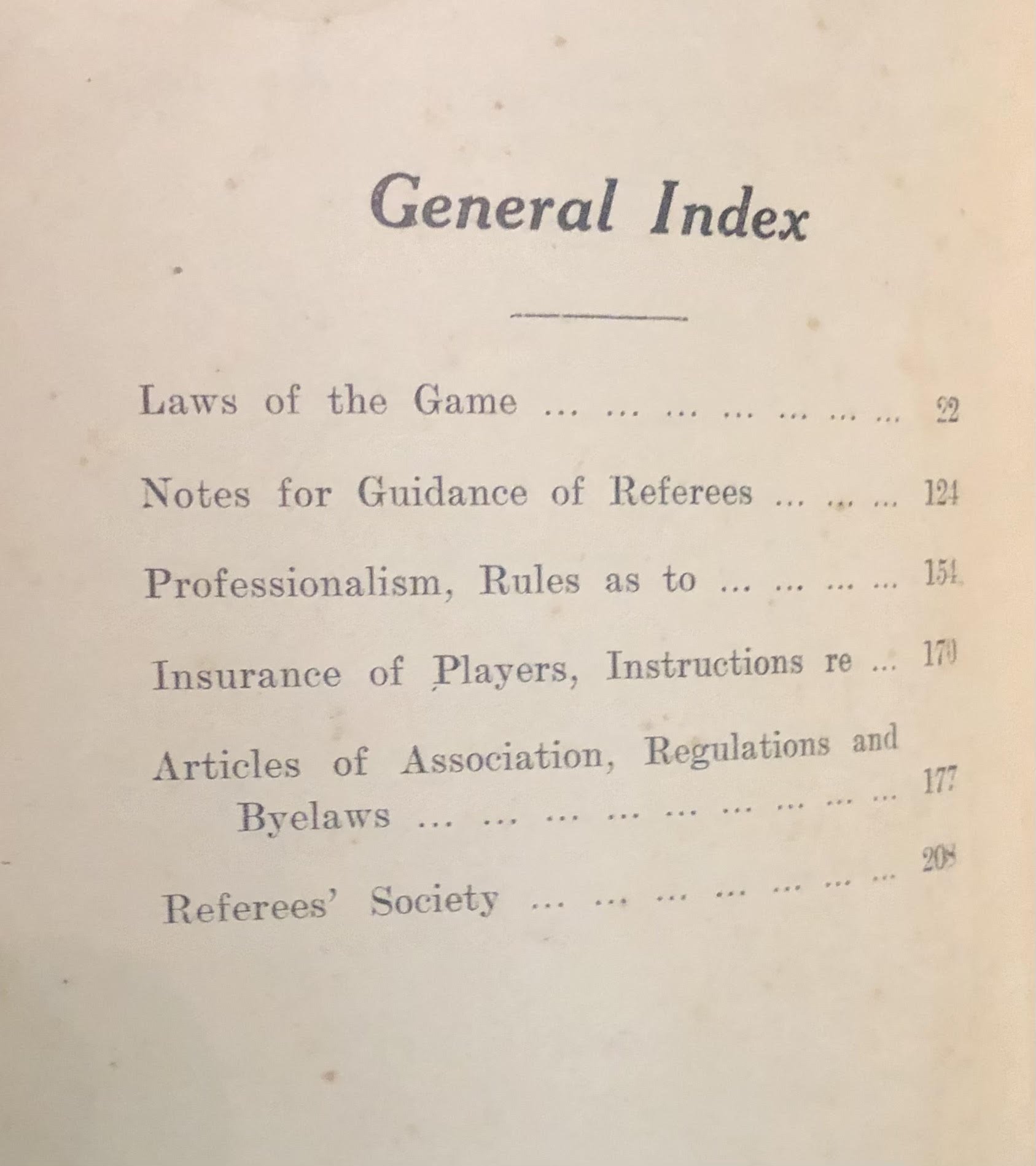
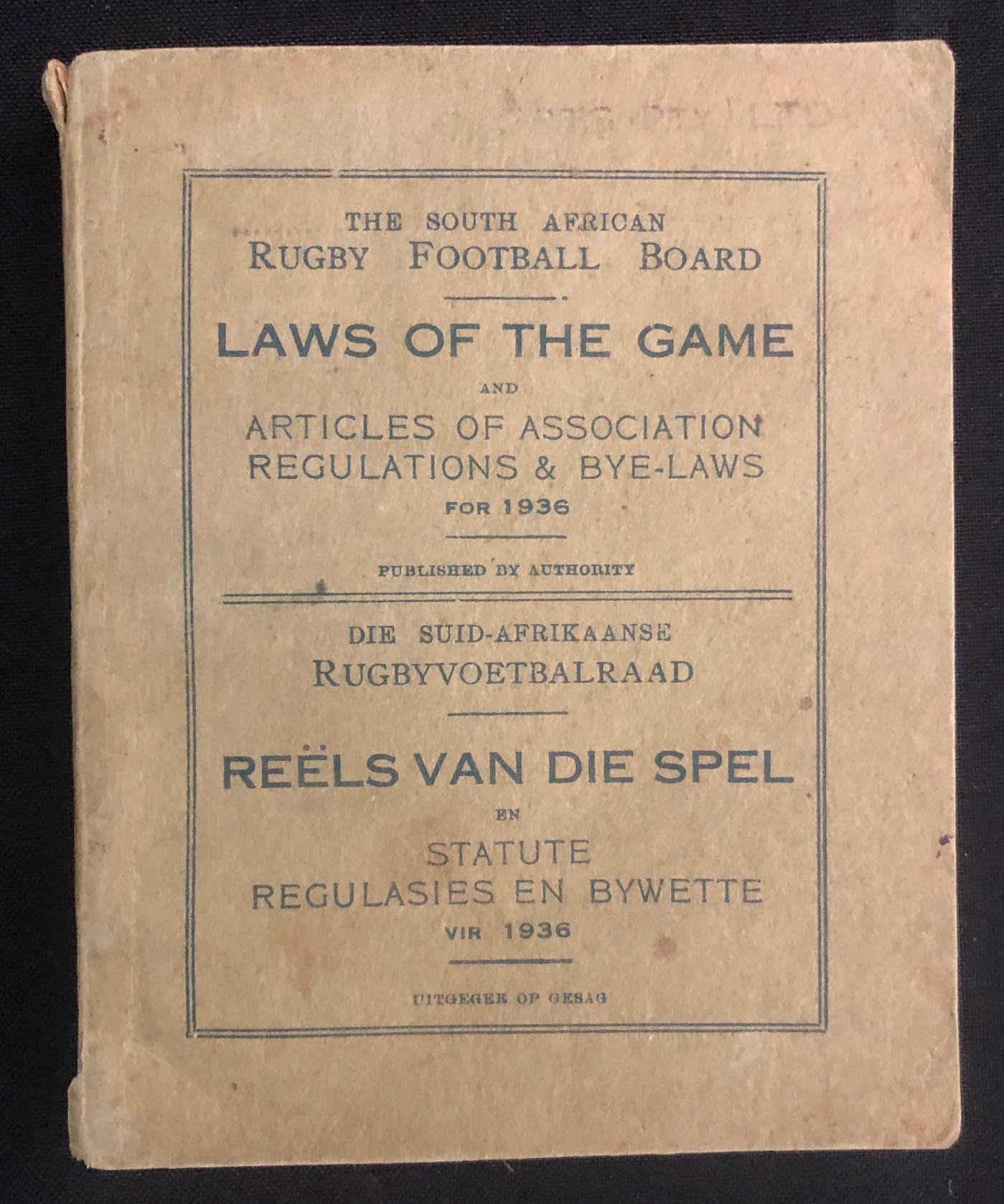
This 1936 bilingual rulebook, published by The South African Rugby Football Board (Die Suid-Afrikaanse Rugbyvoetbalraad), captures a defining golden era in South African rugby history and offers a fascinating snapshot of the sport's pre-war geography, language evolution, and imperial reach.
1. The Eve of the "Invincibles" Tour (1937)
Printed in 1936, this exact edition contains the laws under which the legendary 1937 Springbok squad—widely considered one of the greatest rugby teams in history—selected and prepared for their triumphant tour of Australia and New Zealand. Led by Philip Nel and Danie Craven, that squad won the series against the All Blacks in New Zealand, a feat not repeated by a touring side for decades.
2. An Imperial Map of Southern and East Africa
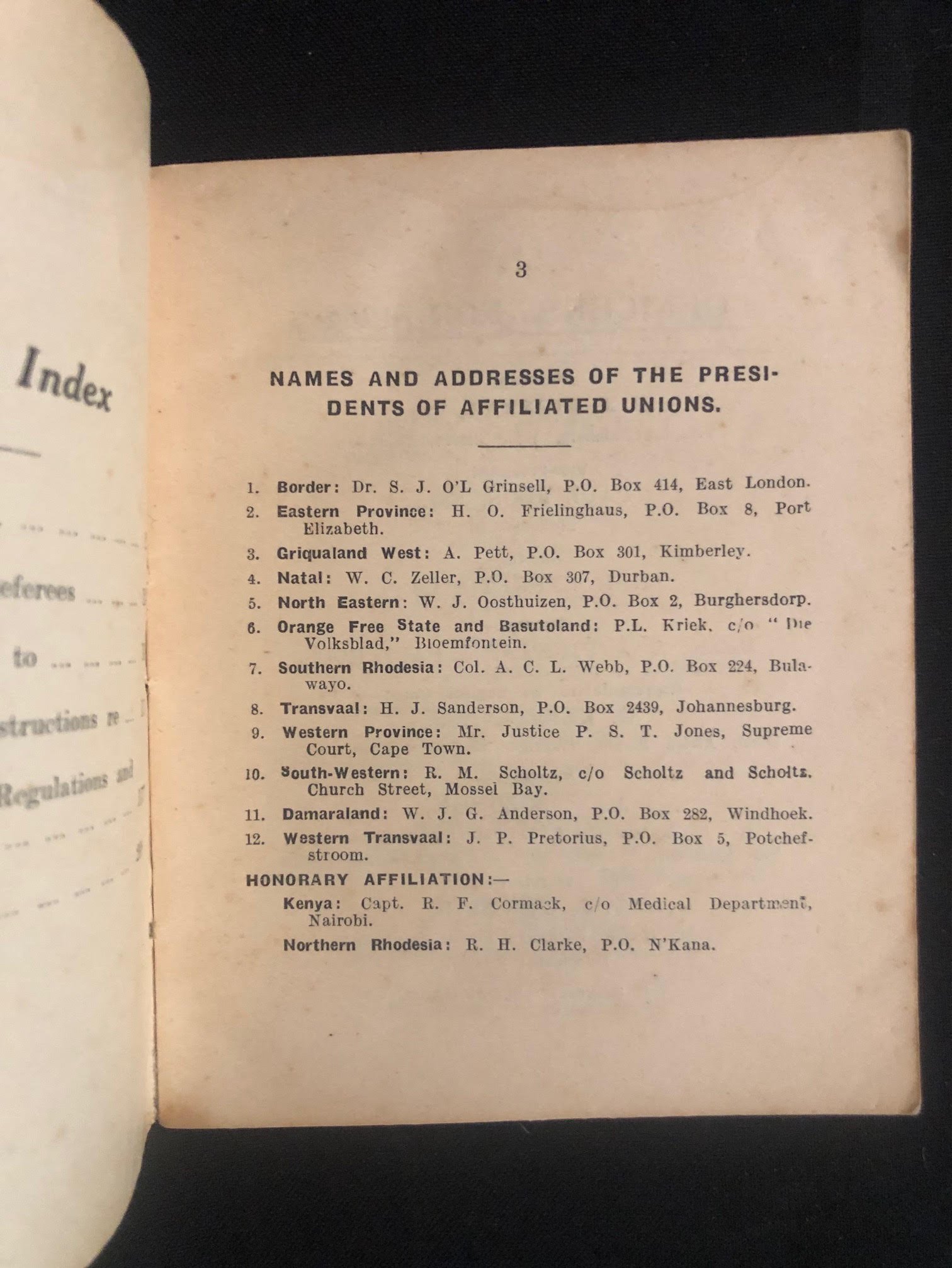
The list of affiliated unions on page 3 reveals how the South African Rugby Football Board acted as the governing hub for rugby across British-administered Africa:
Colonial Territories: Alongside traditional South African provinces, full voting unions included Southern Rhodesia (Zimbabwe), Damaraland (present-day Namibia, headquartered in Windhoek), and Basutoland (Lesotho, combined with the Orange Free State).
Honorary Affiliations: Even further north, the Board maintained honorary affiliations with Kenya (administered via the Medical Department in Nairobi) and Northern Rhodesia (Zambia, based in Nkana).
Notable Administrators: The president of the Western Province union listed here is Mr. Justice P. S. T. Jones (Percy Sydney Twentyman Jones), a Supreme Court judge who was also a former Springbok rugby player and South African Test cricketer—one of the country's rare double internationals.
3. Early Standardized Afrikaans Rugby Terminology
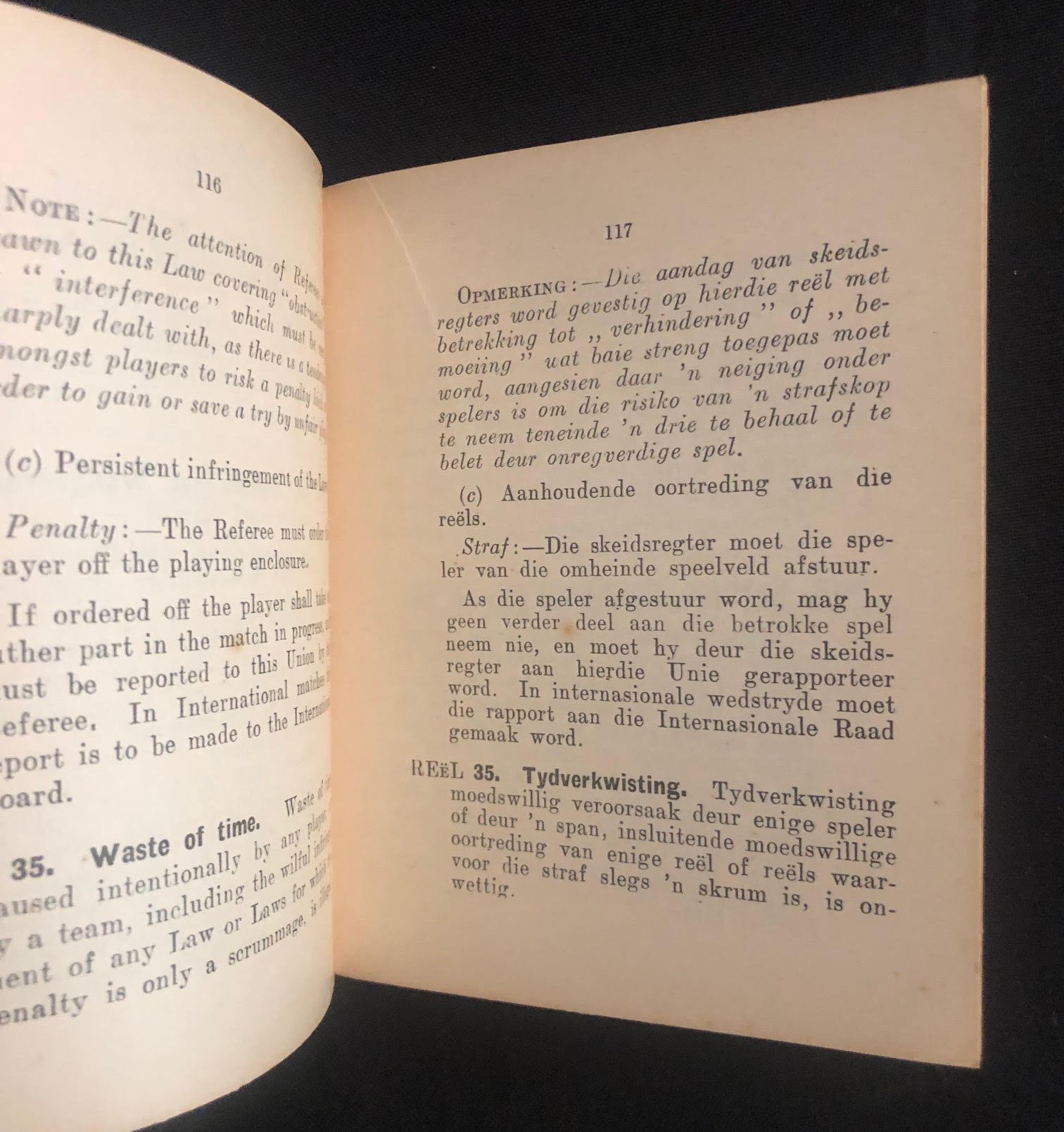
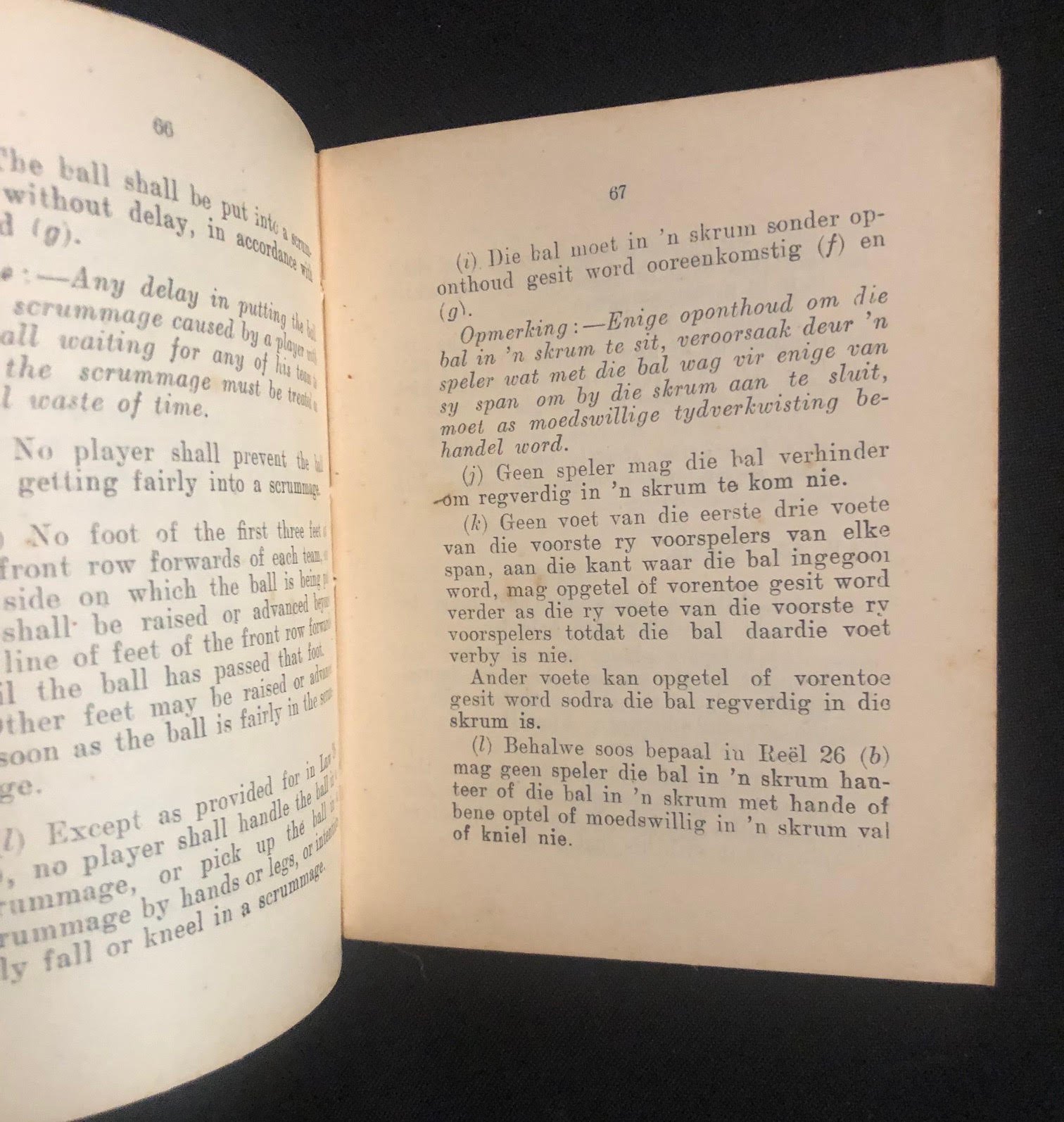
Afrikaans had only been recognized as an official language of the Union of South Africa eleven years earlier, in 1925. The Afrikaans index (Bladwyser van die Reëls) preserves early, literal translations of English rugby terms before modern Afrikaans sporting vocabulary fully settled:
A try is listed as "Drie, 'n" (literally "a three," reflecting the 3-point value of a try in 1936, rather than the modern drie derived from druk/try).
A tackle is rendered as "Doodvat" (literally "dead-grab" or "hold fast").
A mark is "Merk", a drop-kick is "Lugskop" ("air-kick"), and a knock-on is "Aanslag".
4. Pre-Metric Pitch Dimensions and Laws
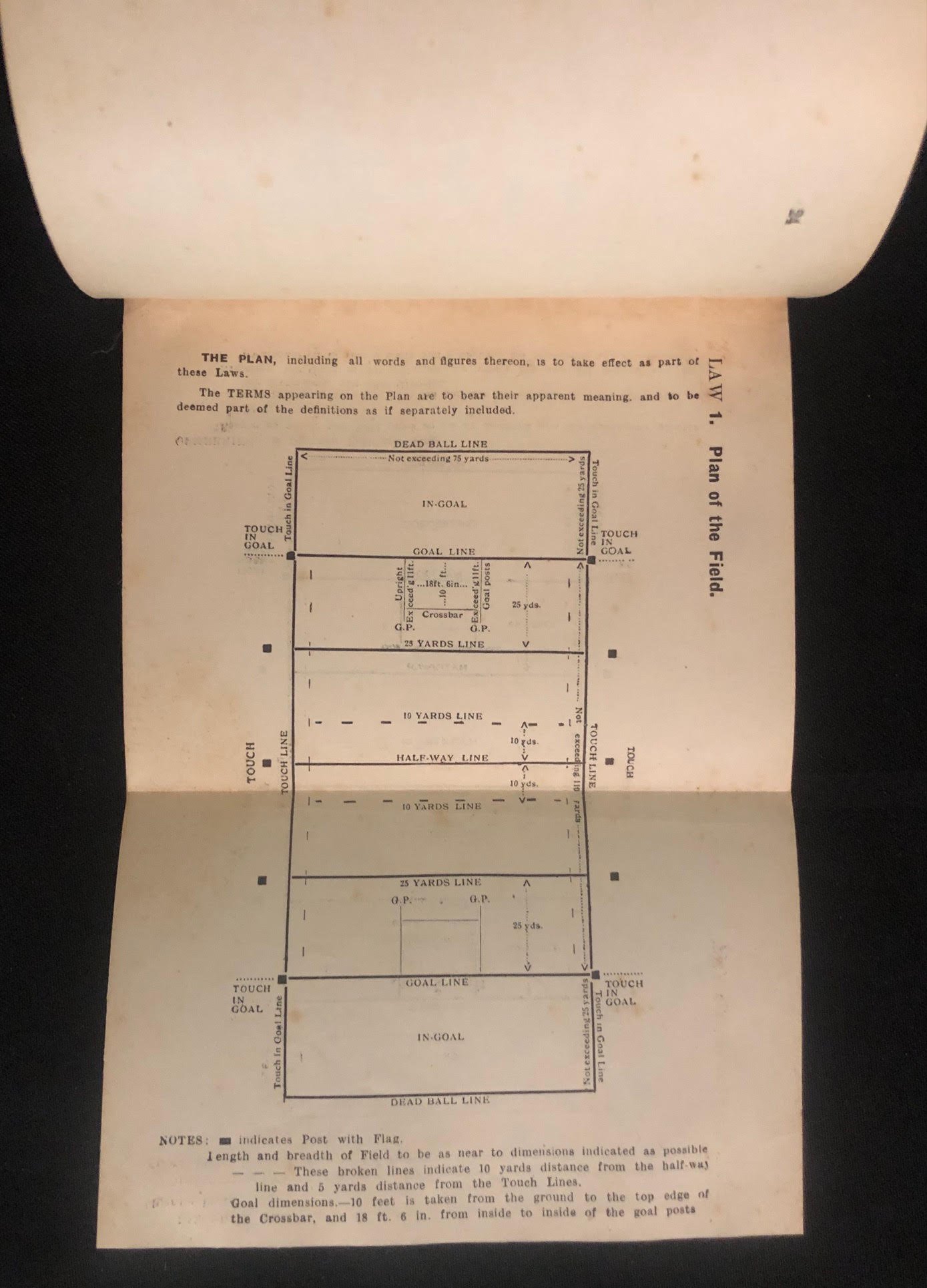
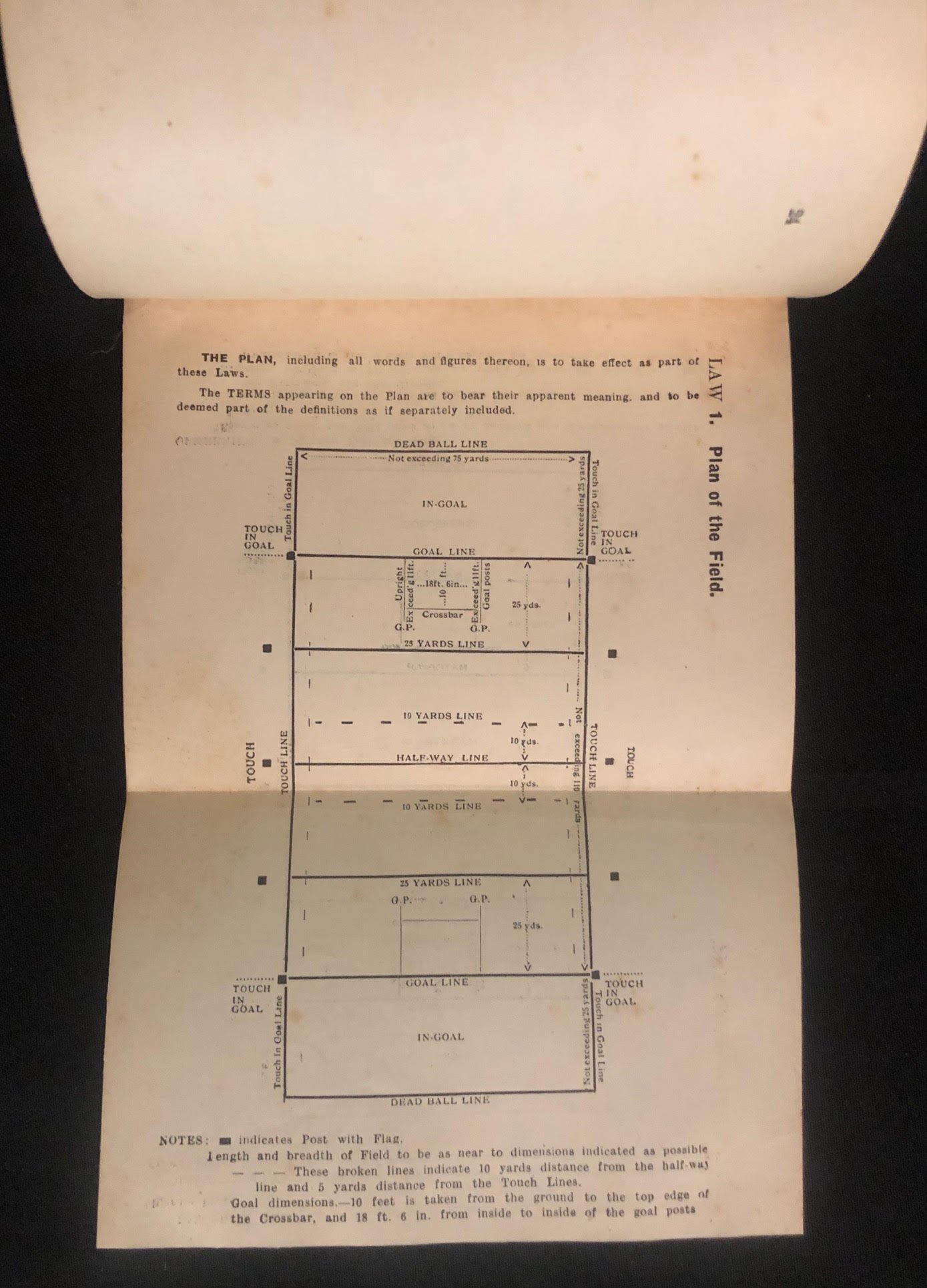
The fold-out pitch diagram under Law 1 preserves the imperial measurements and older tactical markings of the 1930s:
The field is measured strictly in yards—a maximum of 110 yards long by 75 yards wide, with 25-yard lines instead of today's 22-metre lines, and dead-ball lines not exceeding 25 yards behind the goal line.
Notice the broken lines running parallel to the touchlines at a distance of 5 yards (used for lineouts) and 10 yards from the halfway line, alongside square flag posts positioned along the touchlines. In 1936, a conversion or penalty goal was still worth 3 points, a try was 3 points, and a drop goal was worth 4 points—making drop-kicking a dominant tactical weapon in South African rugby of the era.
Size: 100mm x 130mm
212 pages. Worn and chipped at the edges; prelims and edges a bit foxed; fragile.
R1,000