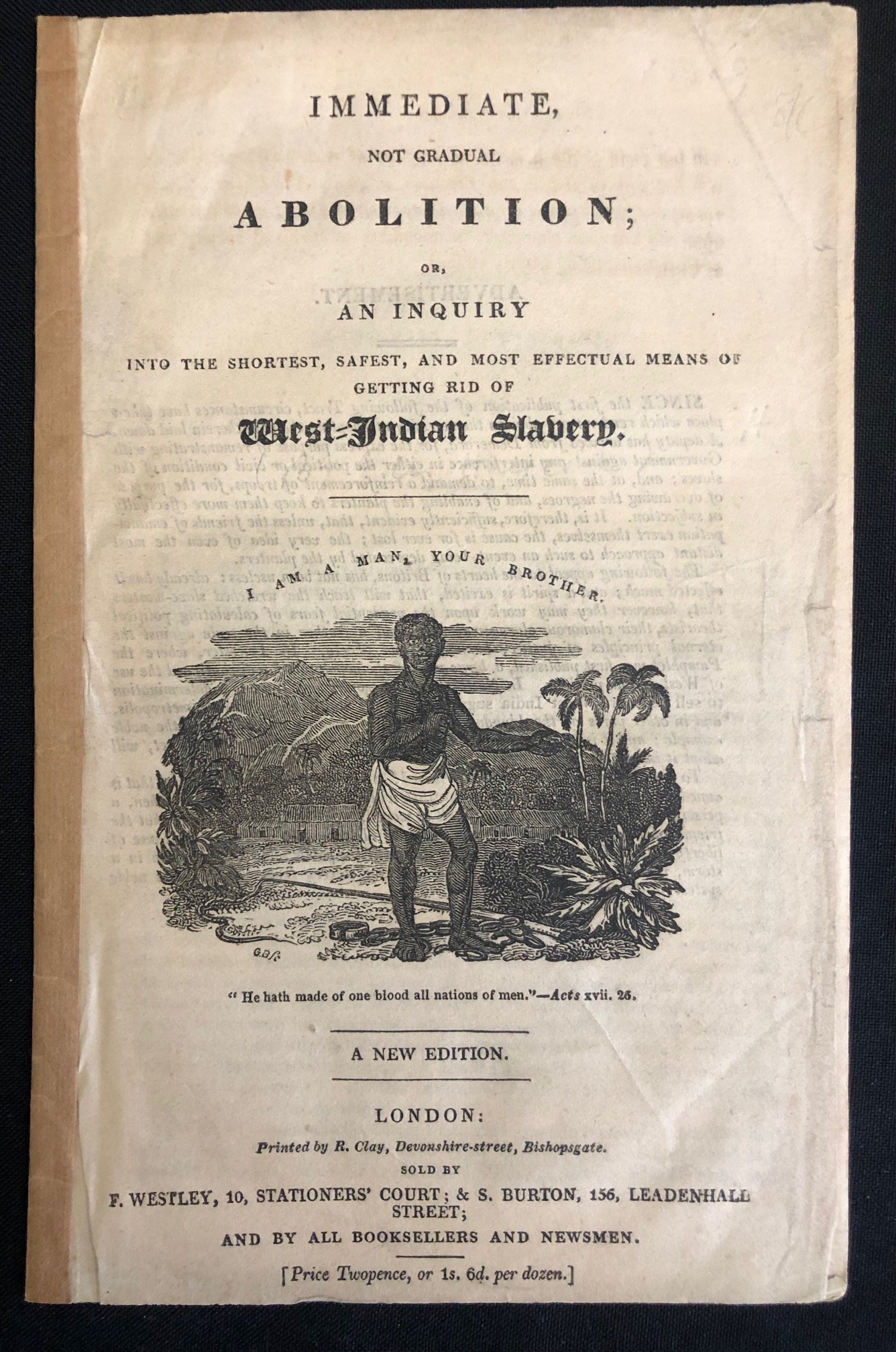
Immediate, not gradual, Abolition of West Indian Slavery
Published anonymously in 1824, the pamphlet was written by Elizabeth Heyrick (1769–1831), an English Quaker, philanthropist, and radical campaigner from Leicester. At a time when women were entirely excluded from formal parliamentary politics, Heyrick used her pen to completely upend the male-dominated leadership of the anti-slavery movement. Before Heyrick's work, the mainstream abolitionist movement favored a gradual approach that relied on reforming the system slowly. Heyrick argued that slavery was an inherent moral sin that required immediate, uncompromising abolition.
‘New Edition’ c.1826.
By 1824, the mainstream British Anti-Slavery Society—led by figures like William Wilberforce and Thomas Fowell Buxton—was pursuing a strategy of gradualism. They believed that because the slave trade had been abolished in 1807, slavery itself would naturally wither away, and that immediate emancipation would cause economic collapse and social chaos.
Heyrick’s pamphlet was a searing critique of this compromise. She argued that:
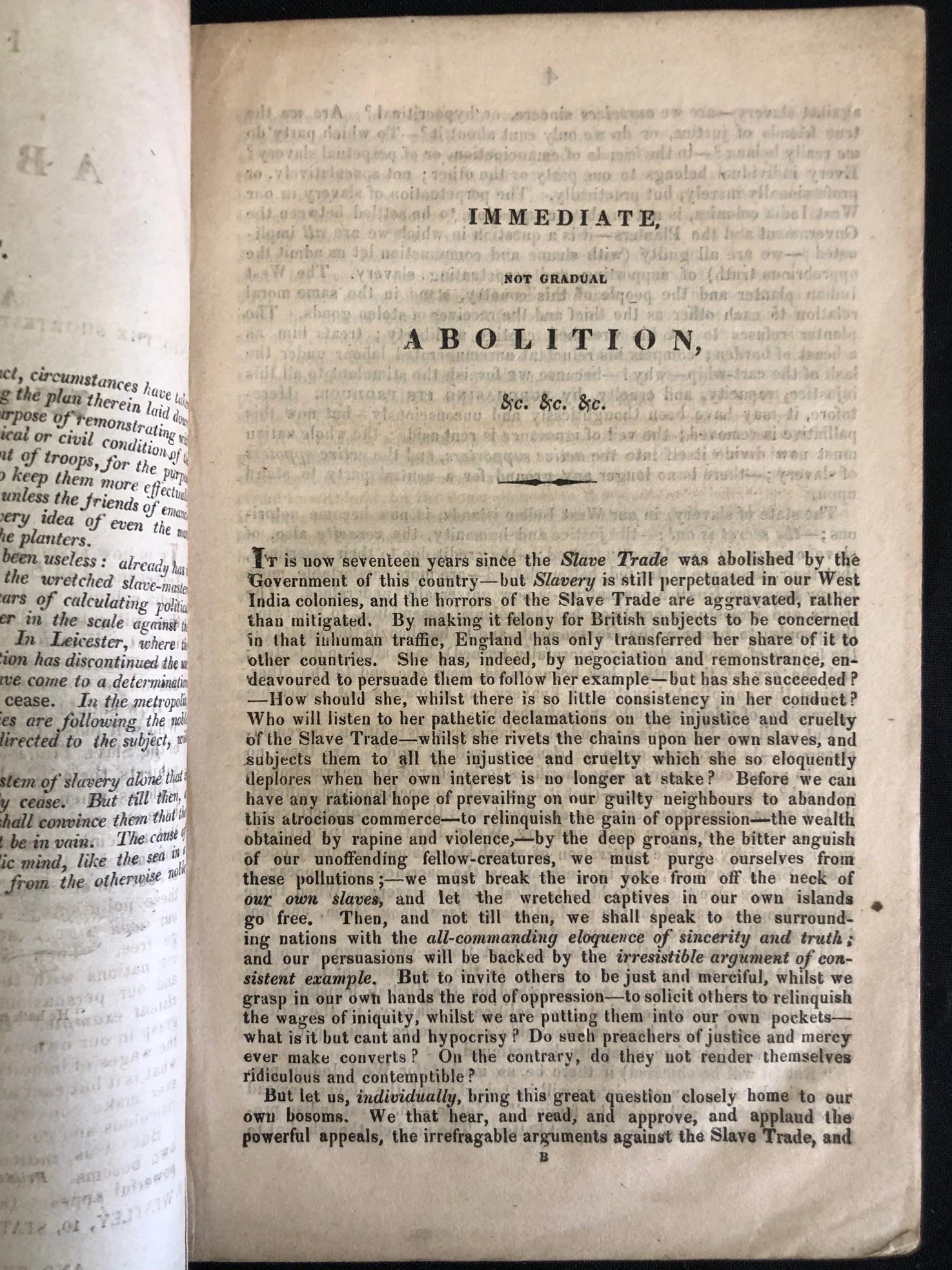
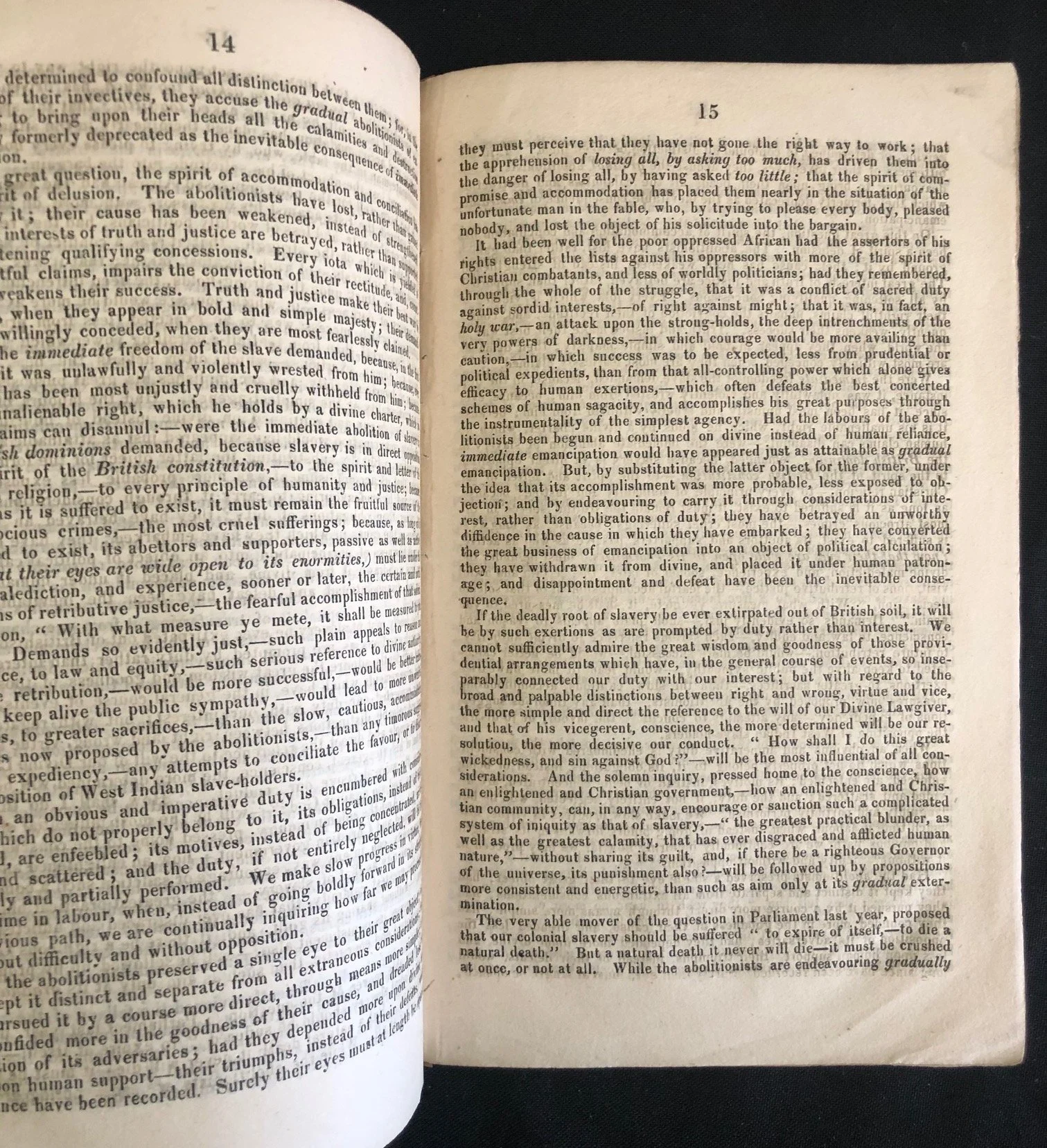
Gradualism was a moral failure and "cant and hypocrisy."
Enslaved people had an immediate right to freedom, and slaveholders had zero right to financial compensation.
If compensation was to be paid, it should go to the enslaved for their years of uncompensated labor.
Heyrick didn't just target politicians; she targeted the British public. She famously compared the West Indian planters to thieves and the British public to the receivers of stolen goods.
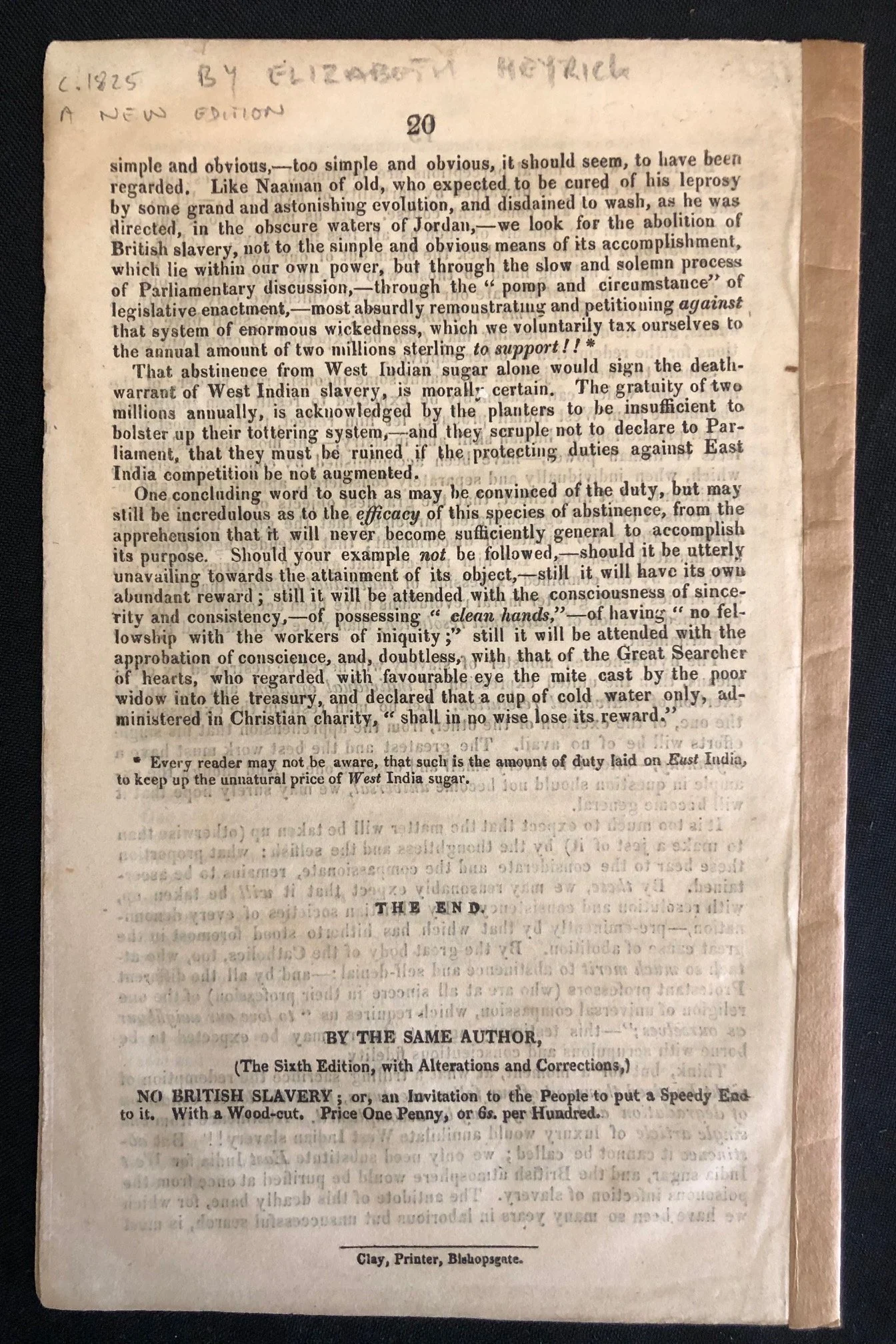
To combat this, she became a massive proponent of the sugar boycott. She organized widespread grassroots networks, largely driven by women's anti-slavery societies, urging households to stop buying slave-grown West Indian sugar in favor of East India sugar (which was produced by free labor). Her campaigns were so successful that they heavily hit the profits of the powerful West Indian lobby.
Heyrick's radical rhetoric and the massive public support she mobilized ultimately forced the mainstream, male-led Anti-Slavery Society to abandon "gradualism." By the late 1820s and early 1830s, the official policy of the movement shifted to demanding total, immediate emancipation. This pressure directly culminated in the passage of the Slavery Abolition Act of 1833.
The centerpiece of this "New Edition" cover features the iconic image of an enslaved man standing in a Caribbean landscape, flanked by the words "I AM A MAN, YOUR BROTHER." This phrase and imagery were adapted from the famous medallion designed by Josiah Wedgwood in the late 18th century, which became the universal emblem of the abolition movement. Beneath it, the quote from Acts xvii. 26 ("He hath made of one blood all nations of men") was a direct theological strike against the pro-slavery arguments of the era that tried to justify racial hierarchy.
This edition, sold for "Twopence, or 1s. 6d. per dozen," is a beautiful example of early mass-produced street literature designed to be affordable, easily distributed, and politically explosive.
Reinforced with brown tape along the spine; minor creasing and wear. Title page; 20 pages in total. Complete.
130mm x 208mm
R12,500