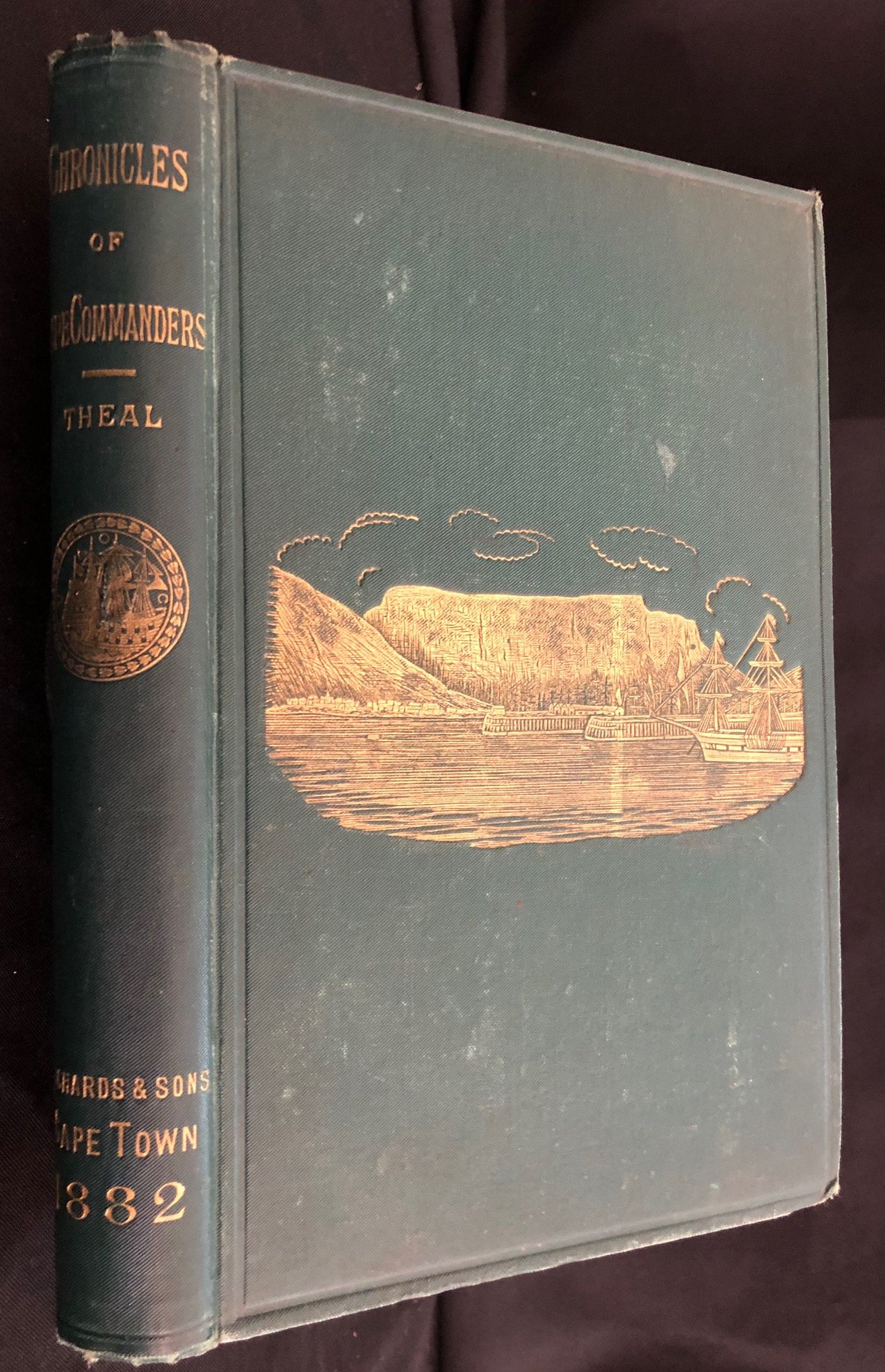
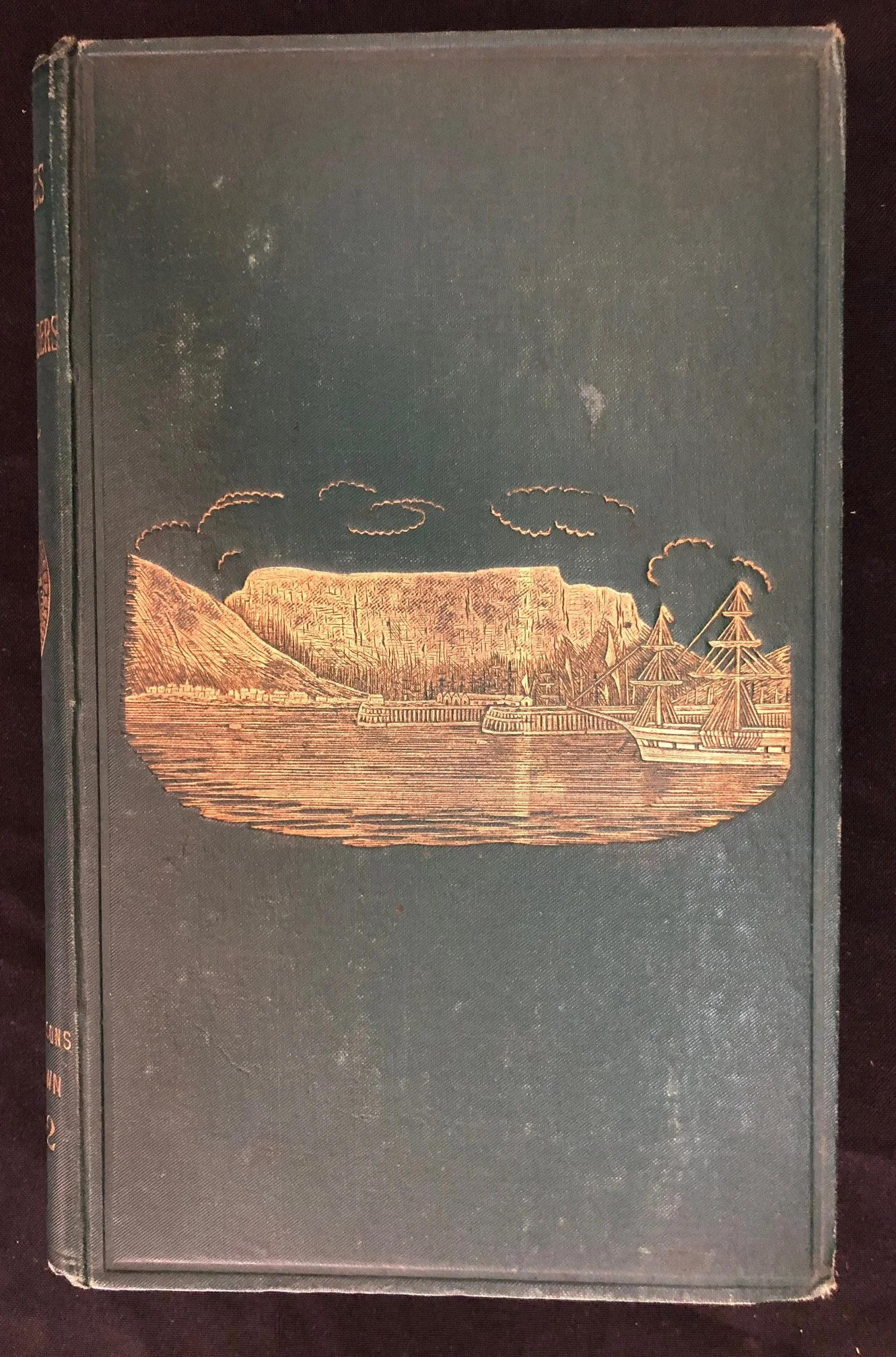
First edition of George McCall Theal’s Chronicles of Cape Commanders (1882)
This 1882 first edition of George McCall Theal’s Chronicles of Cape Commanders is a landmark piece of South African historiography.
The Birth of Organized Cape Archives
Before Theal came along, the massive repository of the Dutch East India Company (VOC) records in Cape Town was in a state of utter neglect. They were uncataloged, gathering dust, and falling apart.
In the late 1870s, the Cape Government appointed a commission to look into them, and Theal—who was working as a clerk in the Native Affairs Department but had a passion for history—was eventually appointed "Keeper of the Archives." * Chronicles of Cape Commanders represents some of the earliest systematic, published fruit of that labor. It was printed by W.A. Richards & Sons, who held the official contract as "Government Printers" on Castle Street at the time.
The Discrepancy in the "Charts"
If you look closely at the title page, it proudly states near the bottom: "With Four Charts."Theal continually amended and added to his cartographic insertions as the volume went through the government presses, making the physical collation of this specific edition a point of high interest for bibliophiles.
The Value of the Bibliography
While the main body of the book focuses tightly on the VOC commanders from Jan van Riebeeck to Simon van der Stel (1651–1691), the real hidden gem for researchers is the section noted near the center of the title page:
"Notes on English, Dutch, and French Books published before 1796, containing references to South Africa."
This was essentially one of the earliest reliable, annotated bibliographies of South African travel literature. Decades before Sidney Mendelssohn published his monumental South African Bibliography in 1910, Theal was using this final section to lay down the foundational roadmap for early African book collecting.
A Complicated Legacy
Theal went on to become the most prolific historian of South Africa, virtually single-handedly shaping how late 19th and early 20th-century colonial society viewed its own past.
While his monumental efforts in preserving the VOC archives are universally praised, modern historians view his actual writing with a critical eye, as his later narratives heavily reflected the pro-colonial and racially biased perspectives of his era. This 1882 imprint captures him right at the transition point from an enthusiastic archivist to the dominant ideological voice of South African history.
155mm x 235mm x 30mm
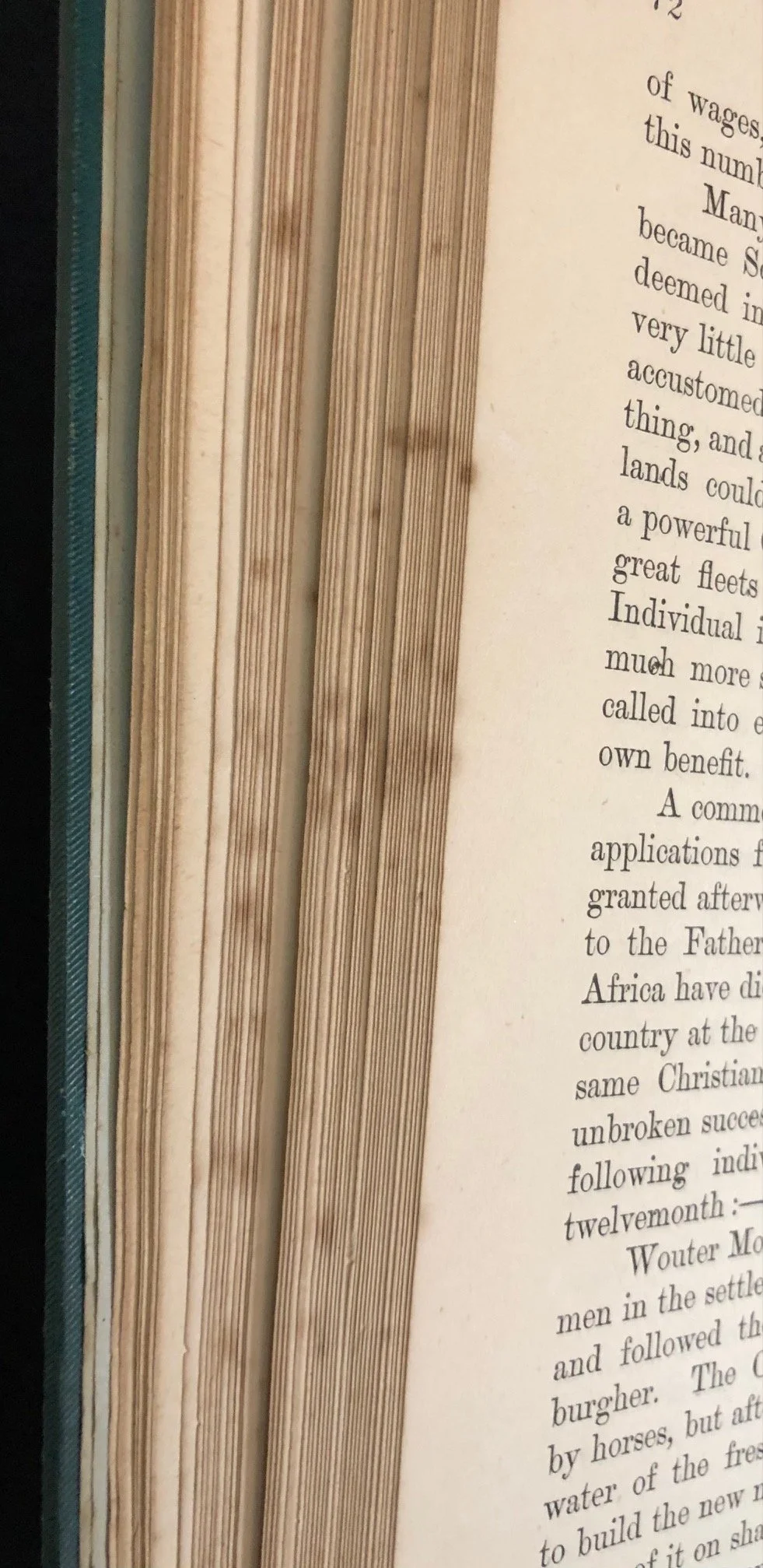
Complete with 4 charts. Some spotting to the fore edge; minor sporadic foxing; spine worn at the edges.
R2,000