Genealogical letter: Possibly to Jacob Coenraad Cloete (1866)
Four page manuscript letter 1866.
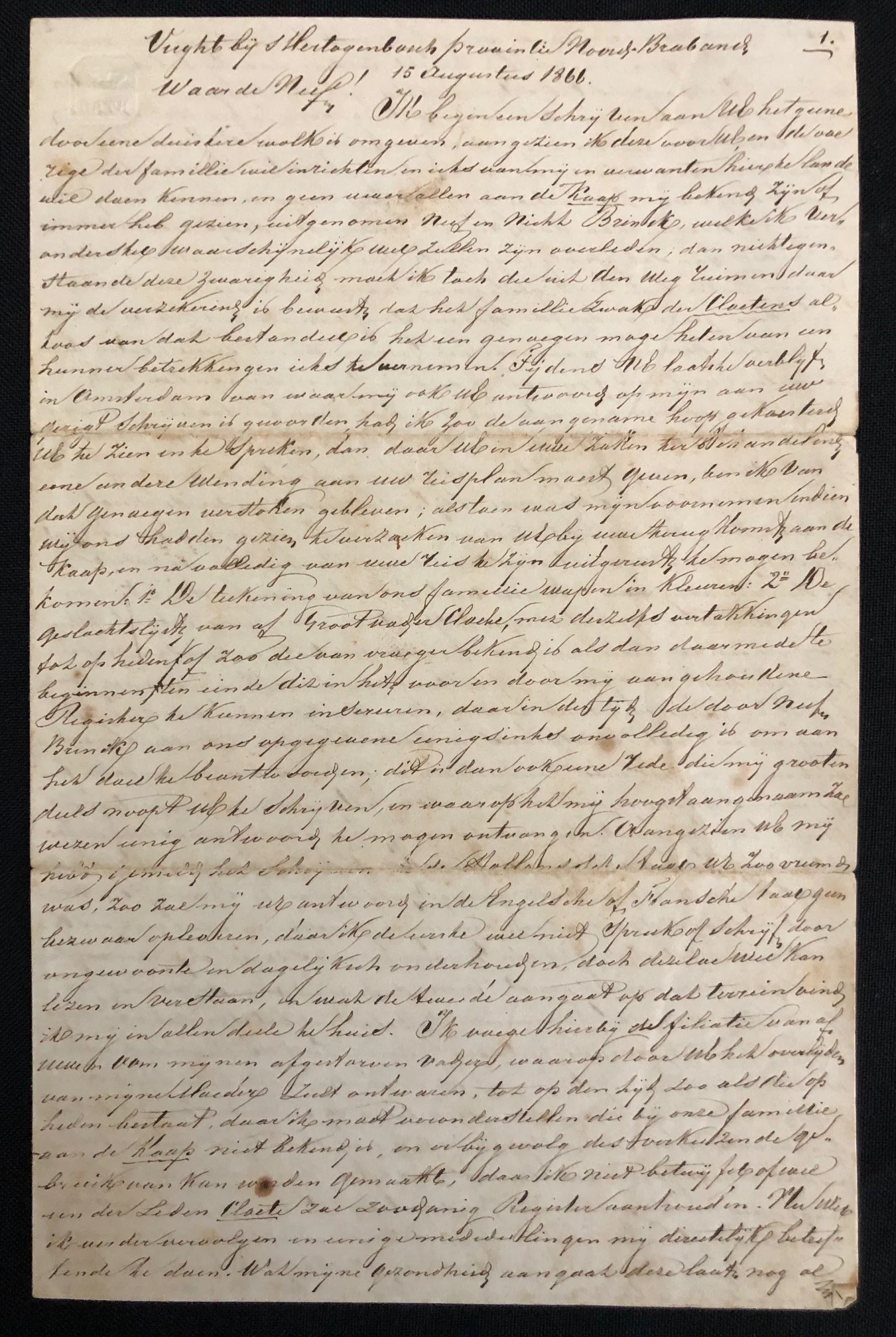
This is an extraordinary and deeply personal genealogical letter, providing a bridge between a family in the Netherlands and their relatives at the Cape of Good Hope.
The letter is written in Dutch, dated August 15, 1866, from Vught (near 's-Hertogenbosch in the province of North Brabant). It is addressed to a "Waarde Neef" (Dear Cousin), who appears to be Jacobus Coenraad Cloete.
The writer identifies himself in the signature and address as J. H. Cloete, a retired cavalry officer living in Vught. He is writing to re-establish contact with the South African branch of the Cloete family.
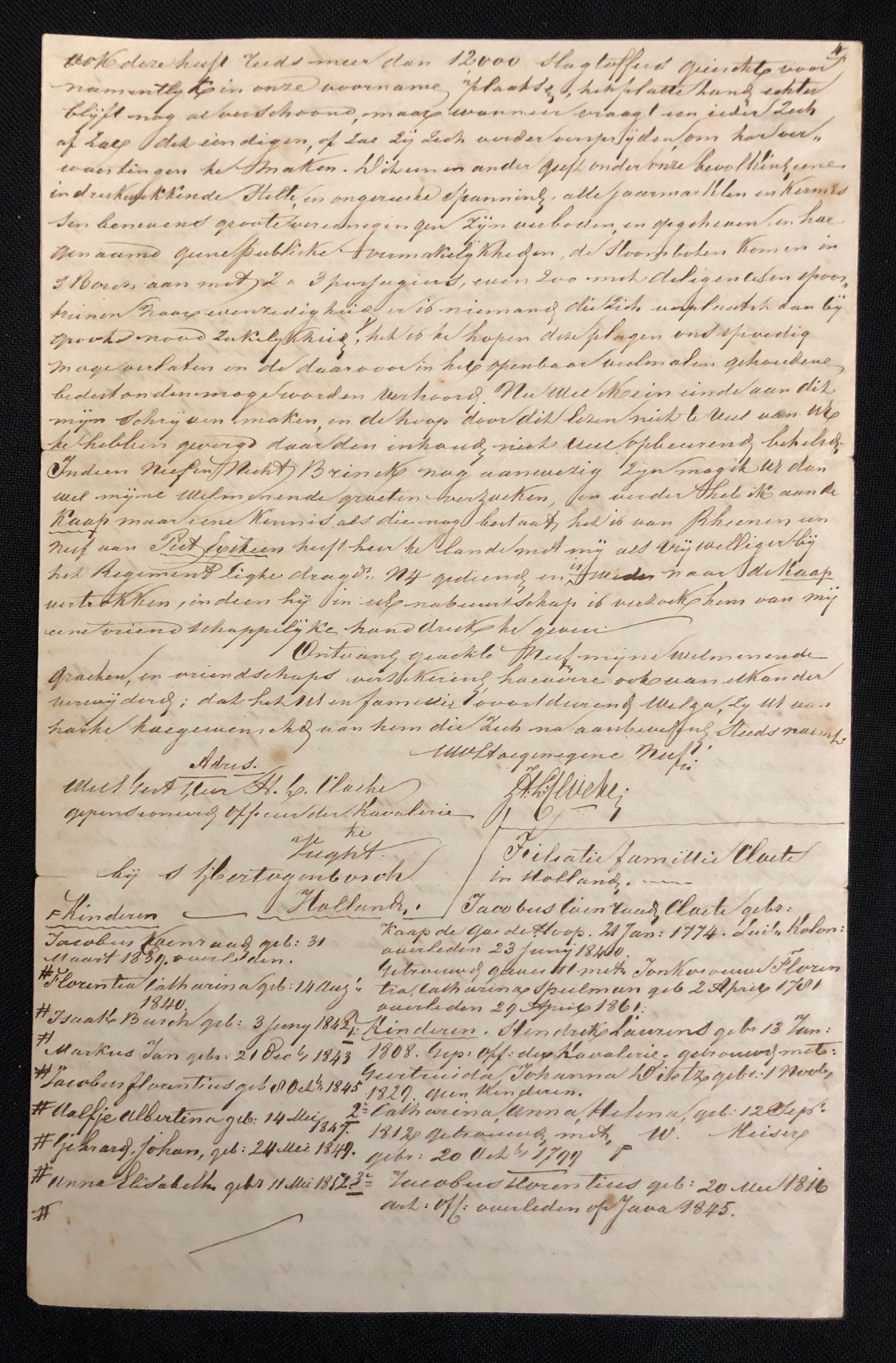
The letter includes a meticulously handwritten "Filiatie" (Family Tree) on the final page. It traces the lineage back to:
• Jacobus Laurentius Cloete (born at the Cape, Jan 21, 1774; died June 23, 1844). He was a Lieutenant Colonel.
• The tree lists children and grandchildren, including names like Hendrik Laurentius, Catharina Anna Helena, and Jacobus Florentius.
• The writer mentions that while he doesn't speak English or French well, he can read and understand them, inviting his cousin to reply in whichever language is most comfortable.
Beyond family names, the letter is a rich narrative of the hardships of the mid-19th century:
• The Austro-Prussian War (1866): The writer mentions the "war between the two great European powers, Prussia and Austria." He discusses the political tension in Europe and the fear that the French government might provoke a new war.
• The Cholera Epidemic: He writes about the "terrible plague" of cholera currently ravaging the Netherlands. He notes that in their province alone, more than 12,000 to 13,000 people have already died. He describes the "oppressive tension" among the population and the canceling of public events like fairs (kermissen).
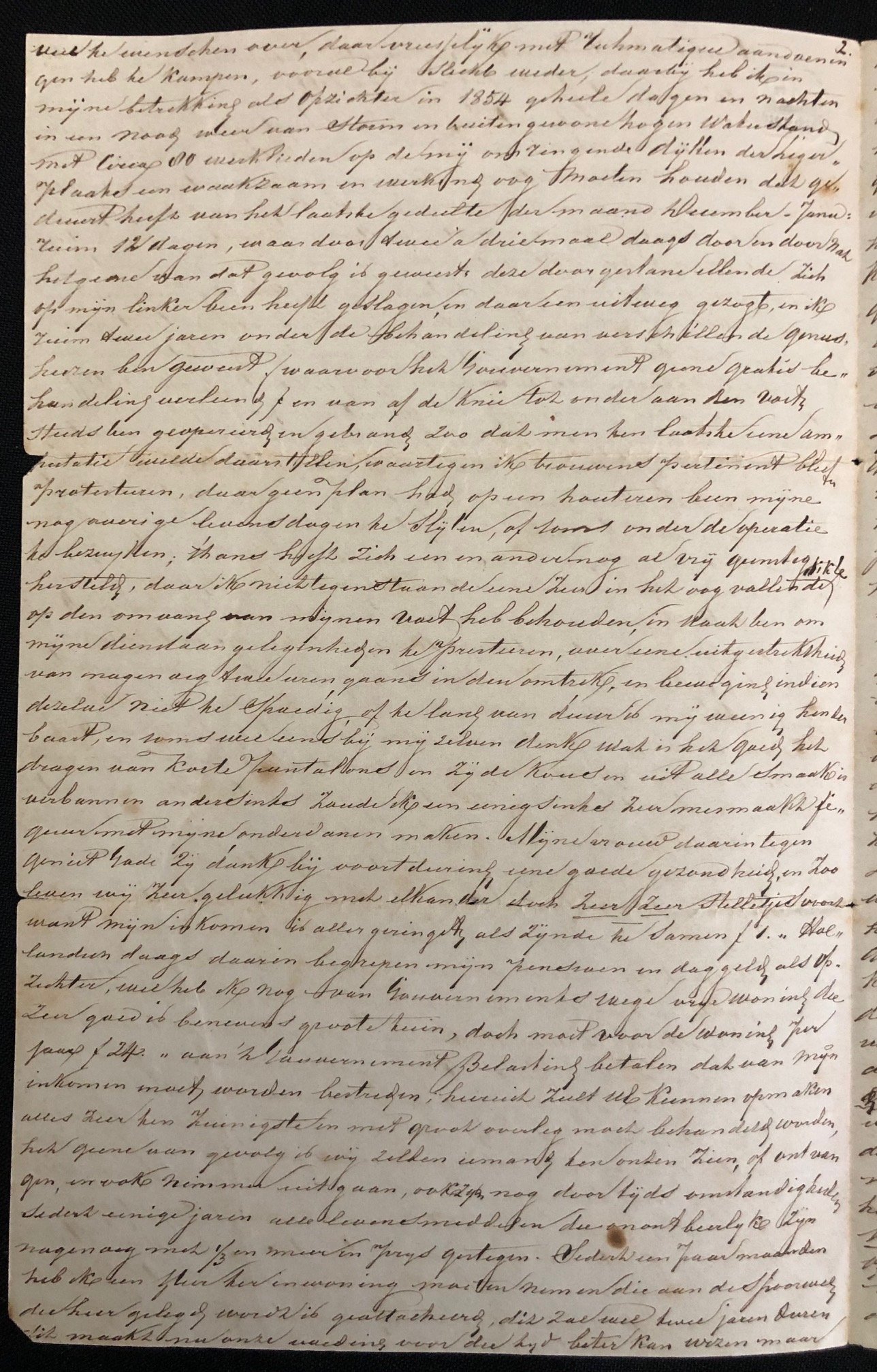
• Personal Injury and Flooding: The writer describes a harrowing personal experience from 1854. While working as an "Opzichter" (Overseer) during a severe storm and high water levels, he spent days and nights on the dikes with 90 men to prevent flooding. The cold and wet conditions caused a severe infection in his left leg, leading to multiple surgeries and a permanent disability. He notes that the government provided no financial compensation for this "act of service."
The letter touches on the rising cost of living in the 1860s, noting that the price of life's necessities has risen by 1/3 or more. He describes his living situation—a house with a large garden provided by the government—but notes that his pension is small and requires "extreme frugality."
For a researcher interested in South African history, this is a "gold mine" document for several reasons:
• The Cloete Family: This is one of the most prominent Cape families (historically associated with estates like Groot Constantia). This letter documents the specific links maintained between the Dutch and Cape branches after the British takeover of the Cape.
• The "Vrijwilliger" Mention: On the final page, he mentions a relative who served as a volunteer in the Regiment Ligte Dragoons (Light Dragoons), further linking the family to military service.
The writer’s desire to "fill in his register" suggests he was an amateur genealogist of his time, making this a record of a record.
1350mm x 215mm
R4,000