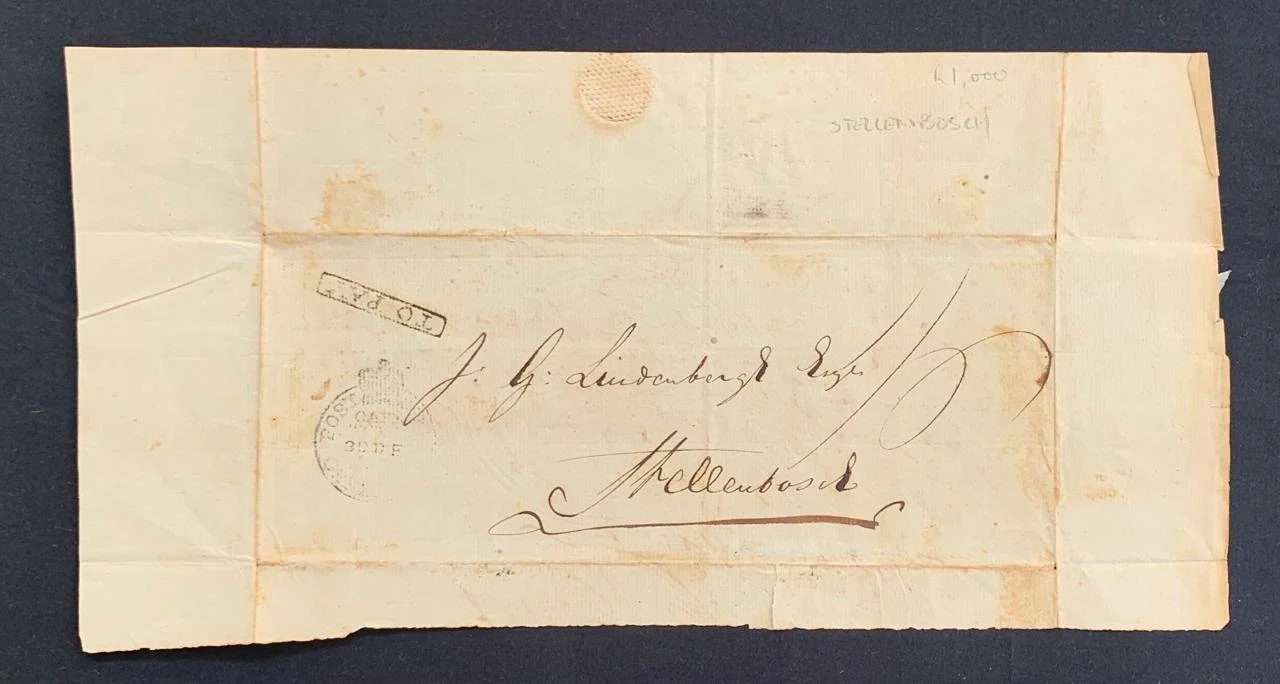
Pre-postal system letter to JG Lindenbergh ESQ (1835)
Stellenbosch interest.
This document provides a fascinating glimpse into the legal and postal landscape of the 19th-century Cape Colony. It captures the complex bureaucratic shift that occurred as British administrative and postal systems overlaid the existing Dutch legal framework in the region.
The Recipient: A Key Local Agent
The cover is addressed to "J. G. Lindenbergh Esqr / Stellenbosch."
Johannes Gysbertus Lindenberg was a highly influential bureaucratic figure in early 19th-century Stellenbosch. He wore many hats, serving as a local district clerk, an auctioneer, and a legal agent. Notably, he acted as the Stellenbosch agent for The South African Commercial Advertiser (South Africa's first independent newspaper), making him a central node for information, legal disputes, and commerce in the district.
Postmarks and the Pre-Stamp "To Pay" System
The postal markings date this envelope right into the heart of the Cape’s pre-adhesive stamp era:
The "TO PAY" Stamp: Before the famous "Cape Triangular" stamps were introduced in 1853, letters were typically paid for by the recipient upon delivery, rather than prepaid by the sender. The rectangular "TO PAY" handstamp indicated that the Stellenbosch postmaster needed to collect the postage fee from Lindenberg.
The Circular Date Stamp: The faint circular mark on the left is a classic Cape Town post office handstamp, which includes the abbreviation "CAPETOWN" and the day/month stamp at the bottom ("30 DE" for December 30th).
The Shift in Legal Language: "Translaten"
The interior letter dated 30 December 1835, is written in Dutch (the colloquial administrative language of the Cape's populace at the time) but highlights the mounting pressures of British rule.
The writer states:
"Hier nevens de Translaten der Schuldbrieven..." (Herewith the translations of the debt certificates/bonds...)
Following the second British occupation of the Cape in 1806, the colonial government systematically implemented English as the official language of the courts and administrative records. This created a boom industry for legal agents like Lindenberg, who had to constantly manage, submit, and request official English translaten (translations) of older Dutch schuldbrieven (bonds) or deeds to satisfy the British authorities.
The Mention of "du Plessis"
The text also notes that copies are being made and mentions that something is:
"...op de rekening van du Plessis gehadt" (...had on the account of du Plessis).
The du Plessis family was one of the early, established Huguenot settler families in the Western Cape, deeply rooted in the farming and wine-producing architecture of Stellenbosch and Franschhoek. Seeing their names pop up in local debt and legal correspondence from 1835 underscores how intertwined these old Cape families were with the local district courts and debt registries during times of economic transition.
162mm x 315mm
R1,000