Manuscript letter from Missionary James Read to Abolitionist Dr. John Philip 1834
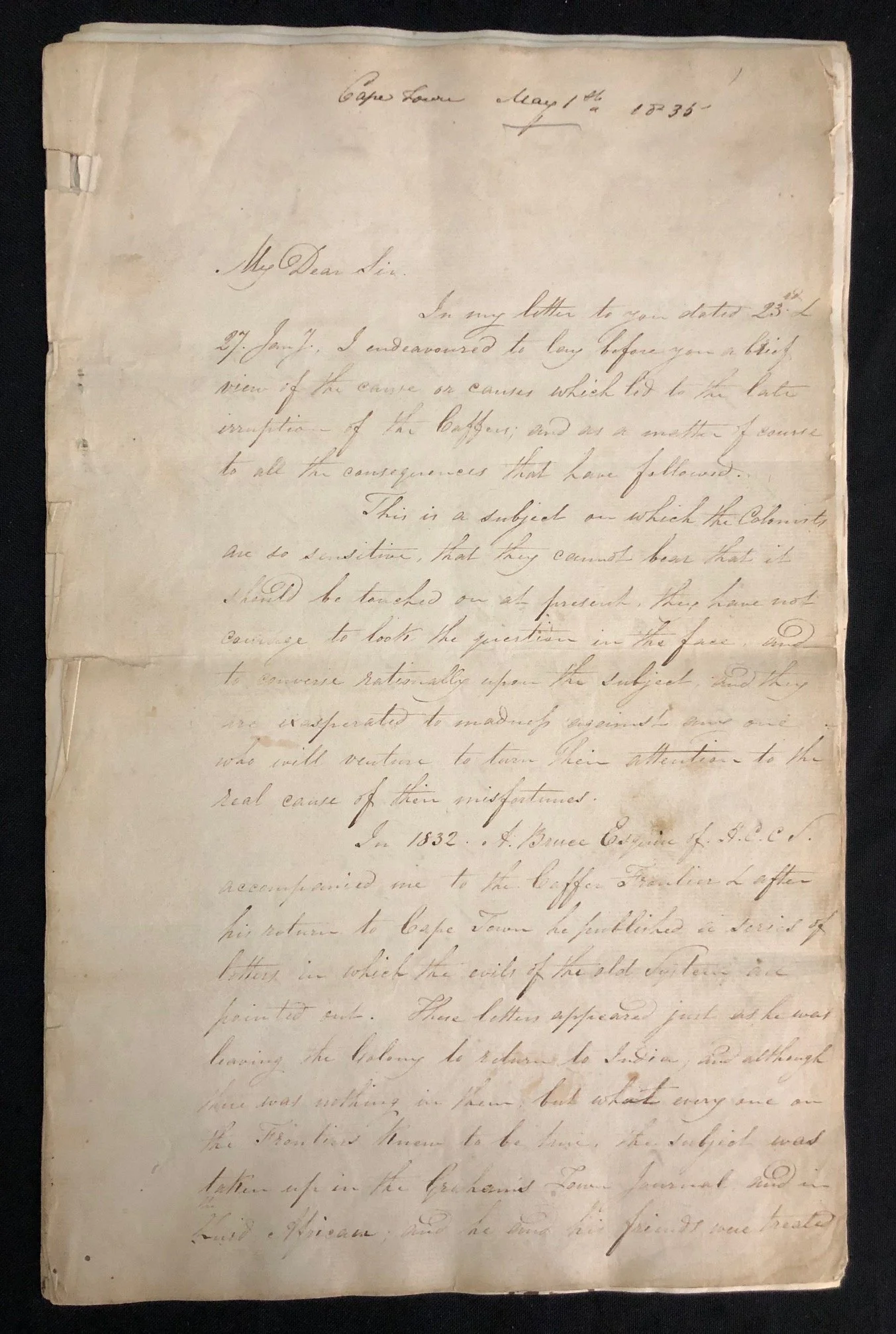
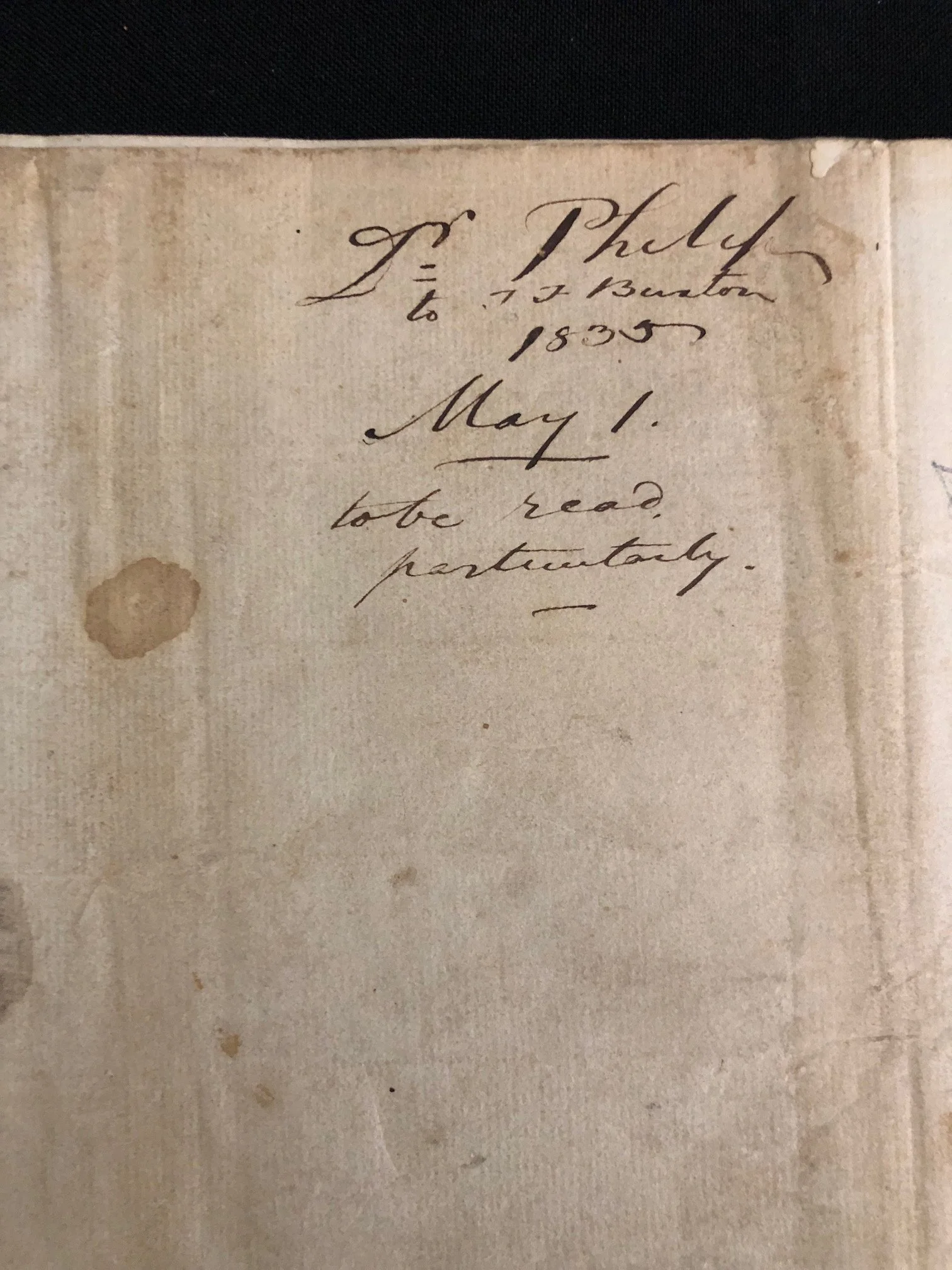
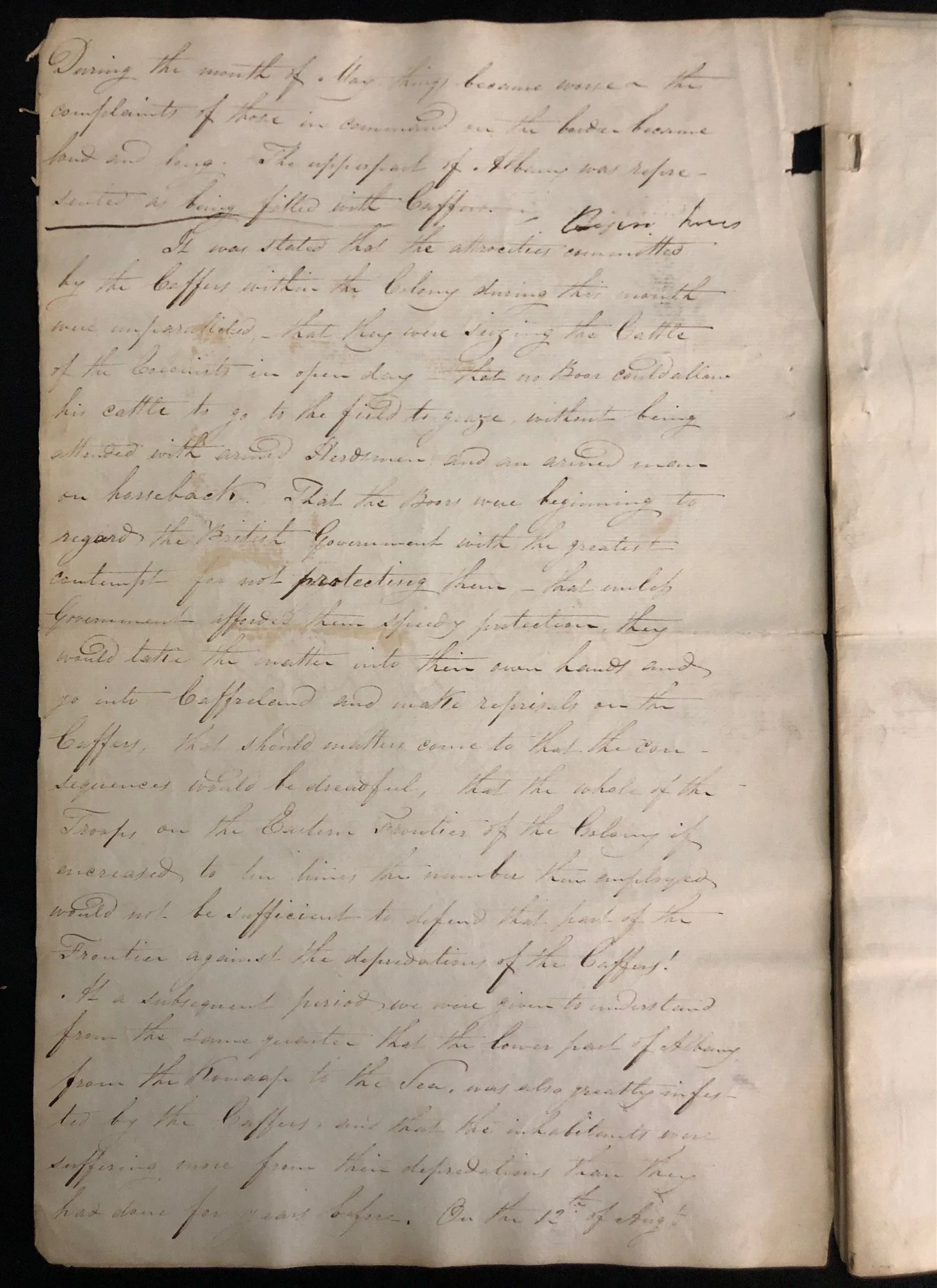
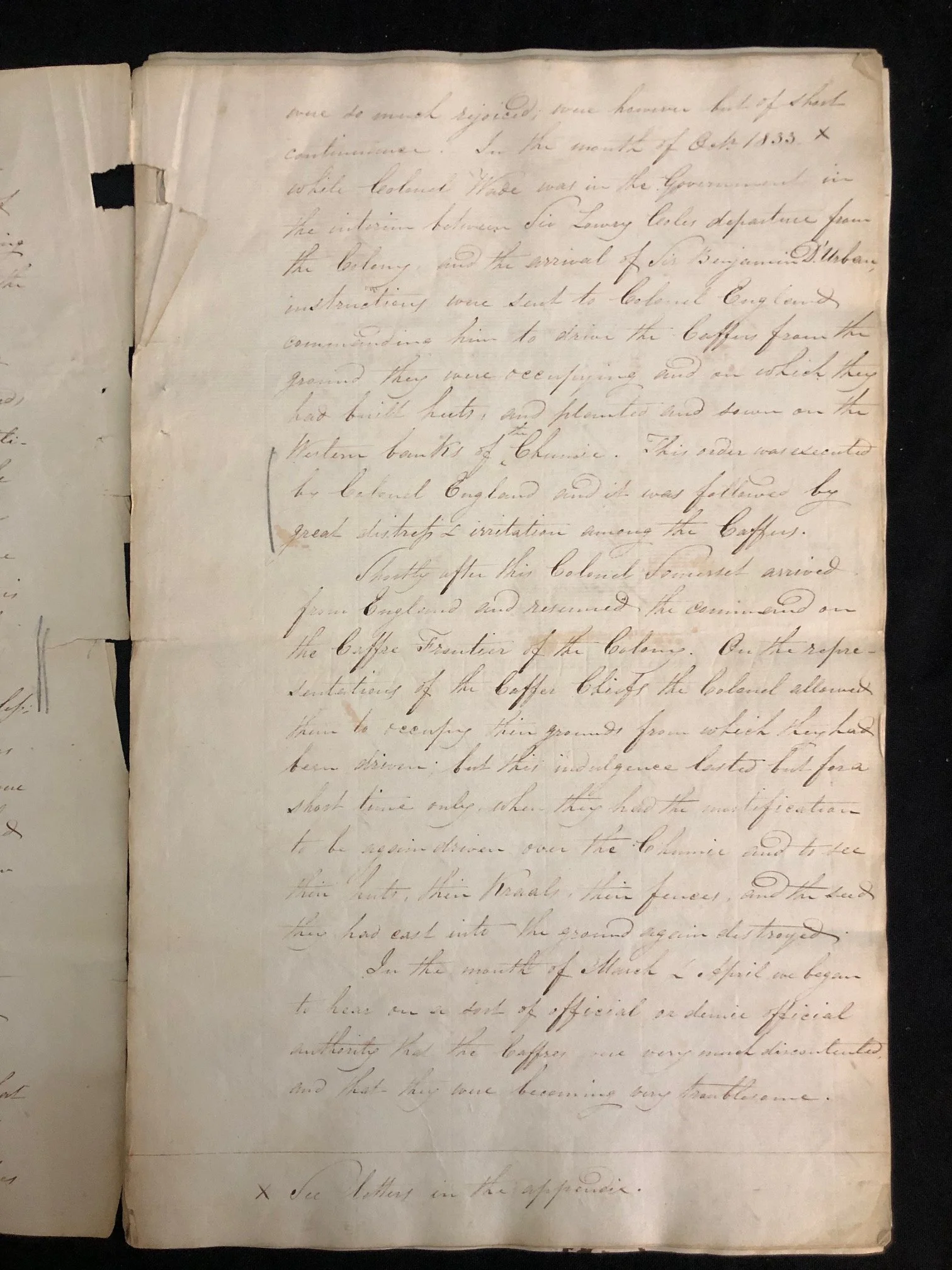
46 pages in the author’s hand. I speculate that these are the preliminary copies of the sent letters. Corrections and notes make this collection more desirable as it illustrates the author’s thought process.
This collection of handwritten letters is dated April 13, 1834, and was sent from Cape Town. The document is a significant historical record detailing the "Patrole System" and its impact on the Xhosa (historically referred to in the text as "C*") along the frontier of the Cape Colony.
The letter, signed by J. Read, describes the escalating tensions and perceived injustices on the frontier. The writer expresses deep concern over the practice of colonial patrols seizing cattle from the Xhosa based on reports of theft, often without proper verification or involvement of the local chiefs.
The prominent watermark features a crown above a circular emblem with the date 1832 and the name J. Whatman. (Cape administrative stationery)
The letter identifies several key historical figures and groups involved in the colonial administration and frontier conflicts of the 1830s:
• J. Read (The Author): The writer of the letter, who signs off with "Kind regards to Mrs. Fairbairn". James Read was a prominent missionary at the Kat River Settlement.
• Dr. Philip: Mentioned as the person the author wished to consult regarding the "present state of the Frontier". This refers to Dr. John Philip, the influential superintendent of the London Missionary Society in South Africa.
• Mr. Fairbairn: Mentioned as a person whose recommendation for cattle recovery should be followed. John Fairbairn was editor of the South African Commercial Advertiser and a known advocate for frontier justice.
• The Governor: The author frequently references "the Governor," hoping he will be "prepared for the important work before him". This refers to Sir Benjamin D'Urban, who arrived as Governor of the Cape Colony in early 1834.
• Colonel Wade: Mentioned as having complained about descriptions of him in "Mr. Pringle’s sketches". This refers to Colonel Thomas Francis Wade, who served as Acting Governor before D'Urban.
• Mr. Pringle: Noted for his "sketches" that Colonel Wade found objectionable. Thomas Pringle was the Scottish poet and journalist who was a prominent critic of colonial policy.
• Captain Stockenström: Mentioned in relation to the surveying of the "Neutral Territory" and the frontier line. This refers to Andries Stockenström, a key figure in frontier policy and later Lieutenant-Governor.
• The Xhosa (referred to as "C*"): The letter details the "unparalleled outrages" and "depredations" committed against them, specifically the burning of their huts and seizure of cattle by patrols.
Some staining; tears and mellowing.
205mm x 330mm
R20,000