Great Trek Interest: The Cape of Good Hope Punishment Act (1836)
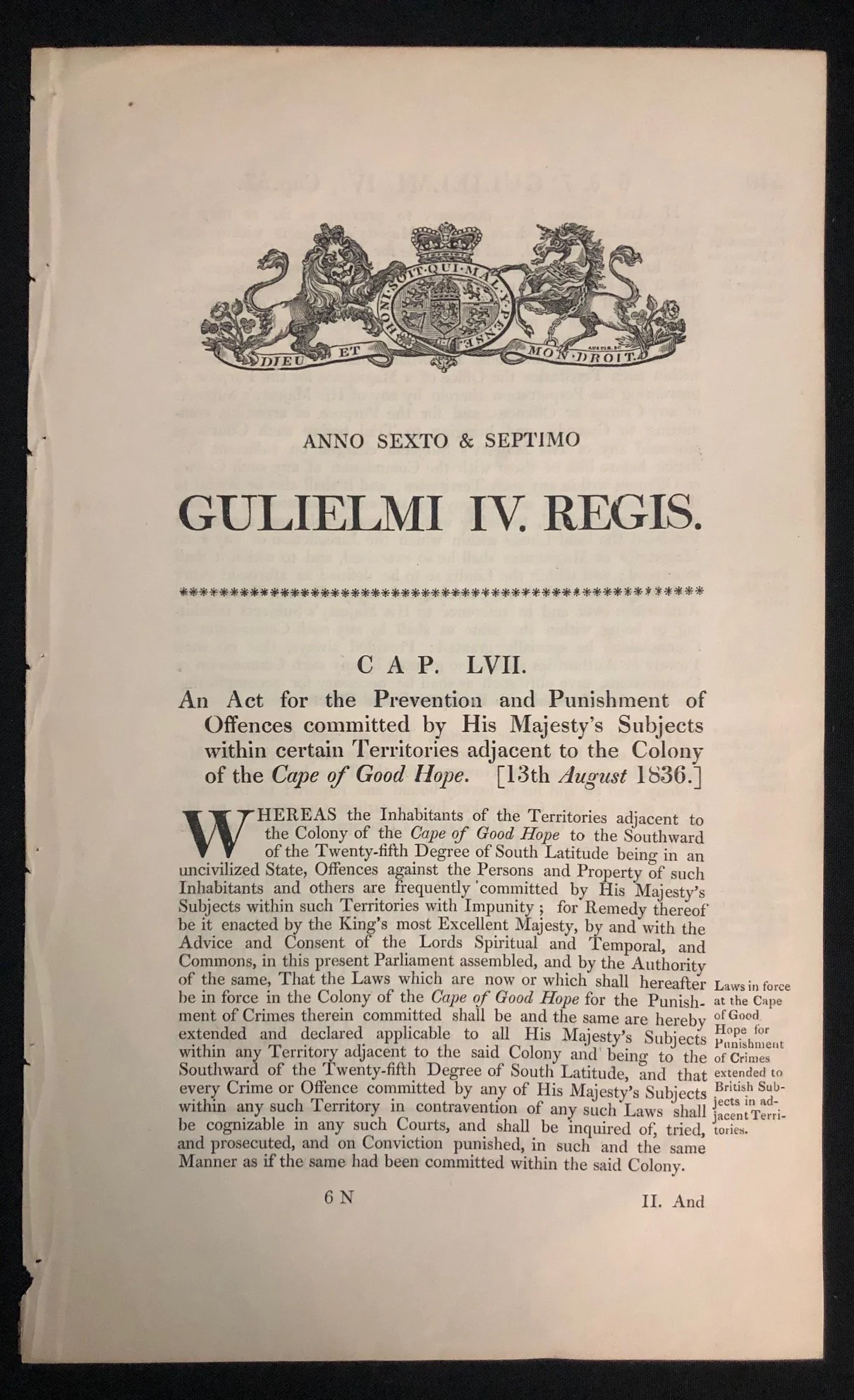
An original British Parliamentary imperial statute passed on 13 August 1836, officially known as the Cape of Good Hope Punishment Act (6 & 7 Gulielmi IV Regis, Cap. LVII).
Printed by George Eyre and Andrew Spottiswoode in London, this legislative act stands as one of the most intriguing, legally ambitious, yet utterly un-enforceable attempts by the British Empire to control its borders and its subjects in Southern Africa.
A Direct Response to the Great Trek
By 1836, large groups of Dutch-African colonists (Trekboers or Voortrekkers) were beginning to pack up their ox-wagons and mass-migrate out of the British-controlled Cape Colony into the interior to escape British rule.
The British government, anxious to avoid the massive financial and military costs of expanding its formal territory, hit upon a legal maneuver: they declared that British subjects could not simply leave their legal obligations behind by walking across a border. This Act officially extended Cape colonial criminal law to any British subject operating anywhere in the interior, all the way up to the 25th degree of South Latitude (roughly modern-day Pretoria/Polokwane).
Legal Sovereignty vs. Territorial Disclaimers
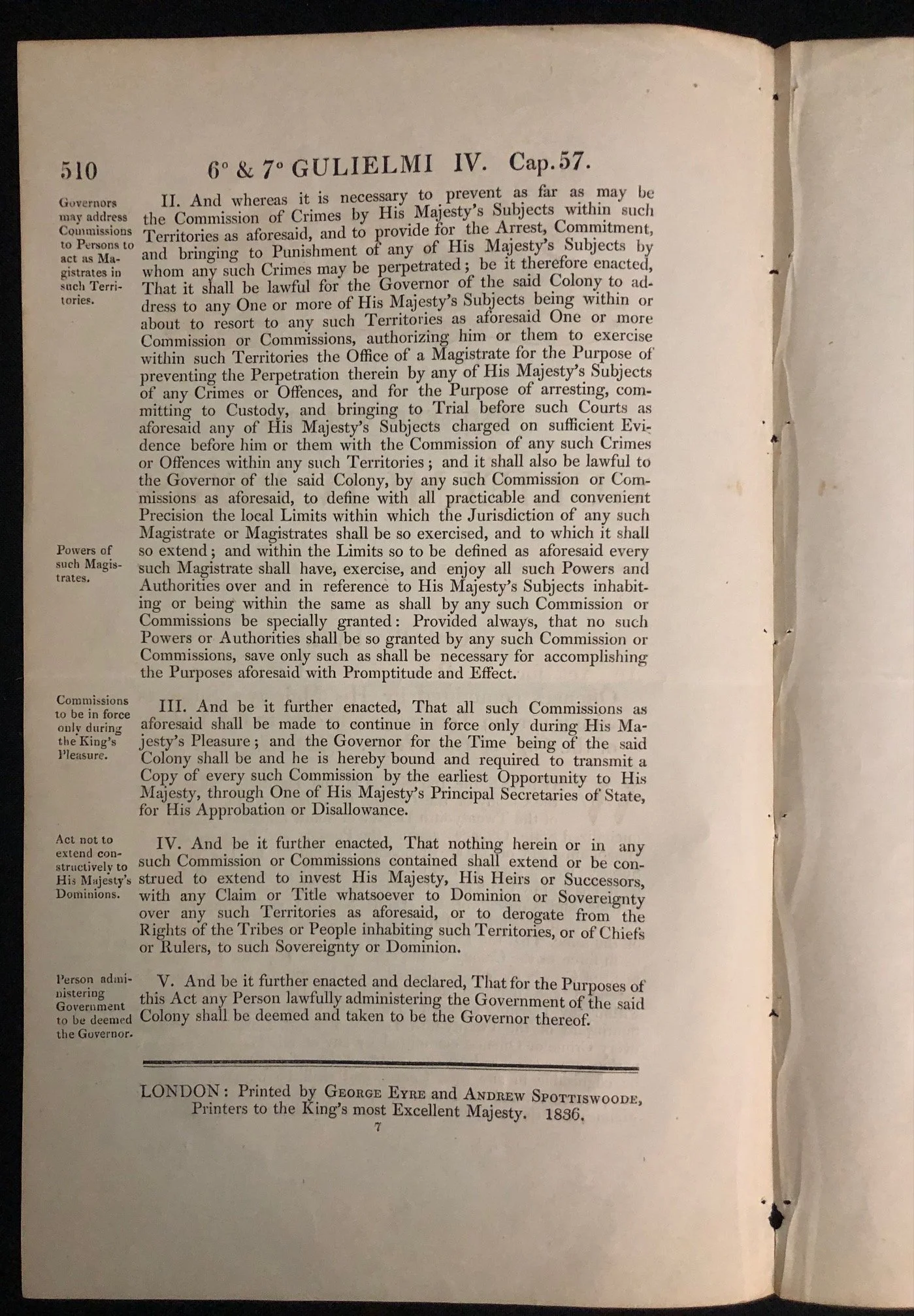
Section IV of the Act features a brilliant piece of legal tightrope walking. It states:
“...nothing herein... shall extend or be construed to extend to invest His Majesty, His Heirs or Successors, with any Claim or Title whatsoever to Dominion or Sovereignty over any such Territories...”
The British government was essentially trying to police the people without claiming the land. They wanted the authority to arrest and try their own subjects for crimes committed in the interior—particularly offenses against indigenous populations—without committing the British Crown to the expense of annexing, administering, or defending new territory.
A Completely Unenforceable Law
In reality, the Act was a toothless tiger. While it authorized the Governor of the Cape to appoint magistrates to arrest and try offending subjects, the British authorities lacked the actual military manpower, police presence, or administrative infrastructure to project power deep into the vast Southern African veld.
No Voortrekker or interior trader was ever successfully prosecuted under this Act by a Cape court. In fact, it had the opposite effect: when Dutch-Belgian trader Johan Arnold Smellekamp informed the Voortrekkers about the specific boundaries of the Act, it simply encouraged Trek leaders like Louis Trichardt, Hans van Rensburg, and Andries Hendrik Potgieter to push even further north, explicitly crossing the 25° South Latitude boundary to place themselves completely outside the reaches of British maritime law.
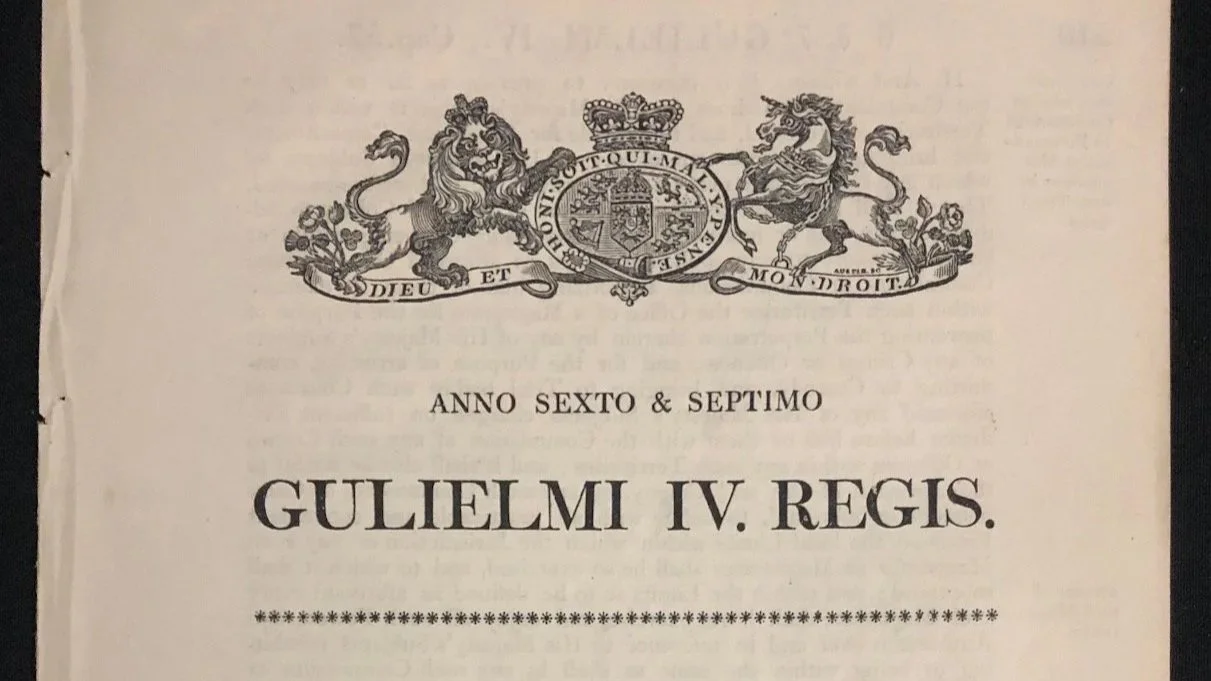
A Typography Detail: Gulielmi IV Regis
GULIELMI IV REGIS is the Latin genitive form for "King William IV." William IV was the "Sailor King" of Great Britain. This Act represents one of the final pieces of imperial legislation passed regarding South Africa during his reign; he died less than a year later in June 1837, ushering in the iconic Victorian era.
190mm x 310mm
Minor wear and tears to the edges.
R2,500