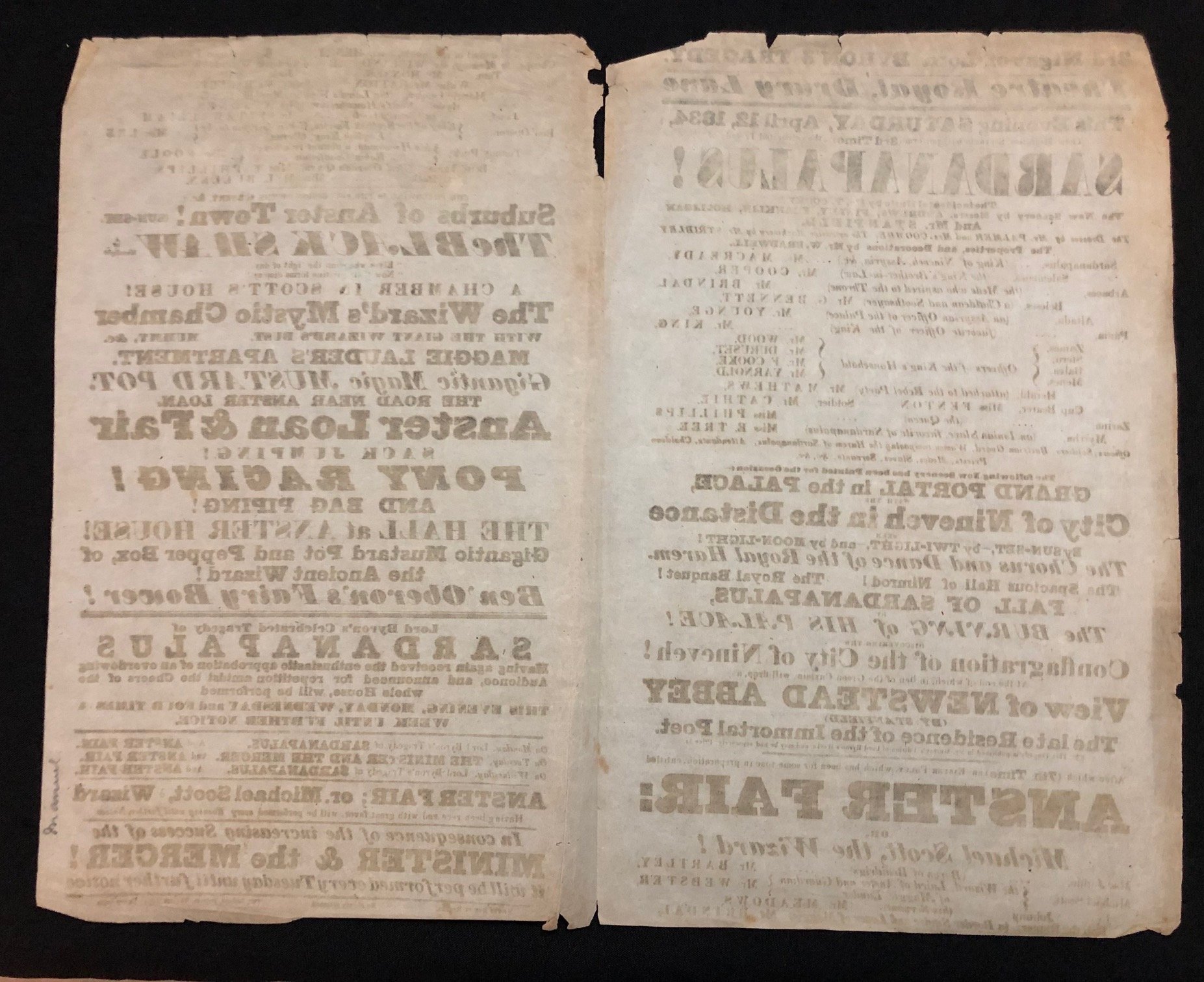
Broadside: Lord Byron’s Sardanapalus (1834)
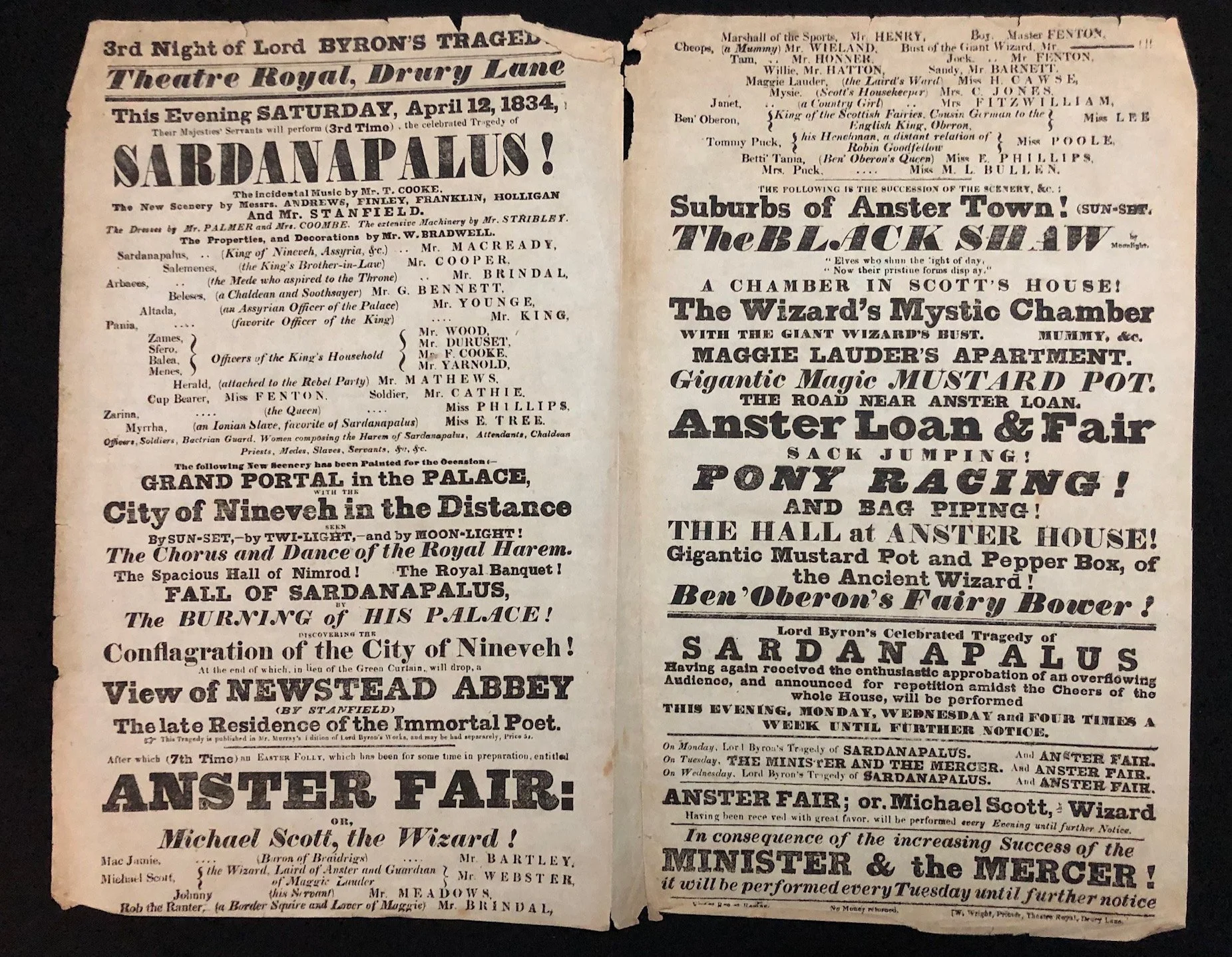
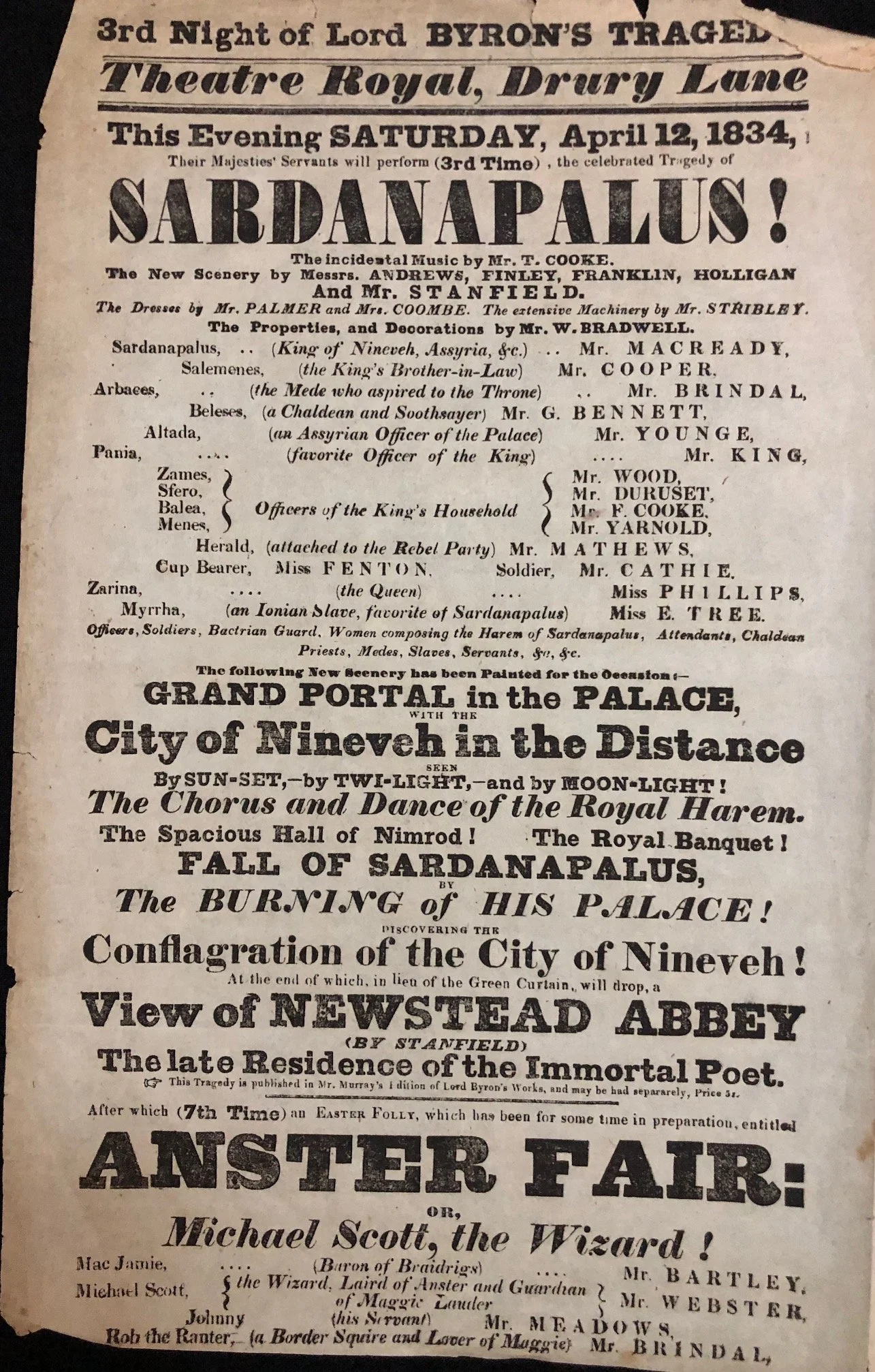
This is a classic theatrical playbill (broadside) for the Theatre Royal, Drury Lane in London, dated Saturday, April 12, 1834.
It is a remarkable piece of 19th-century ephemera, particularly for its connection to Romantic literature and the "Golden Age" of British theater.
The headline advertises the 3rd night of Lord Byron’s tragedy, Sardanapalus.
The title role is played by William Charles Macready, one of the most famous actor-managers of the Victorian era. Macready was known for his "intellectual" approach to acting and was a key figure in elevating the status of the theater.
The play follows the last king of Assyria, a decadent but pacifist ruler who eventually chooses to die in a massive funeral pyre with his favorite slave, Myrrha, rather than be captured by rebels.
The playbill emphasizes the "New Scenery" by Stanfield and others. 19th-century audiences loved "spectacle drama," and this production promised a visual feast: the Hall of Nimrod, the burning of the palace, and the "Conflagration of the City of Nineveh."
The "Newstead Abbey" Connection
Interestingly, the playbill notes that at the end of the tragedy, instead of the standard green curtain, a View of Newstead Abbey (the late residence of Lord Byron) would be displayed. This was a direct appeal to the "Byronmania" of the time—Byron had died only ten years prior in 1824, and his personal life and estates were still of immense public interest.
It was common practice in the 1830s for a long tragedy to be followed by a lighter "afterpiece" to ensure the audience got their money's worth.
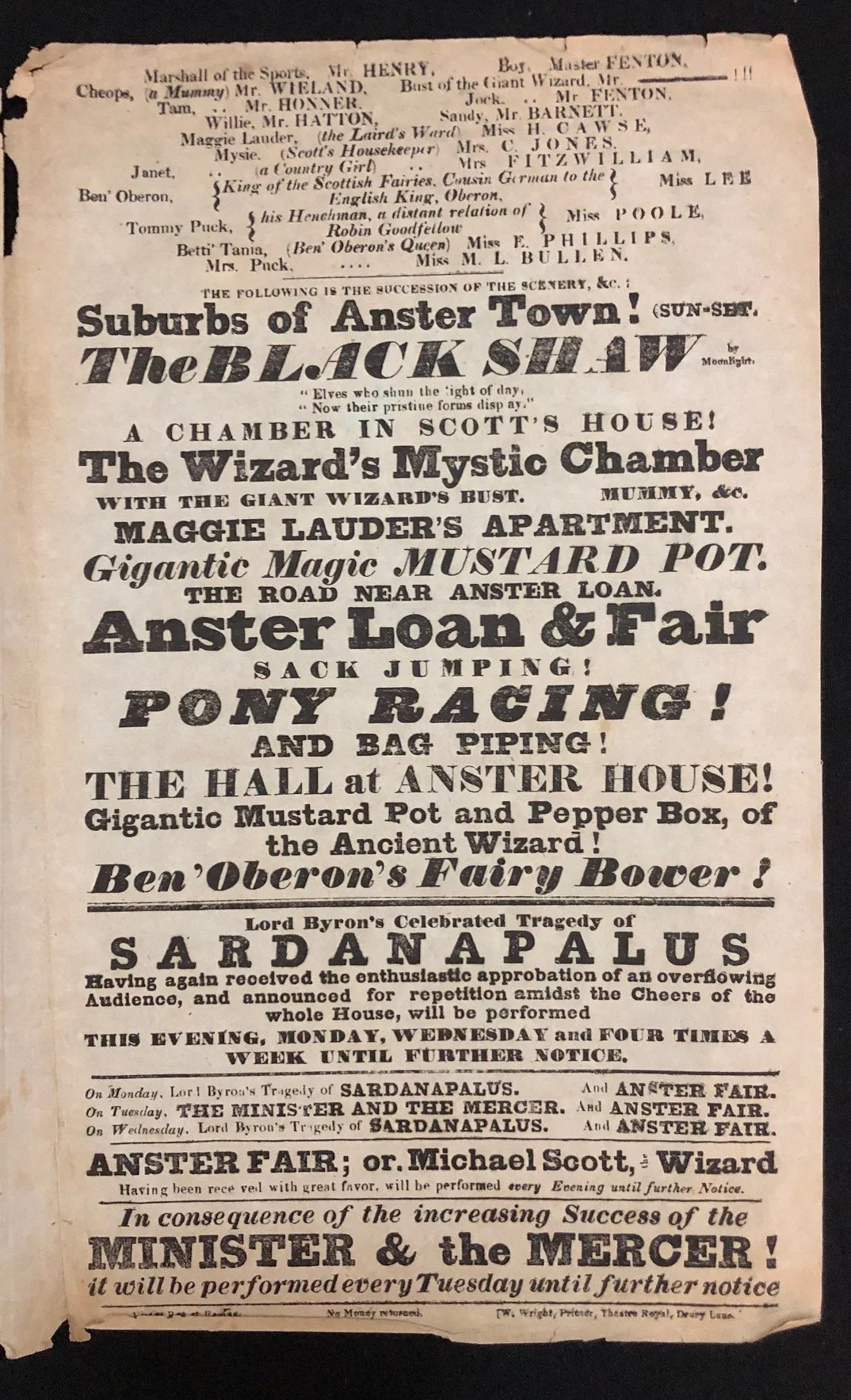
Anster Fair; or, Michael Scott, the Wizard! * Genre: Described as an "Easter Folly," likely a pantomime or musical extravaganza featuring magic, Scottish folklore, and broad comedy.
Key Details for a Collector
• Typography: Notice the variety of typefaces—typical of 19th-century playbills designed to grab attention on a busy street corner.
• Printing: These were usually printed on thin, cheap paper intended to be pasted onto walls or handed out at theater doors, which makes surviving copies in good condition quite desirable.
• Date Context: 1834 was a transitional year for Drury Lane; the theater was constantly battling for financial survival against the "minor" theaters by putting on increasingly elaborate and expensive spectacles like this one.
This document is a superb example of how the literary world of Romantic poets like Byron crossed over into the popular, high-drama world of the London stage.
420mm x 340mm open
R3,000