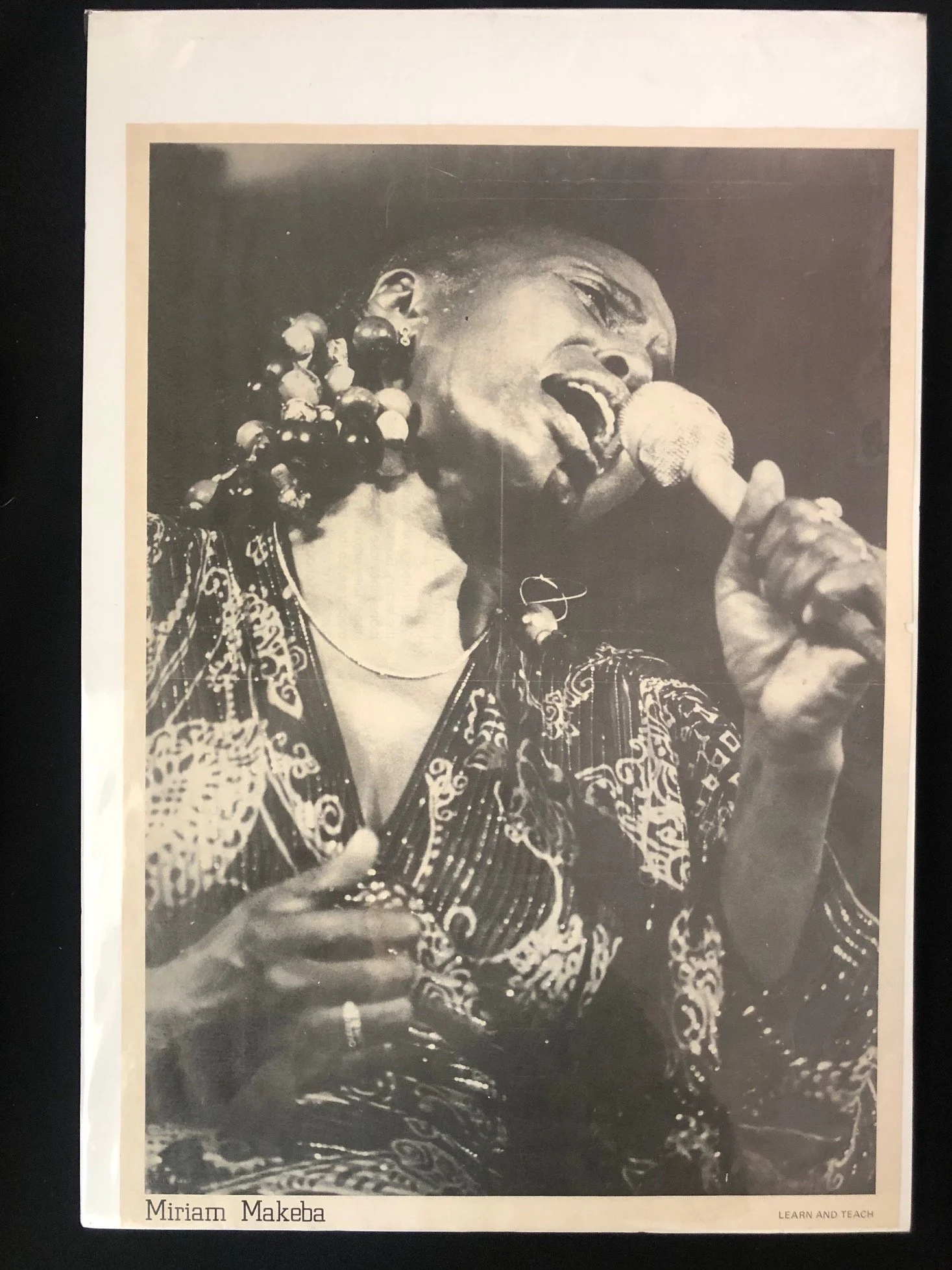
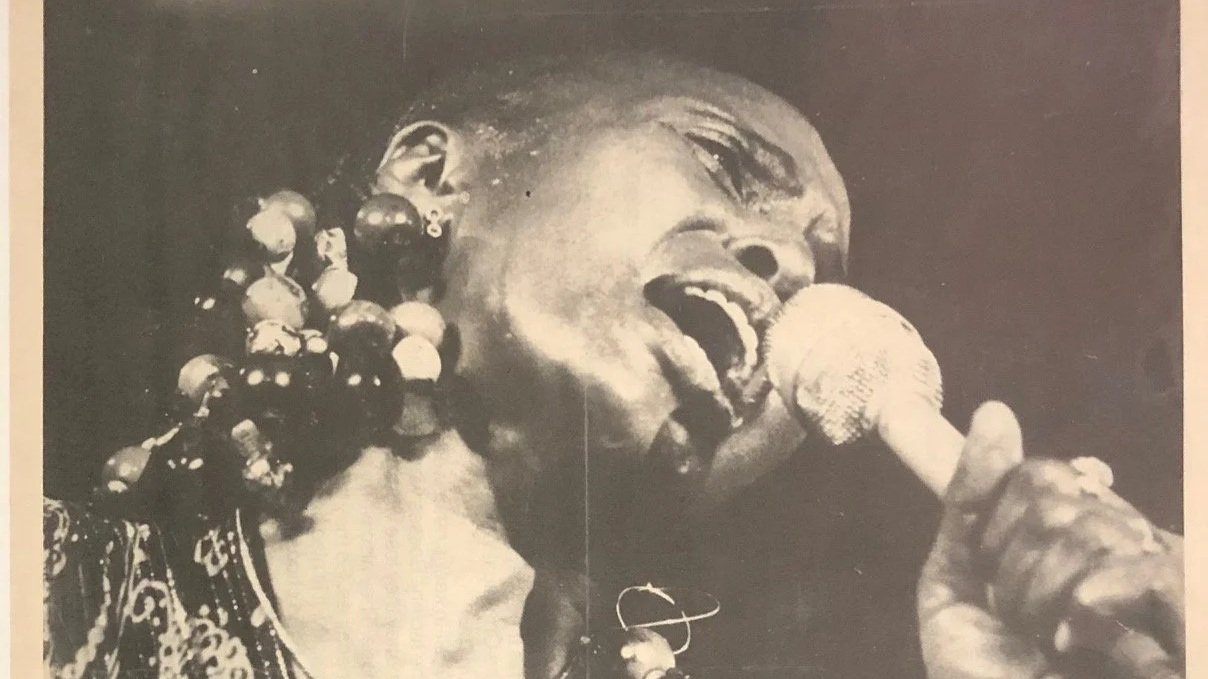
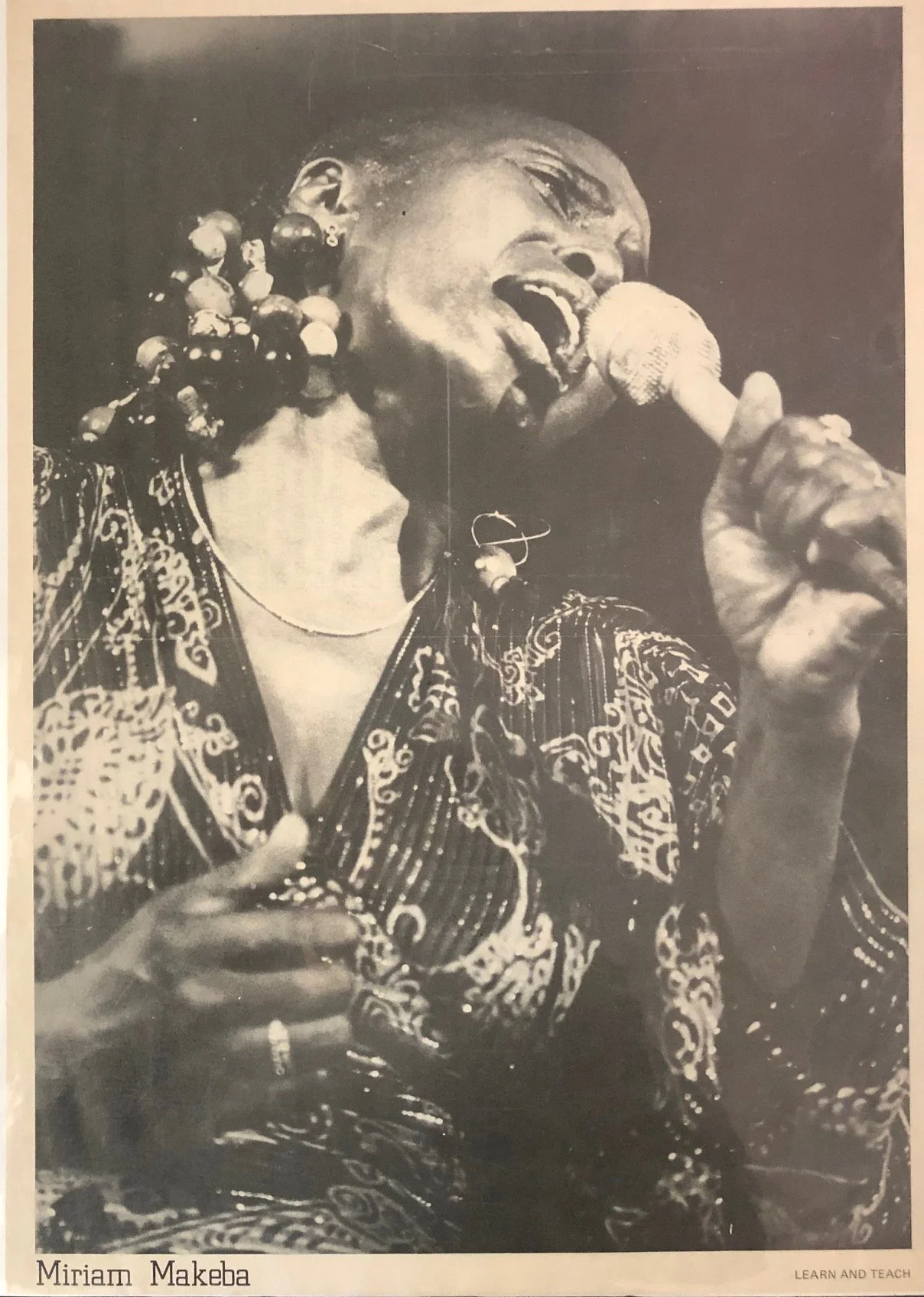
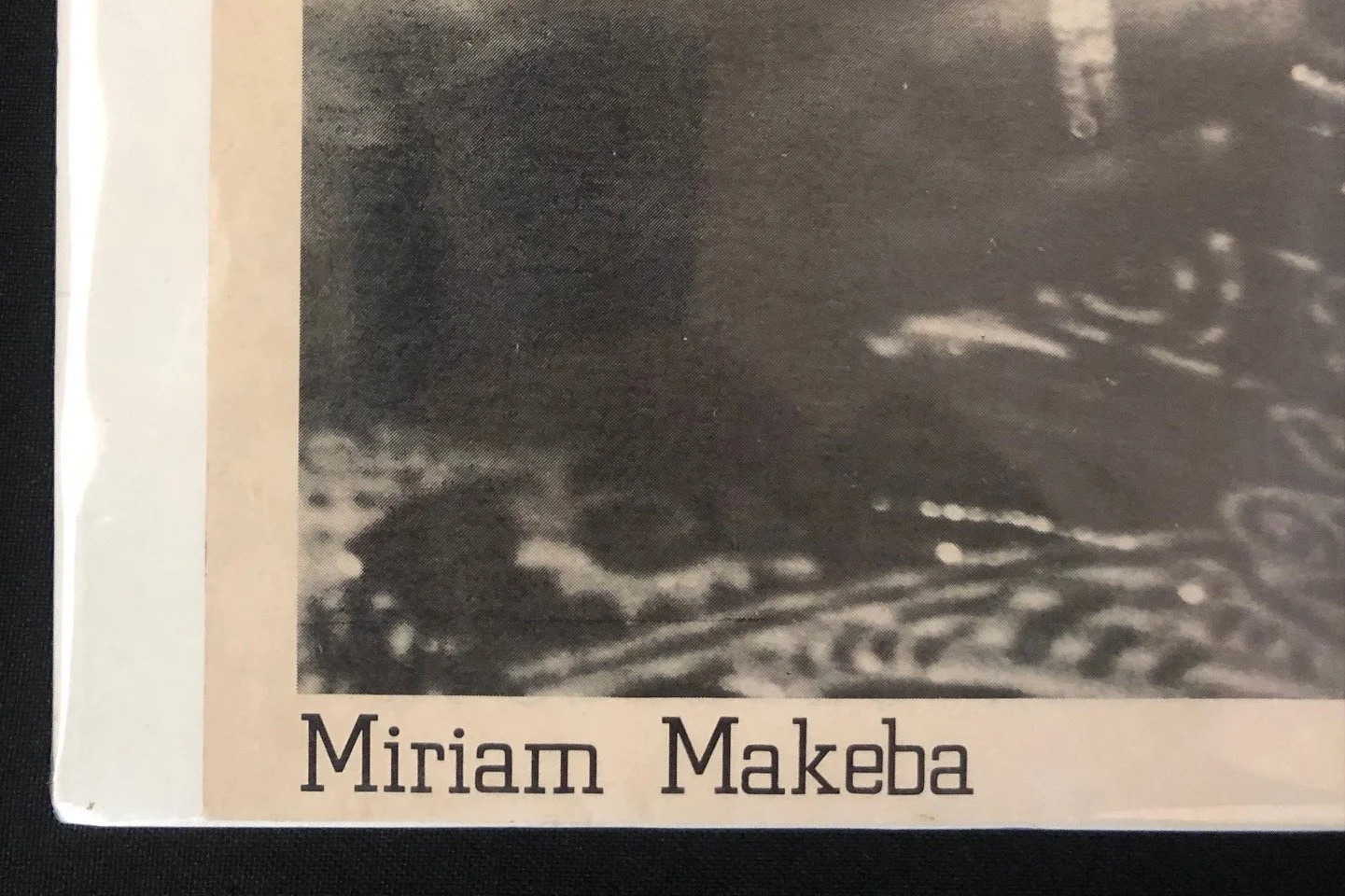
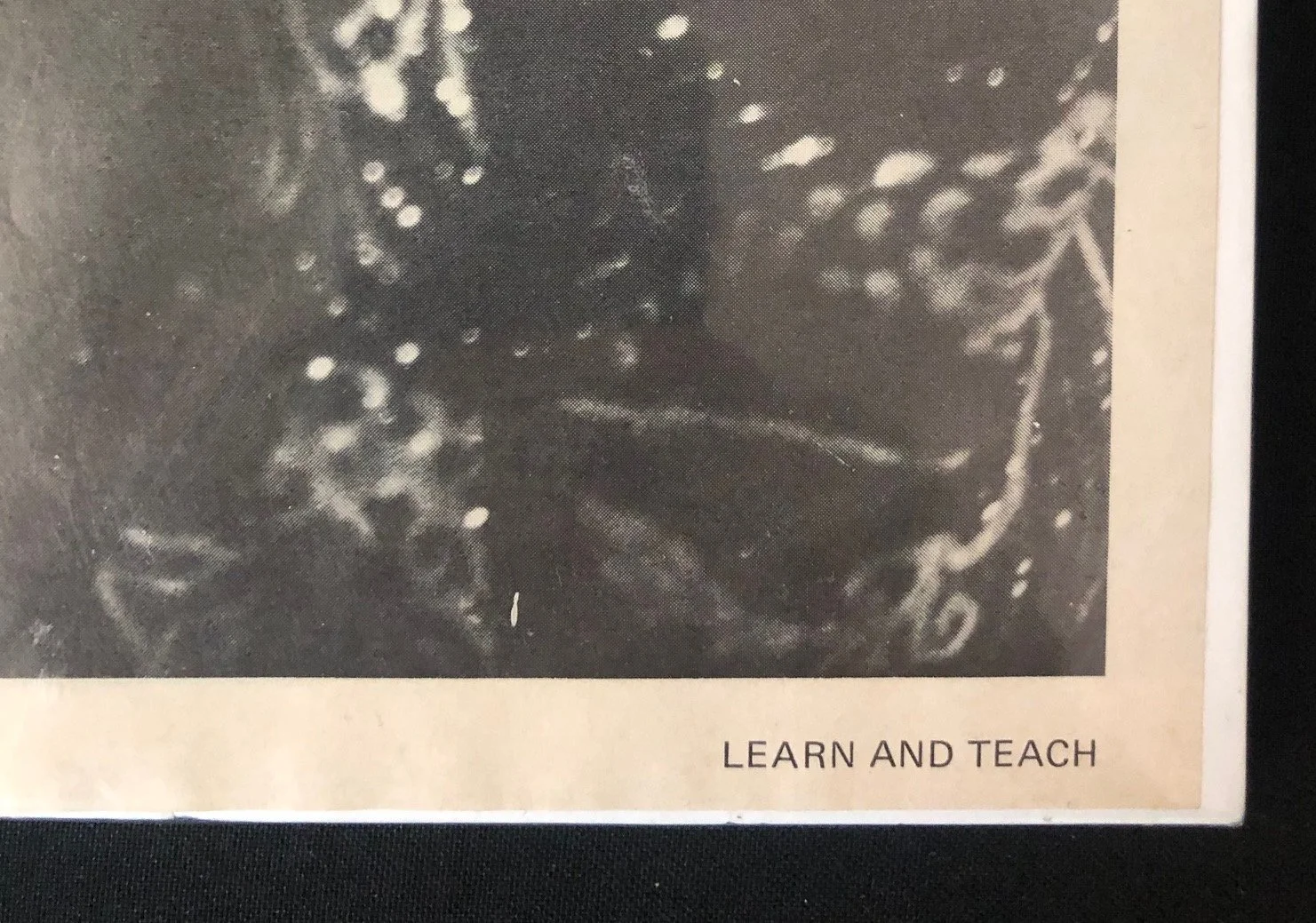
Poster of Miriam Makeba issued by Learn and Teach (c.1990)
Foldout insert issued by Learn and Teach magazine, a progressive, grassroots literacy and political publication in South Africa active during the late anti-apartheid era (1980s to early 1990s).
Learn and Teach relied on accessible English and bold, high-contrast imagery—often including centrefold posters of cultural and political icons—to promote adult literacy and anti-apartheid education.
Cultural Exiles in Print
During the height of the cultural boycott and apartheid state censorship, depictions and recordings of exiled artists like Miriam Makeba ("Mama Africa") were heavily restricted or banned from state media (SABC). Alternative media outlets like Learn and Teach provided a vital channel for South Africans to keep connected with exiled cultural leaders who were vocal anti-apartheid ambassadors abroad.
Visual Style
The high-contrast, black-and-white duotone print style with minimal typography at the bottom margin is characteristic of community-press posters produced in South Africa during that era, designed for affordability and mass dissemination.
Zenzile Miriam Makeba (4 March 1932 – 9 November 2008), globally known as "Mama Africa," was a legendary South African singer, songwriter, actress, and civil rights activist. She was one of the first African musicians to achieve major international success and played a pivotal role in bringing African music to a global audience while speaking out against apartheid.
Early Career and Rise to Fame
Born in Prospect Township near Johannesburg, Makeba began her music career singing in local groups during the 1950s, including The Manhattan Brothers and the all-female vocal group The Skylarks. She gained national acclaim starring in the 1959 jazz opera King Kong and appearing in the anti-apartheid documentary Come Back, Africa. The film attracted international attention, leading to invitations to perform abroad.
Exile and Activism
In 1960, while traveling overseas, Makeba learned that her mother had died. When she attempted to return home for the funeral, she discovered the South African government had revoked her passport and banned her from returning. She spent 31 years in exile.
Based initially in the United States and later in Guinea, Makeba used her global fame to speak out against apartheid. She addressed the United Nations General Assembly twice (in 1963 and 1975) to testify against the South African regime.
Mentored by Harry Belafonte, Makeba won a Grammy Award in 1966 for Best Folk Recording (An Evening with Belafonte/Makeba). In 1967, her single "Pata Pata" became a massive international hit, cementing her standing as a world music pioneer.
Return Home and Legacy
Following the release of Nelson Mandela and the dismantling of apartheid laws, Makeba returned to South Africa in December 1990.
Makeba continued performing and engaging in humanitarian causes worldwide until her death. She suffered a fatal heart attack shortly after performing at a concert in Castel Volturno, Italy, in November 2008.
295mm x 420mm
Slight age toning; small nick to the right side.
R1,250