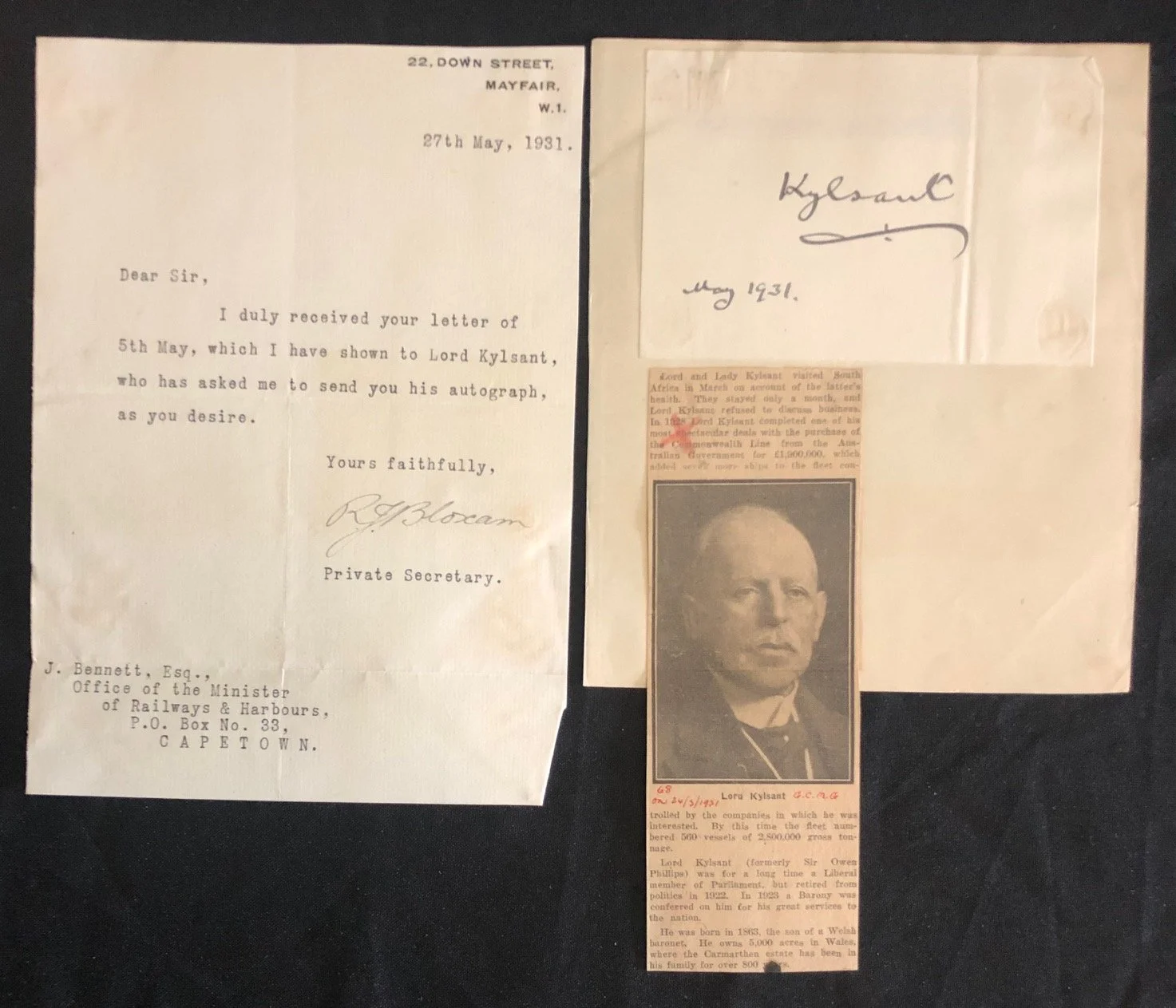
Autograph: Lord Kylsant, Head of the Royal Mail Steamship Company (1931)
This correspondence offers a fascinating, behind-the-scenes glimpse into one of the most high-profile white-collar corporate scandals in British history—sent right at its absolute tipping point.
The Calm Before the Corporate Storm
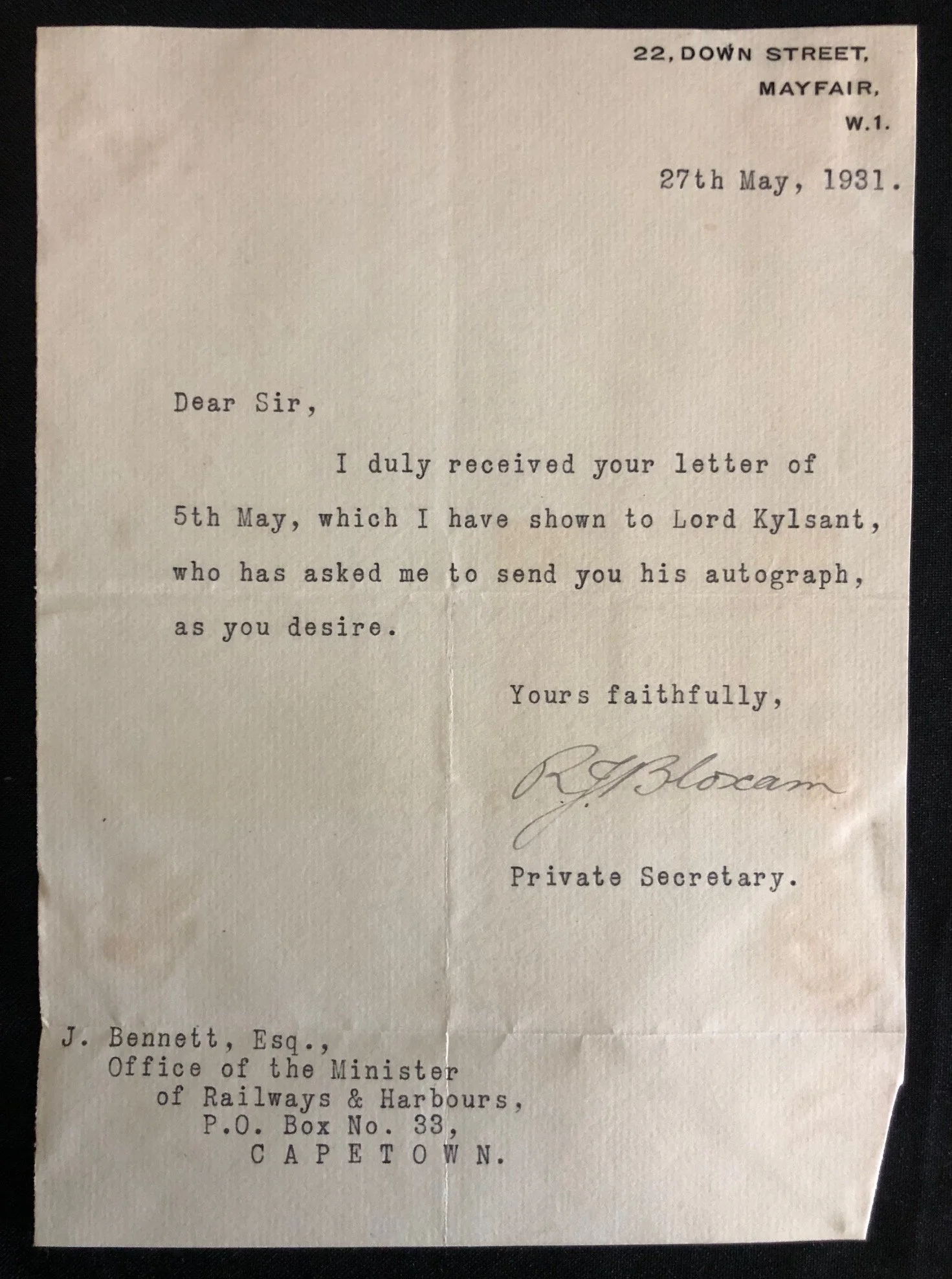
The letter is dated 27th May, 1931. It is written from a private residence in Mayfair by R.J. Bloxam, the private secretary to Owen Philipps, 1st Baron Kylsant. The secretary politely encloses Lord Kylsant’s autogrant.
To the unsuspecting recipient, J. Bennett in Cape Town’s Office of the Minister of Railways & Harbours, this was a routine piece of high-society correspondence from a legendary shipping magnate. In reality, the ground was opening up beneath Lord Kylsant's feet at this exact moment.
The Royal Mail Case of 1931
Lord Kylsant was the head of the Royal Mail Steam Packet Company, which by the late 1920s had become the largest shipping group in the world (having absorbed iconic lines like the White Star Line).
However, behind the scenes, the empire was a house of cards:
The Deception: Throughout the late 1920s, the company was hemorrhaging money from a severe downturn in global trade. To hide this and keep paying dividends to shareholders, Kylsant systematically drew from massive, undisclosed secret reserves built up during WWI, falsifying balance sheets to look profitable.
The Prospectus: In 1928, he issued a fraudulent prospectus to attract new investors, claiming the company earned a comfortable average profit, completely omitting that they were actually running a deficit of hundreds of thousands of pounds a year.
The Downfall
By 1929, the British Treasury forced an independent audit, exposing the multi-million-pound ruse.
Just weeks around the timeframe of this letter in May 1931, the official judicial hammer fell. Kylsant was arrested, and his trial at the Old Bailey took place in July 1931. While he was acquitted of some minor accounting charges, he was found guilty of publishing the fraudulent prospectus and sentenced to 12 months in prison at Wormwood Scrubs.
Historical Legacy
The "Royal Mail Case" completely revolutionized modern corporate law and British accounting practice. Before this trial, it was common for directors to argue that keeping "secret reserves" and obscurantist balance sheets was a valid strategy to protect public confidence. The judge famously ruled that a director’s duty was to tell the truth, not treat investors like sheep.
This piece of paper shows Kylsant's office calmly sending out standard public relations requests and autographs from a posh Mayfair address, mere weeks before the magnate would be permanently disgraced, his shipping empire liquidated, and his name forever tied to a landmark legal precedent.
Various sizes.
Signature laid down.
R1,000