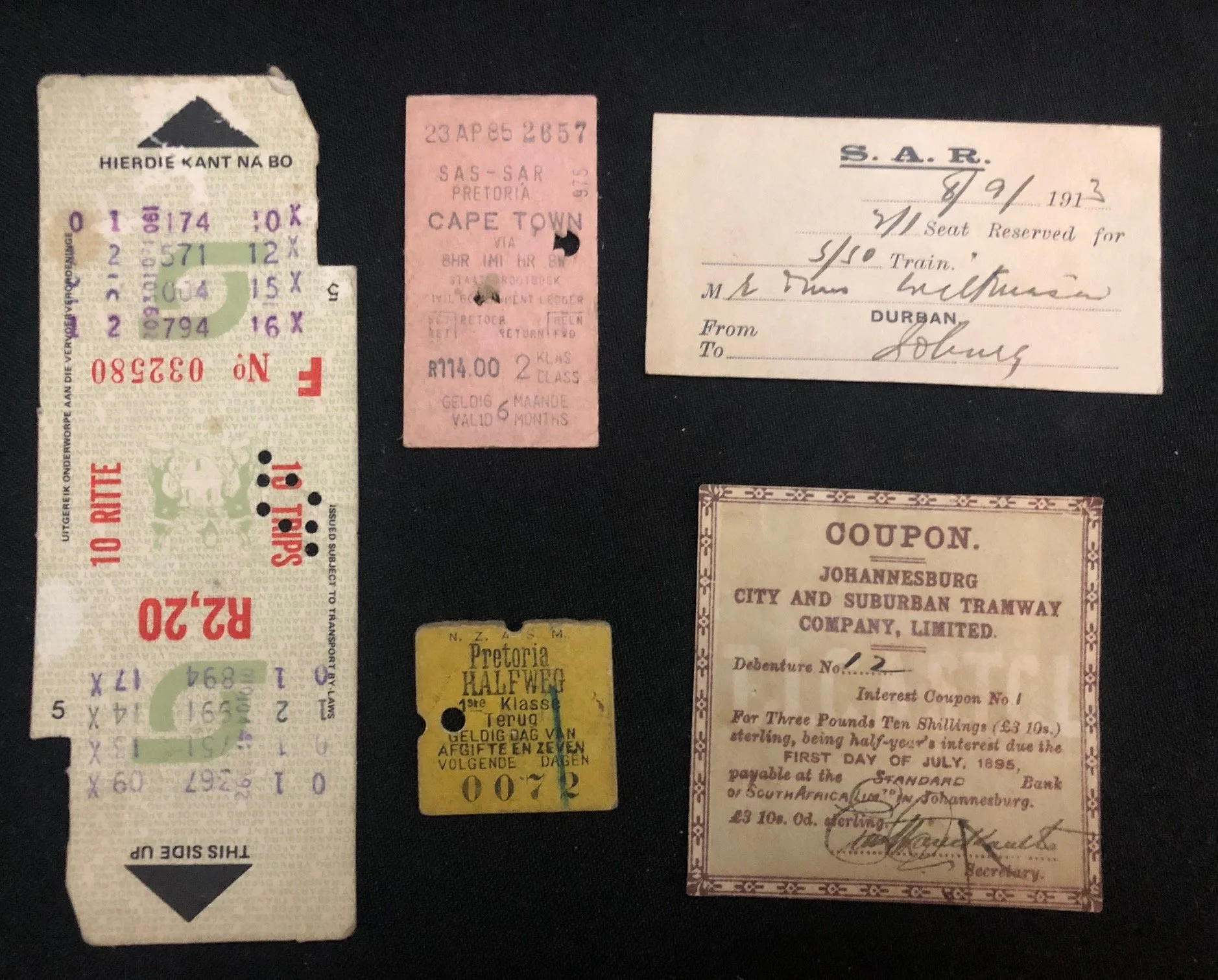
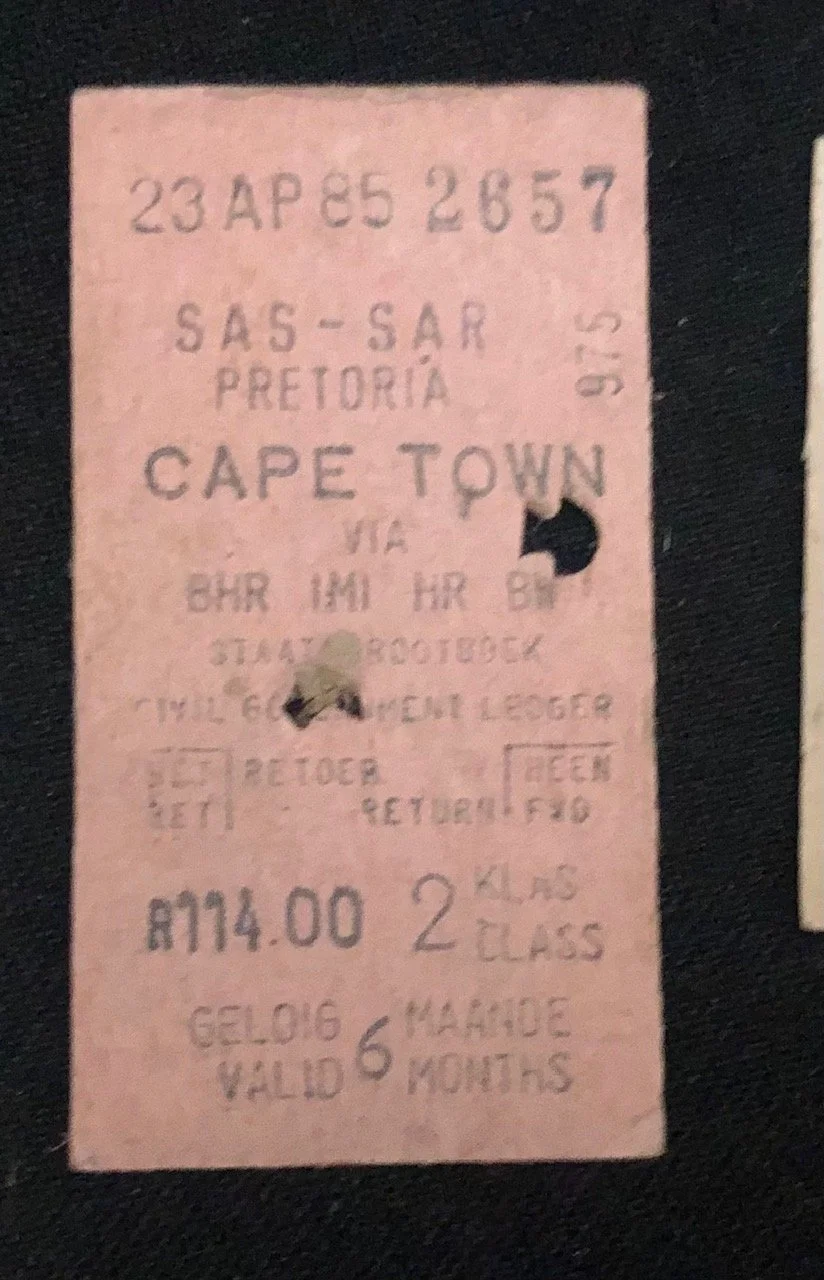
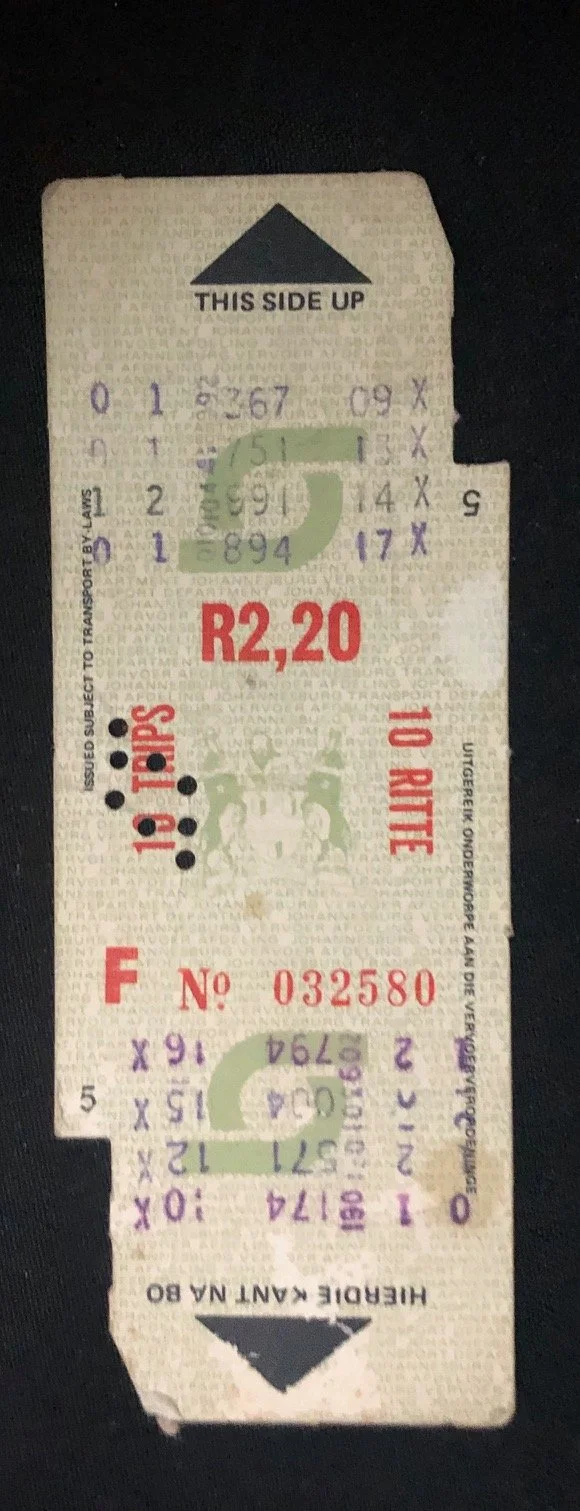
Collection of South African bus and train tickets (5)
This collection of bus and train tickets offers a fantastic snapshot of South African transit and economic history, stretching from the late 19th-century gold rush era to the late 20th century.
While the 1980s pink Edmondson ticket (SAS-SAR) and the multi-trip commuter card show the evolution of everyday travel, the most historically significant pieces here are the three older, rarer items.
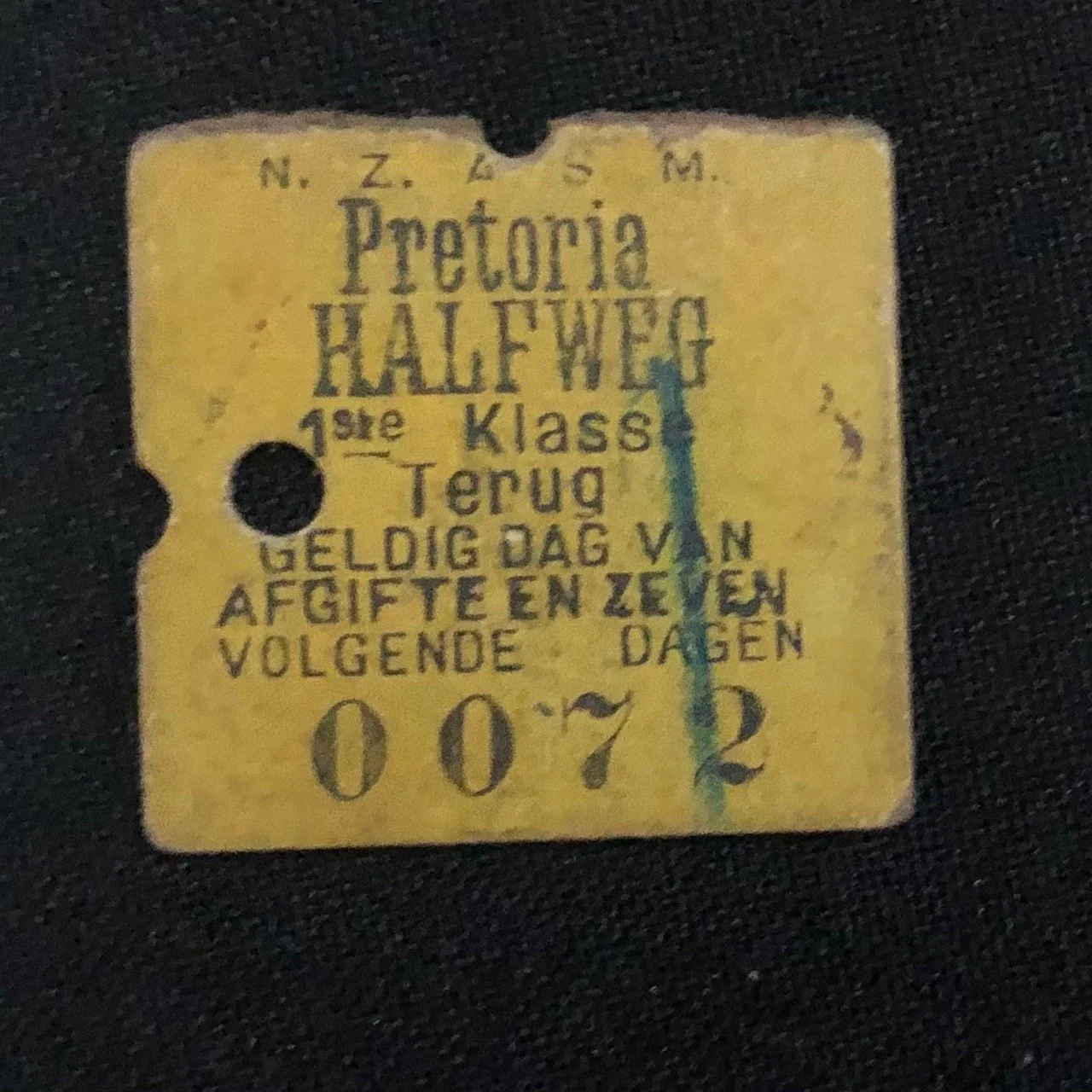
The ZASM Brass Ticket
The small, square yellow ticket stamped "N.Z.A.S.M. Pretoria Halfweg" (Pretoria Halfway) dates back to the South African Republic (Zuid-Afrikaansche Republiek or ZAR) before the Anglo-Boer War.
The Nederlandsche-Zuid-Afrikaansche Spoorweg-Maatschappij (NZASM) was the railway company crucial to President Paul Kruger’s strategy to keep the Transvaal independent of British rail monopolies by linking Pretoria directly to Lourenço Marques (Maputo).
"Halfweg" refers to the halfway point on the vital line connecting Pretoria and Johannesburg—originally a simple staging post for wagons that rapidly transformed into a key railway junction with the arrival of the iron horse in the 1890s. Metal tokens like this were often used for specific short-distance routes or staff privileges during the early days of the line.
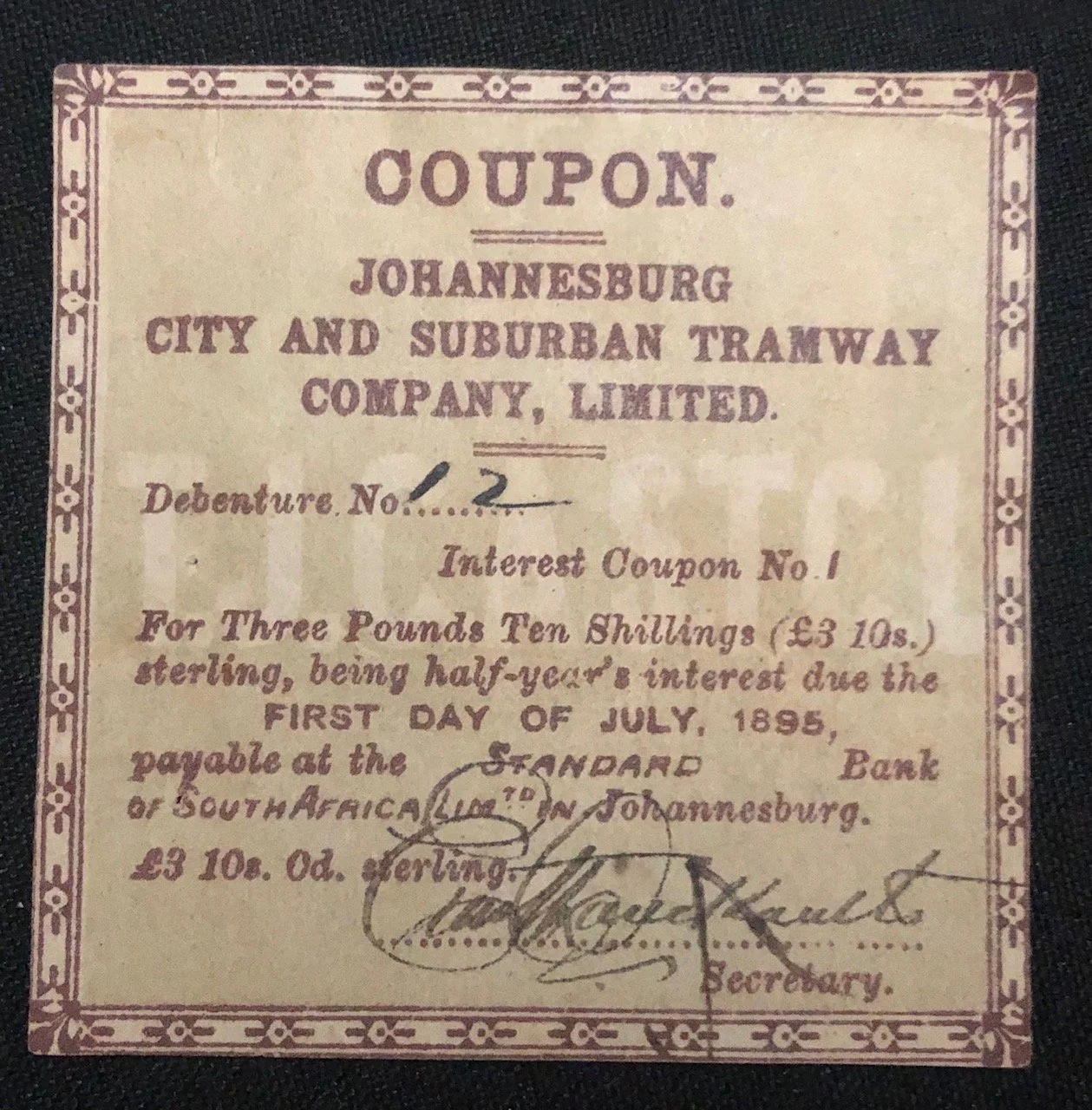
The 1895 Tramway Debenture Coupon
This Johannesburg City and Suburban Tramway Company, Limited coupon is an incredible relic of the Witwatersrand Gold Rush.
Pre-Electric Era: In July 1895, when this interest coupon was payable at the Standard Bank of South Africa, Johannesburg didn’t have electric trams yet. This company operated horse-drawn trams.
The Gold Rush Boom: The company was established in 1889, just three years after gold was discovered on the Rand. This coupon represents the frantic influx of global capital into Johannesburg, where infrastructure companies issued debentures to fund the rapid expansion of a dusty mining camp into a major financial hub.
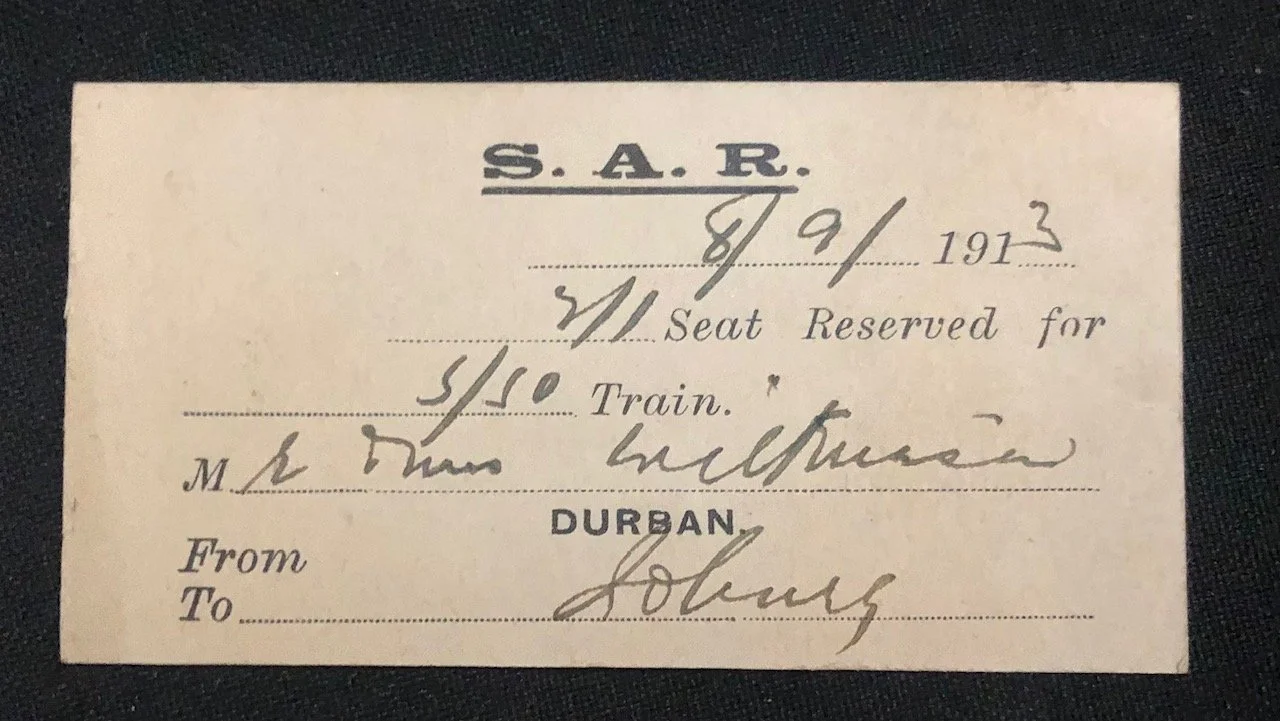
The 1913 S.A.R. Seat Reservation
This handwritten seat reservation card from September 8, 1913, captures a definitive moment in the unification of South Africa’s infrastructure.
A Brand New Network: The South African Railways (S.A.R.) or Suid-Afrikaanse Spoorweë (SAS) was formed in 1910 following the unification of the four colonies into the Union of South Africa.
Hand-marked for a passenger traveling from Durban to "Joburg", this card comes from the infancy of a unified national rail network. Prior to 1910, the Natal Government Railways and the Central South African Railways operated as entirely separate, often competitive entities. By 1913, they were fully integrated, moving passengers and goods smoothly over the dramatic topography from the coast to the Highveld. There was also the 1913 strike.
Various sizes
All used.
R1,000