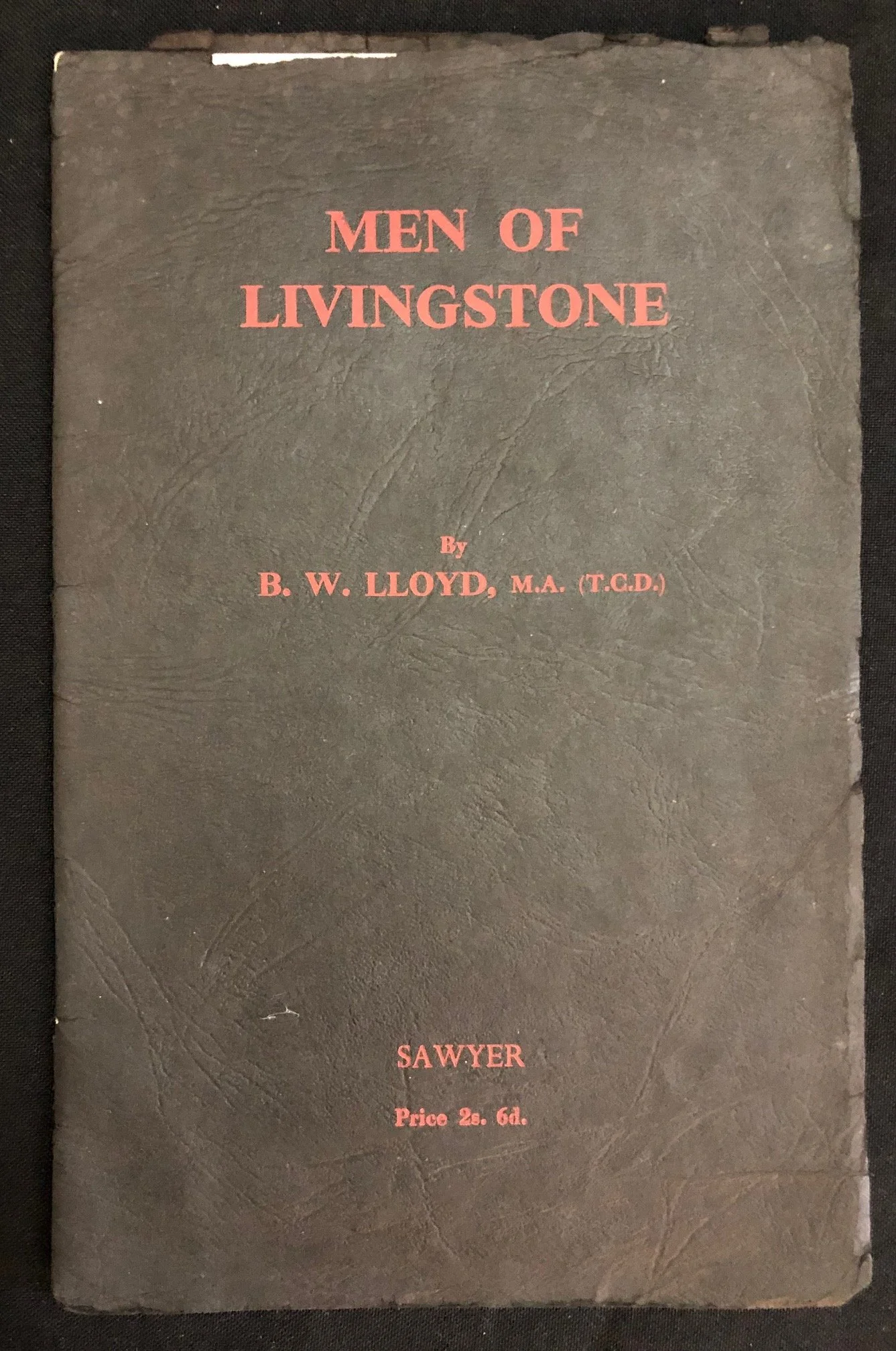
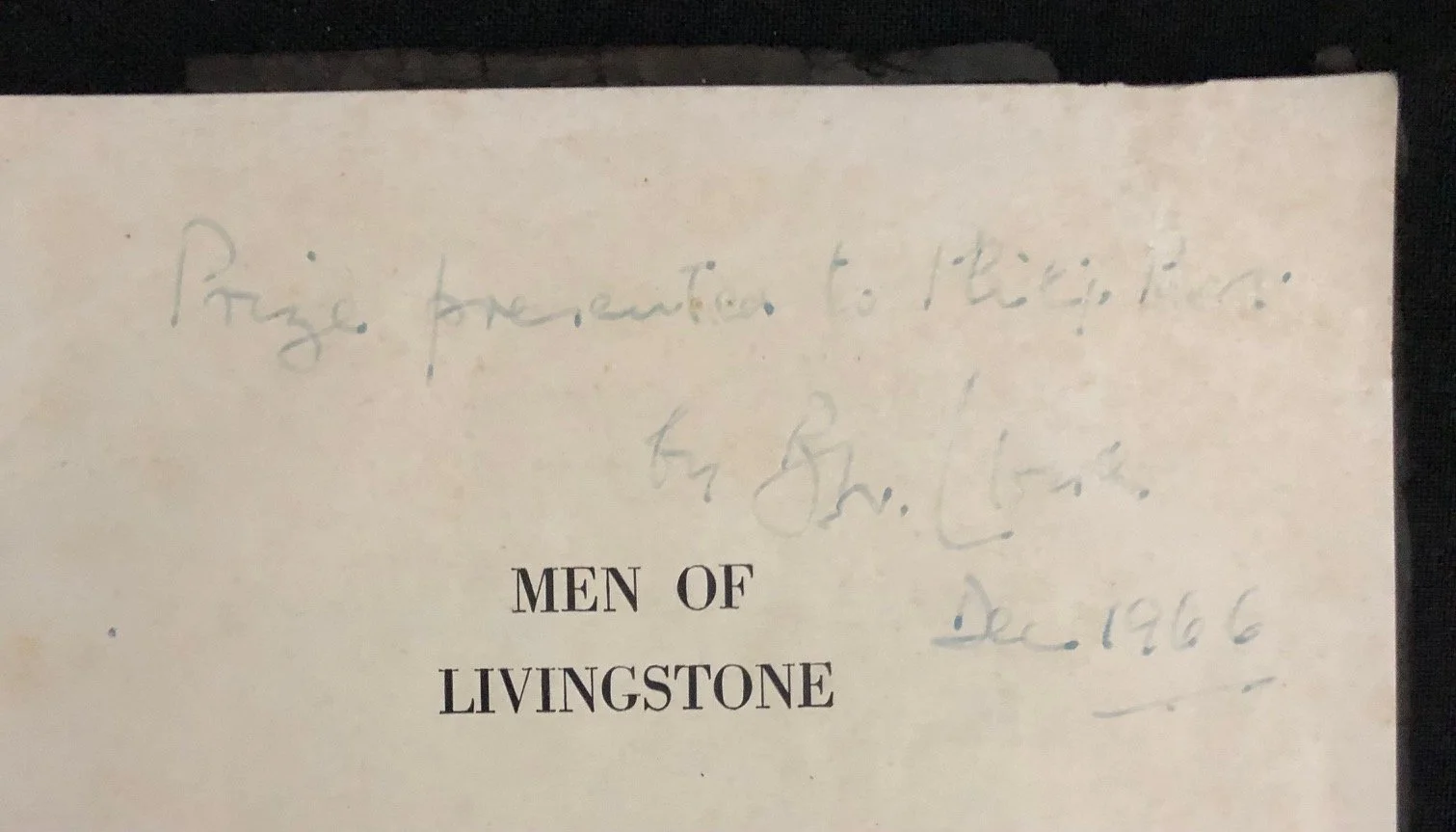
Men of Livingstone by B.W. Lloyd, inscribed (1955)
A specialized biographical work that shifts the focus from the famous explorer David Livingstone to the often-overlooked men who accompanied him on his African travels.
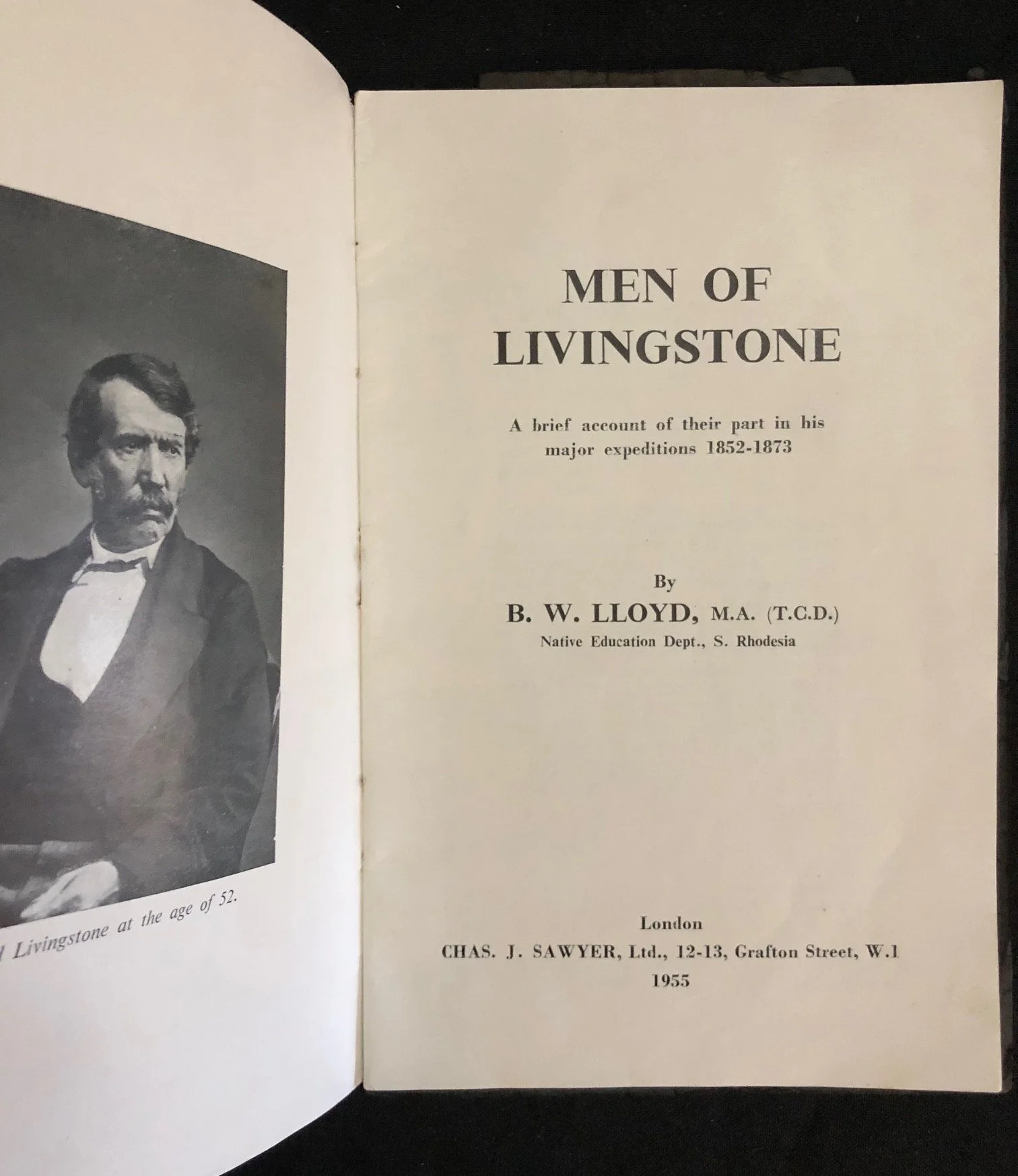
By B.W. Lloyd, M.A. (T.C.D.). At the time of publication, Lloyd was associated with the Native Education Department in Southern Rhodesia (modern-day Zimbabwe).
Published in 1955 by by Chas. J. Sawyer, Ltd., London. Sawyer was a well-known London firm specializing in rare books and high-quality bibliographical publications.
A "brief account" of the African companions, guides, and porters who were essential to Livingstone’s major expeditions between 1852 and 1873.
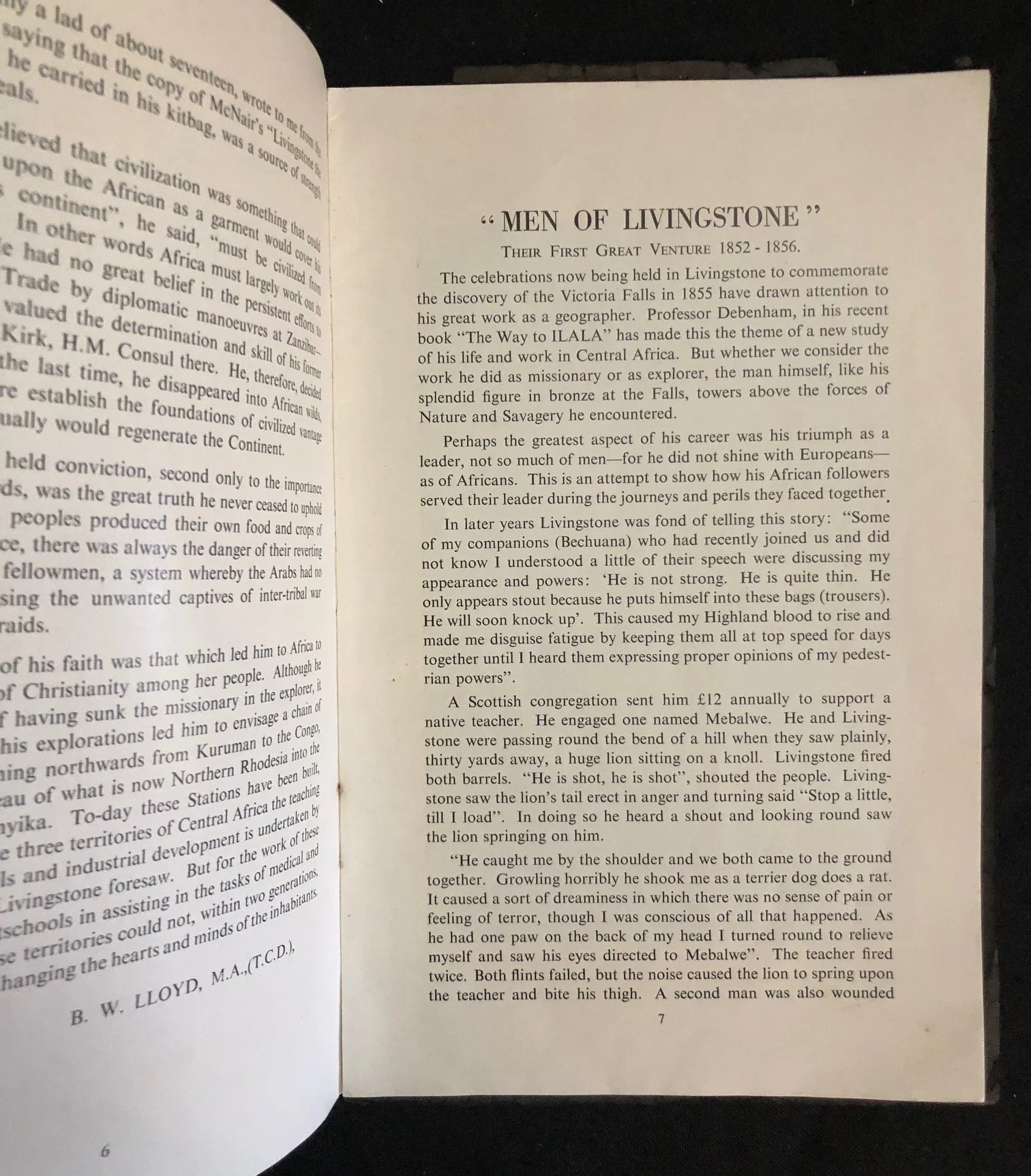
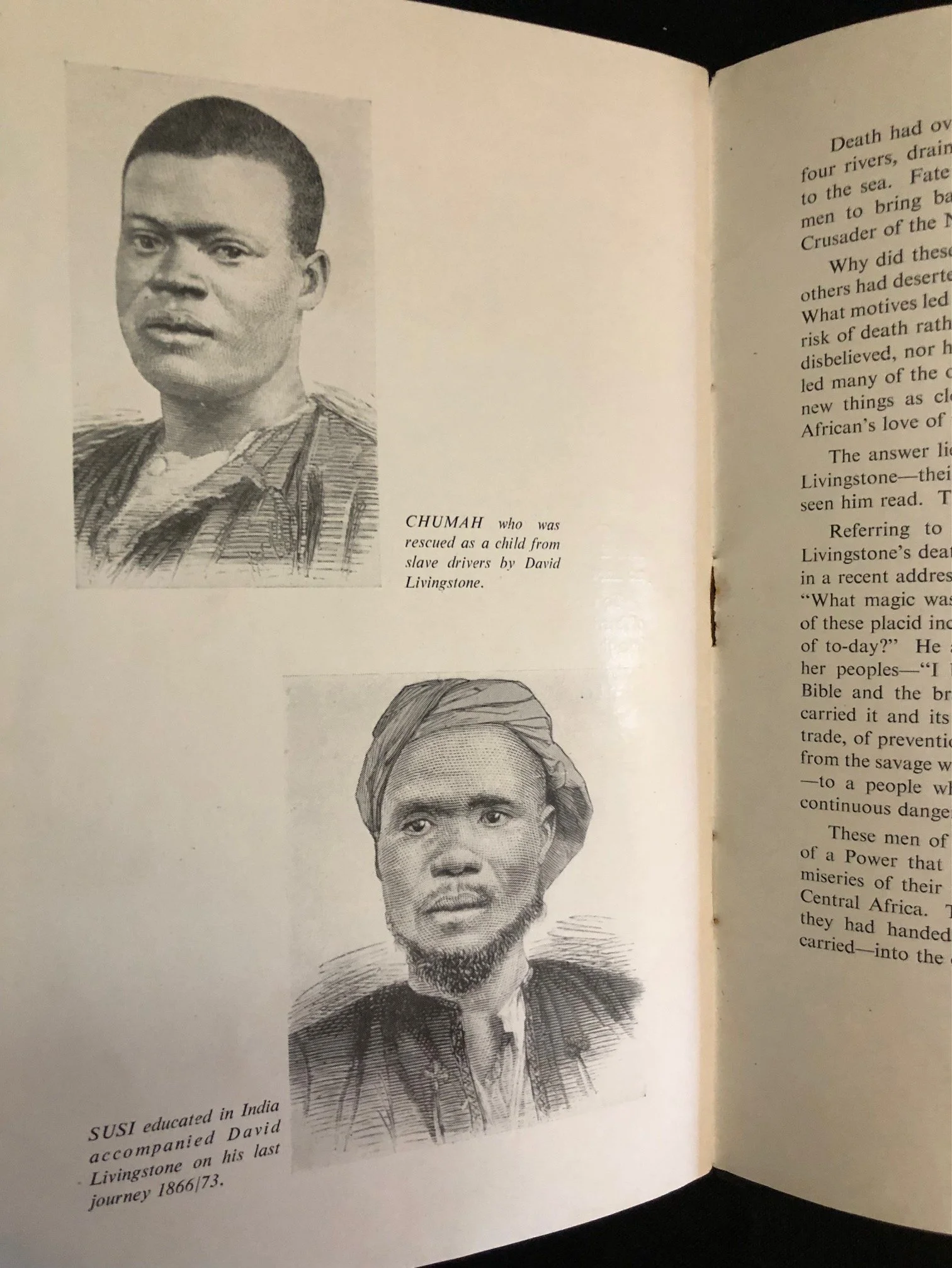
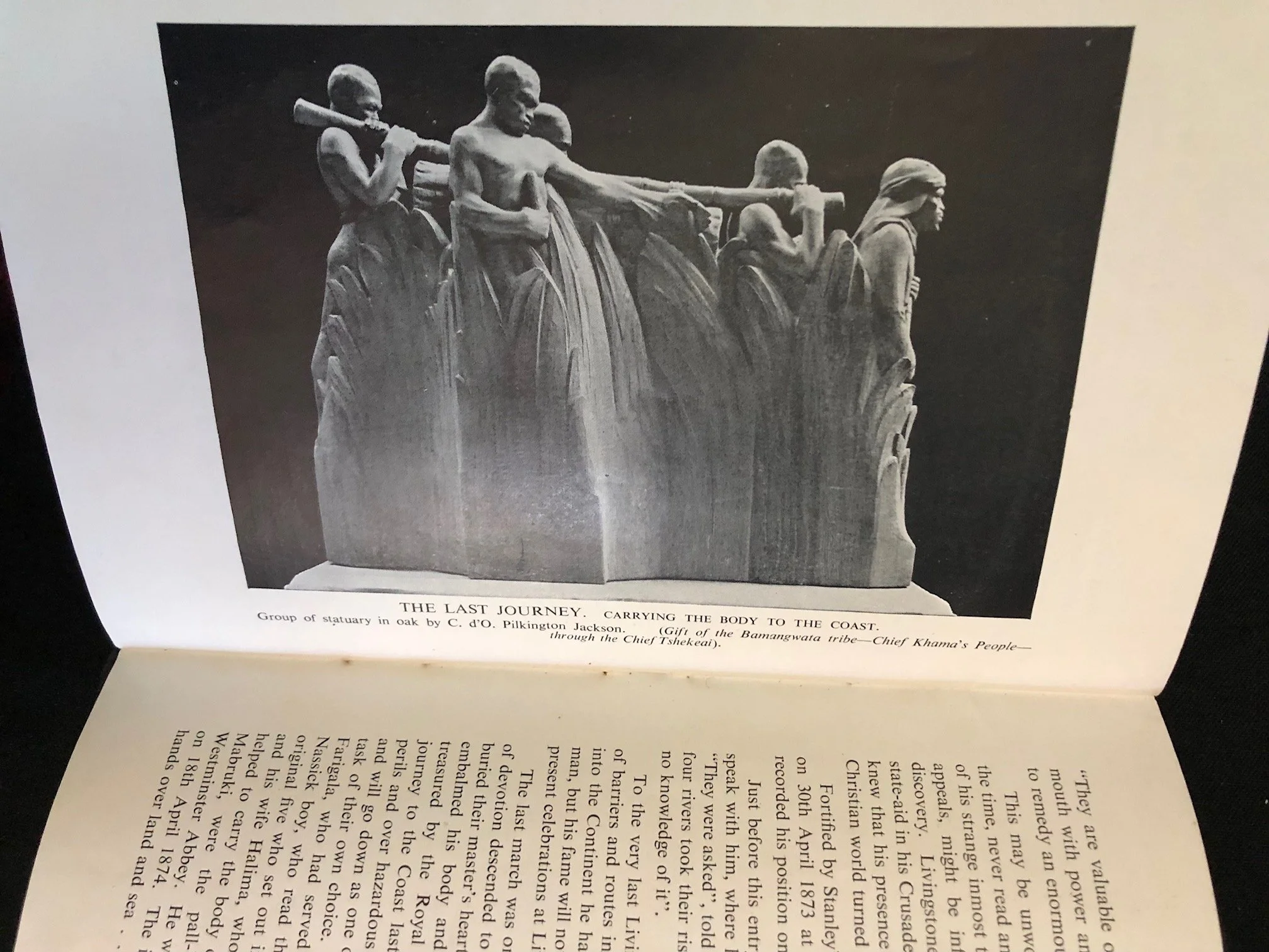
While Victorian accounts often centered solely on the "heroic" European explorer, this 1950s work is notable for documenting the names and roles of the African men who sustained the expeditions. Most famously, it covers figures like Chuma and Susi, who famously carried Livingstone’s body and journals over 1,000 miles from Old Chitambo (in modern Zambia) to the coast so they could be returned to England.
Lloyd’s position in the Native Education Department of Southern Rhodesia suggests he had access to local oral histories or colonial archives that might not have been utilized by earlier British biographers. The 1950s marked a period of growing academic interest in "re-centering" African agency in colonial history.
The Frontispiece shows a classic portrait of David Livingstone at the age of 52. This photograph was taken around 1865 by Thomas Annan, just before Livingstone set out on his final journey to find the source of the Nile.
Chas. J. Sawyer was not a mass-market publisher. Publications from this house were often produced for collectors, historians, and members of bibliographical societies. This makes the book a desirable piece of Rhodesiana and Africana, particularly for those interested in the logistics and human element of 19th-century exploration.
The dates 1852–1873 span Livingstone’s most significant periods:
• The Trans-African journey (1852–1856).
• The Zambezi Expedition (1858–1864).
• The final search for the Nile sources, ending with his death in 1873.
For a researcher or collector, this book is important because it serves as a bridge between the hagiographic Victorian "Livingstone myth" and more modern, inclusive historical perspectives. It acknowledges that Livingstone’s success—and the survival of his records—depended entirely on the loyalty and expertise of his "Men."
Chipped at the edges.
145mm x 225mm
R750