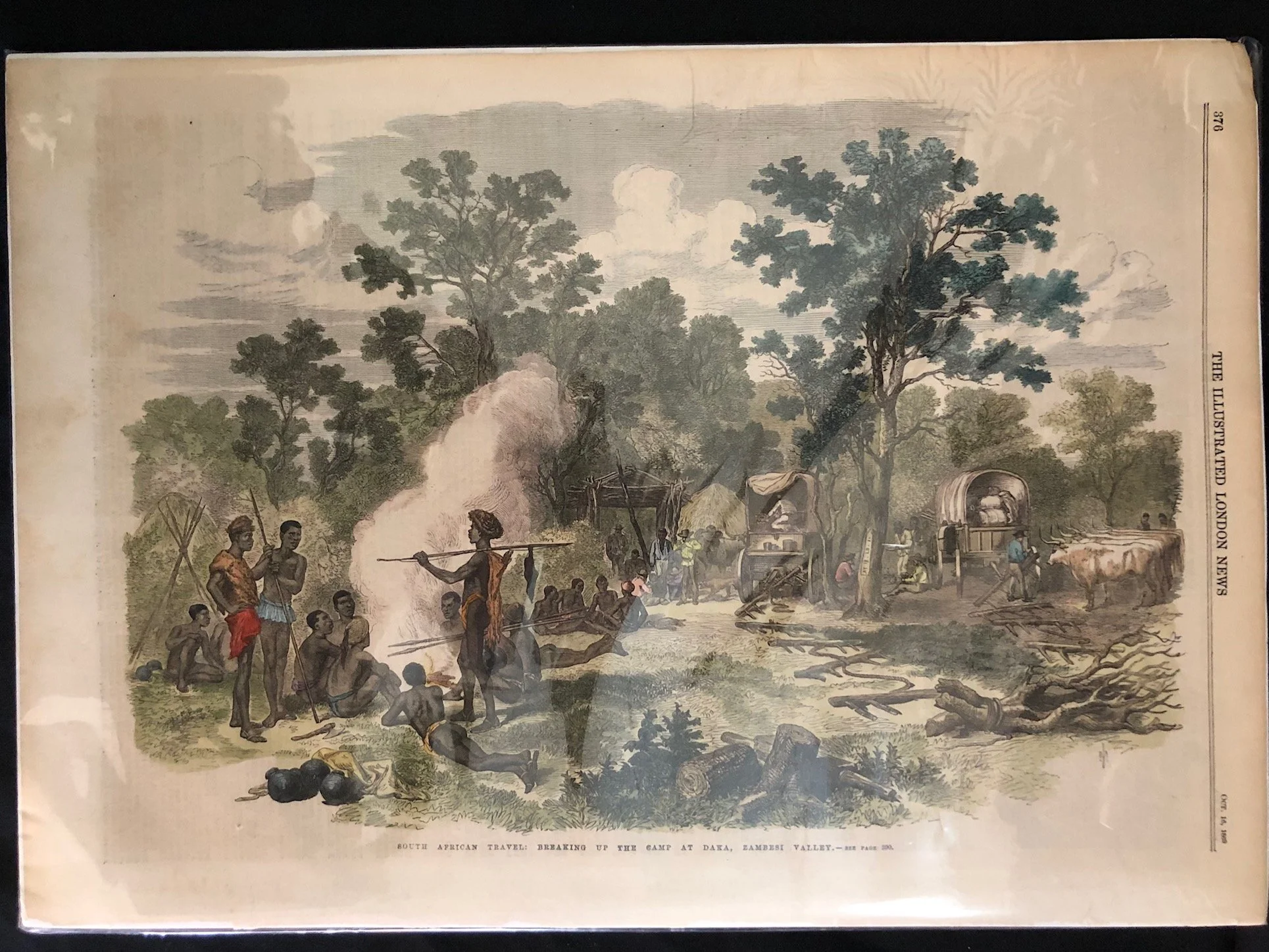
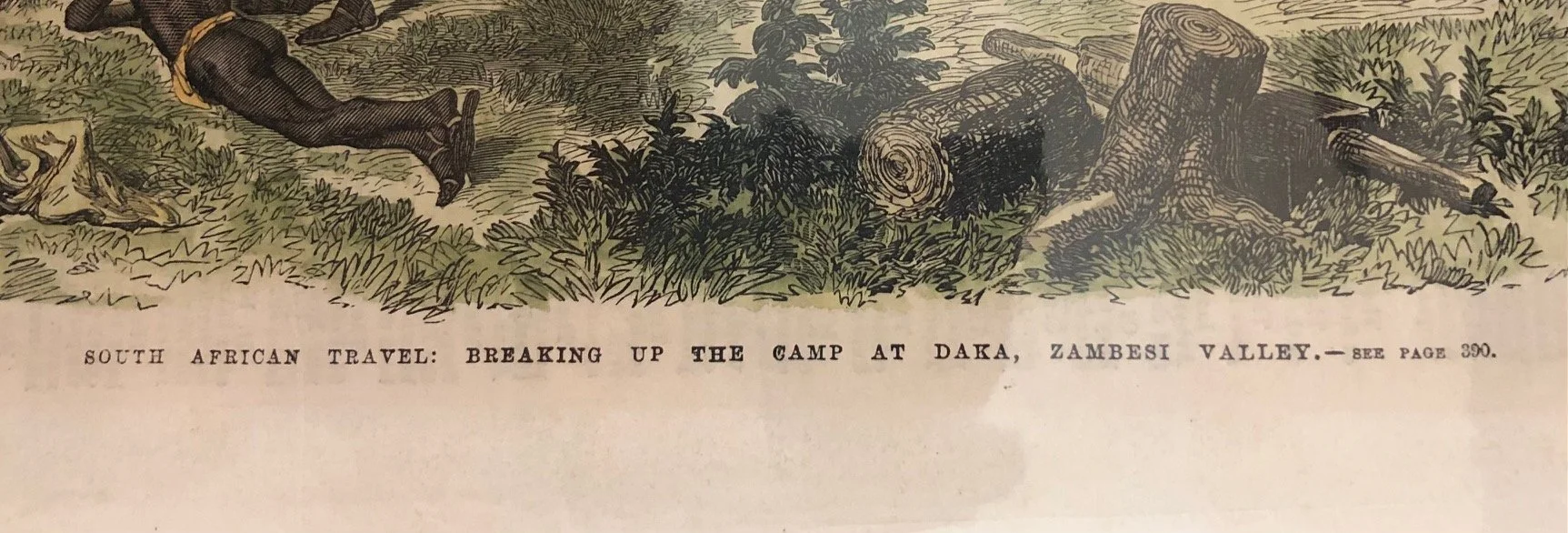
The Deka River and Valley, located in (modern-day) Zimbabwe, After Thomas Baines (1869)
Hand coloured woodcut from The Illustrated London News.
"Daka" refers to the Deka River and valley, located in modern-day western Zimbabwe, near the town of Hwange. In the 19th century, this area was a crucial, well-known staging post for European explorers, hunters, and traders heading toward the Zambezi River and Victoria Falls (which David Livingstone had famously documented for the Western world just over a decade earlier in 1855).
Because the region closer to the Zambezi was heavily infested with the tsetse fly—which carried nagana, a disease fatal to cattle and horses—travelers using ox-wagons would often establish a base camp at Daka. They would leave their wagons and livestock safely behind in the higher, healthier veld and proceed to the Zambezi on foot with local guides.
While The Illustrated London News used its own staff wood-engravers in London to cut these blocks, they relied heavily on sketches sent back by artists on the ground.
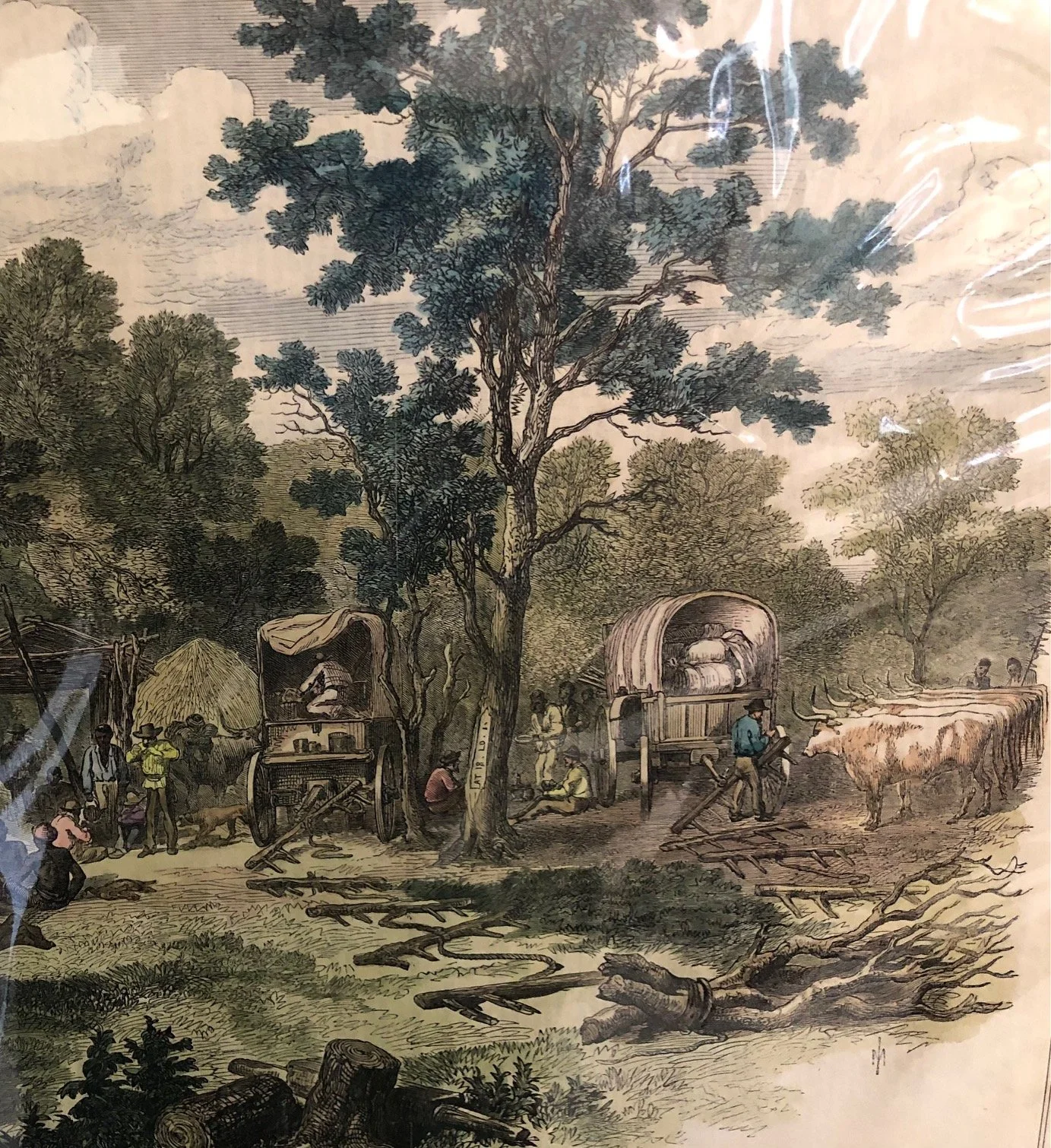
During the late 1860s, the famous English explorer and artist Thomas Baines was actively prospecting and traveling through this exact region (the Matabeleland and Zambezi goldfields expedition). Baines frequently supplied highly detailed sketches and accompanying journal notes to The Illustrated London News. The layout of this scene—painstakingly detailing the architecture of the ox-wagons, the campfires, the specific dress of the local inhabitants, and the surrounding flora—is classic Baines.
The engraving highlights the massive logistical footprint of a 19th-century interior expedition:
Featuring local guides, hunters, or porters gathered around a fire, holding long spears and walking staffs. The engraving attempts to capture distinct hairstyles and traditional attire, which was a point of immense curiosity for Victorian readers.
The classic South African ox-wagon (kakebeenwa style or similar transport wagons), packed tightly with supplies, with a span of oxen resting nearby is also featured. Billowing smoke bridges the two worlds of the expedition, showing a bustling camp in transition as it is "broken up" for the next leg of the journey.
When this page was printed in October 1869, The Illustrated London News was a titan of global journalism. It pioneered the use of high-quality woodblock engravings to bring visual news from the edges of the British Empire directly to London drawing rooms.
The magazine itself was printed strictly in black and white. This specific print has been hand-colored after the fact—a common practice among 19th-century print sellers, collectors, and hobbyists who would use watercolors to breathe life into the monochromatic press illustrations. The subtle earthy tones, the green of the bushveld canopy, and the gentle blues of the sky are characteristic of period hand-tinting, making this specific leaf a unique artifact combining mass media production with individual artistry.
Page size: 405mm x 285mm
R2,000