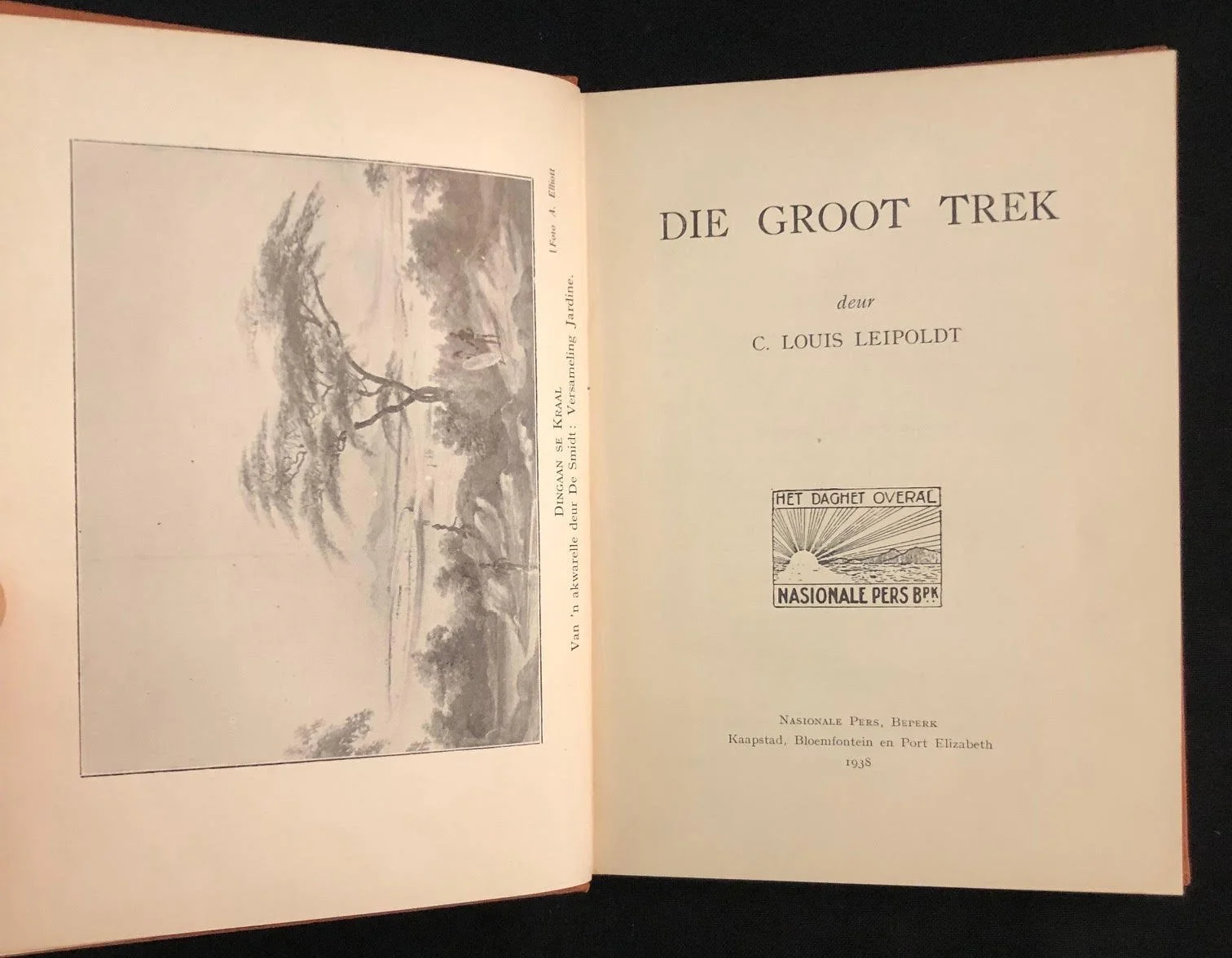
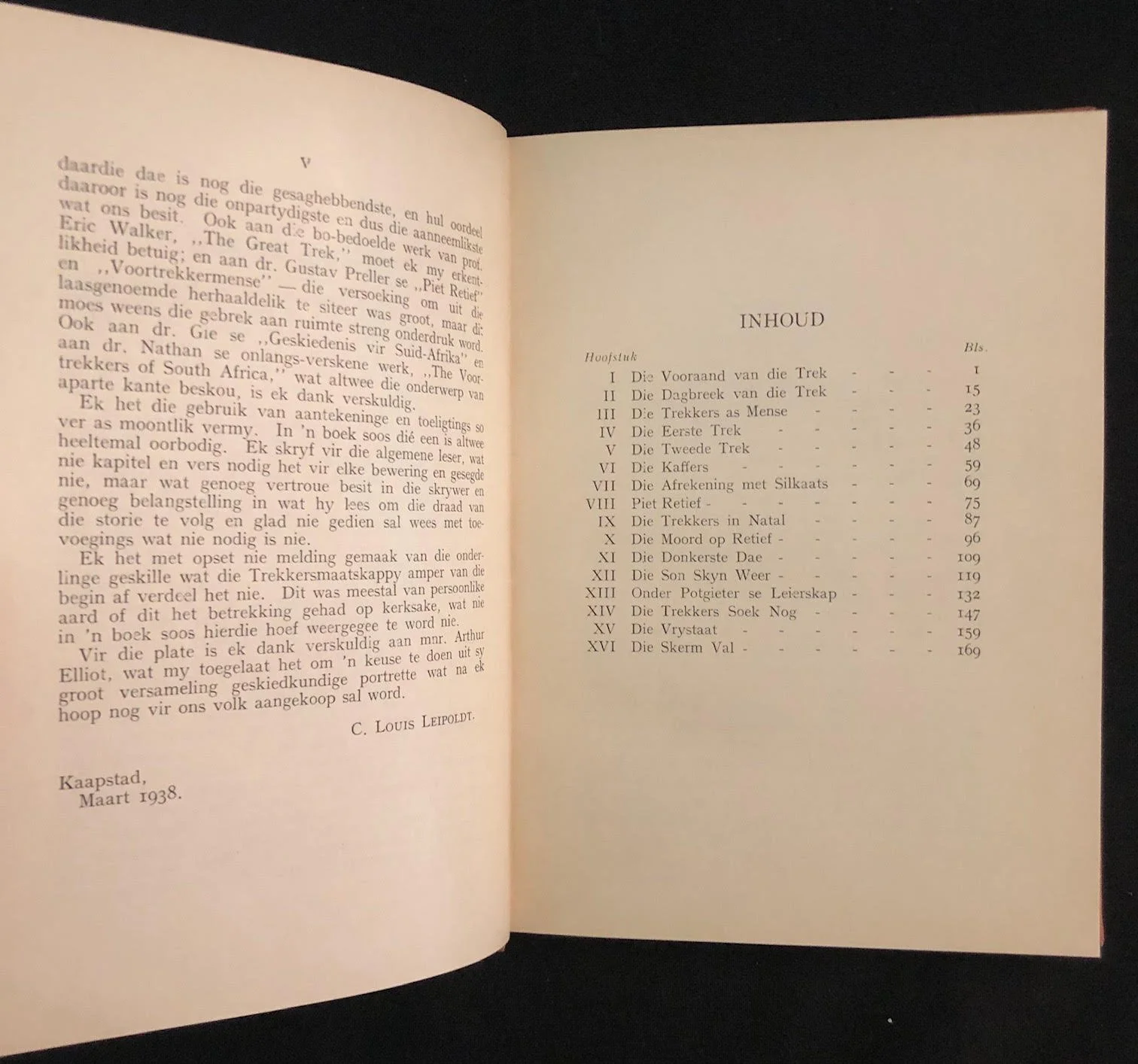
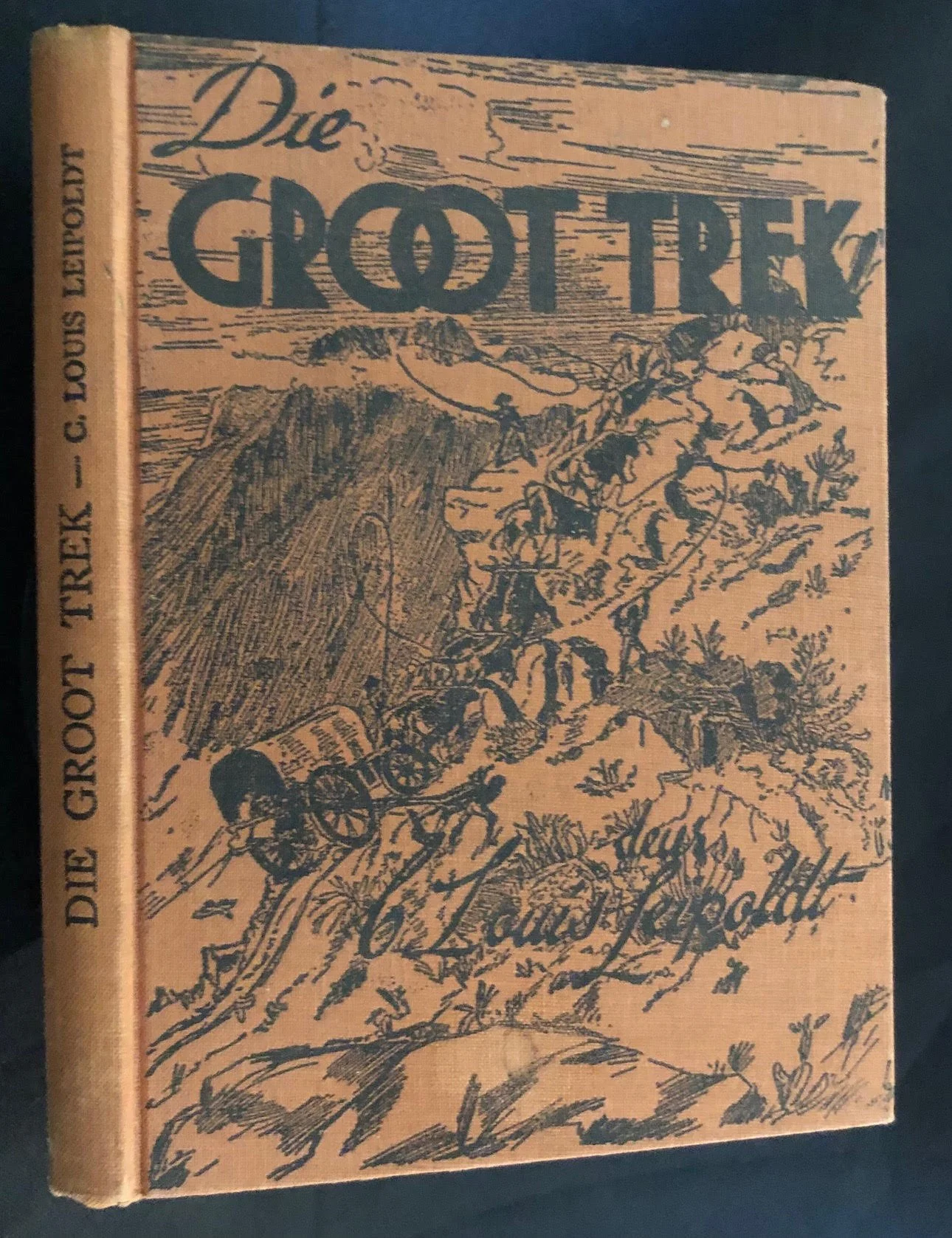
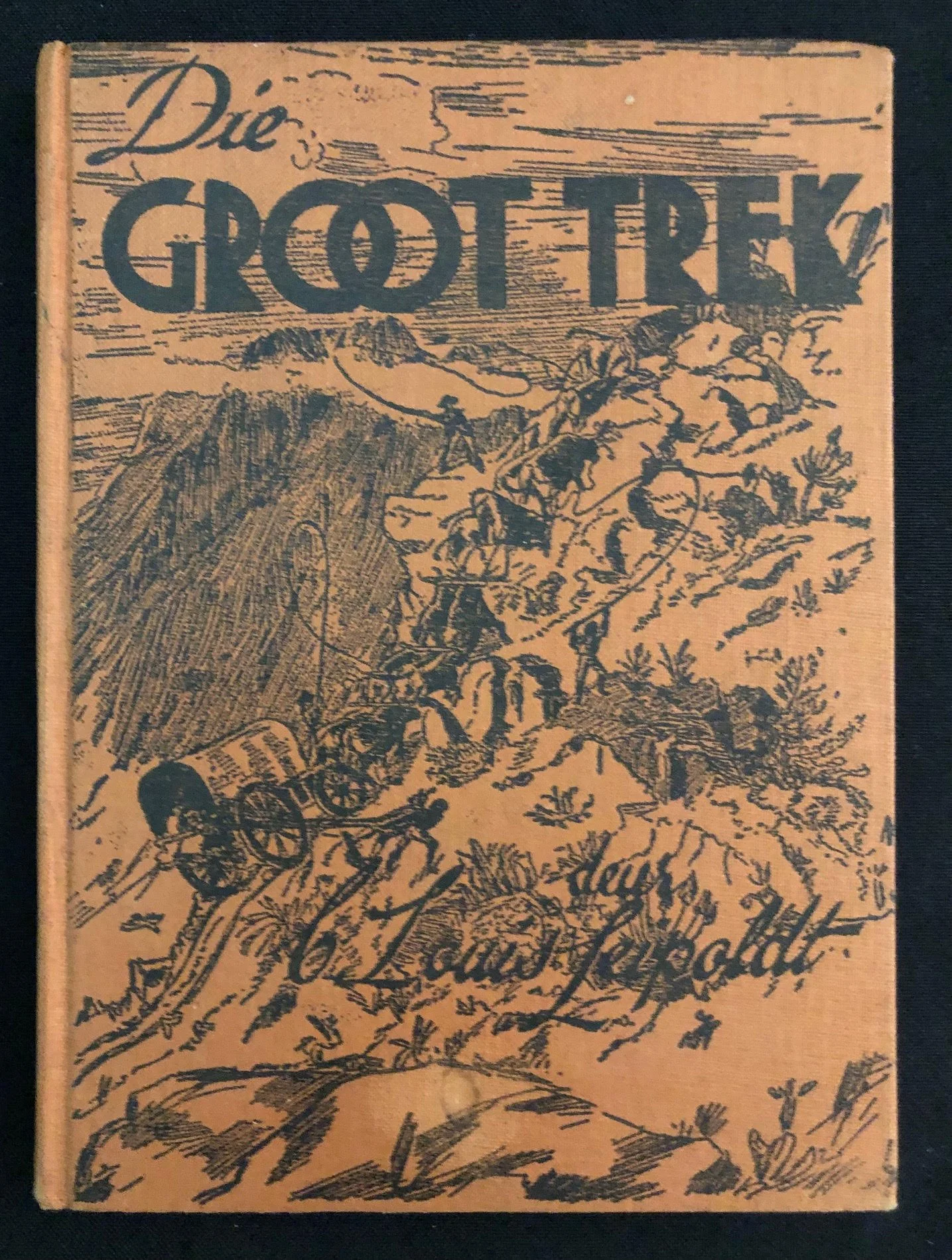
1938 first edition of Die Groot Trek by C. Louis Leipoldt.
This 1938 first edition of Die Groot Trek by C. Louis Leipoldt sits right at the intersection of major South African literary history, Afrikaner nationalism, and a quietly subversive cultural perspective.
1. The Centenary Context (1938)
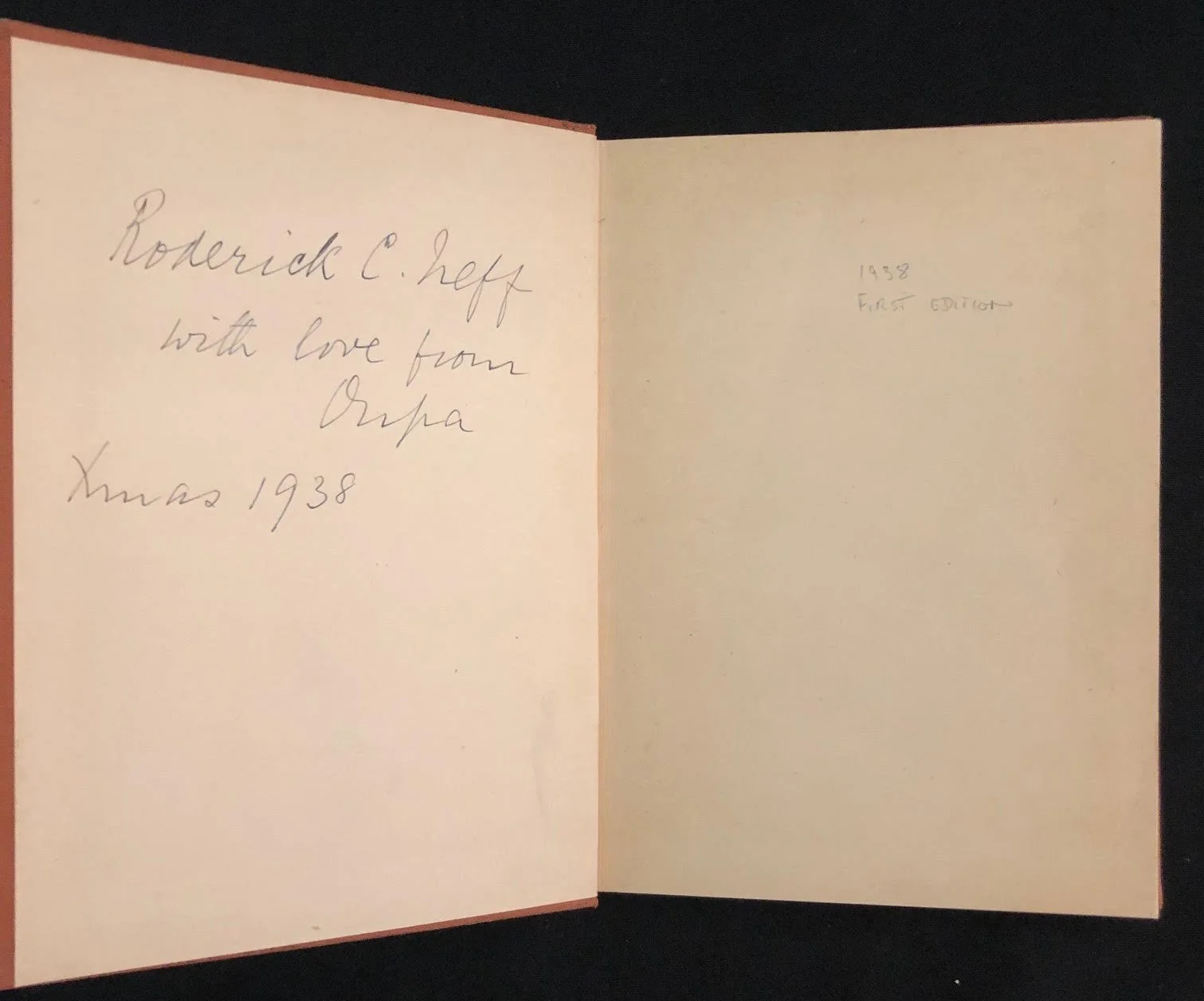
Published by Nasionale Pers in 1938, this book was timed specifically for the Eeufees (Centenary) of the Great Trek—the massive symbolic ox-wagon re-enactment (Simboliese Ossewatrek) that swept across South Africa and crystallized modern Afrikaner nationalism. Giving an Afrikaans history of the Trek to a grandchild ("Roderick C. Neff, with love from Oupa, Xmas 1938") was practically a cultural rite of passage that Christmas.
2. The Subversive Author
While Nasionale Pers was the publishing powerhouse of Afrikaner nationalism, C. Louis Leipoldt was anything but a conventional nationalist. A medical doctor, world traveler, gourmet, and one of the greatest Afrikaans poets, Leipoldt was fiercely anti-imperialist—having worked as a war correspondent during the South African War (1899–1902), where his exposure of British concentration camp atrocities caused an international outcry—yet he was deeply skeptical of narrow, chauvinistic Afrikaner nationalism. In Die Groot Trek, Leipoldt deliberately stripped away the romanticized, quasi-religious myth-making surrounding the Voortrekkers, treating the migration instead as a pragmatic, economically and politically driven historical event rather than a divine exodus.
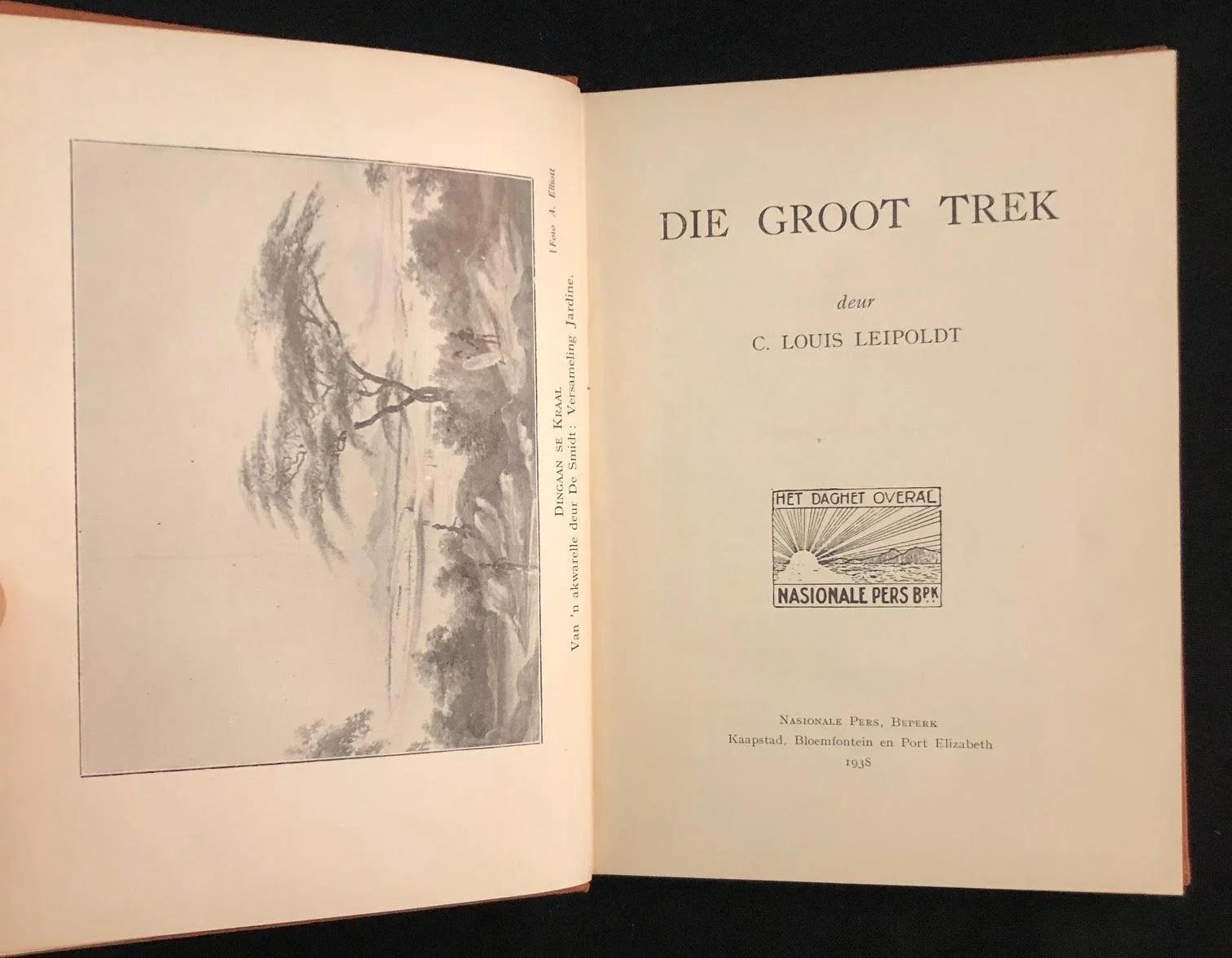
3. A Remarkable Visual Provenance on the Frontispiece
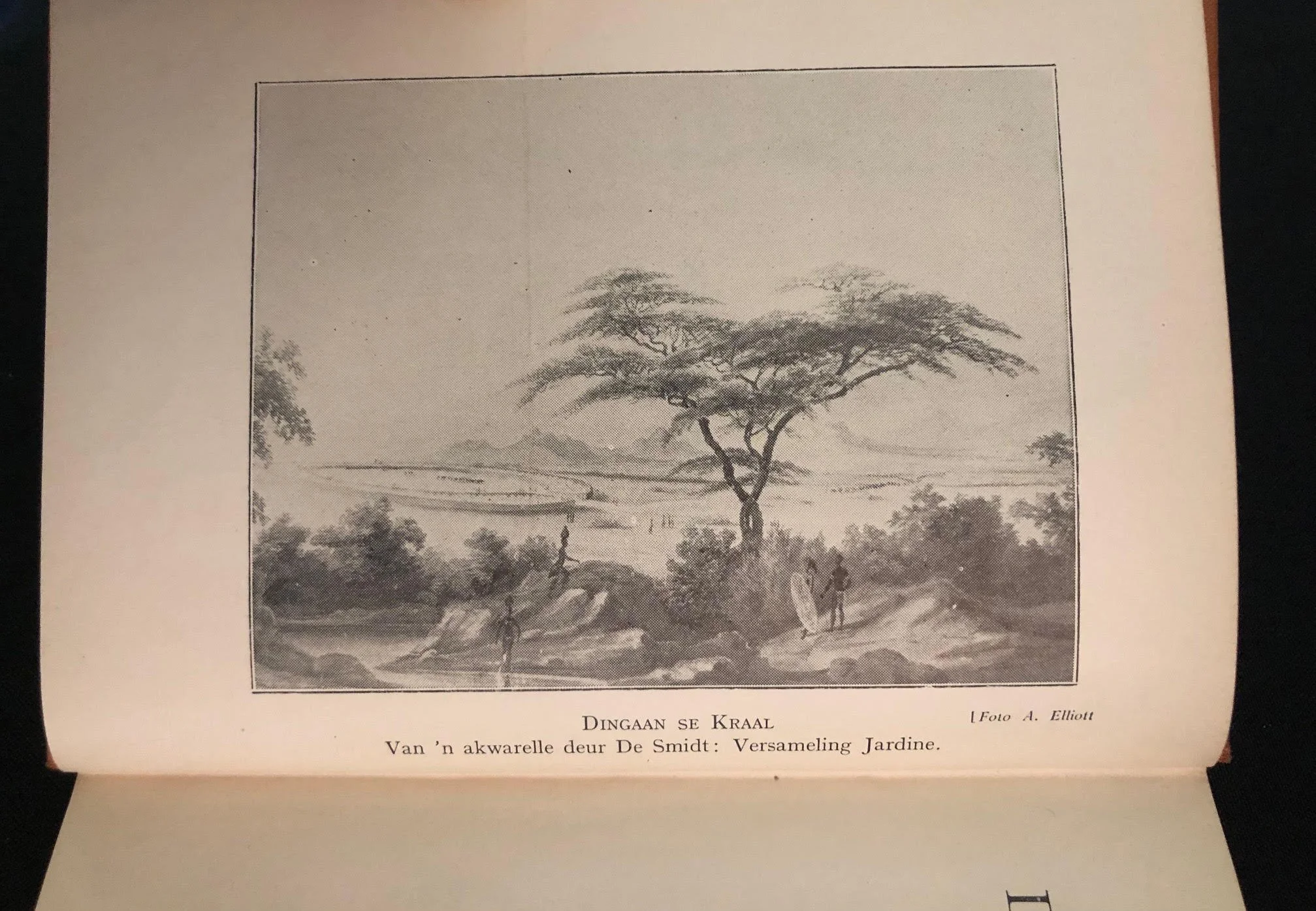
The frontispiece opposite the title page carries three distinct layers of Cape cultural history:
The Artwork: It reproduces a watercolor of Dingaan se Kraal (uMgungundlovu) by Abraham de Smidt (1829–1908), the Cape Surveyor-General and one of the finest 19th-century South African landscape painters.
The Collection: The caption notes it comes from the Jardine Collection (Versameling Jardine)—assembled by Major William Jardine, one of the foundational collectors of Africana whose library was later acquired by the Library of Parliament.
The Photographer: The small credit at the top right (Foto A. Elliott) belongs to Arthur Elliott (1870–1938), the legendary American-born Cape photographer who dedicated his life to documenting Cape architecture, art, and historical relics, and who died in Cape Town the very same year this book was printed.
4. The Bilingual Family Inscription
The inscription itself is a neat snapshot of South African social history: an English-language dedication ("with love from Oupa, Xmas 1938") written on the front pastedown of an Afrikaans historical work, capturing the fluid, bilingual domestic life of many Cape families during the interwar period.
140mm x 185mm
R1,000