Die Sieketrooster ("The Comforter of the Sick") by Reverend Heinrich Kling (c.1923)
Published in 1923 by Van de Sandt de Villiers & Co. in Cape Town, Die Sieketrooster ("The Comforter of the Sick") by Reverend Heinrich Kling is far more than just an early Afrikaans first-aid pamphlet. It sits at a fascinating intersection of indigenous ethnobotany, missionary history, and the early evolution of the Afrikaans language.
A Medical Crossroads: The "Medies Geoefend" Missionary
Reverend Heinrich Kling (1865–1935) was a German-born missionary with the Rhenish Missionary Society (Rynse Sendinggenootskap). The cover notes he was "Medies Geoefend" (medically trained). Kling spent significant portions of his life stationed in arid, isolated frontier regions—most notably at Steinkopf in Namaqualand.
Because professional doctors were non-existent in these remote areas, missionaries like Kling served as the de facto medical authorities. However, Western medical supplies were scarce. To treat his congregation, Kling did something historically invaluable: he deeply studied, recorded, and adopted the traditional medicinal plant knowledge of the local Khoesan (Nama) people. This booklet is a direct distillation of that cross-cultural exchange.
A Landmark Text for South African Ethnobotany
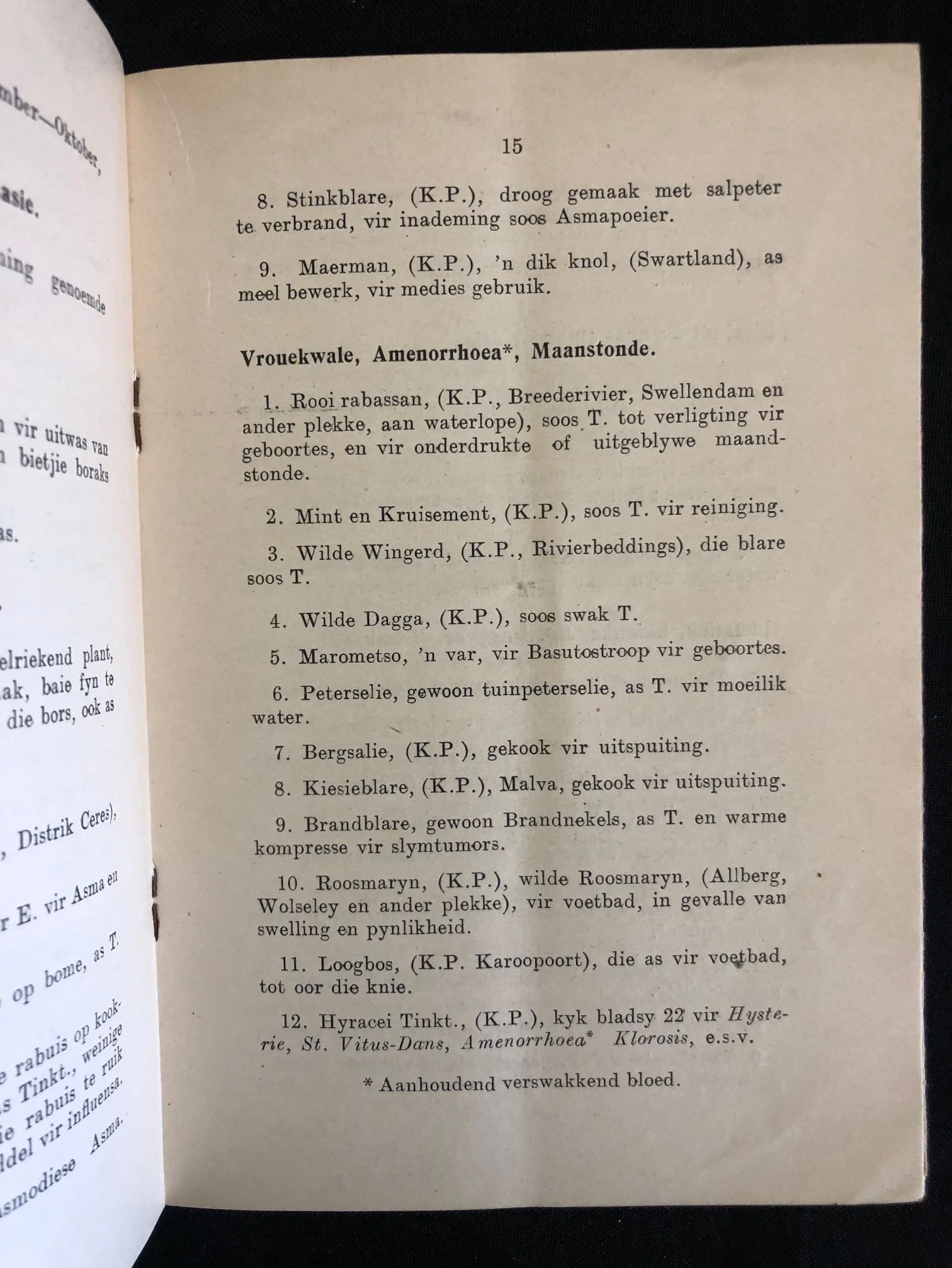
While the cover uses the iconic imagery of the Good Samaritan, the actual substance of Die Sieketrooster relies heavily on the land. It stands as one of the earliest published works to document South African indigenous flora for practical medical use.
Modern botanists and pharmacologists still cite Kling’s 1923 booklet when tracing the historical usage of plants like Blyde-blaasboud (Notobubon galbanum / Wild Celery, used for dropsy and gravel) and |nhora (Pteronia camphorata, a traditional Khoesan remedy for respiratory ailments).
A Snapshot of the Evolution of Afrikaans
The linguistic timing of this publication is highly significant. It was printed in 1923—just two years before Afrikaans officially replaced Dutch as an official language of South Africa in 1925.
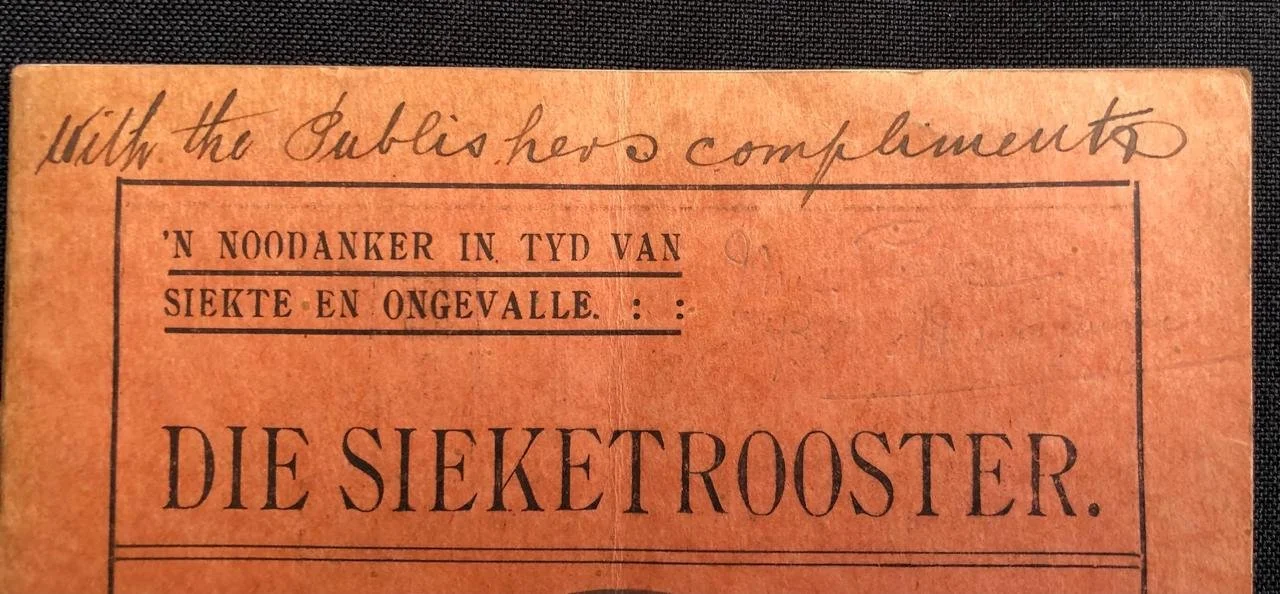
The text captures a language in transition. You can see the shift from formal Dutch grammar toward early standardized Afrikaans spelling (e.g., using "Siekte en ongevalle" instead of the Dutch ziekte). The booklet was designed to be a cheap, accessible "emergency anchor" (noodanker) for rural, working-class Afrikaans speakers, priced at just "1/3 Posvry" (1 shilling and 3 pence, postage free).
The Printer: Van de Sandt de Villiers
The printer noted at the bottom, located at 60-62 Burg Street, Cape Town, is a legendary name in Cape printing history. Founded in the 19th century, this firm was responsible for printing De Zuid-Afrikaan, a massive cultural and political force in the Cape Colony. By the 1920s, they were major players in transitioning the Cape print landscape into the vernacular of early Afrikaans publishing.
Provenance: "With the Publisher's Compliments"
The contemporary ink inscription at the very top—"With the Publisher's compliments"—indicates that this specific copy was likely a review copy, a presentation piece for a contributor, or a file copy kept by Van de Sandt de Villiers & Co. itself. Given that these fragile ephemera booklets were meant to be used until they fell apart in a kitchen drawer or a medical kit, finding a copy in this crisp, complete condition with a publisher's presentation mark is incredibly rare.
125mm x 185mm
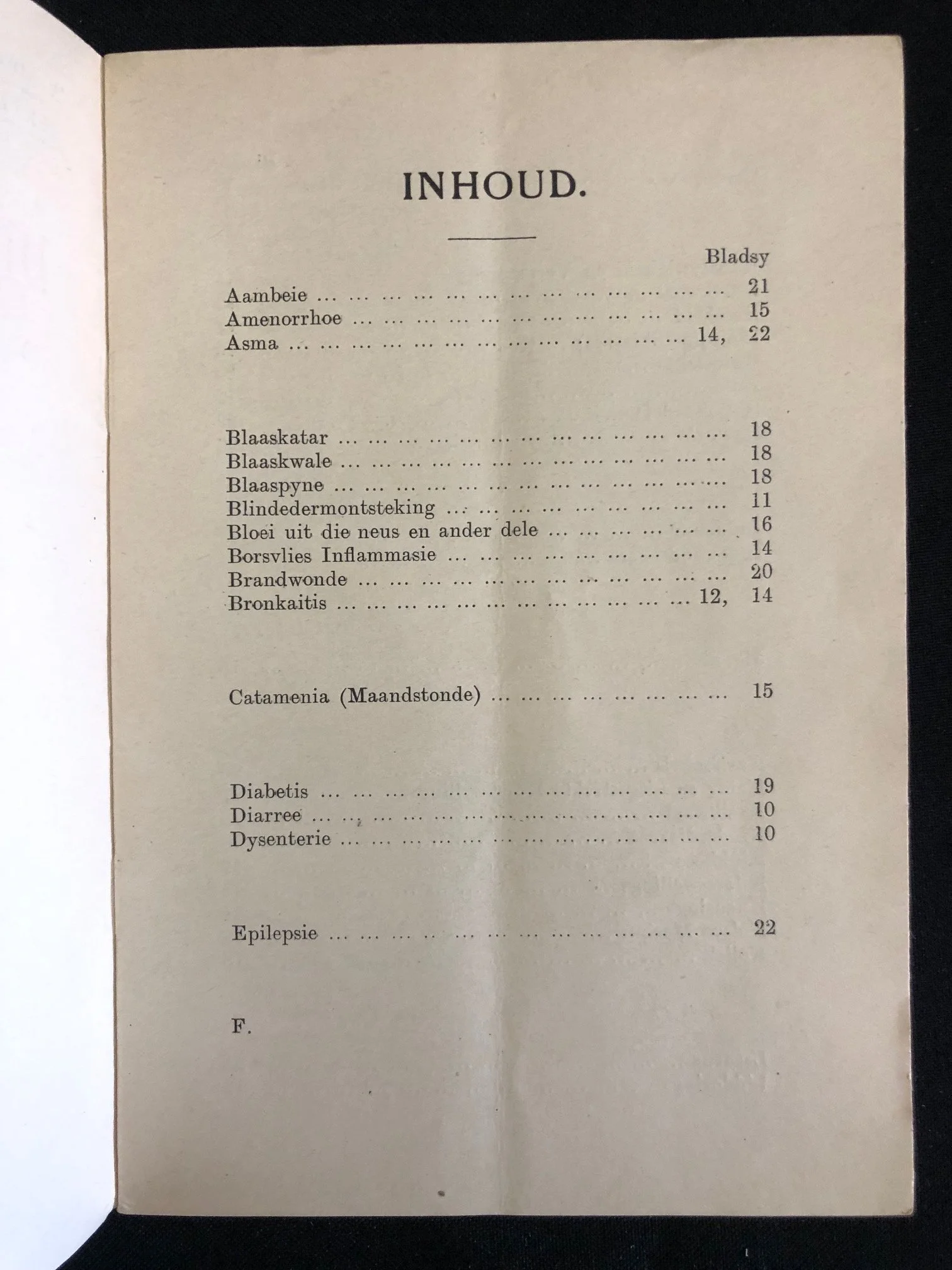
24 pages. Complete. Central long crease; edge wear and some staining.
R2,500