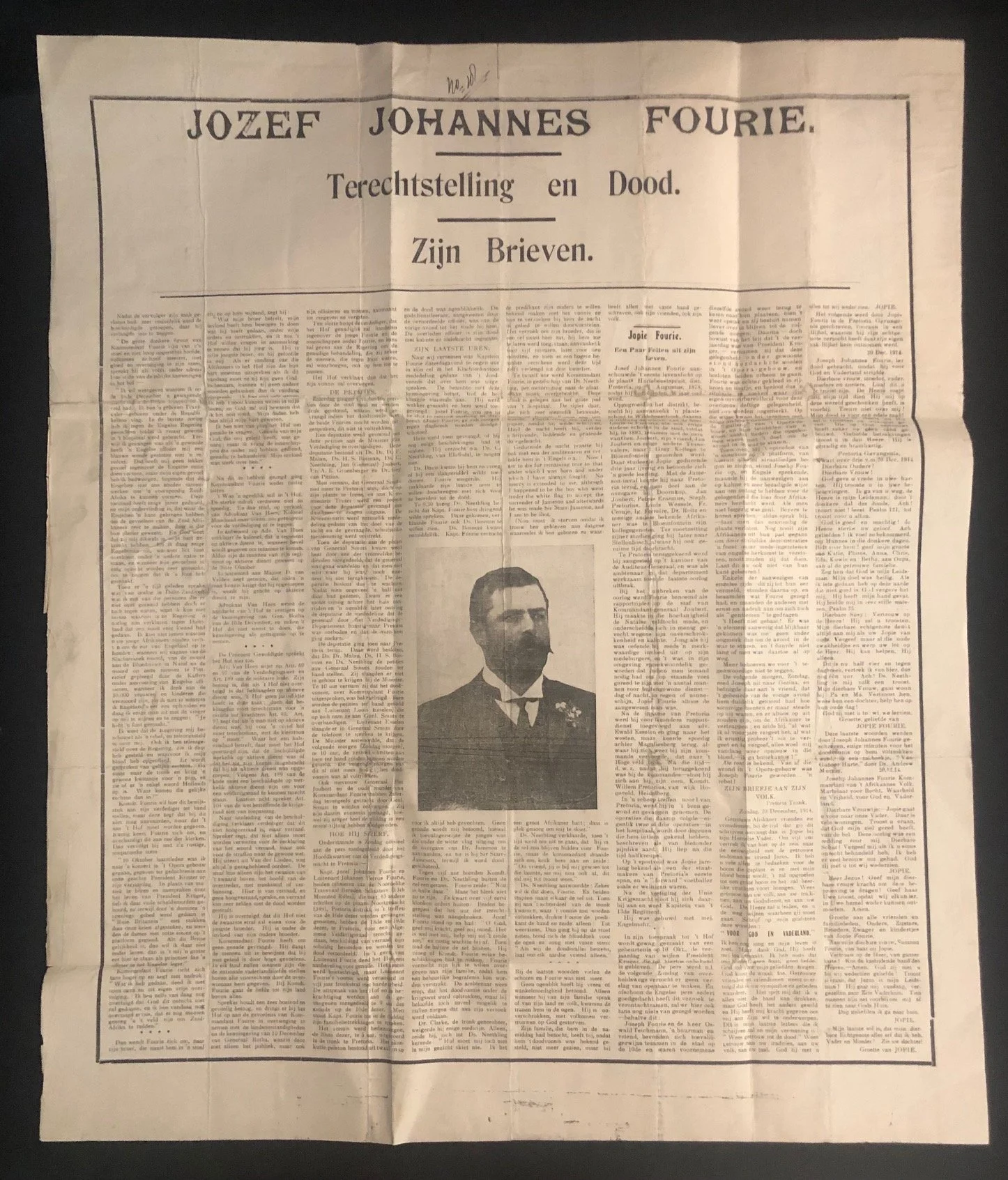
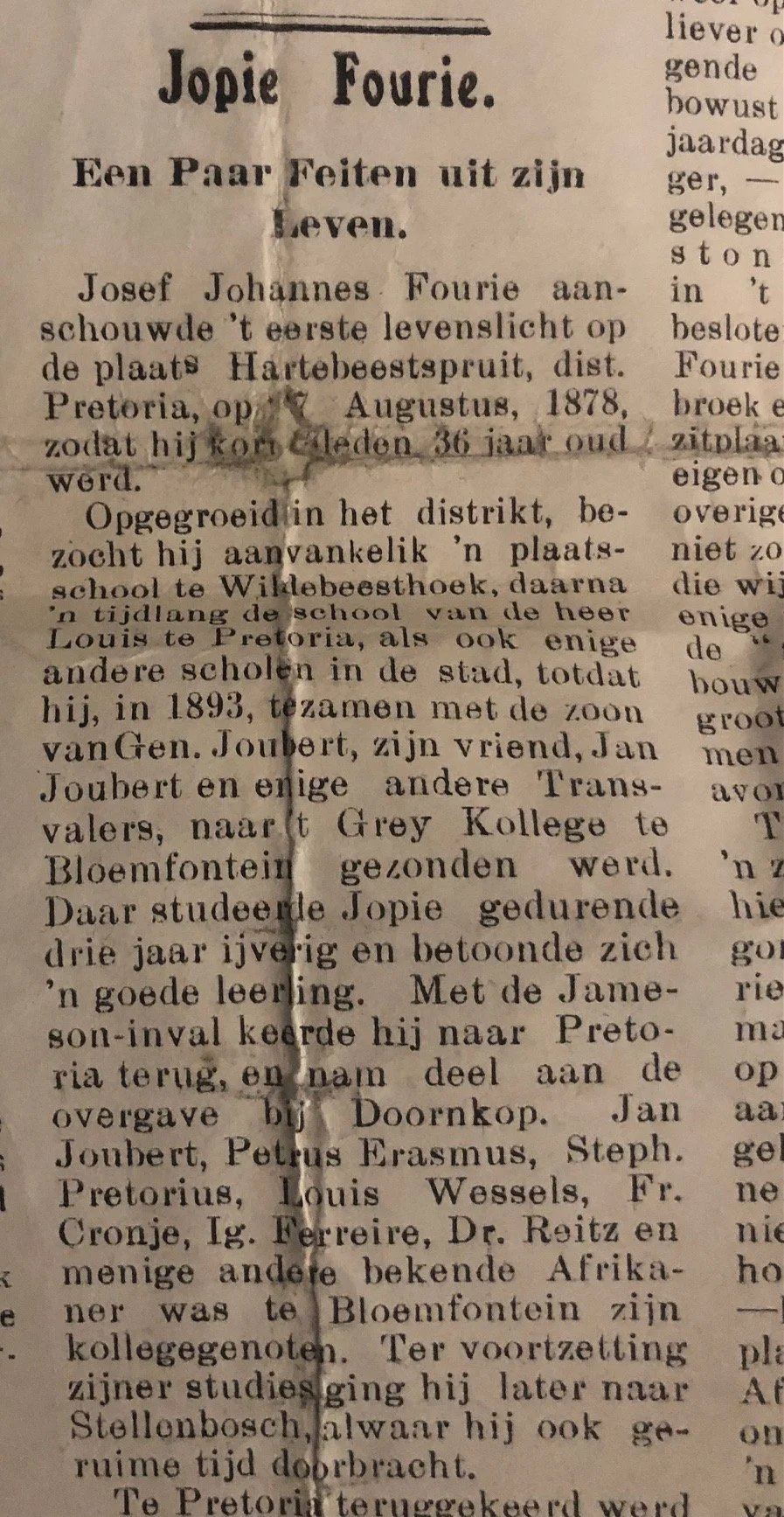
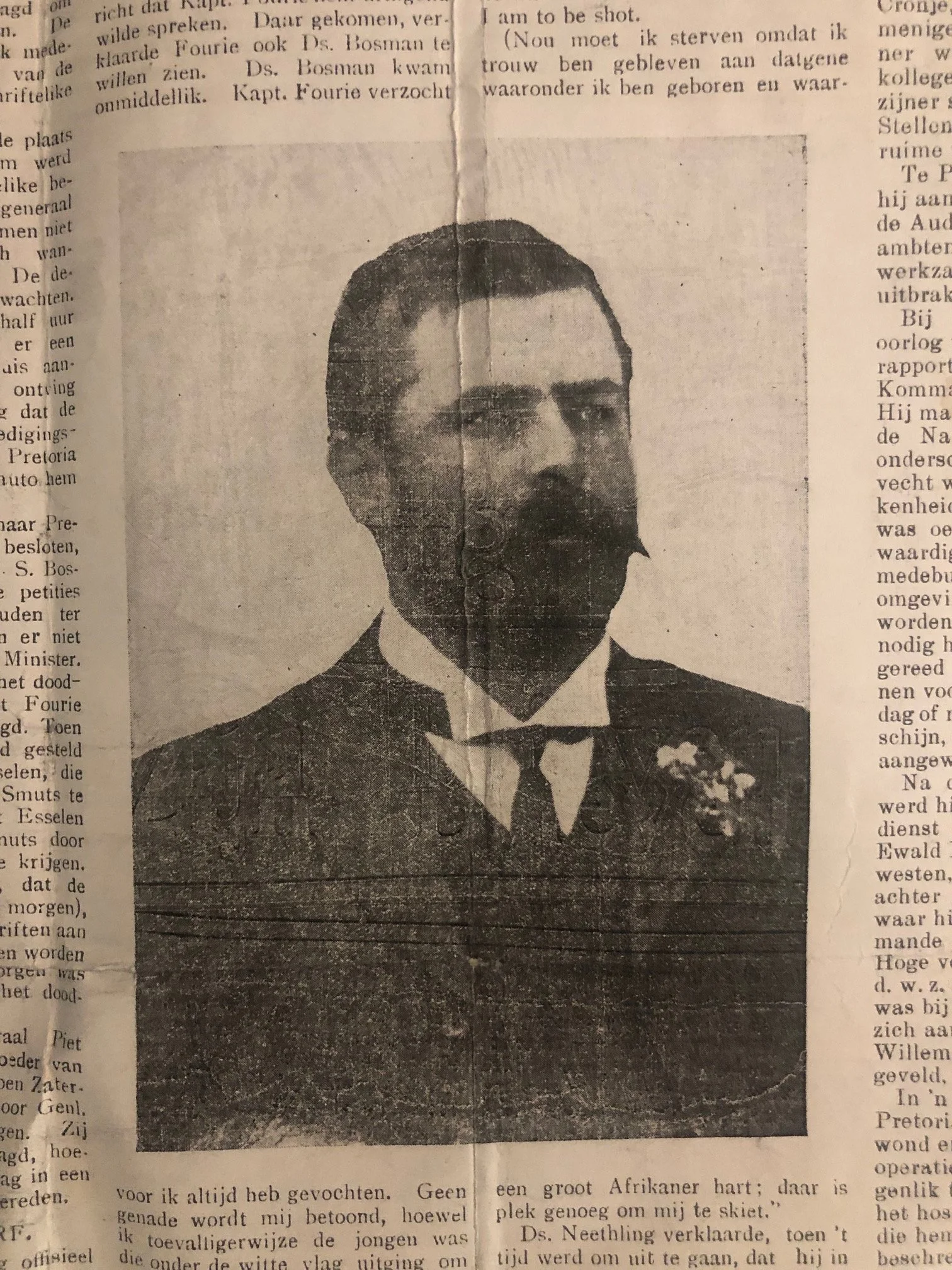
Broadside of the execution of Jozef Johannes "Jopie" Fourie in December 1914.
This broadside document depicts one of the most controversial and emotionally charged events in 20th-century South African history: the execution of Jozef Johannes "Jopie" Fourie in December 1914.
The Maritz Rebellion (1914): At the outbreak of World War I, the government of the Union of South Africa (led by Louis Botha and Jan Smuts) decided to invade German South-West Africa (now Namibia) in support of the British Empire. This split Afrikaner opinion deeply. Many Boer War veterans refused to fight against Germany which had supported them during the Anglo-Boer War or to fight on the side of Great Britain. A armed uprising known as the Maritz Rebellion broke out.
The Only Officer Executed for High Treason: Jopie Fourie was an officer in the Union Defence Force (UDF). Unlike many rebellion leaders who were active citizens or non-serving officers, Fourie took up arms against the government without resigning his commission first. He led an armed commando in the North Pretoria region, causing several casualties among government forces.
Court-Martial and Execution: After his capture on December 16, 1914 (Nooitgedacht), he was court-martialled on December 18 and sentenced to death by firing squad. Despite desperate petitions for clemency sent to General Jan Smuts, and attempts by delegation leaders to reach Smuts over that weekend, the sentence was carried out on Sunday morning, December 20, 1914, at Pretoria Central Gaol.
Martyrdom and Legacy: Fourie went to the firing squad singing the Dutch hymn "Als ik het sêrend kruis aanschouw" ("When I Survey the Wondrous Cross"). Because he was the only rebel officer executed by firing squad during the entire rebellion, his execution transformed him into a major martyr for Afrikaner nationalism. His death galvanized anti-government sentiment, significantly boosting support for J.B.M. Hertzog’s National Party in the years that followed.
Printed on the Broadside
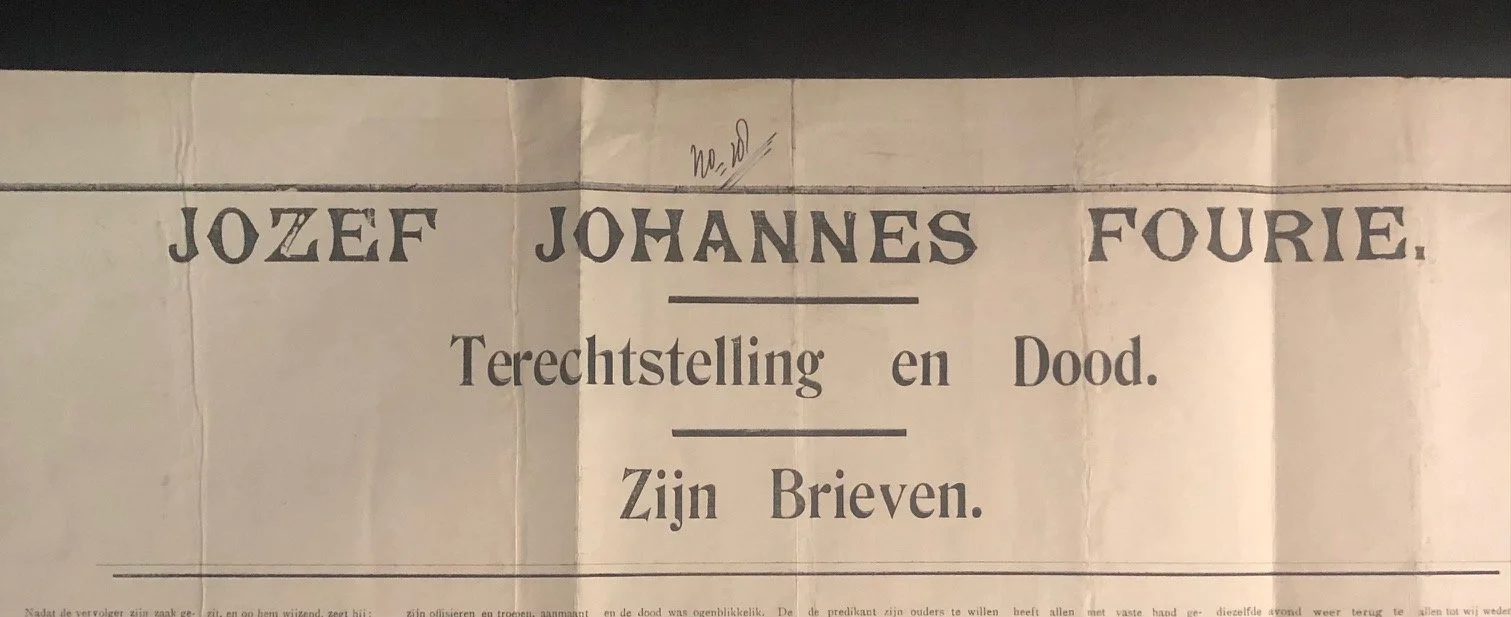
Header: "Jozef Johannes Fourie. Terechtstelling en Dood. Zijn Brieven." (Execution and Death. His Letters.)
Biographical Details: As shown in the inset, the text outlines his early life ("Een Paar Feiten uit zijn Leven"), noting his birth at Hartebeestspruit in the Pretoria district on August 7, 1878, his schooling at Grey College in Bloemfontein alongside Jan Joubert (son of Commandant-General Piet Joubert), and his studies in Stellenbosch.
Farewell Letters (Zijn Brieven): The right side of the sheet prints his final written letters to his family, friends, and the Afrikaner nation written from Pretoria Gaol shortly before his execution, which were widely preserved, copied, and circulated across the country as sacred political relics.
540mm x 630mm
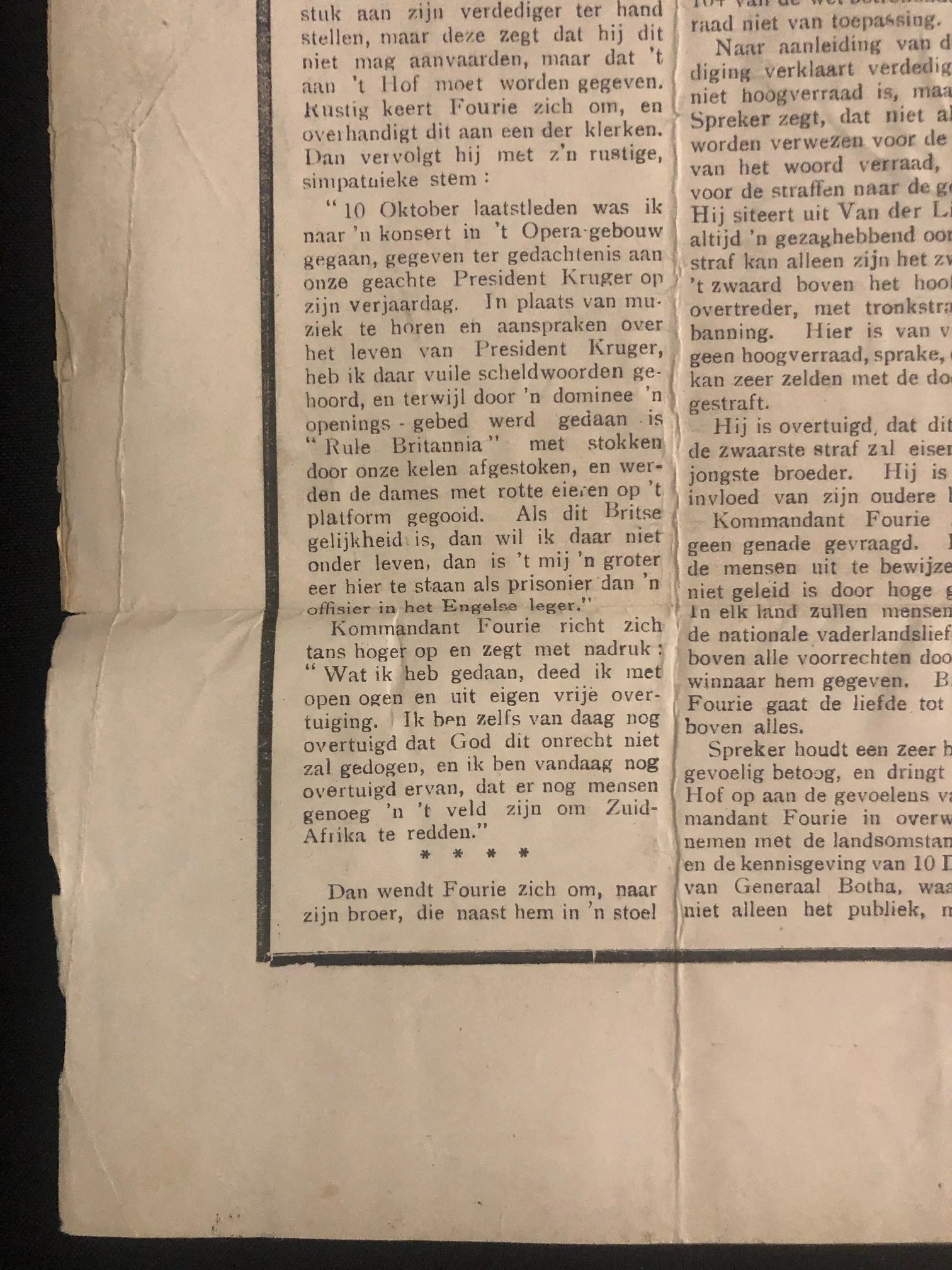
Glued on a piece of paper; amateur repairs; tape etc; discoloured in places; minor tears
R3,000