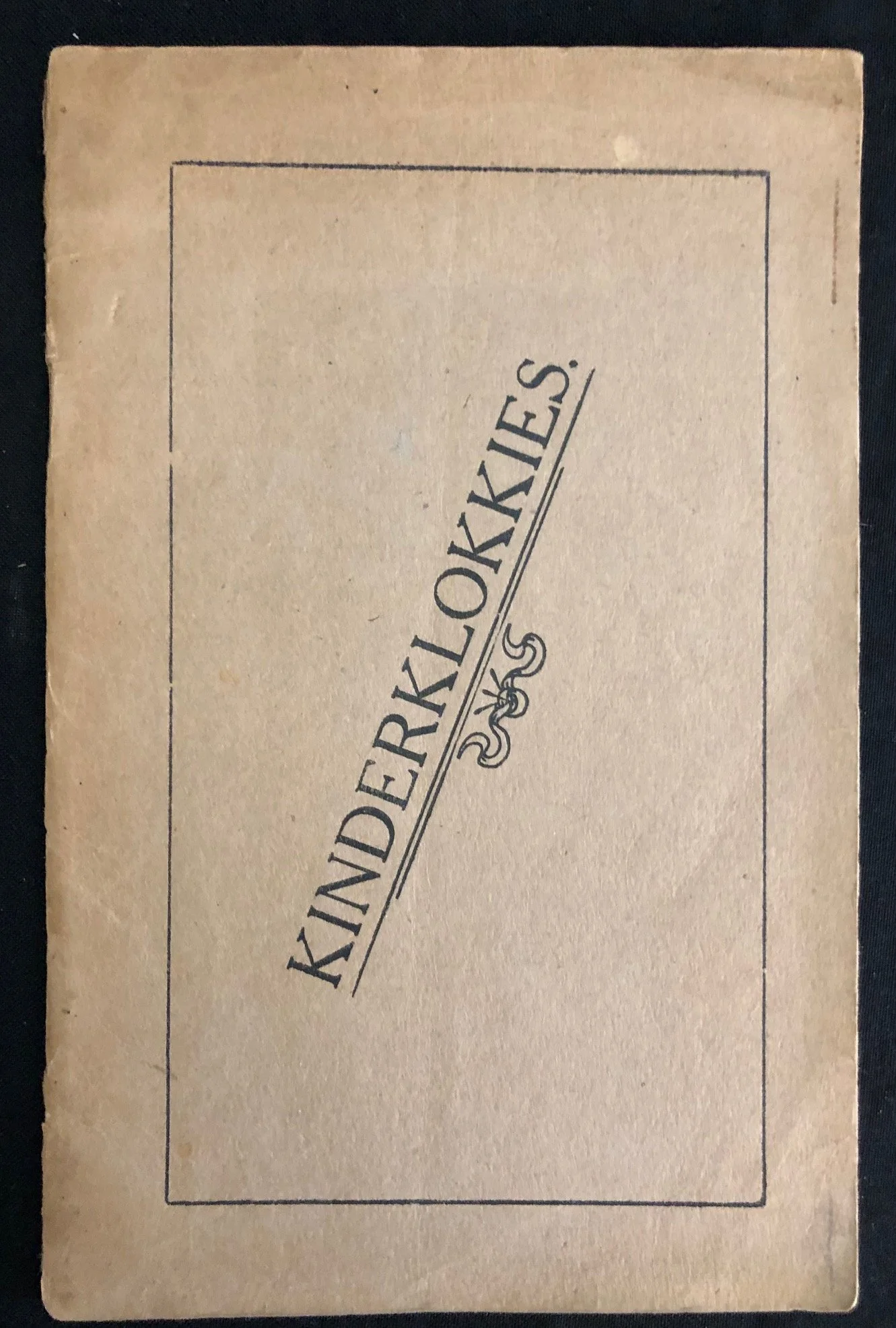
Kinderklokkies by Chris. J. A. Fourie (1918).
Compiled by Chris. J. A. Fourie and published in Cape Town in February 1918.
From a South African cultural and linguistic standpoint, this modest-looking booklet is historically fascinating because it captures a highly volatile, transitional snapshot of the Afrikaans Language Movement right at the climax of its struggle for official recognition.
The Linguistic "No Man's Land"
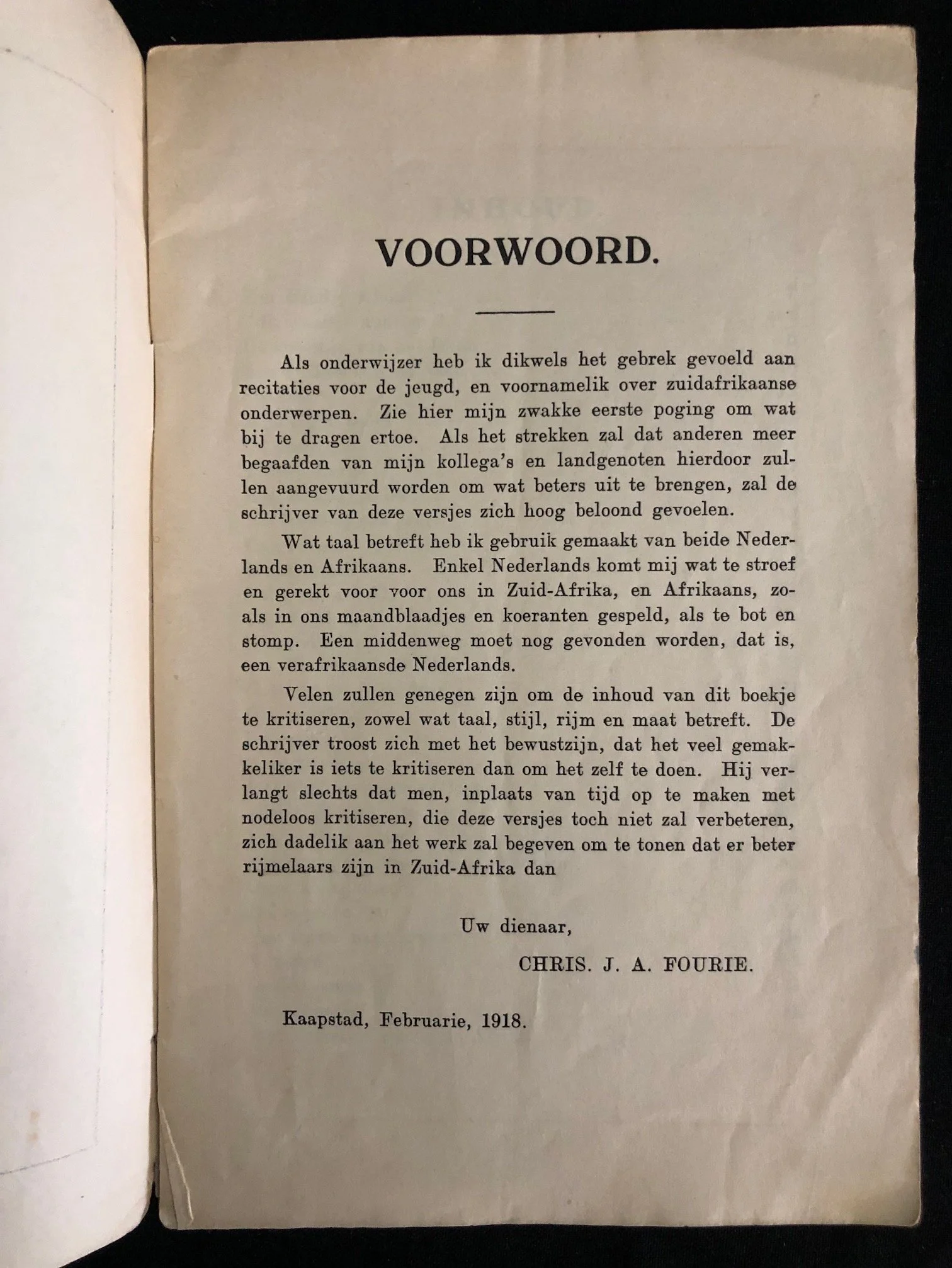
In the Voorwoord Fourie explicitly highlights the linguistic dilemma facing South African educators in 1918. He writes:
"Wat taal betreft heb ik gebruik gemaakt van beide Nederlands en Afrikaans... Een middenweg moet nog gevonden worden, dat is, een verafrikaansde Nederlands."
(As far as language is concerned, I have made use of both Dutch and Afrikaans... A middle way must still be found, that is, an Afrikaans-ified Dutch.)
This is a textbook example of the "Tweede Taalbeweging” (Second Language Movement). In 1918, Dutch was still the official language of schools and the church, but Afrikaans was rapidly sweeping through the younger generation. Educators like Fourie were caught in a strange limbo—trying to phase out standard European Dutch while building up a standardized literary framework for Afrikaans.
A Tool for Cultural Survival
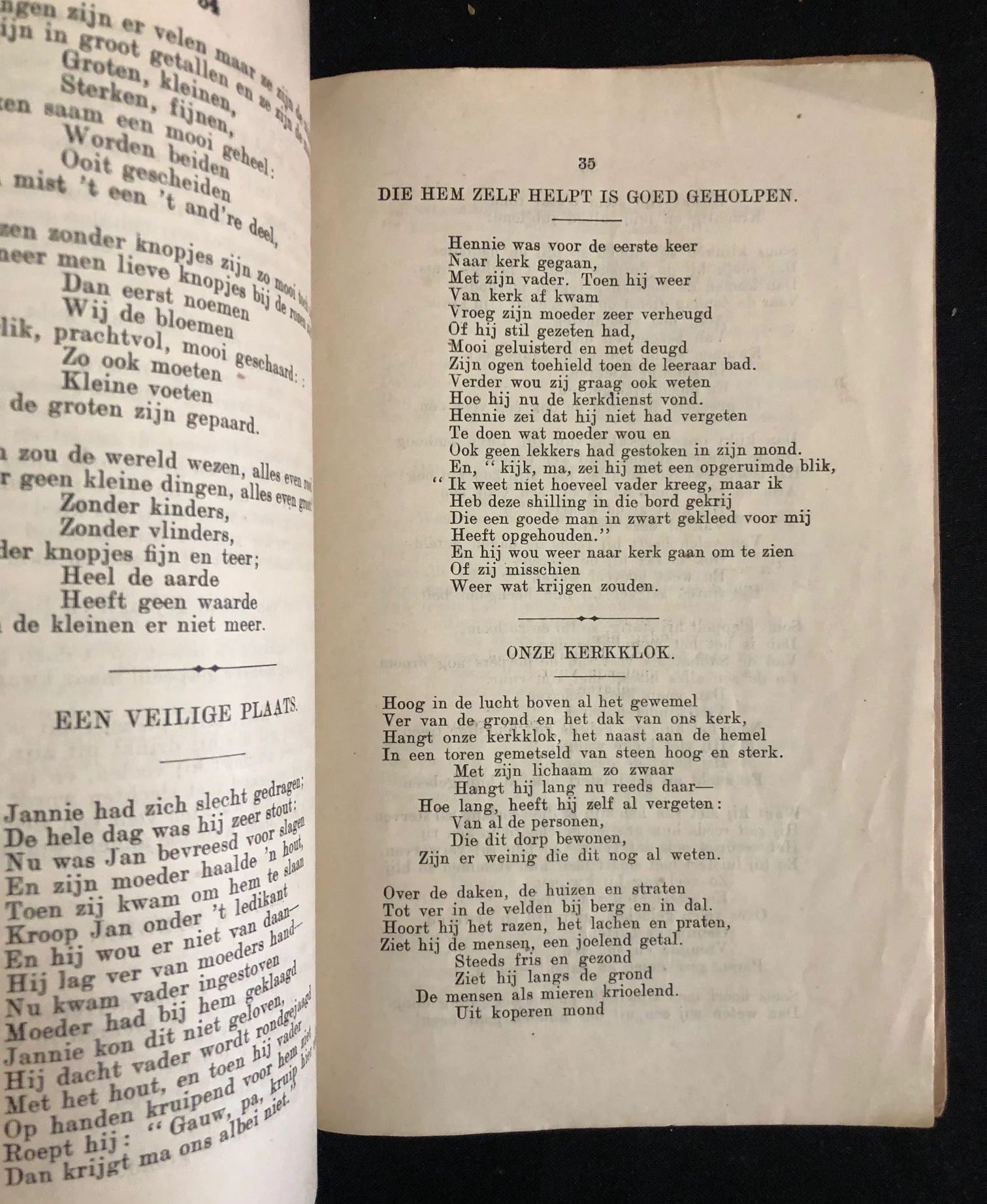
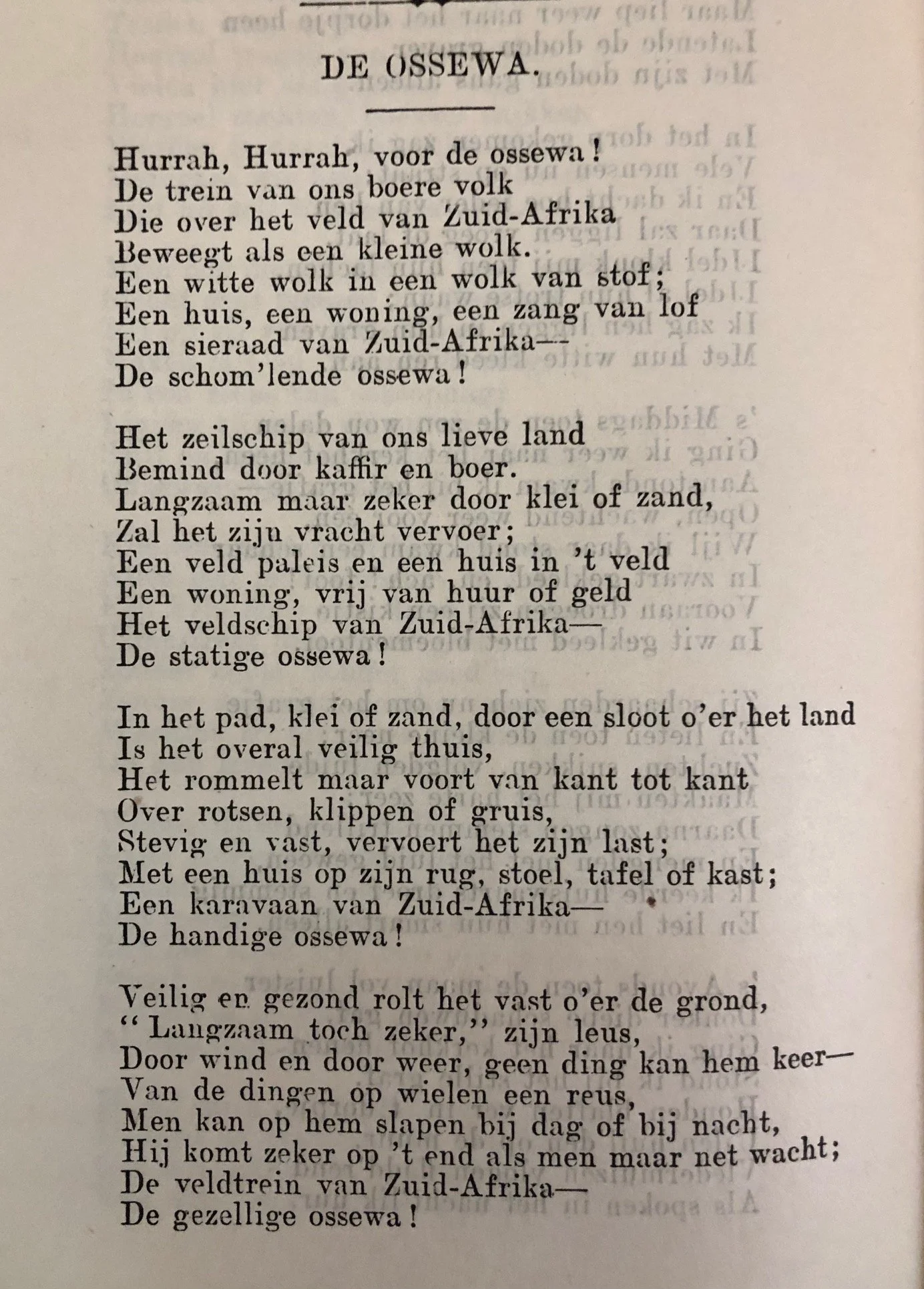
Fourie notes that as an “onderwijzer” (teacher), he noticed a severe lack of “recitaties” (recitation pieces) for youth that dealt with South African subjects. At the time, school children were still heavily subjected to British or European colonial curriculum and poetry. Pamphlets like Kinderklokkies were pioneering attempts to cultivate a distinct national, local identity for children by giving them verses about South African nature, folklore, and life.
Pre-Standardization Scarcity
Because this booklet was published in February 1918, it predates the widespread official adoption of Afrikaans in schools and civil service (which culminated in it replacing Dutch entirely in 1925). Ephemera and school booklets from this exact 1910–1920 window were often cheaply printed on low-grade paper, used transient or experimental spelling frameworks, and had very low survival rates because they were handled heavily by children.
140mm x 220mm
Fragile wrappers; paper mellowing; small chips to the top and bottom of the spine
R1,250