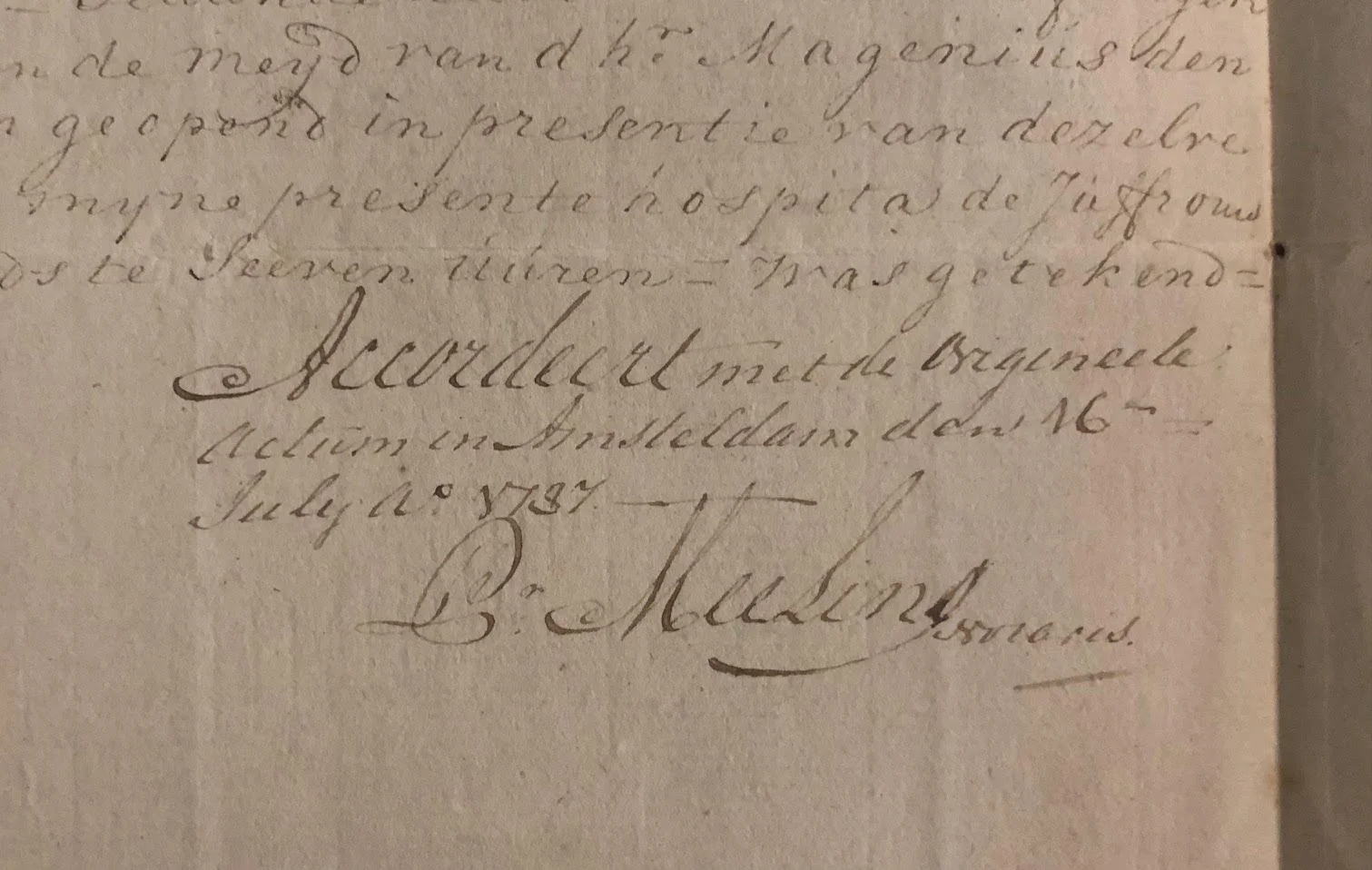
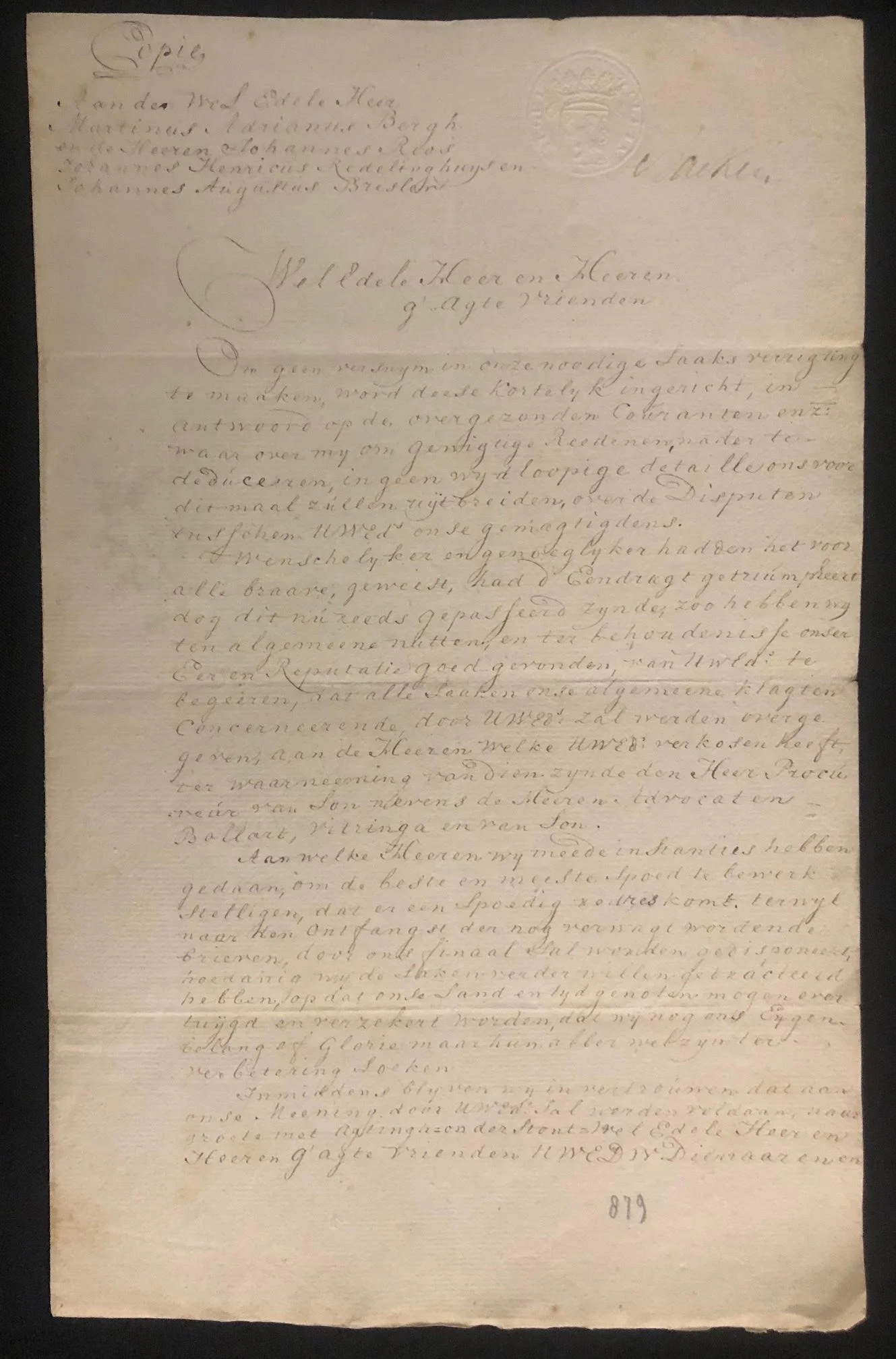
Notarial copy regarding the Cape Patriot movement (Kaapse Patriotte) 16 July 1787.
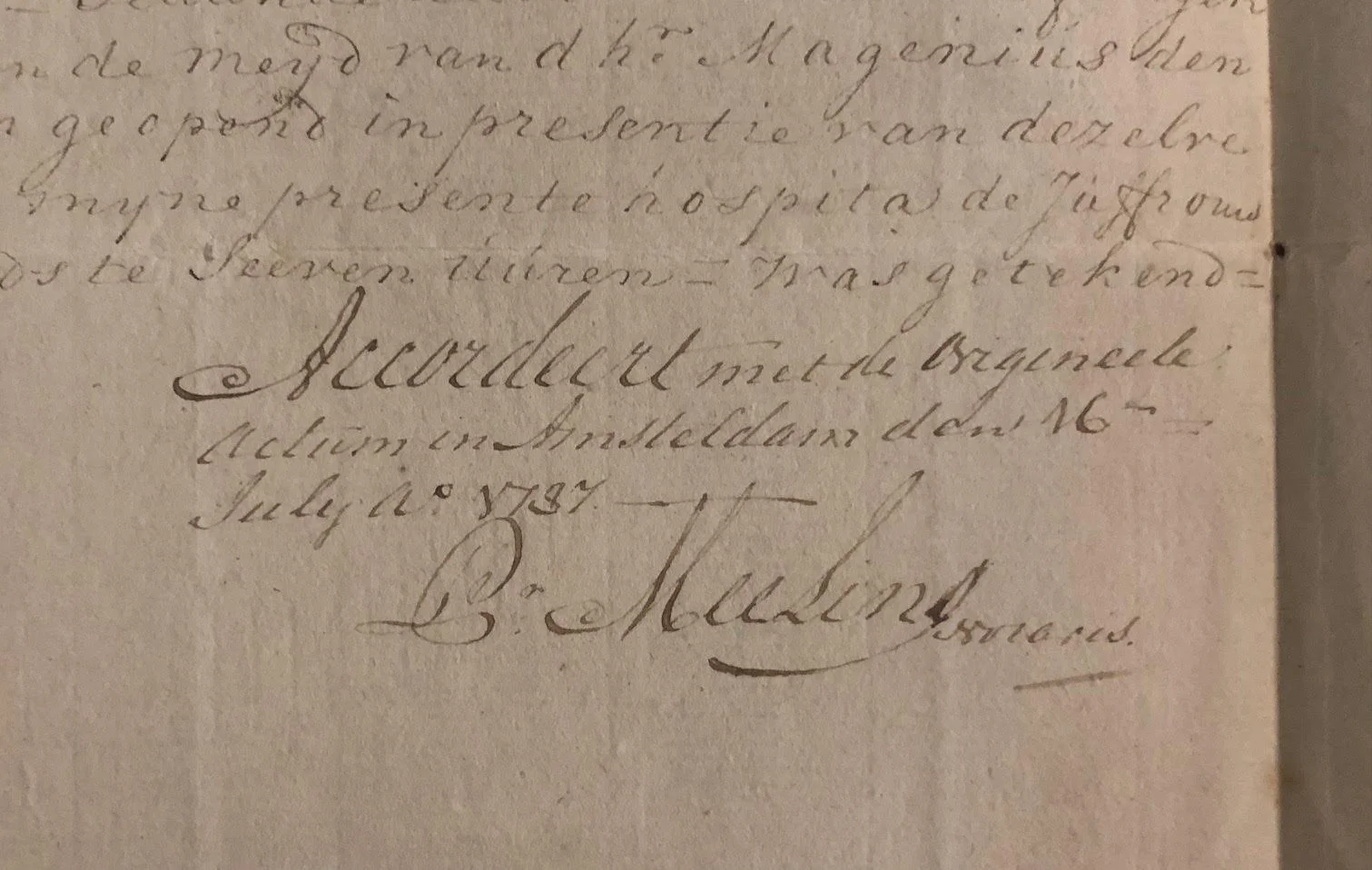
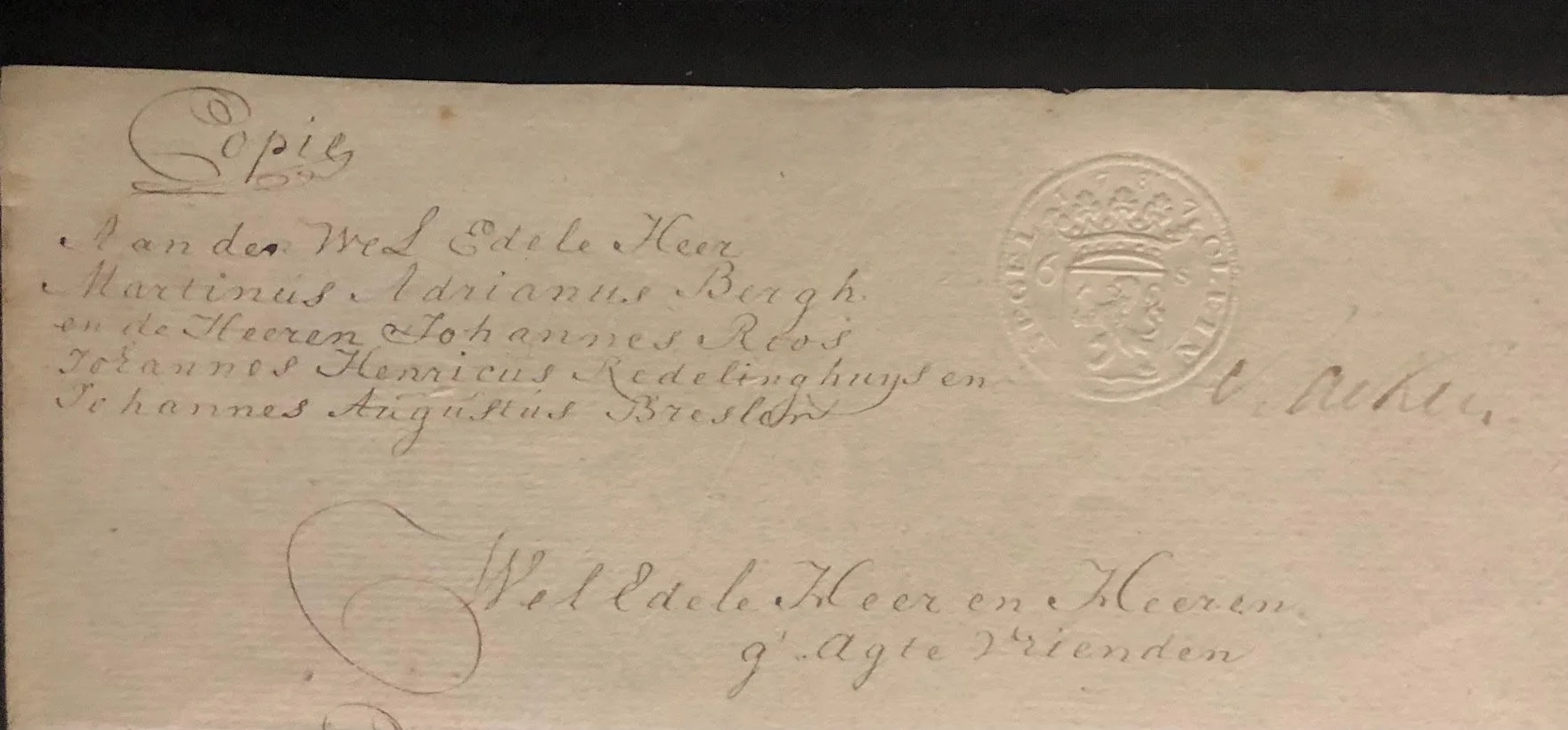
This is a certified contemporary notarial copy (Copie / Accordeert met het Originele) from Amsterdam, dated 16 July 1787, of a key political dispatch from the Cape Patriot movement (Kaapse Patriotte). The original letter, (the whereabouts of which is unknown) was smuggled to Amsterdam from the Cape.
The author of the original document was Martinus Adrianus Bergh. There were probably a few of these clerical copies made, I doubt there was just one produced by the scribe. The movement would then have disseminated these copies. The signature at the end of the document is that of Pieter Mutsing, notaris, 16 July 1787 (a prominent Amsterdam based notary).
Sent from the Cape of Good Hope on 29 June 1786, it bridges the ocean between Cape Town's burgher agitators and their delegation in the Dutch Republic during one of the most volatile constitutional crises in early South African history.
The Recipients: The Cape Patriot Delegation in Exile
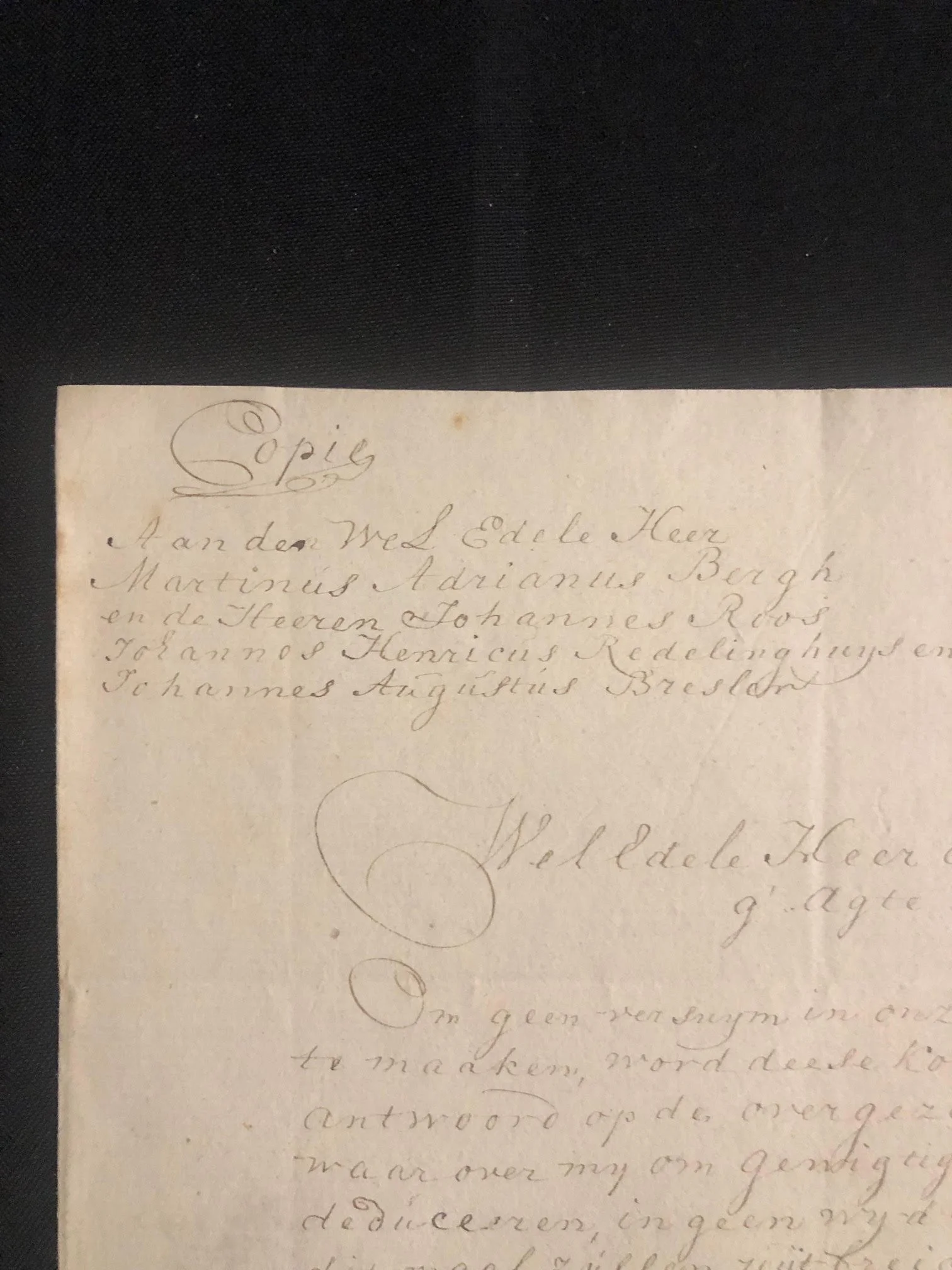
The letter is addressed to the four representatives sent by the Cape burghers to the Netherlands to petition the States-General and the Heren XVII (the governing board of the Dutch East India Company, or VOC) against the corrupt and autocratic rule of the Cape administration (specifically Governor van Plettenberg and Fiscal Willem Cornelis Boers):
Martinus Adrianus Bergh
Johannes Roos
Johannes Henricus Redelinghuys
Johannes Augustus Bresler
The Bitter Internal Schism of 1786
By 1786, the Cape Patriot delegation in Amsterdam had fractured into two bitterly opposed factions, a split explicitly referenced in the text (de Disputen tusschen UWEd: en se gemagtigdens):
The Radical Faction (Redelinghuys & Roos): Inspired by the American Revolution and Dutch Patriotten anti-Orangist ideals, they demanded sweeping political representation and wanted to bypass the VOC entirely to appeal directly to the States-General.
The Moderate Faction (Bergh & Bresler): Favored working within existing legal channels and reaching an accommodation with the VOC directors.
In this letter, the Cape-based committee urges unity (had d' Eendragt getriumpheert "had harmony triumphed"), yet decisively takes sides. They instruct Bergh and his colleagues to hand over all legal matters concerning their general grievances to their chosen Dutch legal team, Procurator van Son and Advocates Bollart, Vitringa, and van Son, to press for swift redress before the States-General. Bergh states here that he will submit the original to the Heeren XVII.
Clandestine Delivery & Notarial Paranoia
The back of the document offers a remarkable glimpse into 18th-century political intrigue and chain-of-custody authentication:
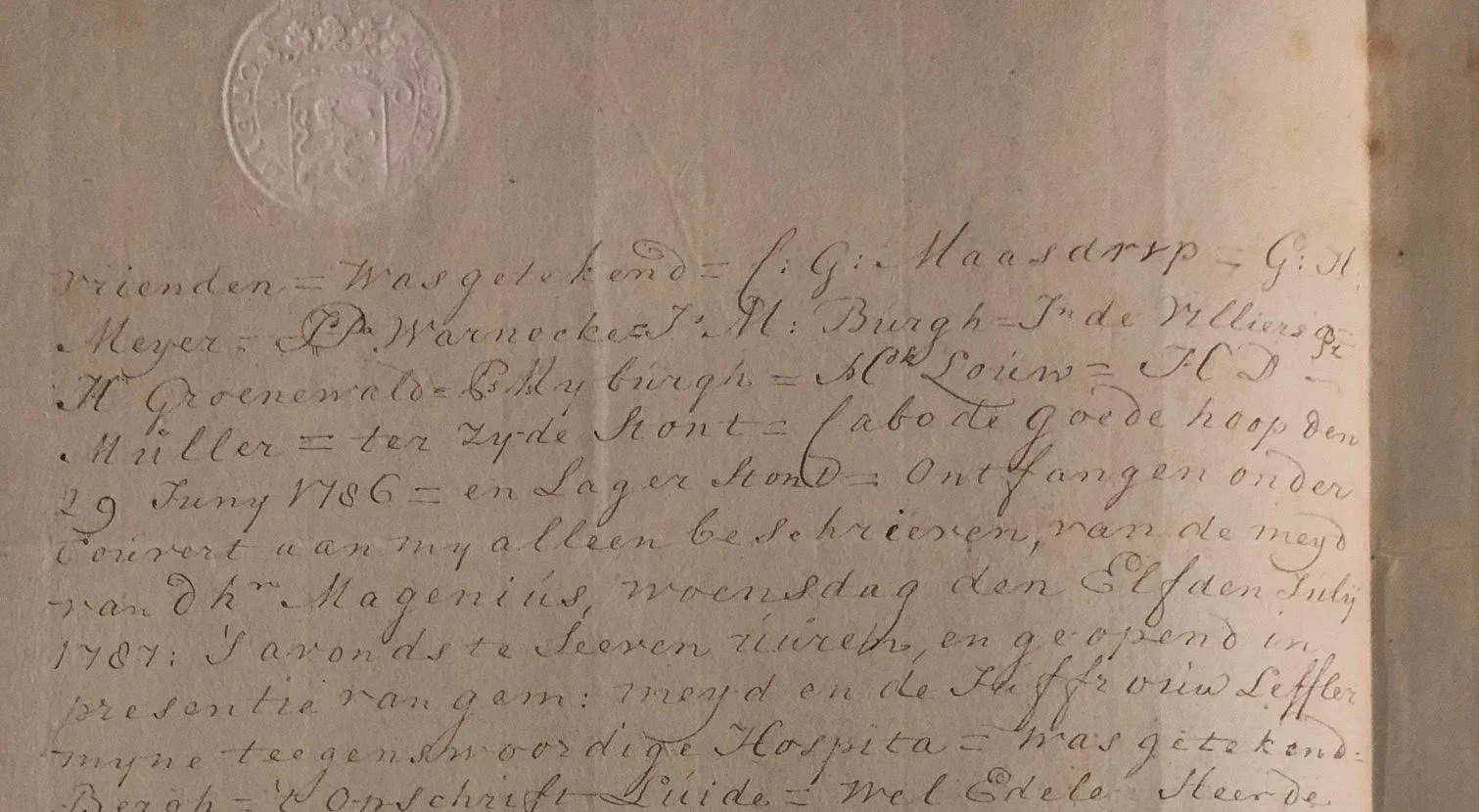
Over a Year in Transit: Written in Cape Town on 29 June 1786, the letter did not reach Martinus Adrianus Bergh in Amsterdam until 11 July 1787—over twelve months later.
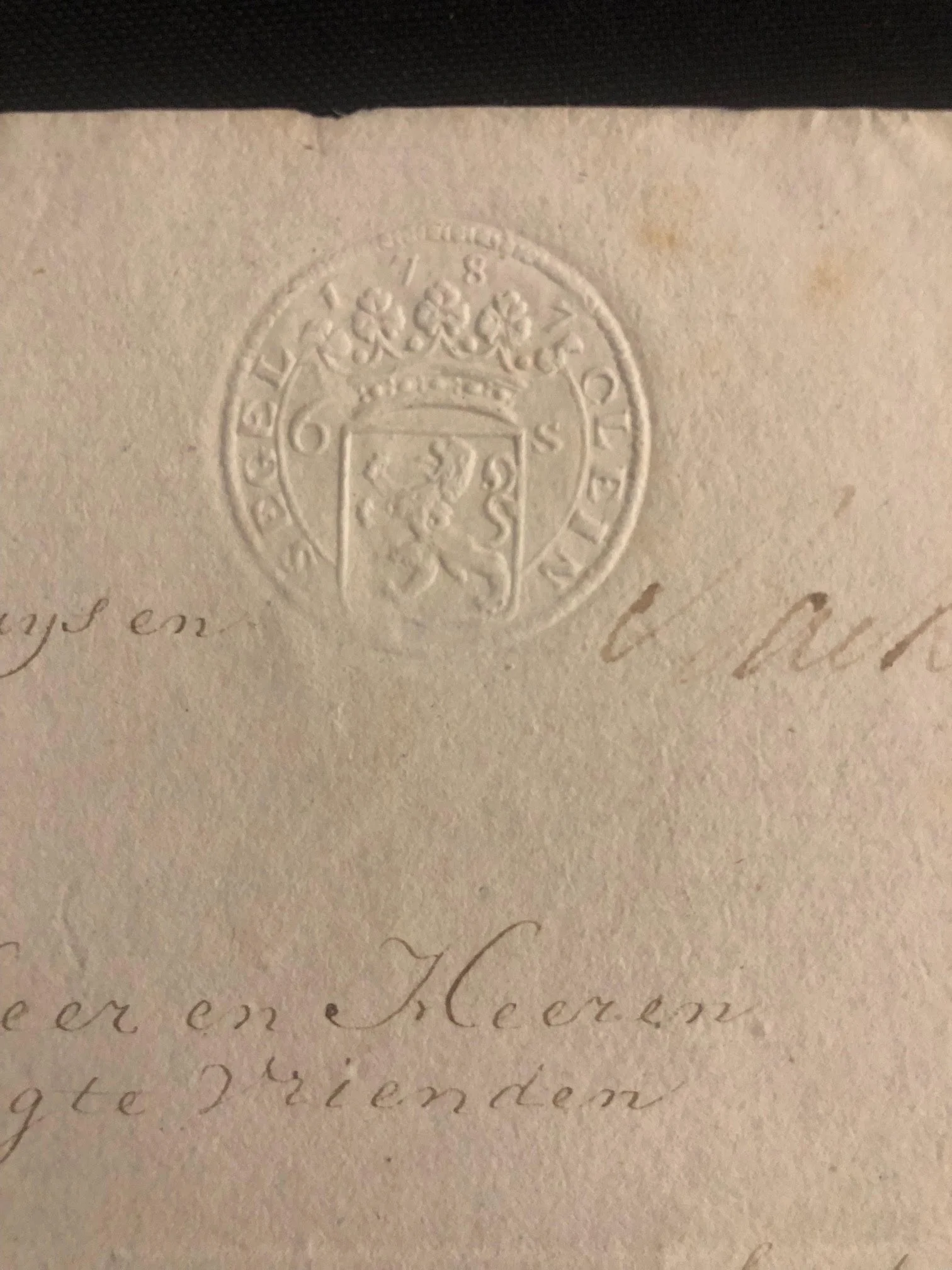
A Secret Courier & Witnessed Opening: Because the VOC routinely intercepted Patriot mail, the letter was smuggled privately. Bergh records that he received it at his lodgings on the Singel near the Gasthuismolensteeg in Amsterdam at 7:00 PM from the maidservant of a Dr. Magenius. Recognizing the political sensitivity and internal faction-fighting, Bergh refused to open it alone; he had it opened in the presence of both the maidservant and his landlady (myne teegenswoordige Hospita), Juffrouw Leffler, and then had an Amsterdam notary (B. Meulink) officially certify the transcript five days later on 16 July 1787 (bearing the embossed revenue stamp of Holland at the top).
The Signatories at the Cape
The copied signatures at the end represent the core leadership of the Cape Burgher Representatives (Burgerraden and Comités), including C.G. Maasdorp, G.H. Meyer, P.P. Warnecke, J.M. Burgh, J. de Villiers, M. Groenewald, C. Myburgh, M. Louw, and H.D. Müller.
Historical Irony
Just two months after this notarial copy was certified in Amsterdam (September 1787), Prussian troops invaded the Dutch Republic to crush the Dutch Patriot uprising and restore Stadtholder William V. With their Dutch political allies defeated and exiled, the Cape Patriot mission in Amsterdam collapsed completely, making documents like this one rare surviving artefacts of the final, desperate phase of South Africa's first organized democratic protest movement.
Further research: The Cape Town Archives Repository have a collection of Bergh material; The Western Cape Archives; The University of Cape Town (possibly now lost with the Jagger library fire); The National Archive at The Hague.
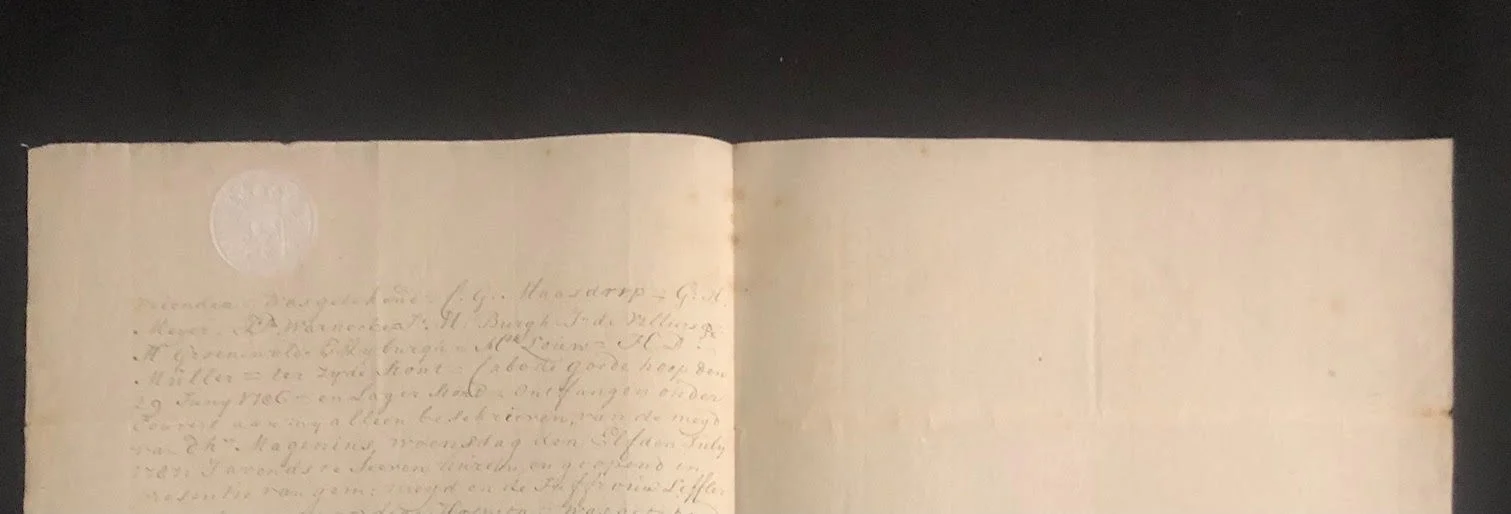
Each page: 205mm x 330mm
One and a half page manuscript document; wear; some marked; a possible archive number at the bottom of the page “879”; creased.
R65,000