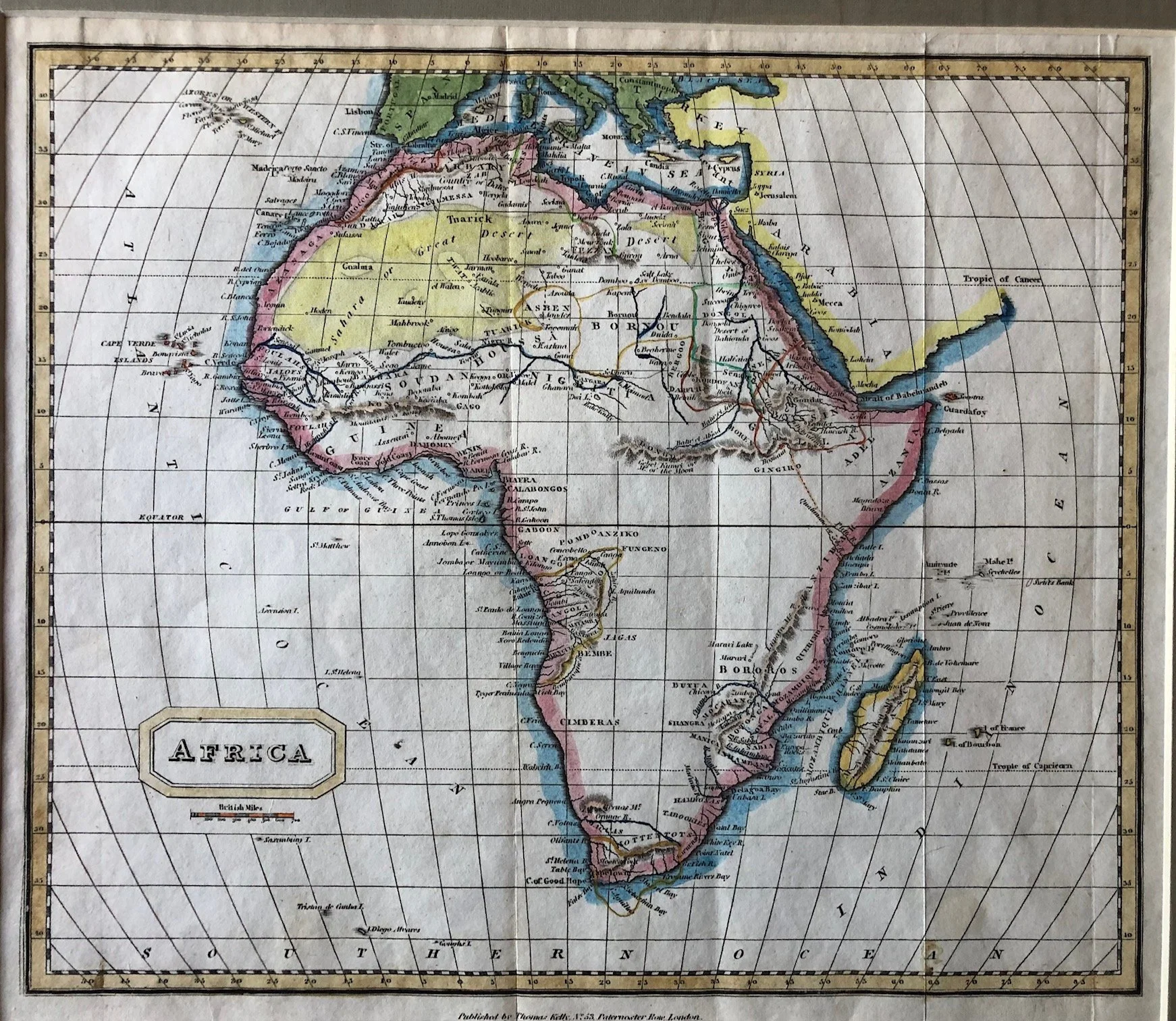
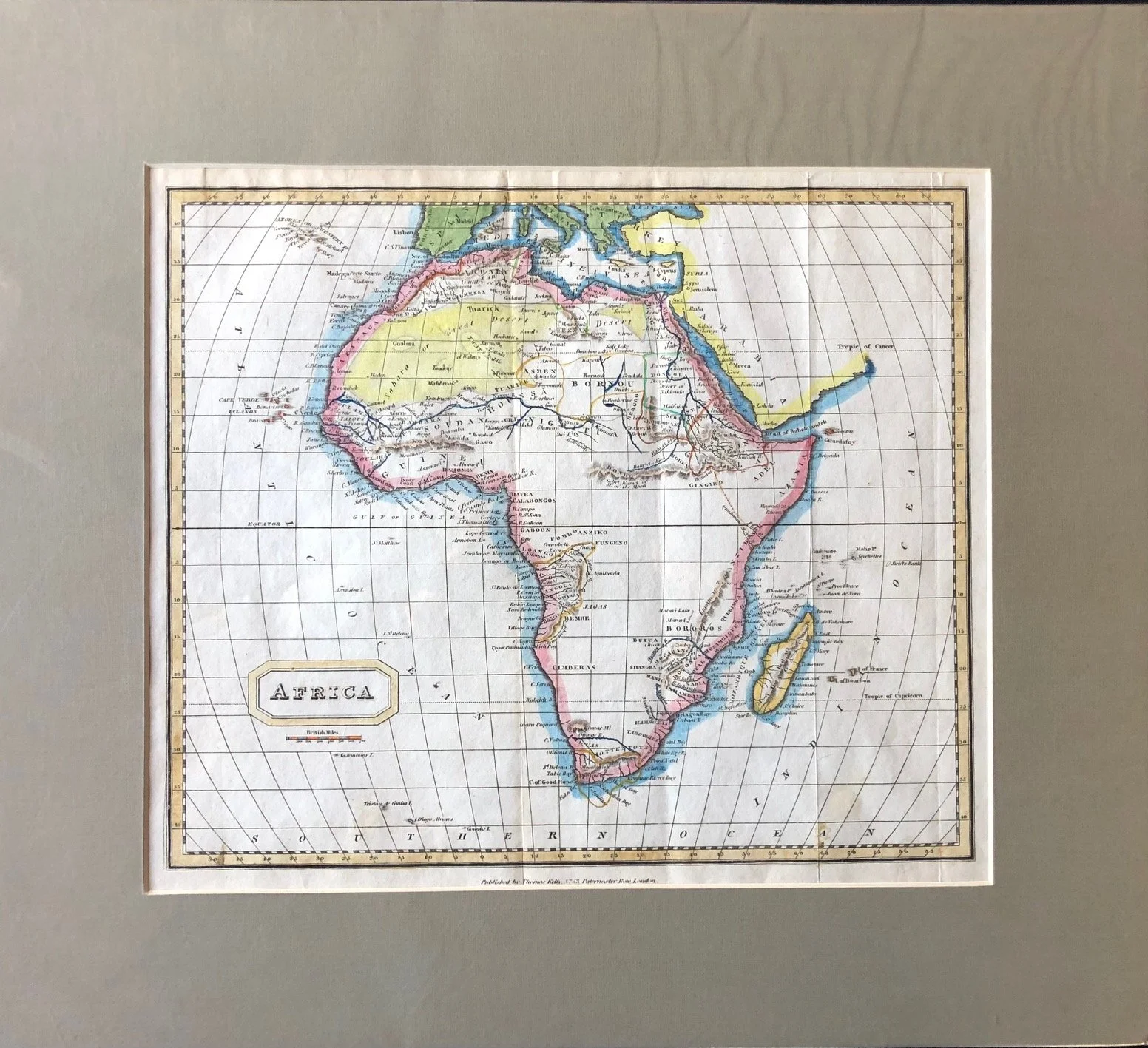
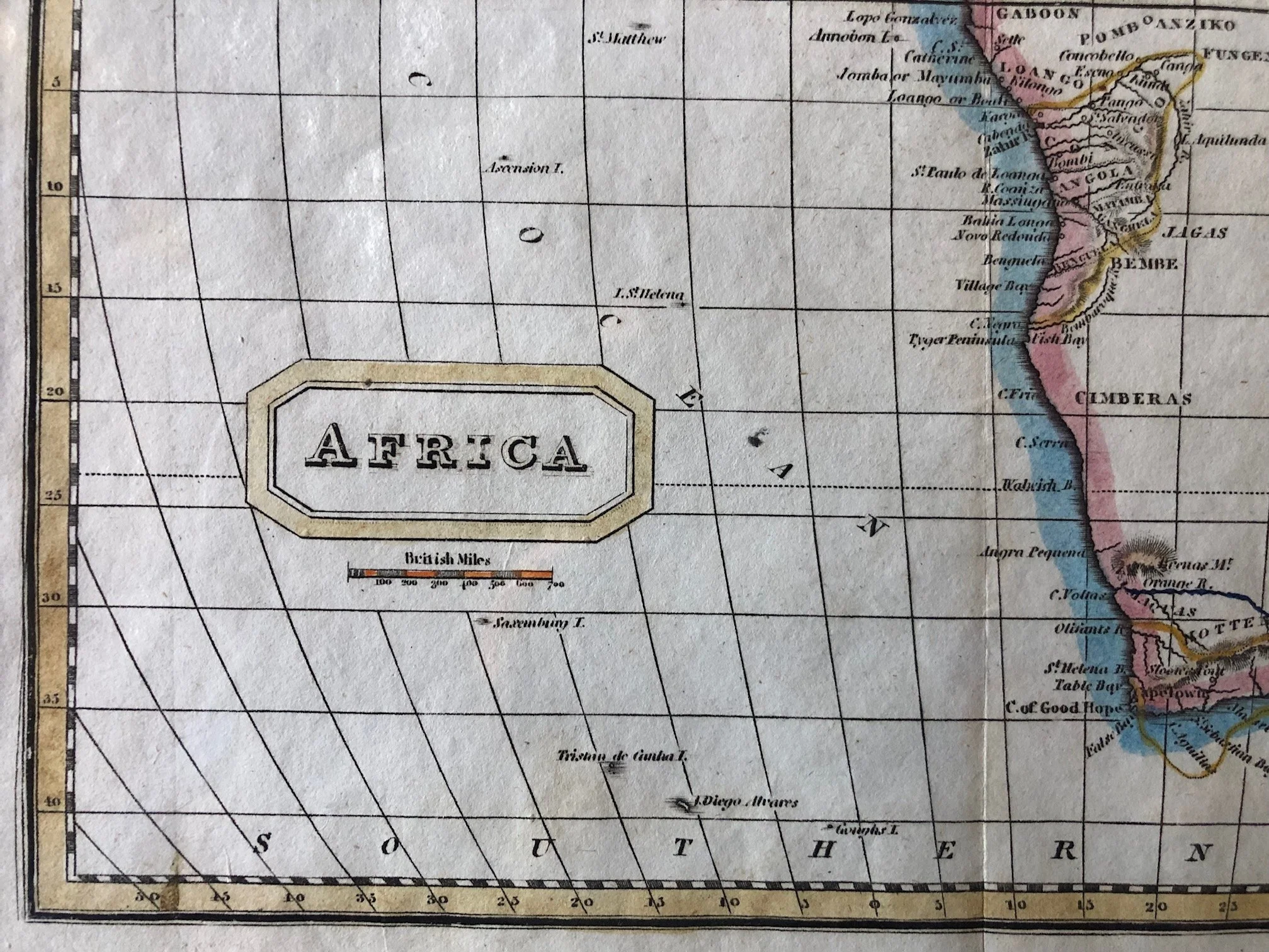
Map of Africa published in London by Thomas Kelly (circa 1818–1825)
Part of Kelly’s “A New and Complete System of Universal Geography”.
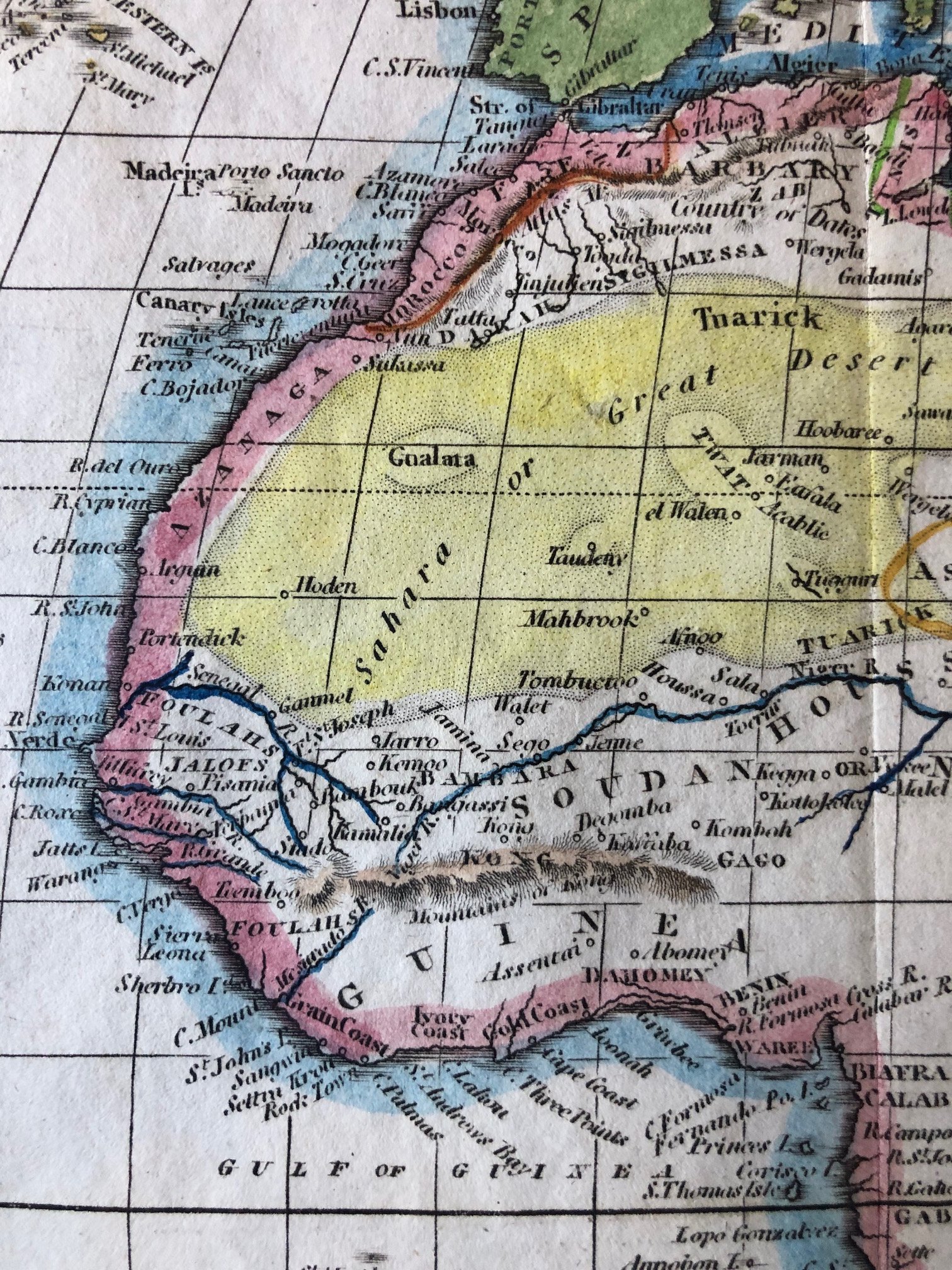
When viewing West Africa the map reveals a fascinating, transient moment in British cartography when geopolitical ambition clashed with highly speculative geography.
The Fictional "Mountains of Kong"
Running horizontally across the lower middle section is a distinct, shaded mountain range labeled "Mountains of Kong".
The Myth: First introduced to European maps in 1798 by the English cartographer James Rennell, the Mountains of Kong were believed to be an immense, unbroken mountain range stretching thousands of miles across West Africa, acting as a great continental watershed.
The Reality: They were completely imaginary. The range didn't exist at all, yet it appeared on almost every major commercial map of Africa for nearly a century.
The Debunking: It wasn't until the late 1880s that the French explorer Louis-Gustave Binger thoroughly explored the Niger River basin and definitively proved that the mountains were a complete cartographic fabrication.
The Unsolved Mystery of the Niger River
Equally compelling is the course assigned to the "Niger R." just north of the Mountains of Kong.
At the exact time Thomas Kelly published this map, the ultimate destination of the Niger River was one of the greatest geographical mysteries in the Western world, resulting in several competing theories:
This map shows the river flowing resolutely eastward past Tombuctoo (Timbuktu) and Houssa. It is depicted cutting across the continent toward Lake Chad and the Nile, rather than emptying into the Atlantic.
Many contemporary geographers believed the Niger evaporated into vast inland marshes or actually merged with the Nile River.
Just a few years later, in 1830, the English explorers Richard and John Lander traced the river down to its actual delta in the Gulf of Guinea, proving that its easterly path actually curved sharply south to the ocean—an discovery that immediately made Kelly’s eastward-flowing speculative network obsolete.
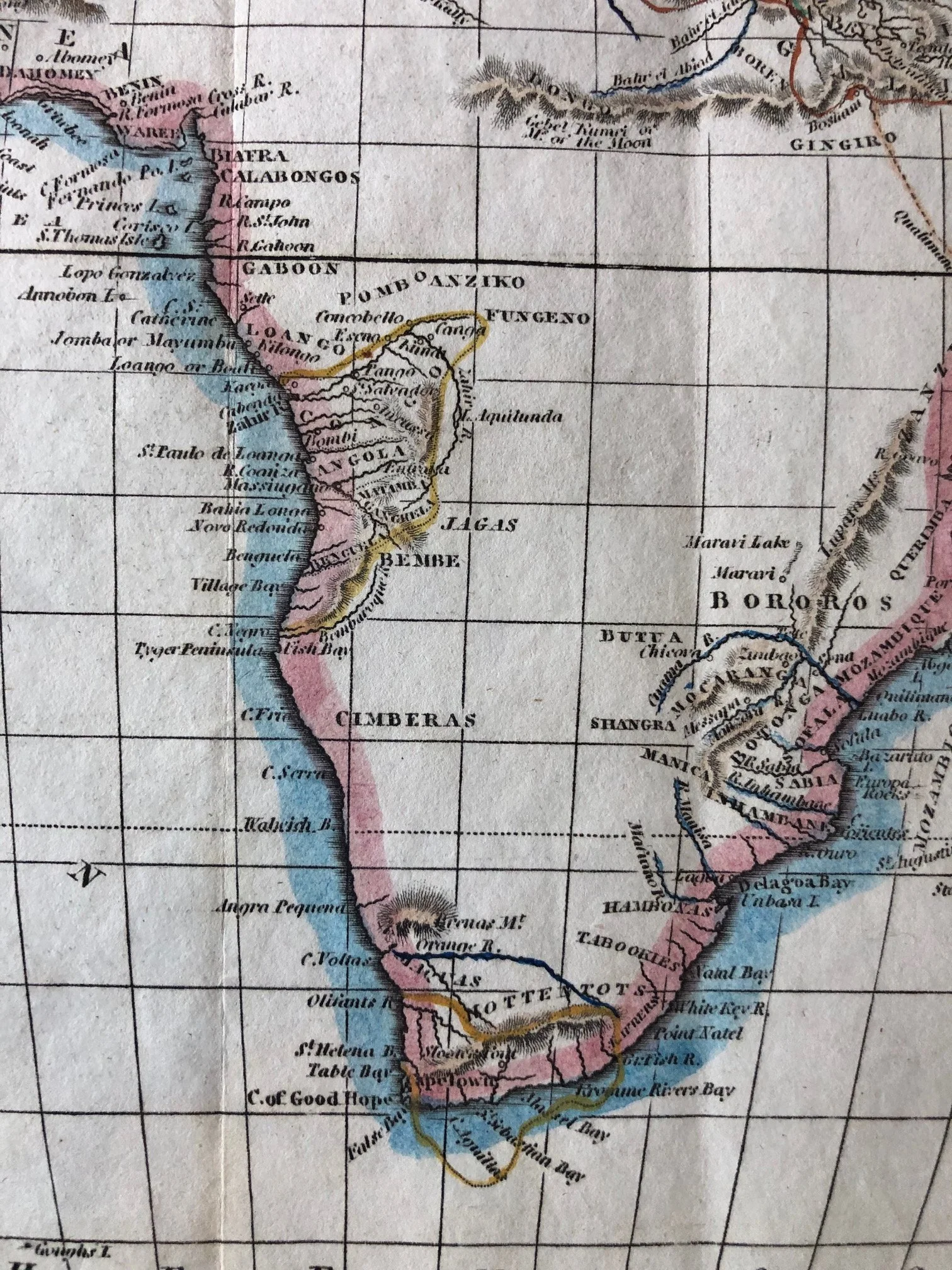
Note the ghosting of the tip of southern Africa, this is where cartographers speculate as to the shape of the tip of Africa.
315mm x 270mm
Hand coloured copperplate engraving. Some minor stains and creases.
R3,000