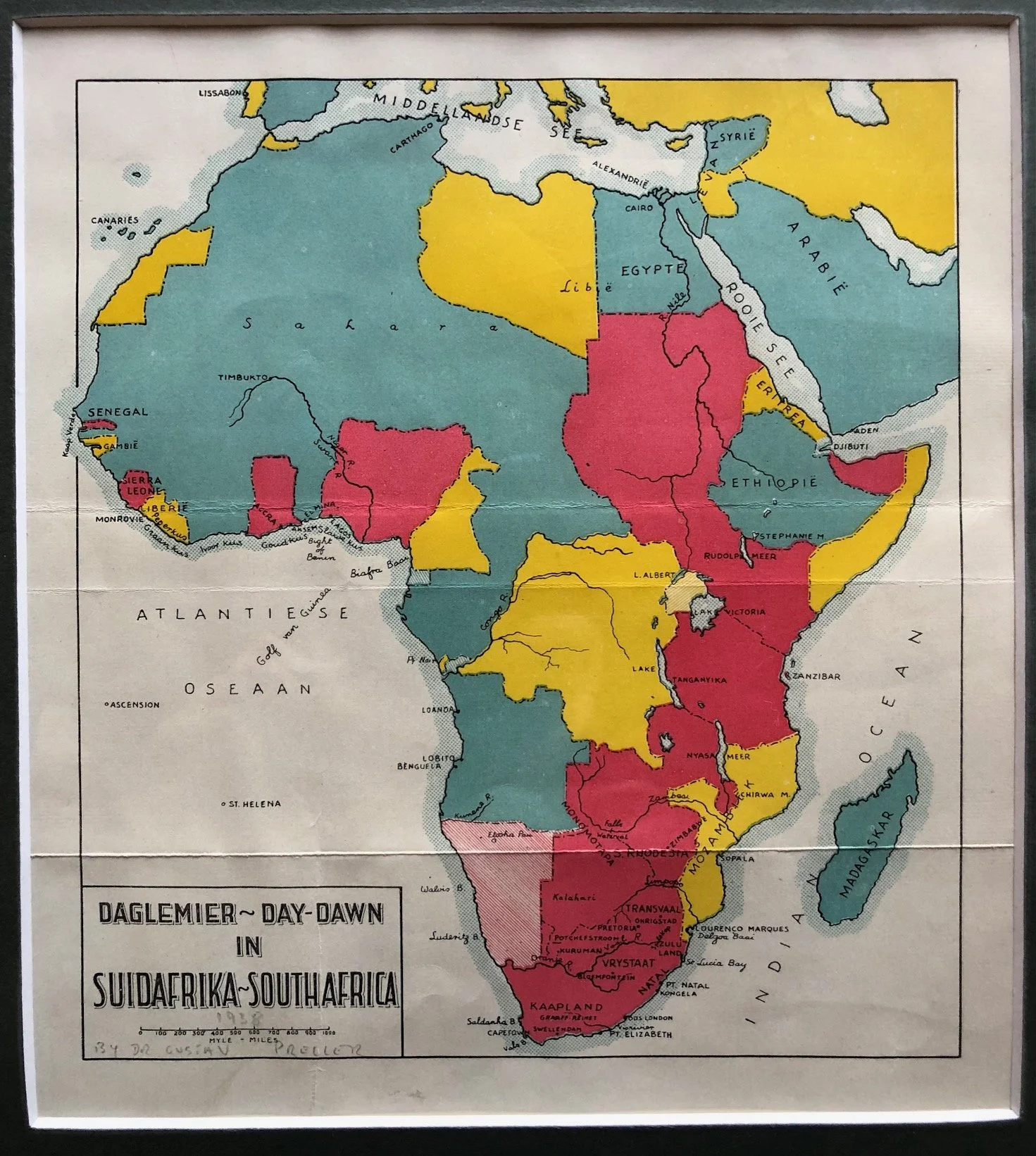
Daglemier / Day-Dawn in South Africa, by Dr. Gustav Schoeman Preller (1938)
This striking, color-blocked map is an interesting piece of 20th-century geopolitical and cultural ephemera. It was featured in the 1937 historical work Daglemier in Suid-Afrika / Day-Dawn in South Africa, written by Dr. Gustav Schoeman Preller.
The map reflects a deeply influential period of Afrikaner nationalism, historical revisionism, and early 20th-century colonial perspectives.
The Author: An Architect of Afrikaner Nationalism
Dr. Gustav Preller (1875–1943) was one of the most prominent journalists, historians, and cultural figures of the early 20th century in South Africa. He played a pivotal role in popularizing the Afrikaans language and was a key driver in romanticizing the history of the Voortrekkers (including writing the script for the landmark 1916 film De Voortrekkers).
The title of the map and book, Daglemier (an archaic Afrikaans word for the very first light of dawn), represents the nationalist narrative of the time—framing the history of European settlement and expansion as the bringing of "light" or a new dawn to the continent.
A Linguistic Transitional Artifact
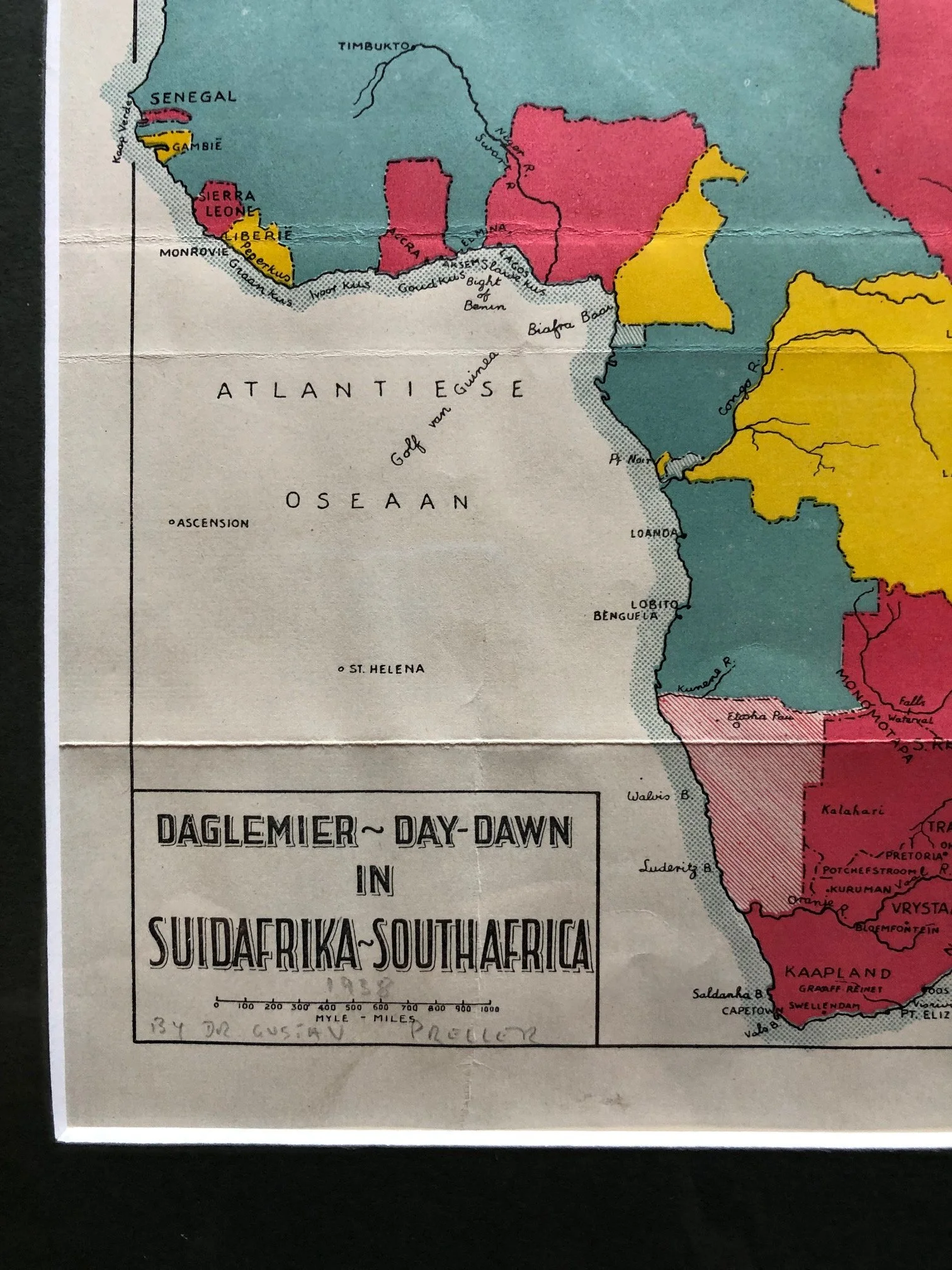
The map text captures a fascinating transitional phase in the Afrikaans language. While it is heavily localized, it still features older Dutch spelling variants and conventions alongside newer Afrikaans forms (such as Middellandse See, Rooie See, Oseeaan, and Egiptë). The dual-language title block (Suidafrika~Southafrica) shows that the book was aimed at a broad local audience during the era of the Union of South Africa, when British and Afrikaner identities were navigating a tense co-existence.
Geopolitical Cartography of 1937
Though the book's narrative covers the history of South Africa up to 1881, the map layout highlights the broader African continent through a distinctly 1930s lens:
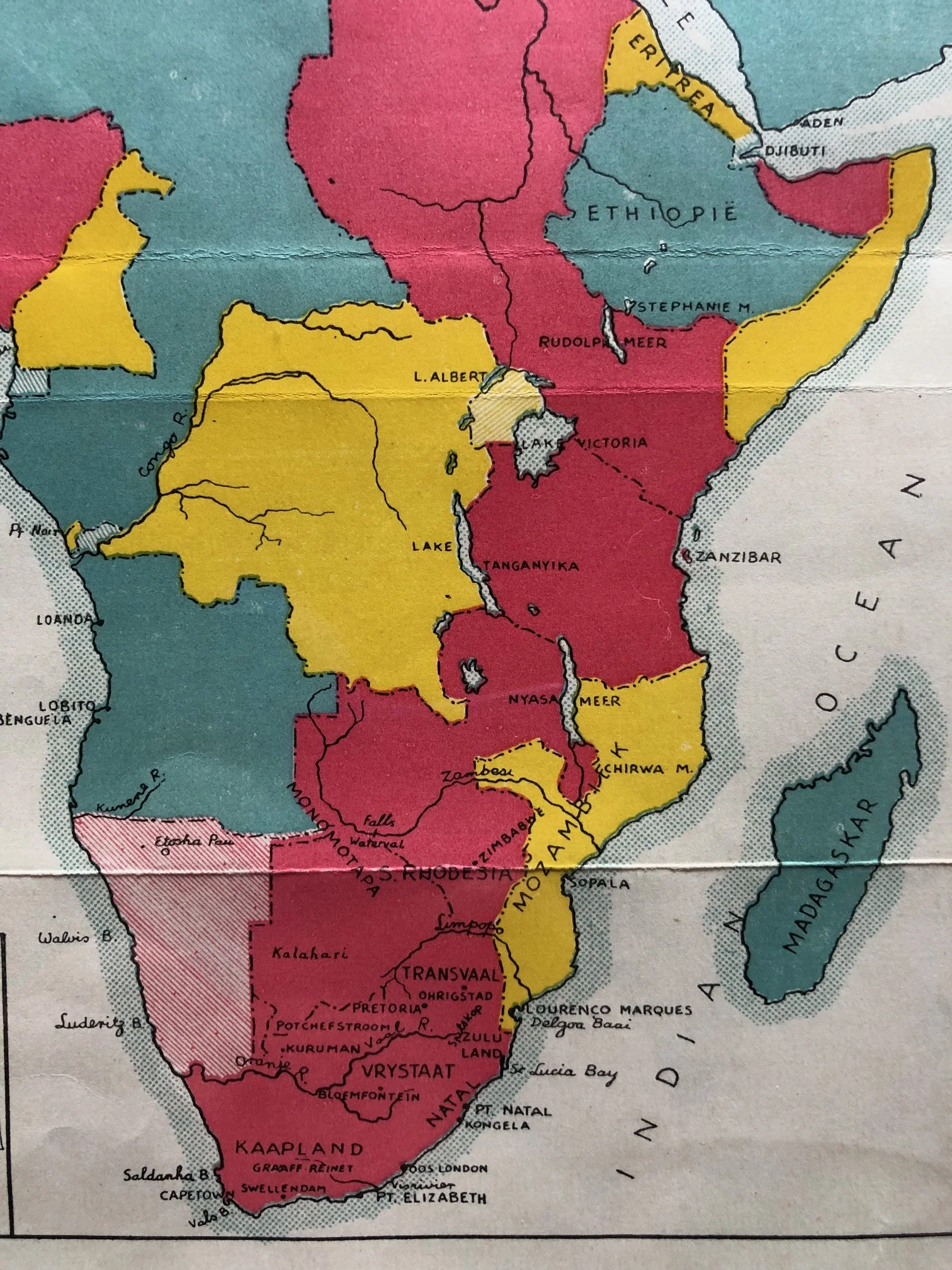
The Imperial Corridor: The map uses sharp color-coding to emphasize the immense "Cape to Cairo" British imperial footprint (marked heavily in pink/red), which ran continuously down the eastern spine of the continent.
Monomotapa and Zimbabwe: Interestingly, while the map frames the continent into modern political blocks, it includes specific historical and archaeological markers in the southern interior, such as Monomatapa and Zimbabwe. Preller, like many of his contemporaries, was deeply interested in tracking the older historical boundaries and legendary gold empires of the region.
The "Alluvial" Focus: The map gives outsized typographic weight to old coastal trading posts, river mouths, and bays (such as Saldanha B., St. Lucia Bay, Delagoa Baai, and the old names for the West African coast like Goudkus and Slawenkus), serving to chart the historical approach vectors of European powers toward the interior.
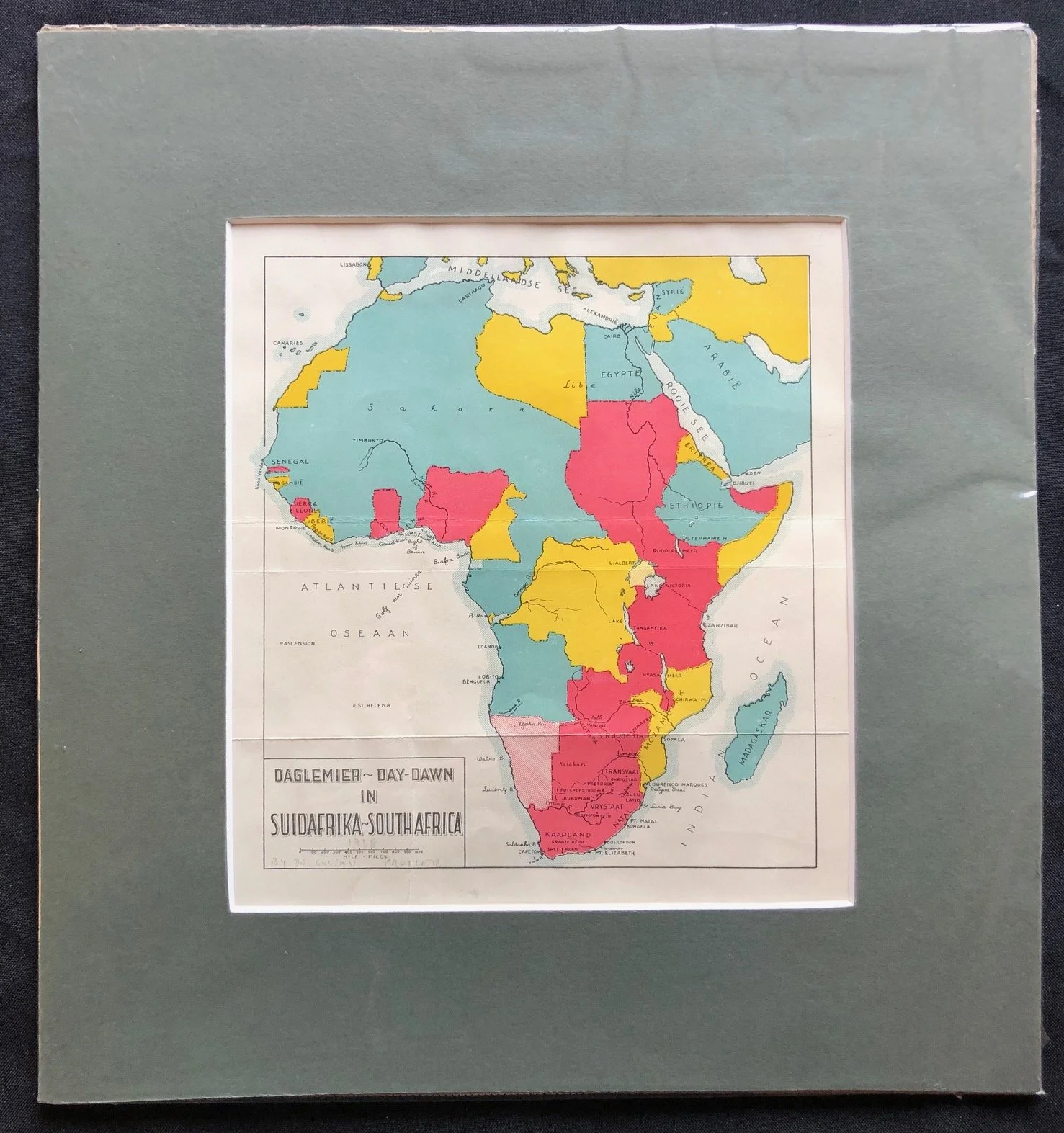
195mm x 220mm
Offset litho printing
R1,000