Map of Africa, from Diaz to Rhodes (c.1920)
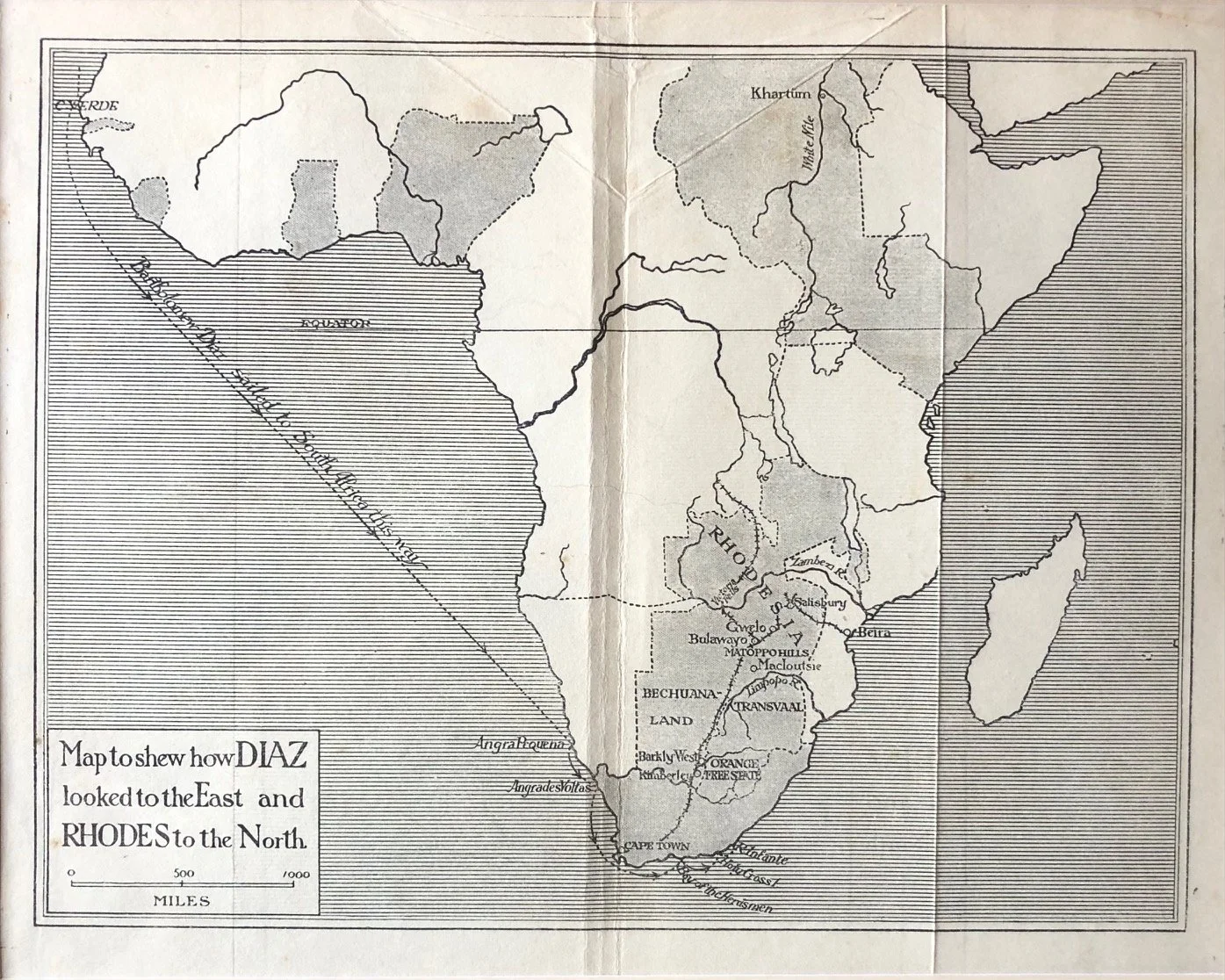
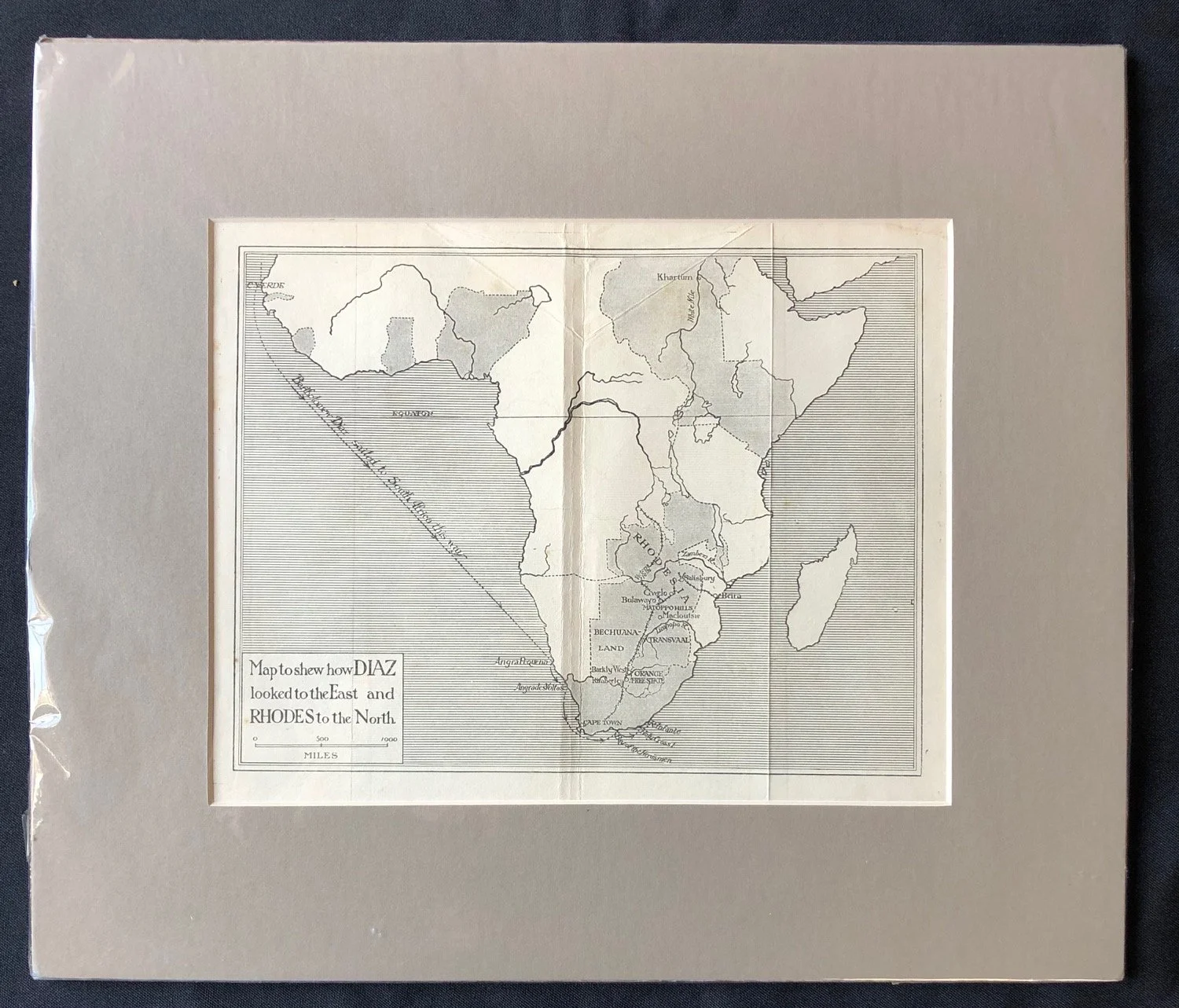
This map is an explicitly ideological and political piece of cartography from the late 19th or early 20th century, designed to contrast and link two vastly different eras of European expansion in Africa. Titled "Map to shew how DIAZ looked to the East and RHODES to the North," it serves as a powerful piece of historical propaganda.
The Justification of the "Cape to Cairo" Dream
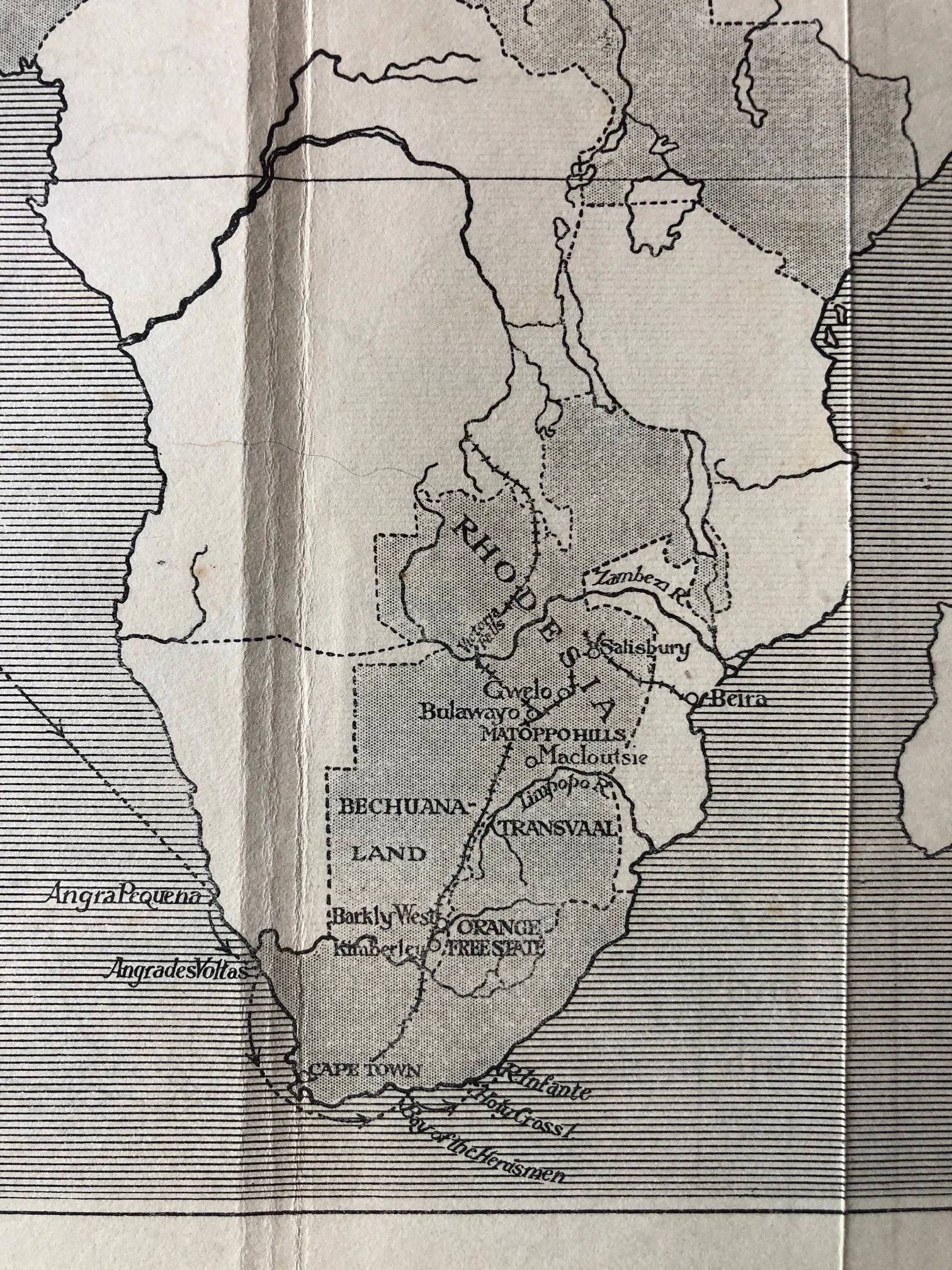
The primary purpose of this map is to visually legitimize the imperial ambitions of Cecil John Rhodes. Rhodes famously envisioned a continuous, unbroken line of British colonial territory stretching from Cape Town to Cairo—the "Cape to Cairo Red Line." By drawing a dotted line all the way up through the Transvaal, Bechuanaland, Rhodesia, and straight toward Khartoum and Egypt, the map reframes Rhodes’ aggressive corporate and imperial expansion as a logical, historical destiny for the continent.
Paralleling Exploration with Colonization
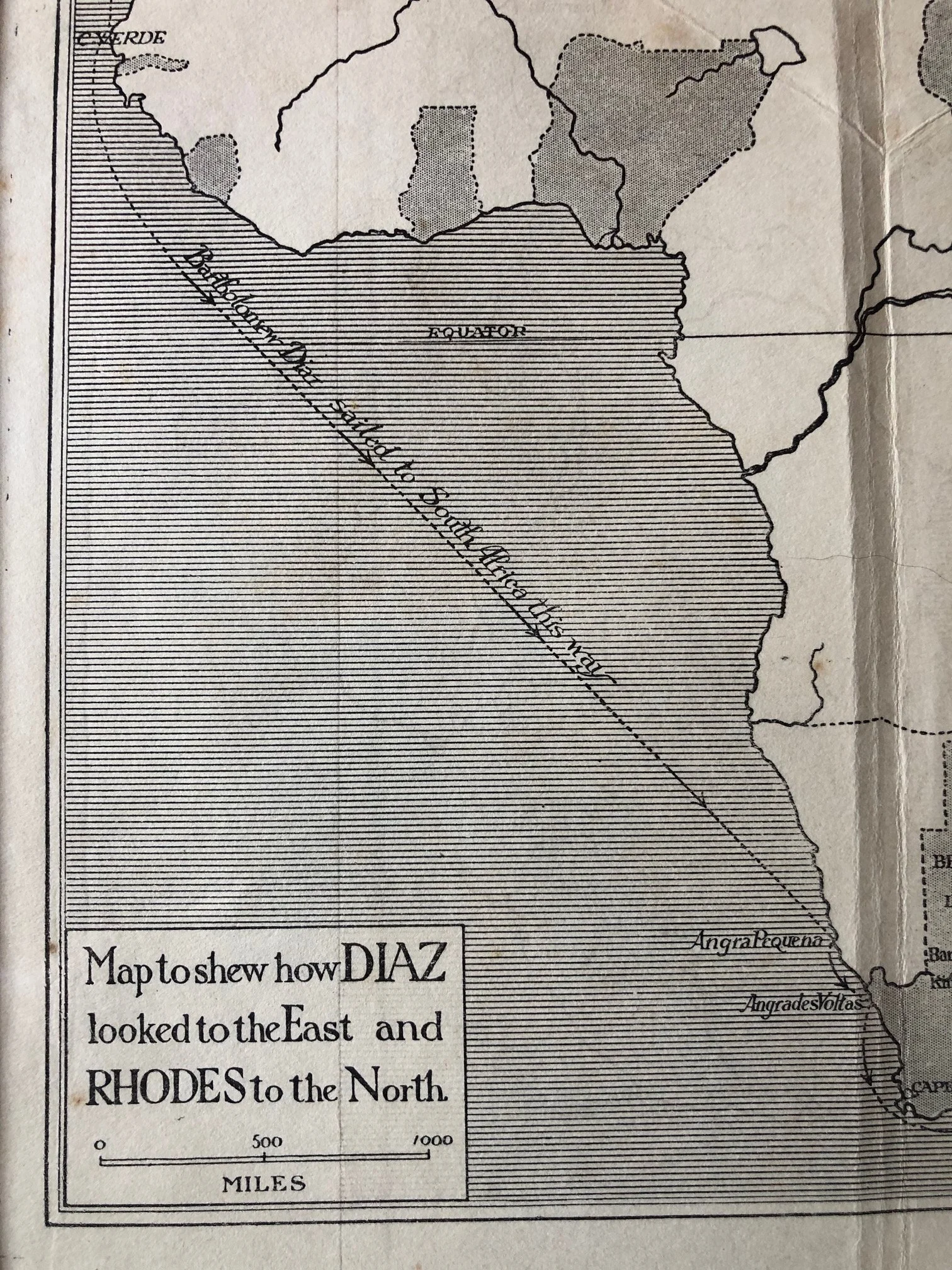
The map juxtaposes the 1488 maritime voyage of Portuguese explorer Bartolomeu Dias (labeled here as Diaz) with the inland territorial conquests of Cecil Rhodes four centuries later.
The Contrast: While Dias curved around the coast to find a sea route to the wealth of the East Indies (looking East), Rhodes used railroads, treaties, and private armies to push deep into the African interior (looking North).
The Message: By placing Rhodes on the same historical plane as Dias, the mapmaker elevates a 19th-century mining magnate and politician to the mythic status of the great Age of Discovery explorers.
A Snapshot of Chartered Company Rule
The presence of "RHODESIA" on the map highlights a unique and brutal chapter in colonial history. This region (modern-day Zimbabwe and Zambia) was not initially conquered by the British military or governed by the Crown; it was annexed and ruled by Rhodes’s private commercial entity, the British South Africa Company (BSAC). The map explicitly names settlements born from this corporate expansion, such as Salisbury (Harare) and Bulawayo, as well as the Matoppo Hills (Matobo Hills), the spiritual heartland of the Matabele people where Rhodes orchestrated peace negotiations and where he chose to be buried.
250mm x 200mm
Some creasing.
R1,000