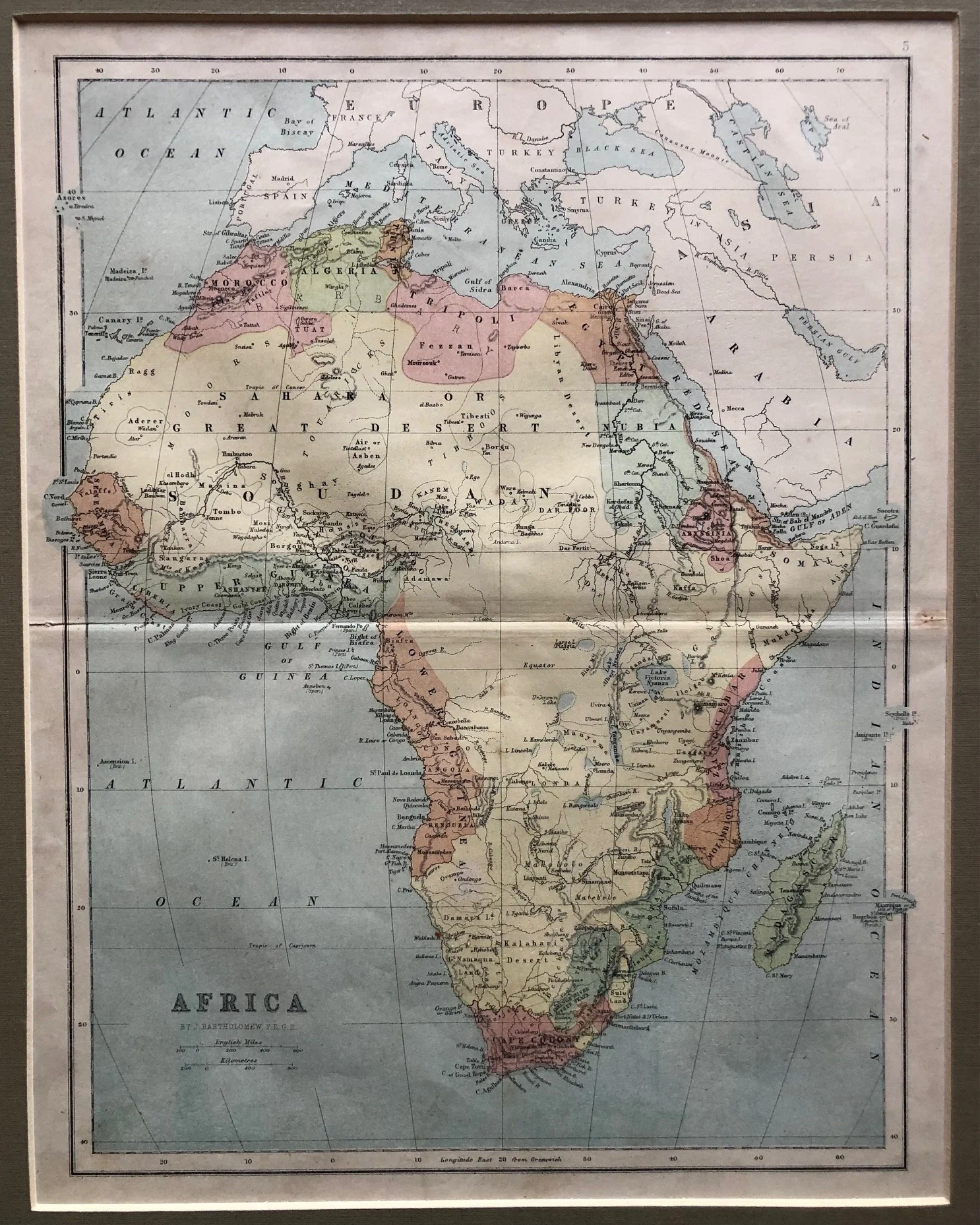
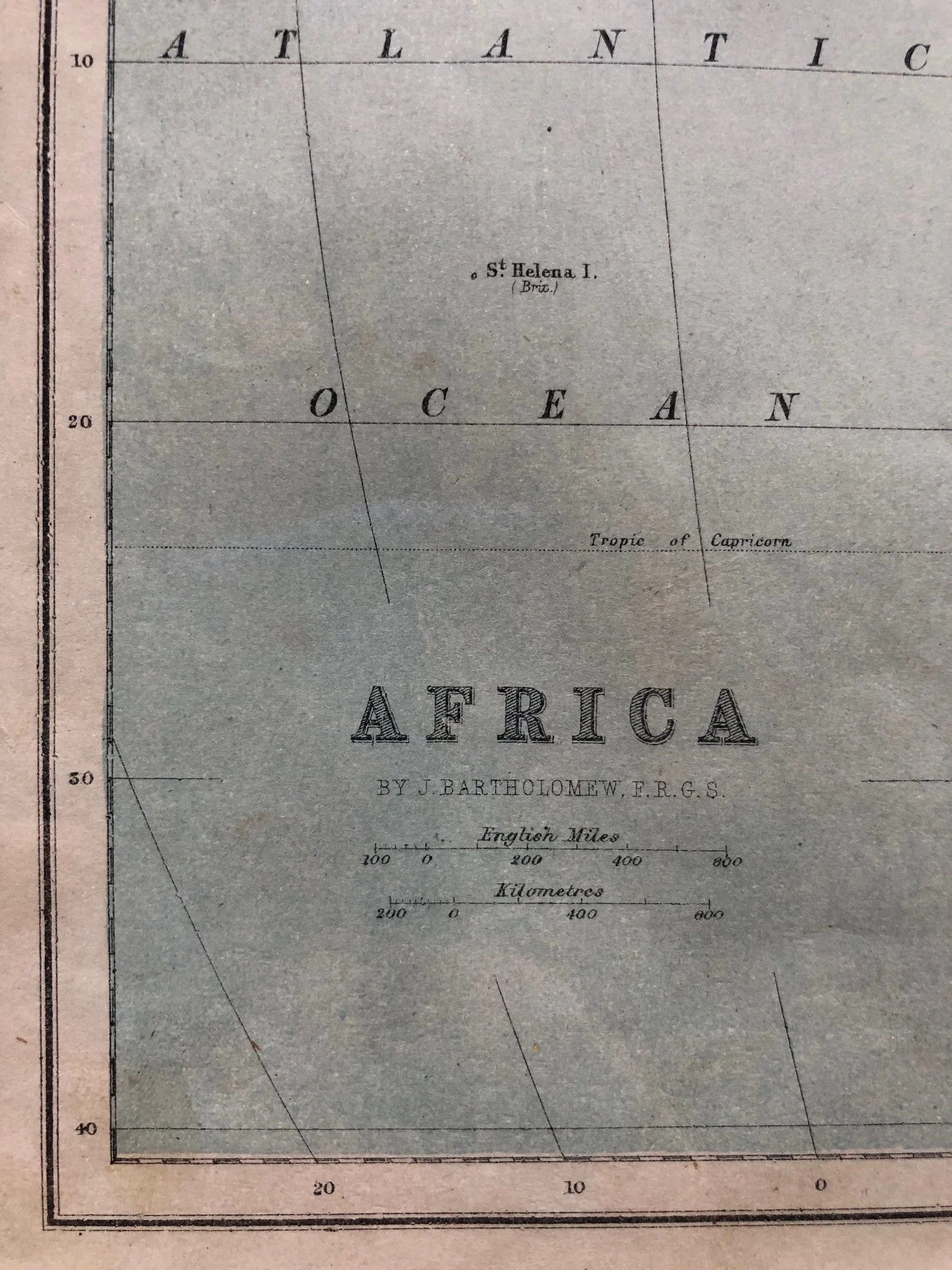
Map of Africa , produced by British cartographer John Bartholomew (c.1873)
Hand coloured engraving.
This map, produced by the prominent British cartographer John Bartholomew in the latter half of the 19th century, captures a fascinating transitional moment in African history. It reflects an era just before the "Scramble for Africa," where accurate coastal mapping and early colonial footprints coexisted with ancient trading empires and persistent geographical myths.
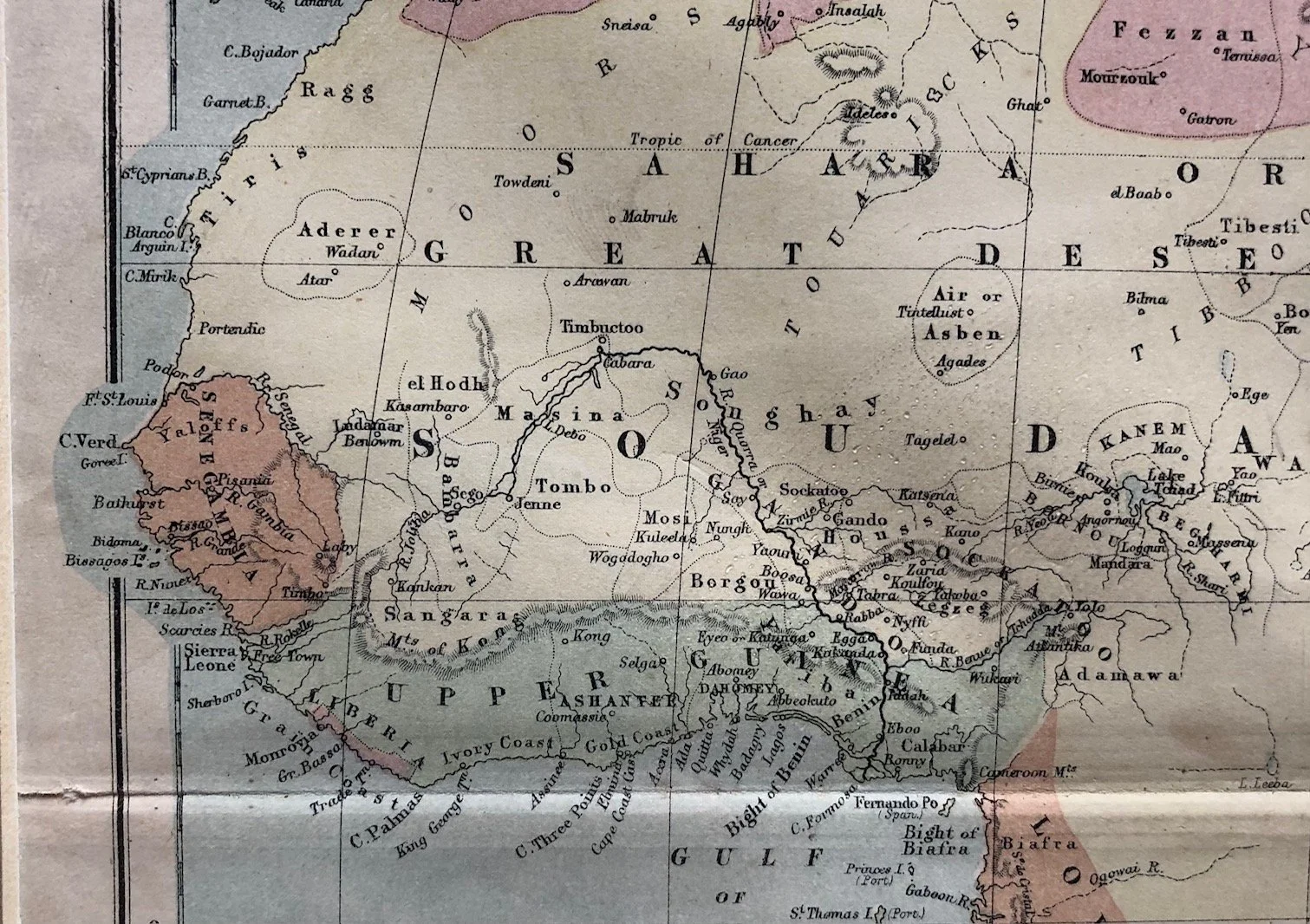
The Persistence of the Kong Mountains
In West Africa, the map proudly displays the Mts. of Kong stretching horizontally above the Upper Guinea coast. This map demonstrates just how deeply entrenched this cartographic error was. Despite no explorer ever setting eyes on them, premier cartographers like Bartholomew continued to include this massive fictional mountain range until it was finally disproven by French explorer Louis-Gustave Binger in 1889.
The Rise of Cape Colony and the Independence of Zululand
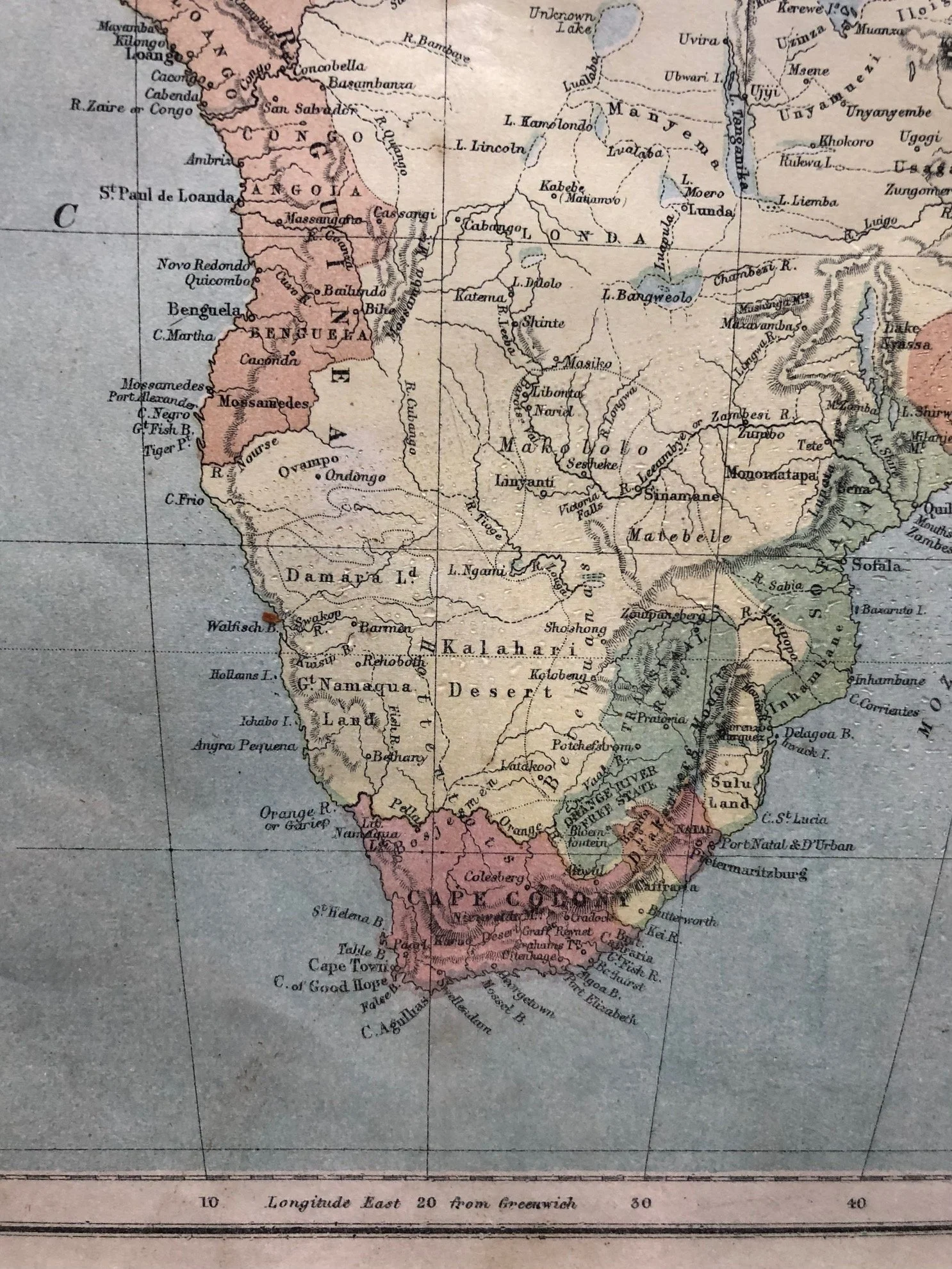
In the southern portion of the continent, the map illustrates the complex geopolitical landscape of the region prior to the major Anglo-Boer and Anglo-Zulu conflicts:
Cape Colony: The British Cape Colony is clearly defined at the southern tip, showing its steady northward expansion toward the Orange River.
Zululand: To the northeast, the map marks Zululand (labeled here as Sulu Land). This maps the territory during the height of the sovereign Zulu Kingdom's power, capturing it as an independent territory before the outbreak of the Anglo-Zulu War in 1879.
Sofala and the Shadows of the Gold Trade
Further up the east coast, the map highlights Sofala, one of the most historically significant ports in Southern Africa.
For centuries, Sofala was the southernmost harbor of the Swahili Coast trade network and the primary maritime outlet for the gold wealth of the interior Monomatapa empire (which is also noted just inland on the map).
By the time this map was engraved, Sofala's prominence had waned significantly due to silting and the rise of Beira and Lourenço Marques, making its prominent placement a nod to older Portuguese trade routes and historical gold networks.
250mm x 325mm
R1,250