L'Afrique suivant les dernières Observations de l'Academie Royale des Sciences (c.1740)
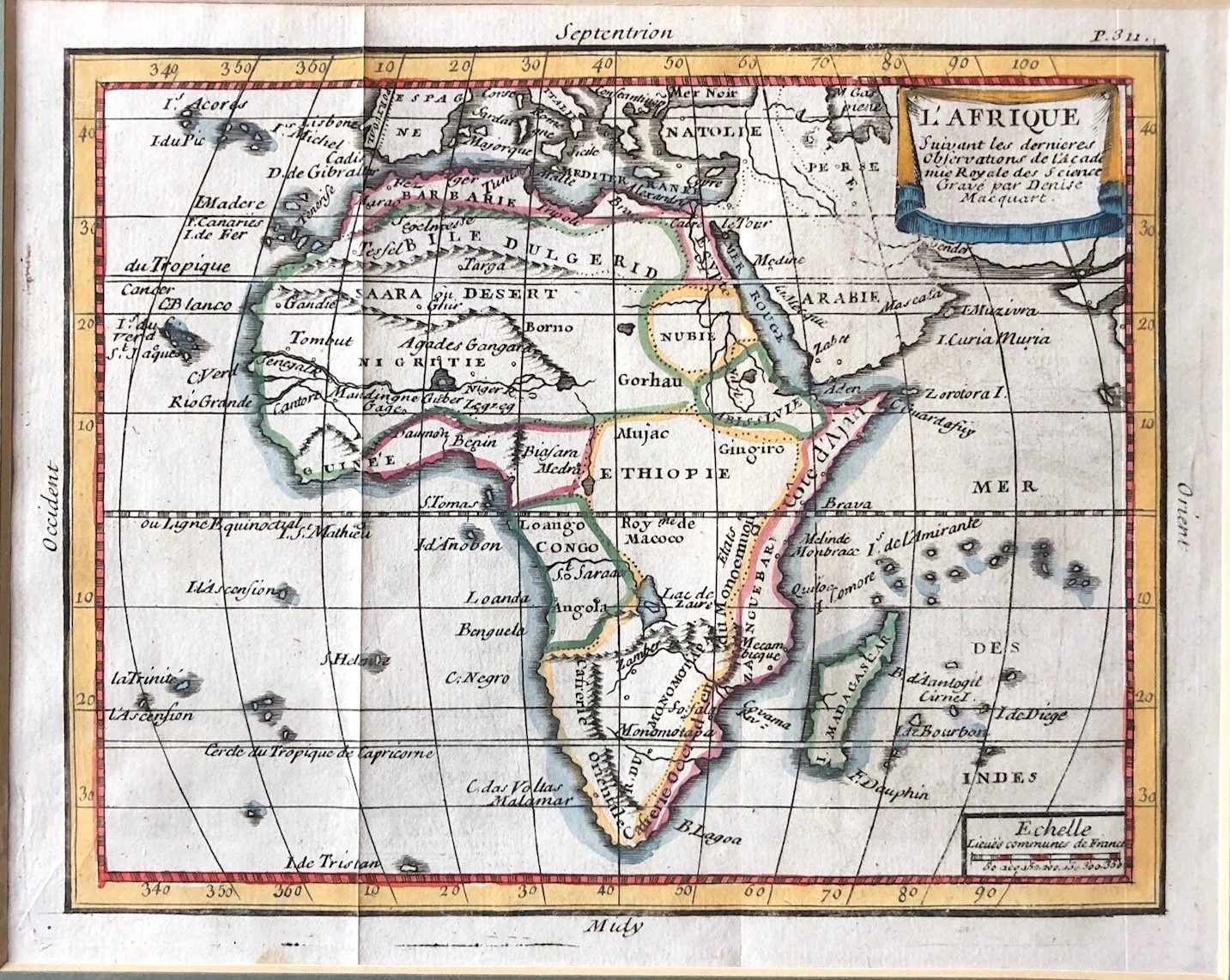
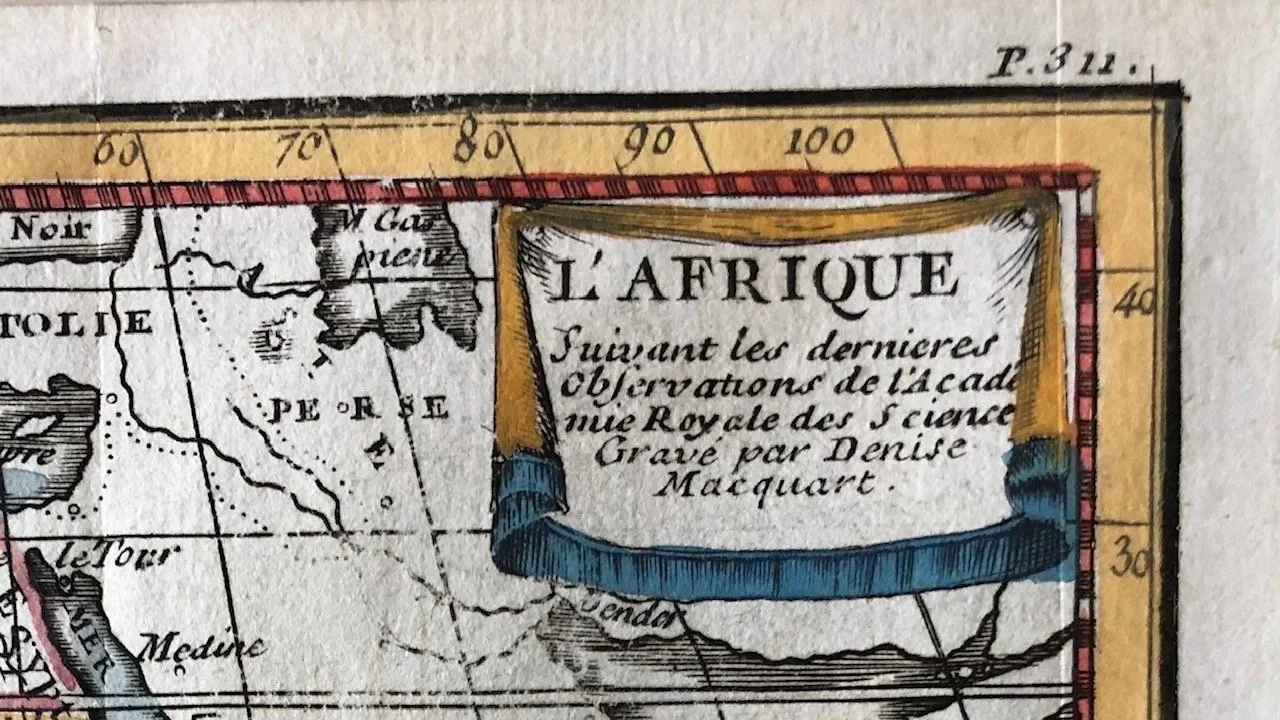
This map, titled "L'AFRIQUE Suivant les dernieres Observations de l'Academie Royale des Sciences," was engraved by Denise Macquart in Paris during the 18th century. It represents a pivotal turning point in the history of cartography: the transition from speculative fantasy to rigorous scientific skepticism.
The Radical "Emptying" of Africa
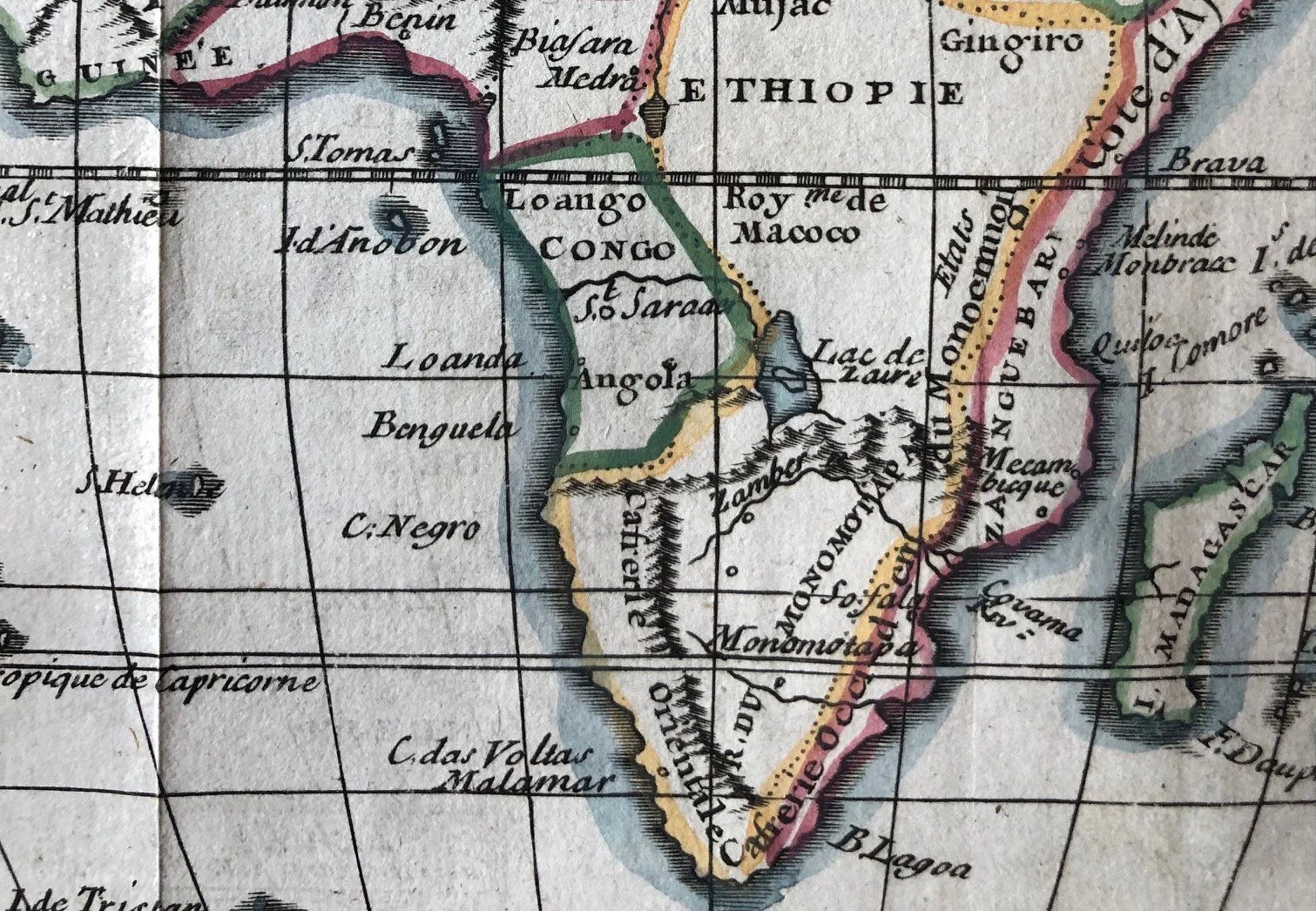
If you contrast this map with earlier 16th- and 17th-century maps, the most striking change is how remarkably blank the interior has become.
Around the start of the 18th century, French cartographers led by Guillaume Delisle and the Académie Royale des Sciences revolutionized mapmaking. They decided that if a river, mountain, or kingdom could not be verified by precise astronomical observations or reliable mathematical data, it had to be completely removed.
The Result: The mythological dual lakes of the Nile and the speculative empires of the interior were ruthlessly swept away. Cartographers proudly left the center of the continent empty rather than filling it with rumors, a practice that defined the Enlightenment era's commitment to empirical truth.
A Female Engraver in the Enlightenment
The cartouche credits the engraver: "Gravé par Denise Macquart."
While the history of cartography is often told through the names of famous men (like Mercator, Ortelius, or Delisle), the actual production of these maps in Paris and Amsterdam relied heavily on women. Wives, daughters, and widows frequently ran printing businesses, engraved intricate copper plates, and managed the complex economics of map publishing. Seeing a woman's name proudly and prominently credited on an official scientific map cartouche from this era is a brilliant testament to the vital role women played in the Enlightenment print trade.
The Re-positioned Nile and "Lac de Zaire"
Because the French Academy demanded proof, the geography of the Nile's source was entirely reworked. Instead of stretching deep into the southern hemisphere via Ptolemy's ancient lakes, the Nile is shown originating correctly in the highlands of Abyssinia (Ethiopia). Meanwhile, a solitary, mysterious "Lac de Zaire" is pushed down toward the center-south—a lingering placeholder for the African Great Lakes that wouldn't be fully traced by Europeans until the mid-19th century.
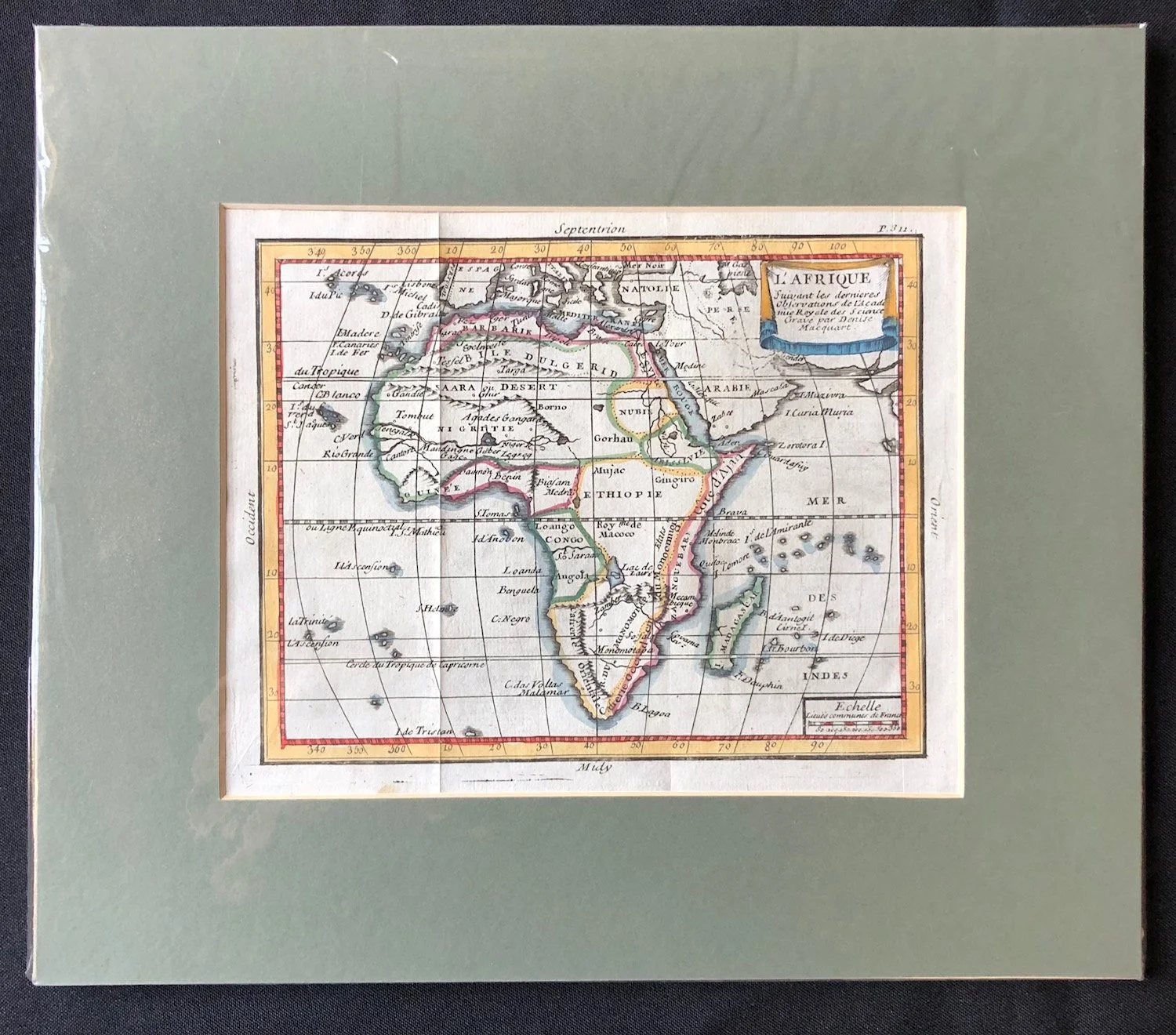
210mm x 160mm
Minor creasing and small stain.
R2,250