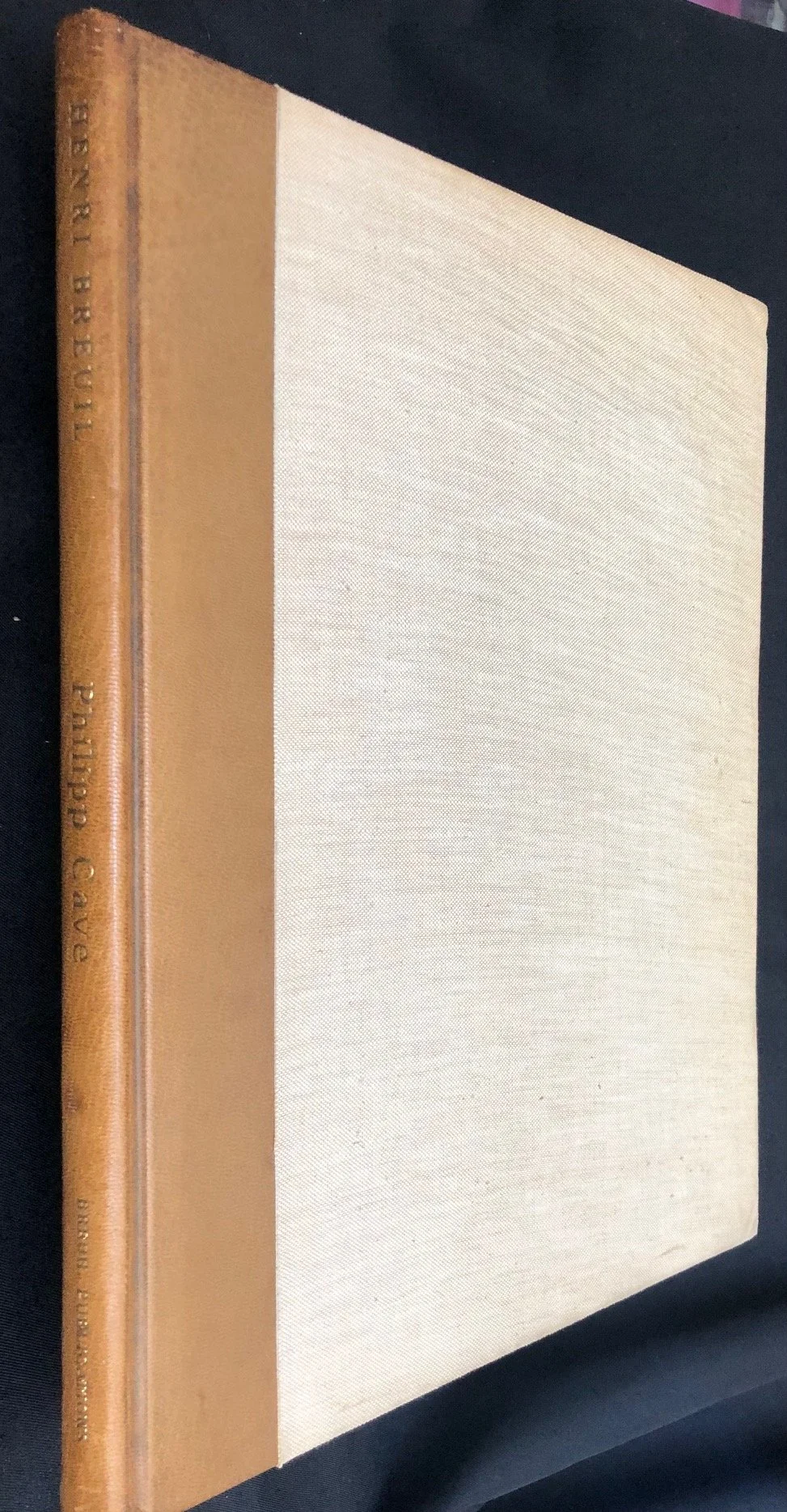
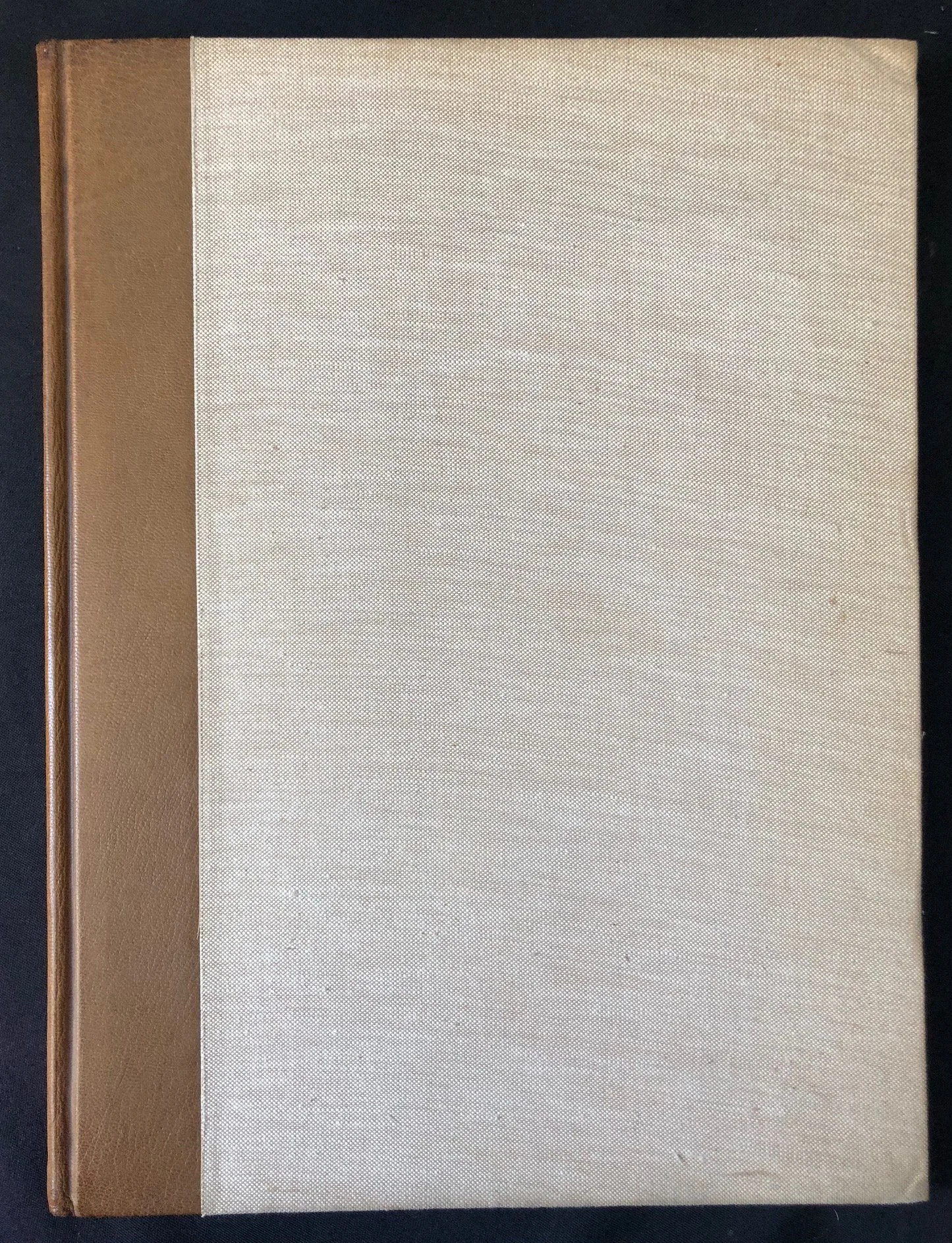
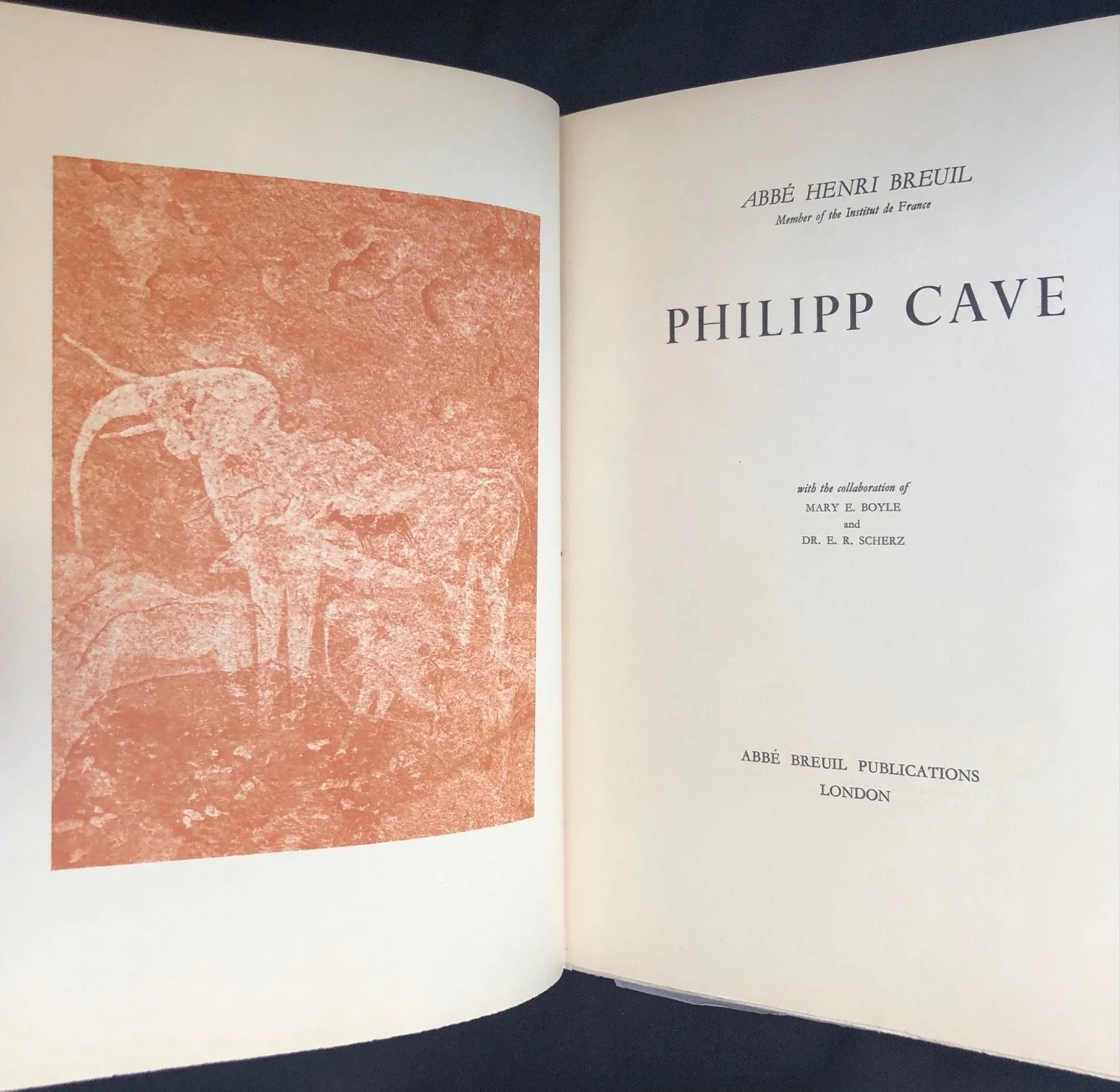
Philipp Cave (1957)
With the collaboration of Mary E. Boyle and Dr E. R. Scherz
De Luxe Edition
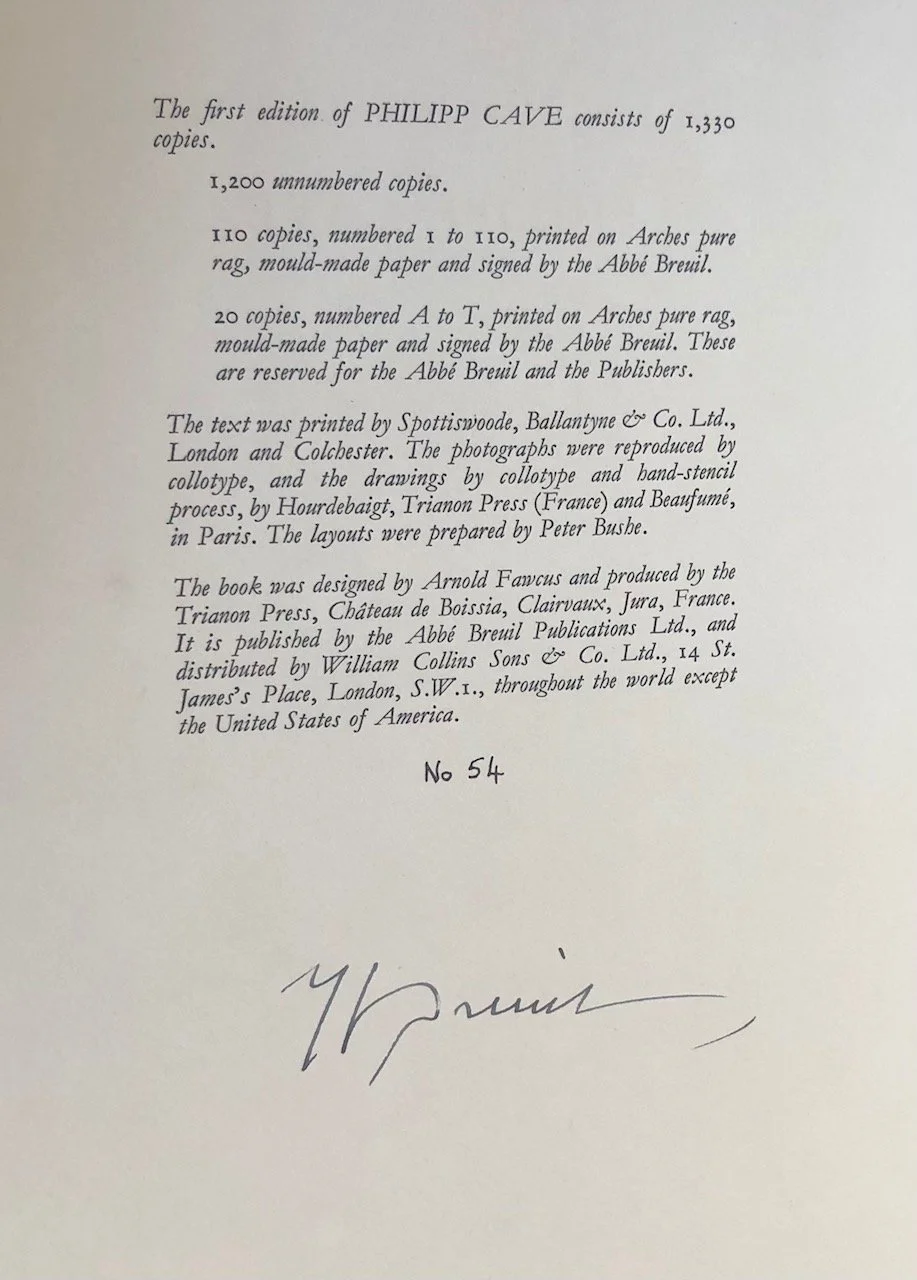
No 54 out of 110 copies printed on rag paper and signed by Abbé Breuil.
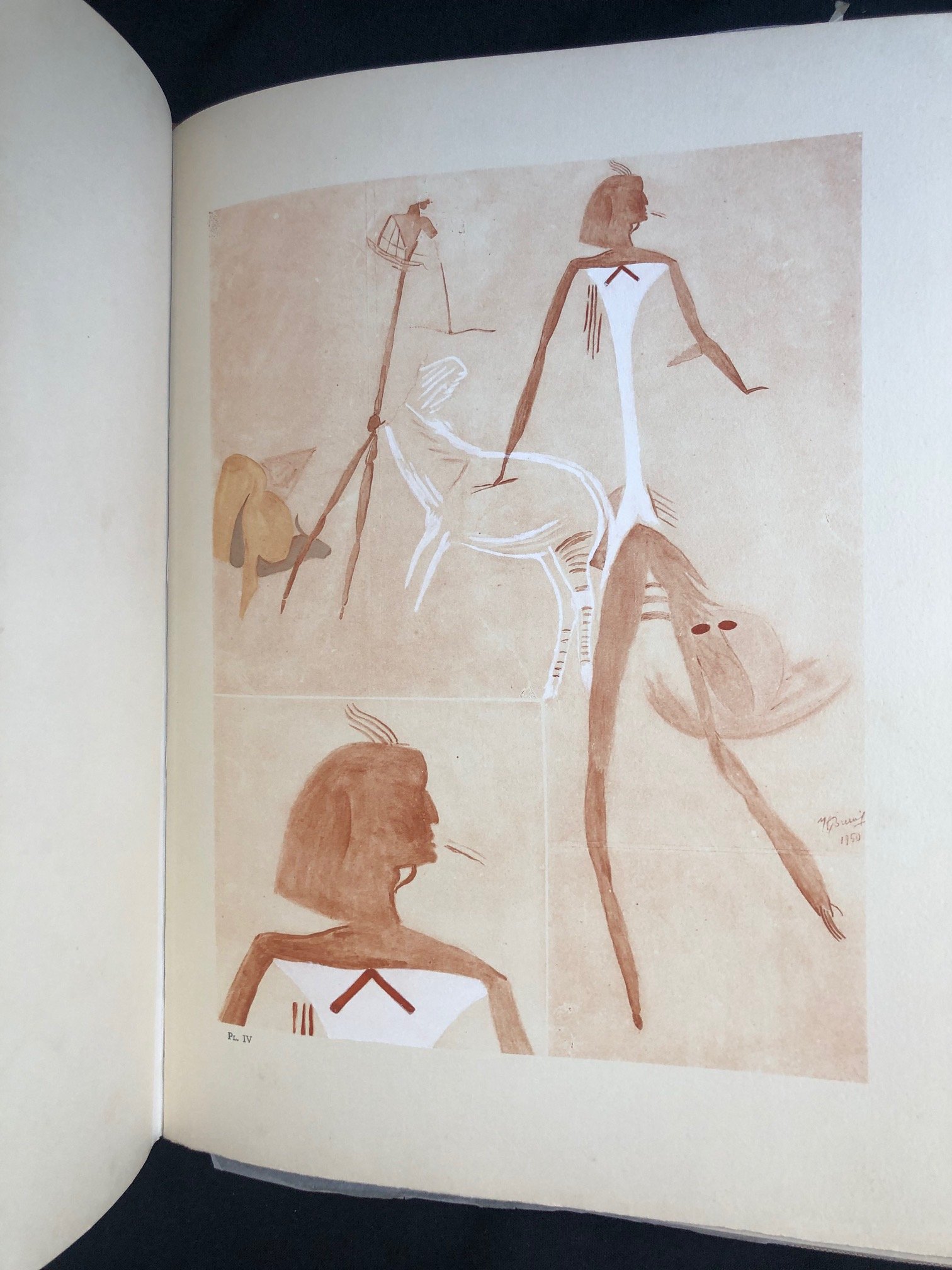
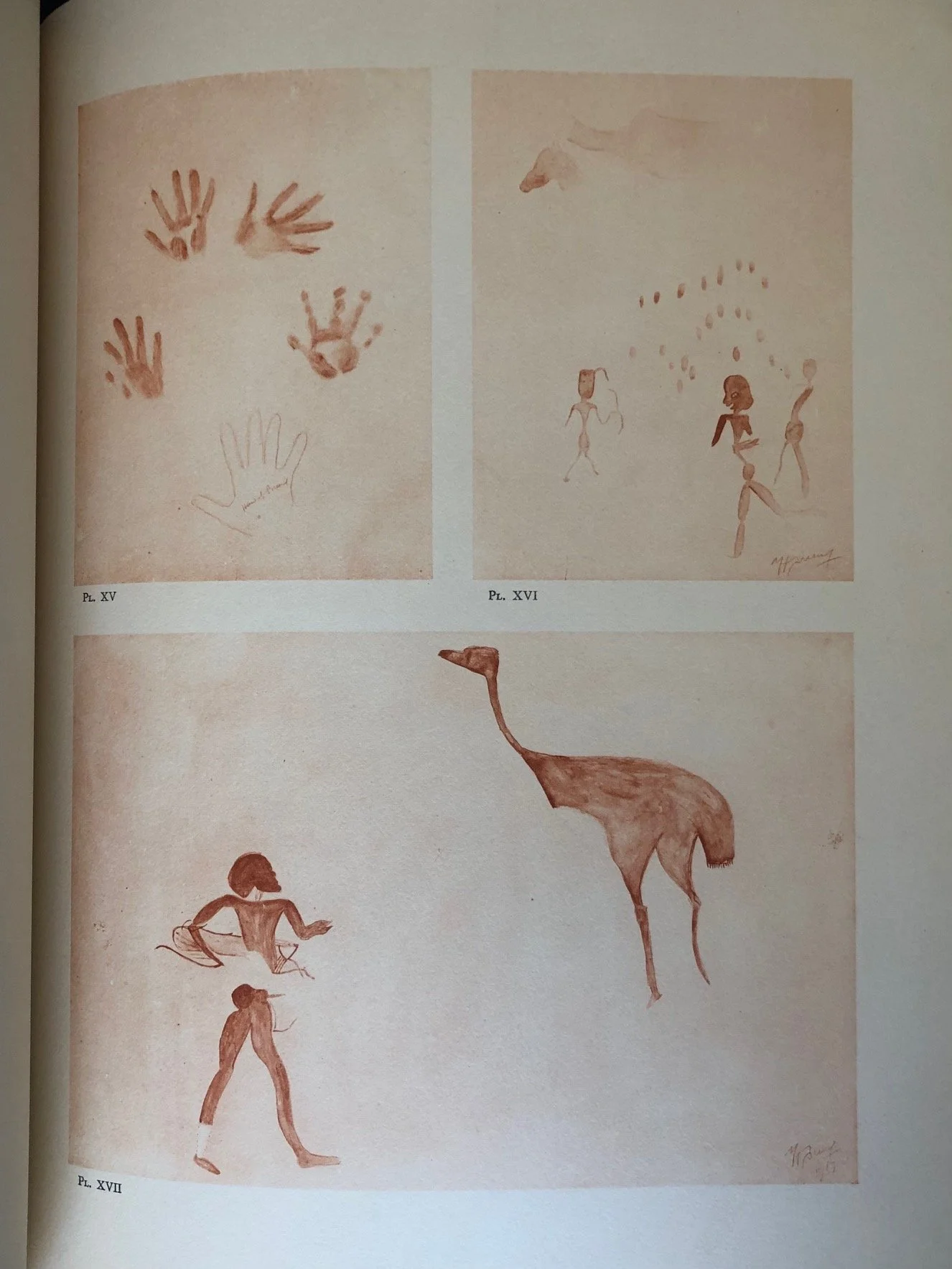
The collotype illustrations were finished off using a stencil for effect.
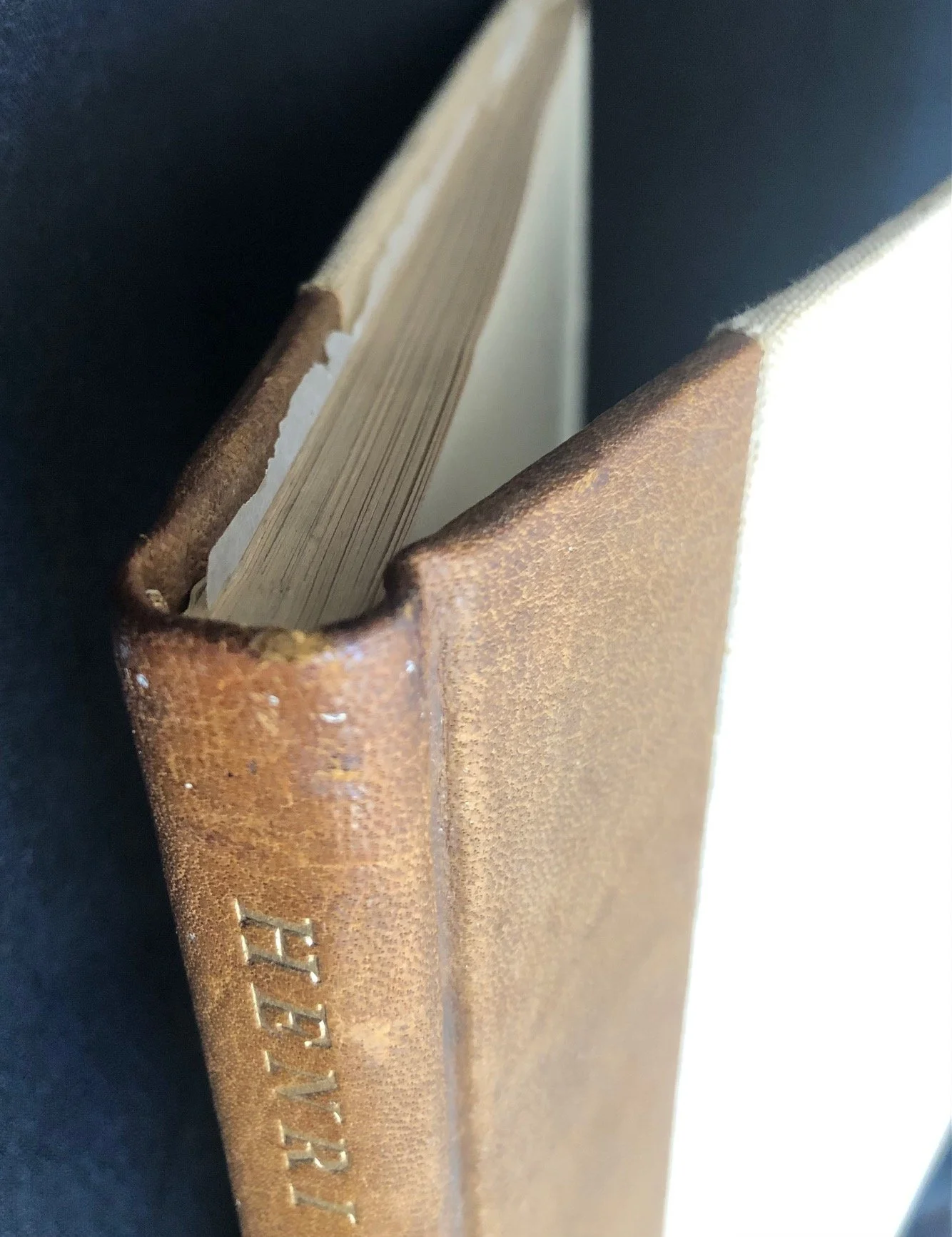
Slight foxing.
285mm x 380mm x 20mm
R3,000
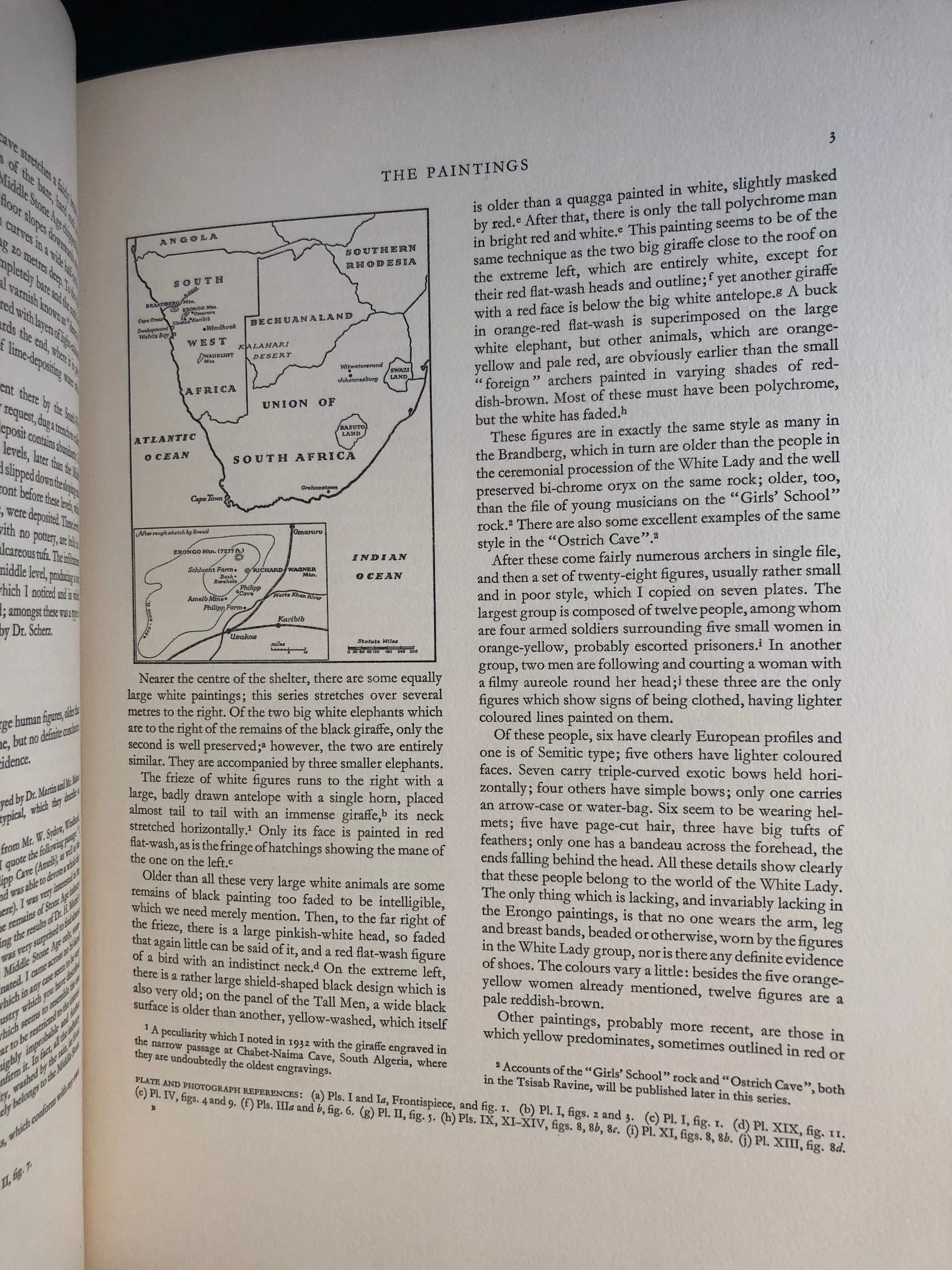
Philipp Cave, published in 1957 as Volume II in the landmark fine-press series The Rock Paintings of Southern Africa. Written by the famed French prehistorian Abbé Henri Breuil in collaboration with Mary E. Boyle and Dr. Ernst Rudolf Scherz, it documents the ancient San rock art shelters on the Philipp Farm in the Erongo Mountains of Namibia.
1. A Rare De Luxe Edition Signed by "The Pope of Prehistory"
The colophon confirms this specific copy is No. 54 of the exclusive 110 de luxe copies printed on Arches pure rag, mould-made paper and hand-signed by Abbé Henri Breuil himself.
Out of a total limitation of 1,330 copies, 1,200 were issued unnumbered, while only 130 special copies (110 numbered + 20 lettered A–T for the author and publisher) were produced on premium French mould-made rag paper.
2. High-Mastery Printing: Collotype & Pochoir (Hand-Stencil)
The limitation page outlines the complex international craftsmanship required to produce the book:
Text Printing: Set and printed by Spottiswoode, Ballantyne & Co. Ltd. in London and Colchester.
Plates & Stenciling: The photographic plates were printed via collotype, and the artwork illustrations were executed using a combination of collotype and hand-stencil (pochoir) by Hourdebaigt and Beaufumé in Paris under the direction of the Trianon Press.
This laborious pochoir method involved applying individual watercolor pigments through thin cut stencils by hand, reproducing Breuil’s original field tracings and rock-face colors with extraordinary accuracy.
3. Masterminded by Arnold Fawcus & Trianon Press
Designed by Arnold Fawcus at the Trianon Press in Clairvaux (Jura, France), this volume represents fine-press bookmaking at its absolute peak. Fawcus was internationally renowned for his exacting standards—most famously for his William Blake Trust facsimiles—and brought the exact same museum-grade quality to Breuil’s African archaeological surveys.
4. Focus on the Erongo "White Elephant" & Rock Art Archaeology
Philipp Cave (located on Farm Ameib in the Erongo region of Namibia) is one of Africa’s premier rock art shelters. It is most famous for the "White Elephant" panel—a massive painting of an elephant executed in white pigment with a red outline, surrounding small human figures. Breuil’s documentation in this volume remains a cornerstone record of prehistoric art in South West Africa prior to modern site erosion.
5. Highly Sought-After Collectors' Item
Because of the low print run for the de luxe state (only 110 numbered copies worldwide), the pristine Arches rag paper, and Breuil’s original signature, this volume is one of the most desirable items in the entire 9-volume Trianon Press Rock Paintings of Southern Africa series for collectors of fine press, Africana, and prehistoric archaeology.