Lady Catherine Herbert, daughter of the 11th Earl of Pembroke (1848)
This letter, offers a window into a significant moment of social paternalism and architectural transformation in Victorian Scotland.
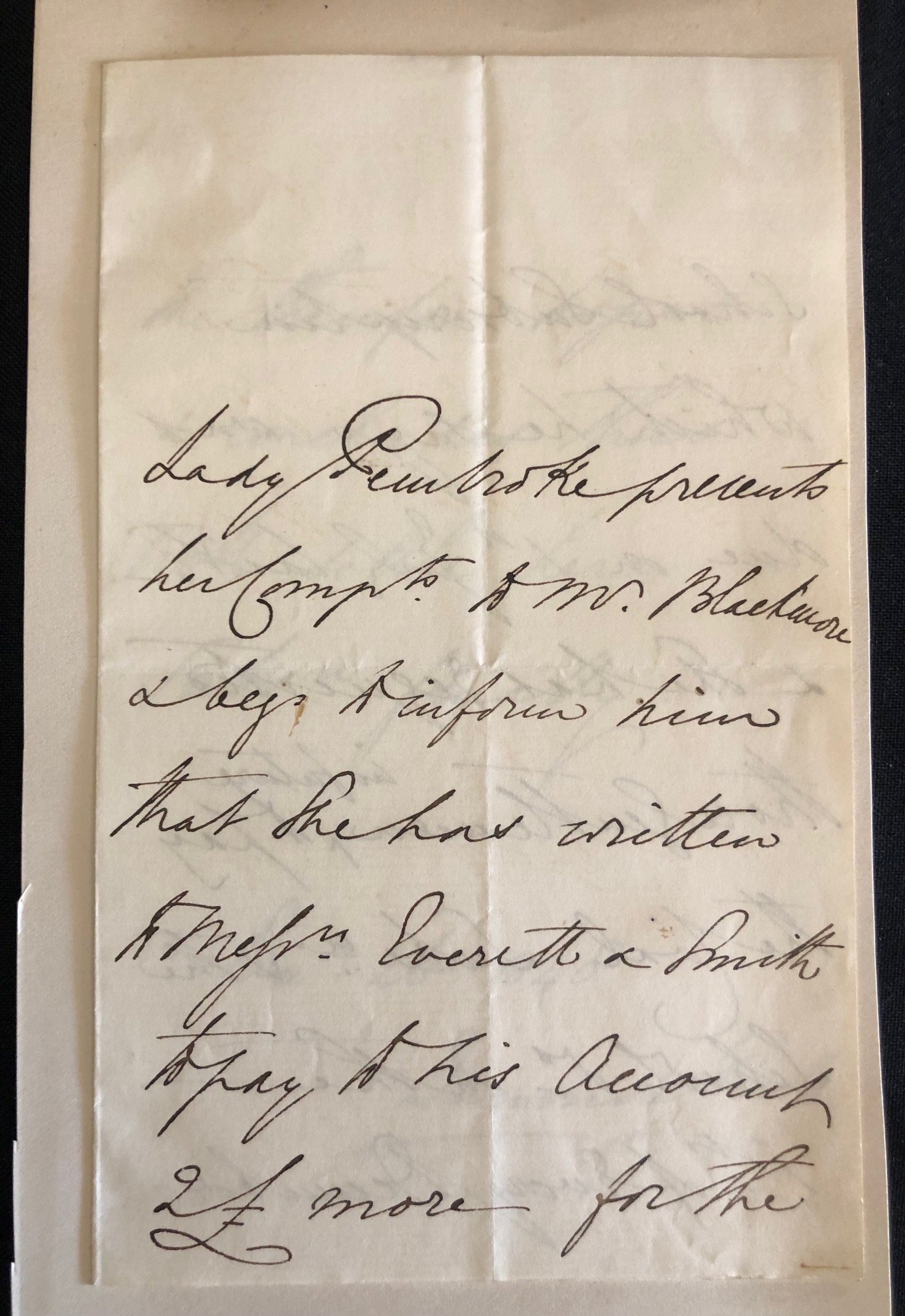
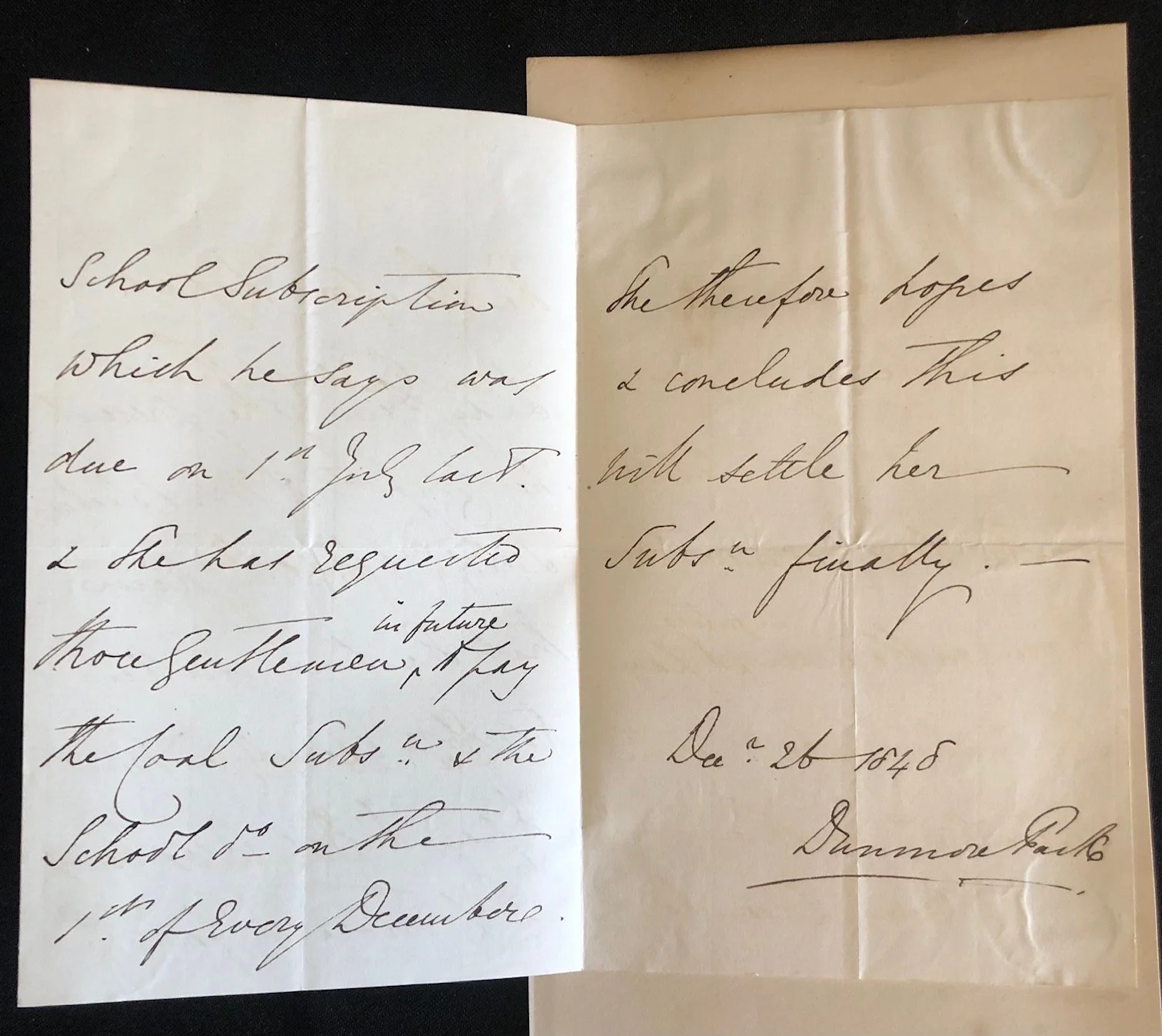
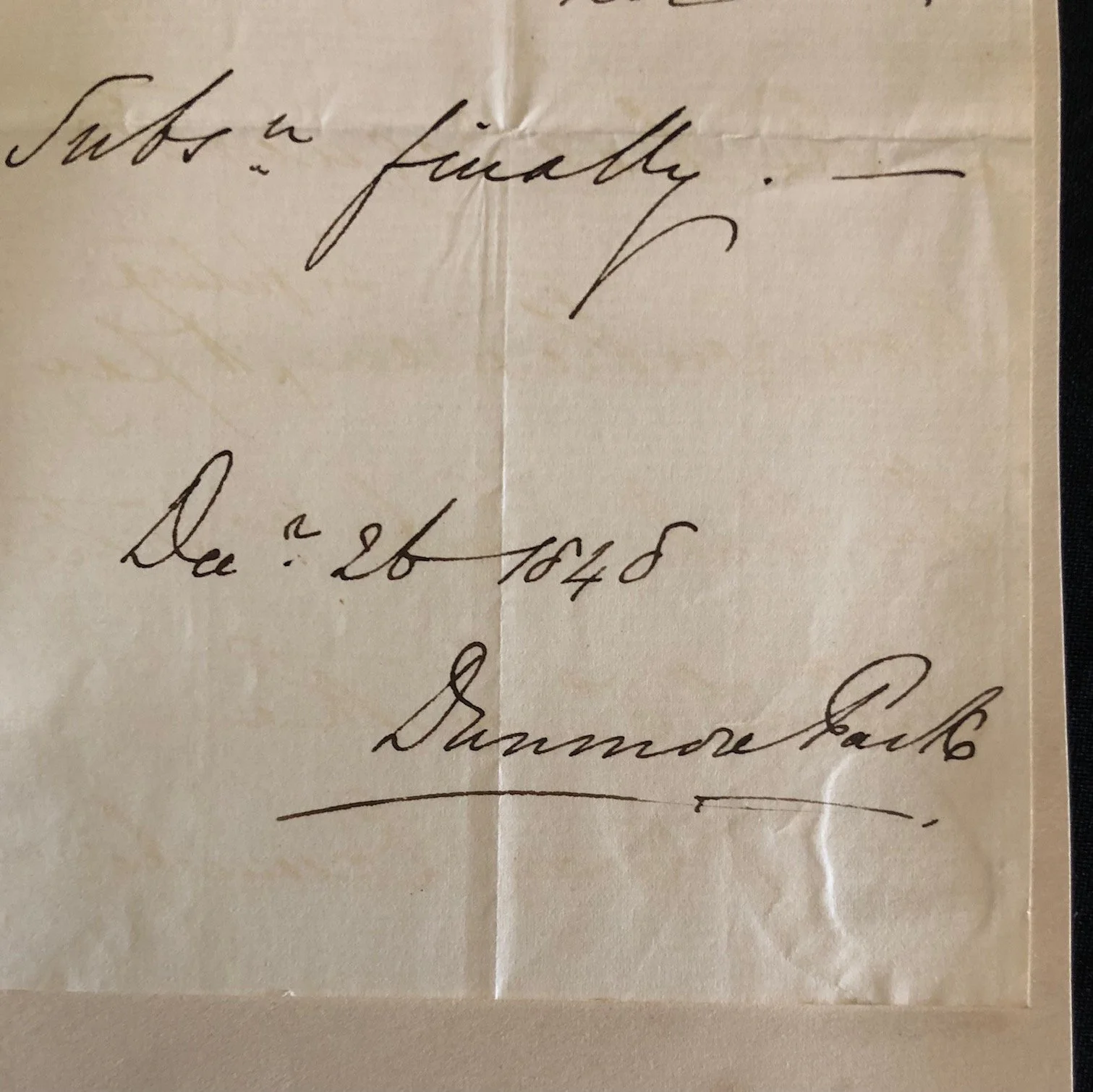
Lady Pembroke presents her compliments to Mr. Blackmore & begs to inform him that she has written to Messrs Everett & Smith to pay to his Account 2£ more for the school subscription which he says was due on 1st July last. & she has requested those Gentlemen in future to pay the Coal subscription (?) & the School (?) the 1st of every December. She therefore hopes & concludes this will settle her Subsn finally. Decr 26 1845 Dunmore Park
A Period of Mourning: Just a few months prior, in July 1845, Alexander Murray, the 6th Earl of Dunmore, passed away suddenly. The estate was left in the hands of his grieving widow, Lady Catherine Herbert (daughter of the 11th Earl of Pembroke), who was left to manage the sprawling estate and care for their young son, the 4-year-old 7th Earl.
The "Coal & School" Connection: Dunmore was originally a dilapidated coal-mining and salt-panning community known as Elphinstone Pans. Upon taking the reins of the estate as the Dowager Countess, Lady Catherine was appalled by the miserable living conditions of the local miners. She immediately set out to completely demolish the old miners' cottages and replace them with a pristine, English-style "model village" arranged around a central village green.
The Subscriptions: This letter captures her direct, hands-on involvement in funding the community's welfare during the exact winter she began remodeling the village. The "School Subscription" and "Coal Subscription" mentioned were philanthropic funds typical of the era, where the local nobility paid to keep the village school running and ensured the destitute or working-class families had a winter supply of coal.
Architectural Legacy
While Lady Catherine was busy organizing school fees and coal allowances from the mansion house at Dunmore Park, the estate was already famous for one of the most eccentric architectural pieces in the world: The Dunmore Pineapple, a massive, 14-meter-tall stone fruit folly built by the 4th Earl in the late 18th century to top his heated hothouse fruit walls.
This short, formal note serves as an excellent artifact of Victorian aristocratic philanthropy—documenting the precise moment a determined widow stepped up to manage an industrial community's welfare in the wake of family tragedy.
115mm x 187mm
3 page manuscript letter; laid down onto card.
R1,000