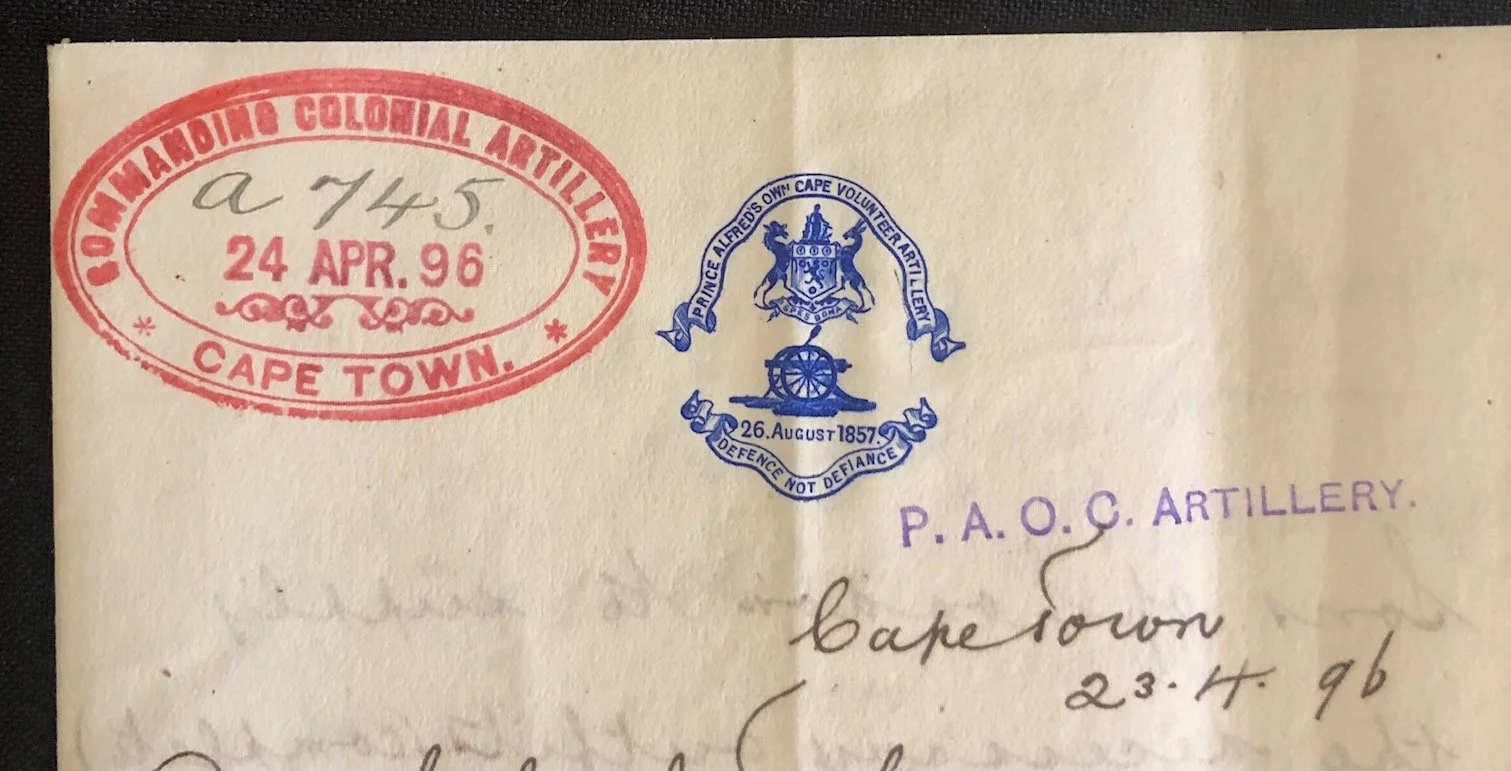
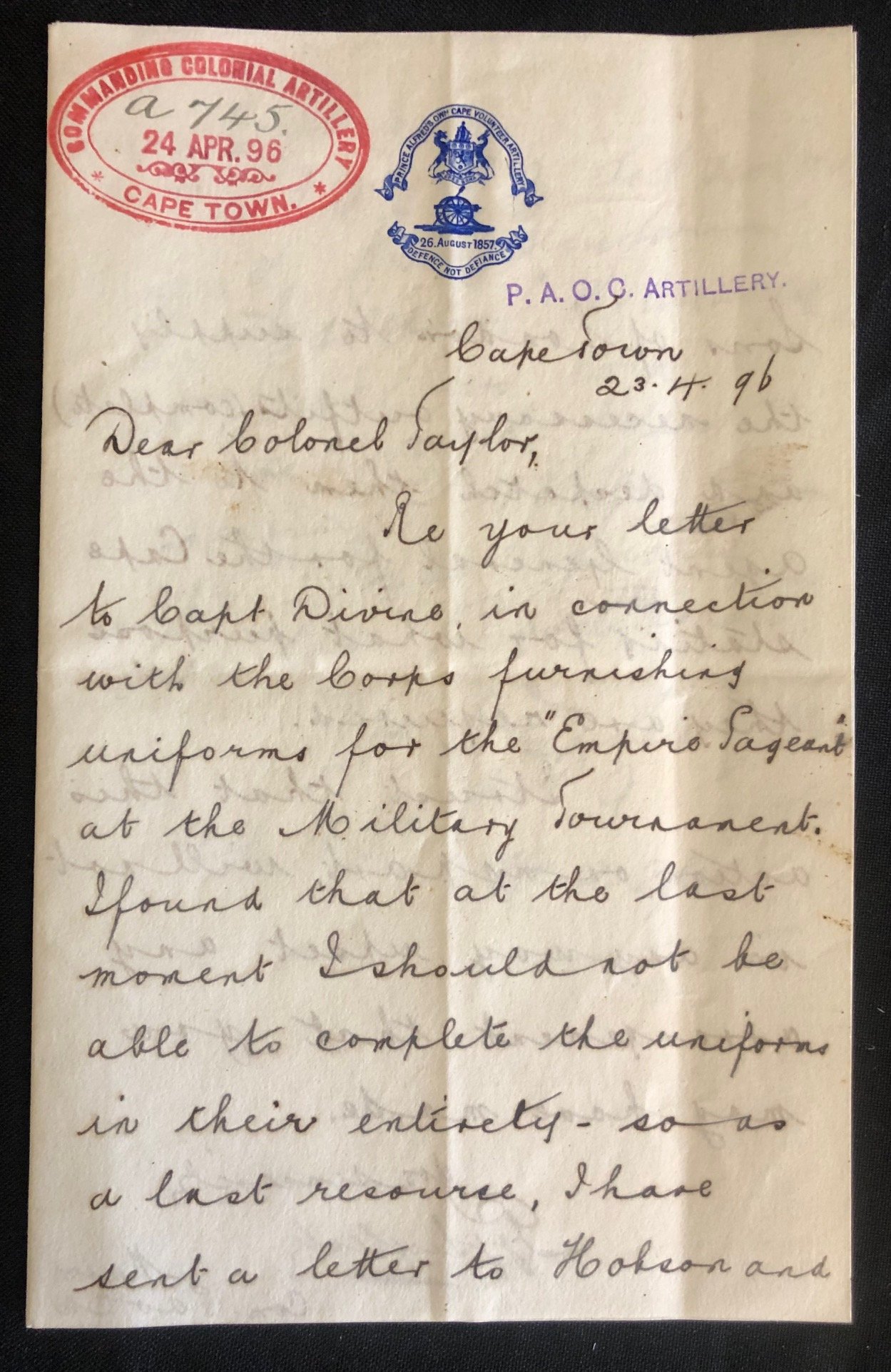
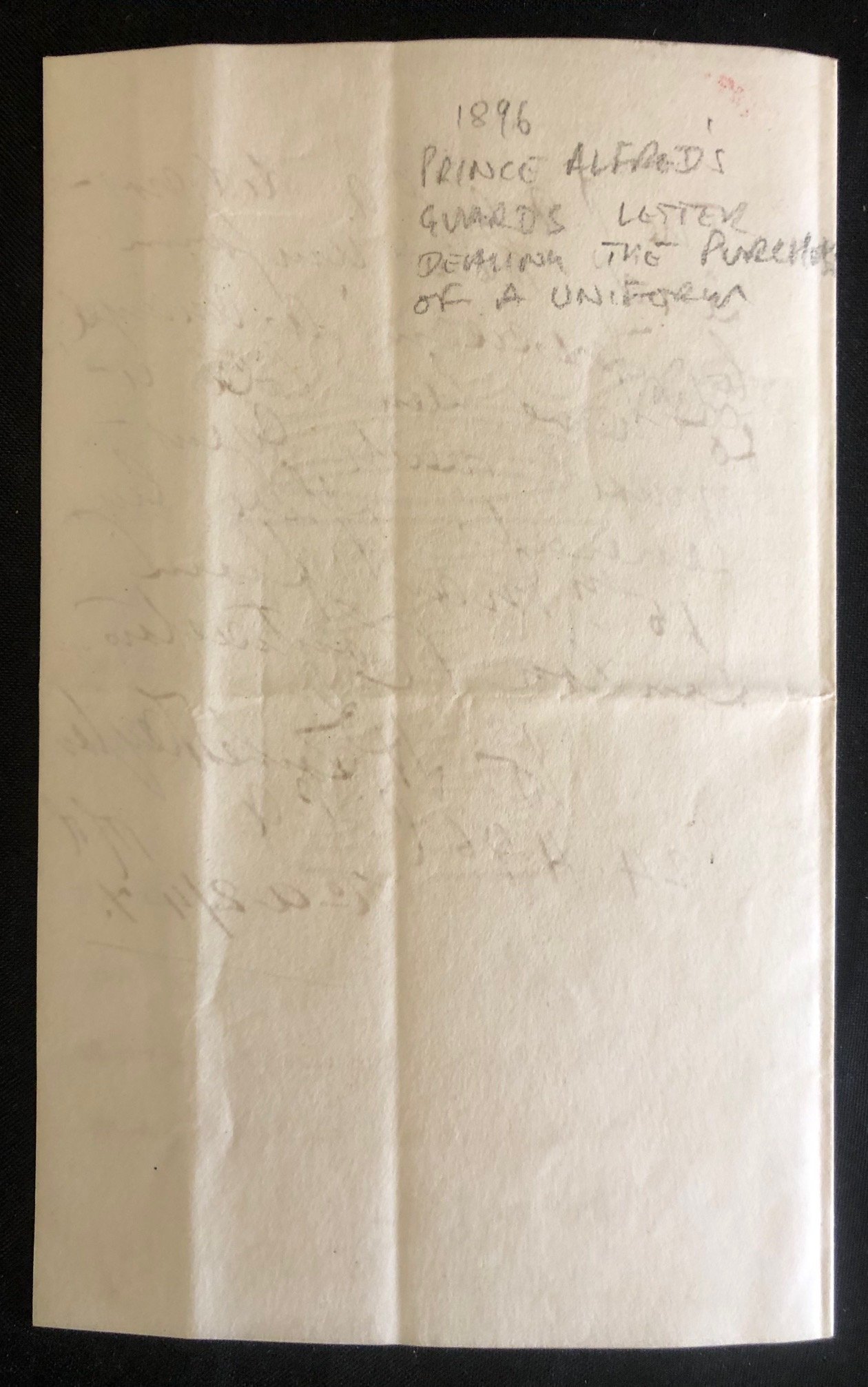
Letter: Prince Alfred’s Guards. "Empire Pageant." London, May 1896
These letters, dated April 23–24, 1896, capture a frantic, last-minute logistical scramble behind one of the British Empire's grandest public spectacles of the late 19th century: the Grand Military Tournament in London.
The "Sons of the Empire" Pageant
The correspondence refers to furnishing uniforms for an "Empire Pageant." In May 1896, the annual Military Tournament at Islington, London, staged a massive, highly publicized imperial procession titled "Sons of the Empire."
Designed to showcase the vast reach and military solidarity of the British Empire, it brought together colonial troops from Canada, Australia, India, and South Africa to march before massive, patriotic English crowds. Because of brewing geopolitical tensions in Southern Africa following the Jameson Raid (which occurred just months earlier in December 1895), the Cape Colony contingents were highly anticipated by the British public.
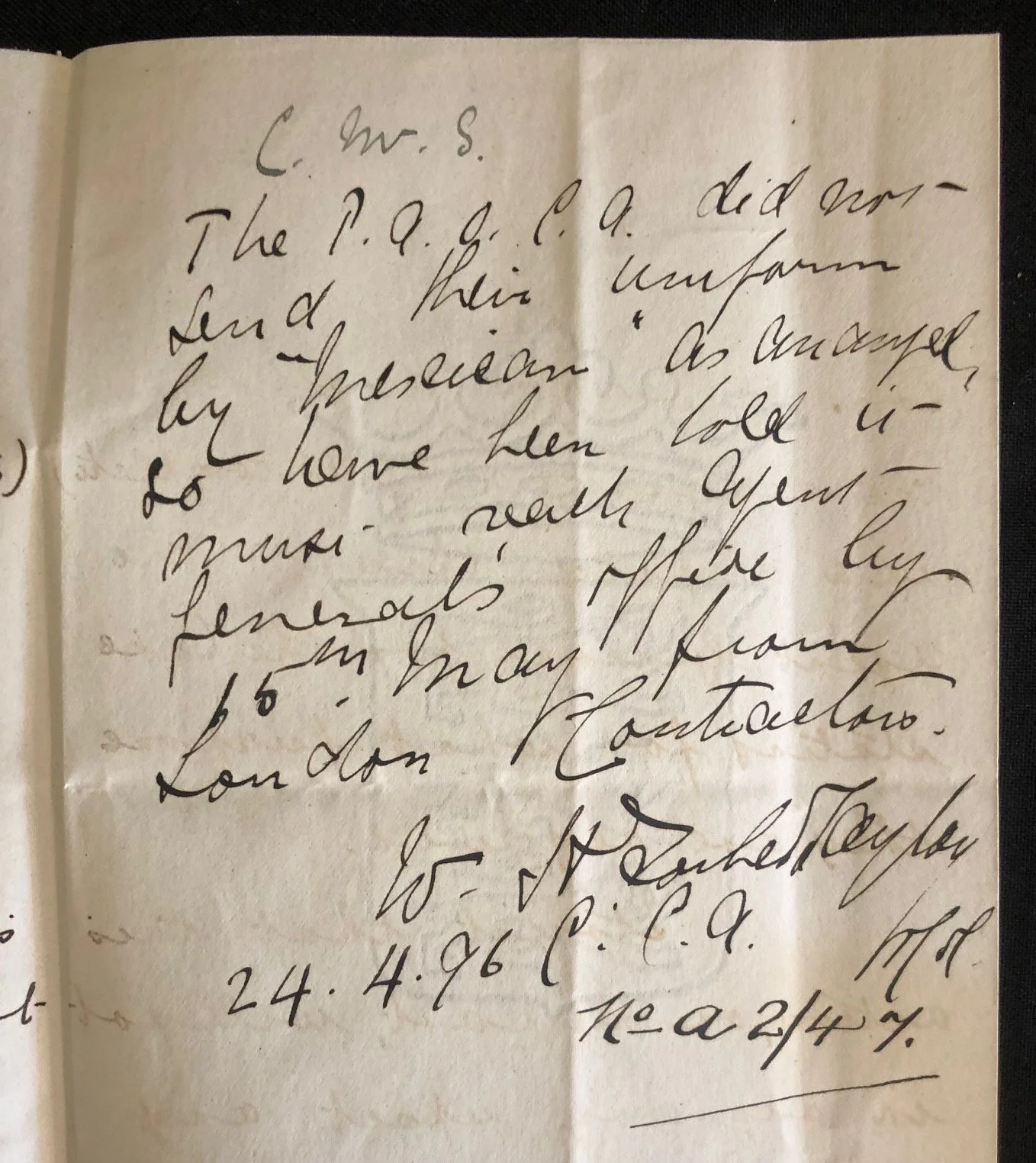
The letter reveals that Prince Alfred’s Own Cape Volunteer Artillery (P.A.O.C.A.) encountered a sudden uniform production failure in Cape Town. The commanding Major writes that “at the last moment I should not be able to complete the uniforms in their entirety.”
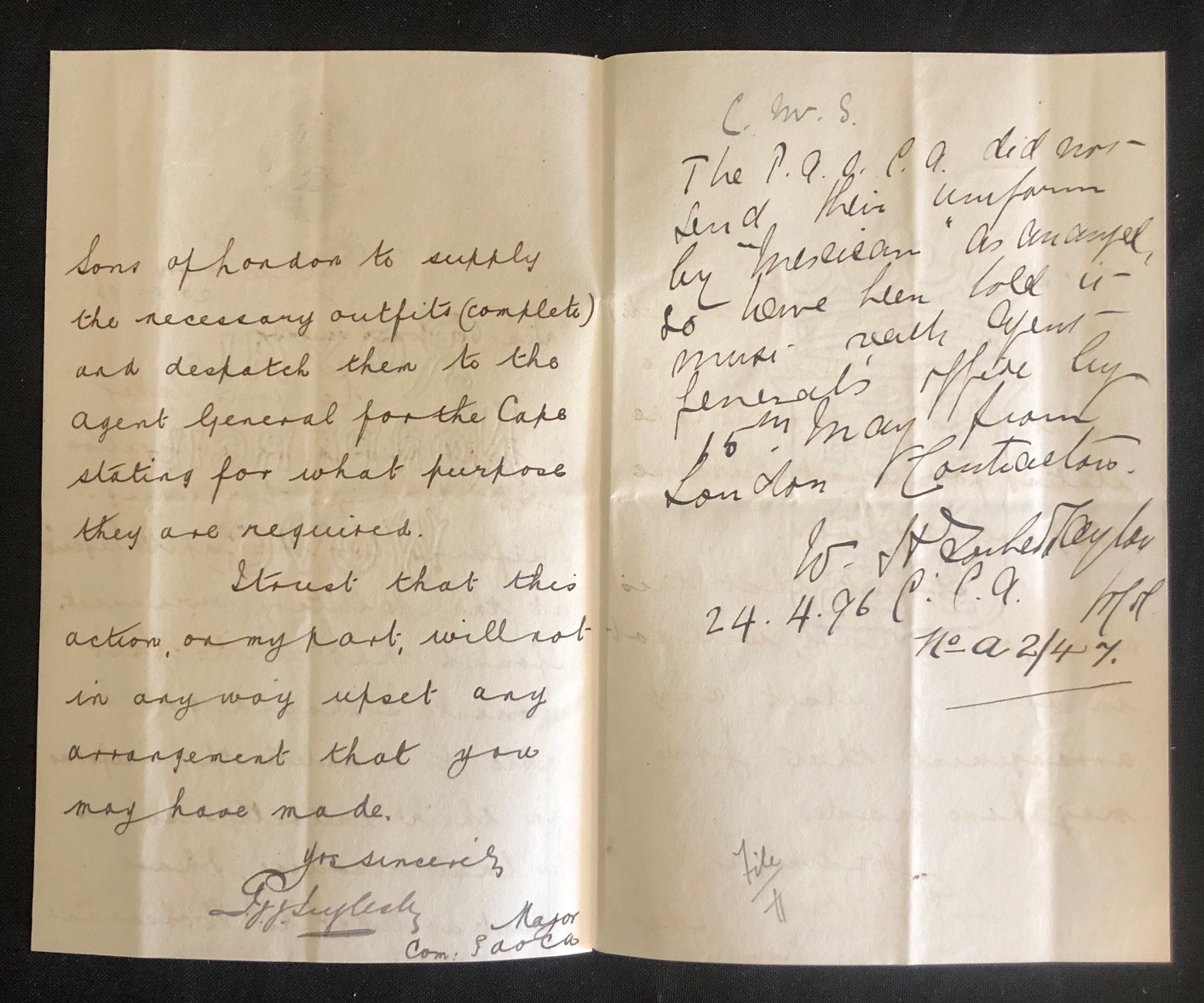
They missed the departure of the steamer Grecian, which was originally supposed to carry the kit to England. The secondary note written on the right side highlights the strict deadline: the uniforms absolutely had to reach the Agent General's office in London by May 15th, 1896, to make the tournament opening.
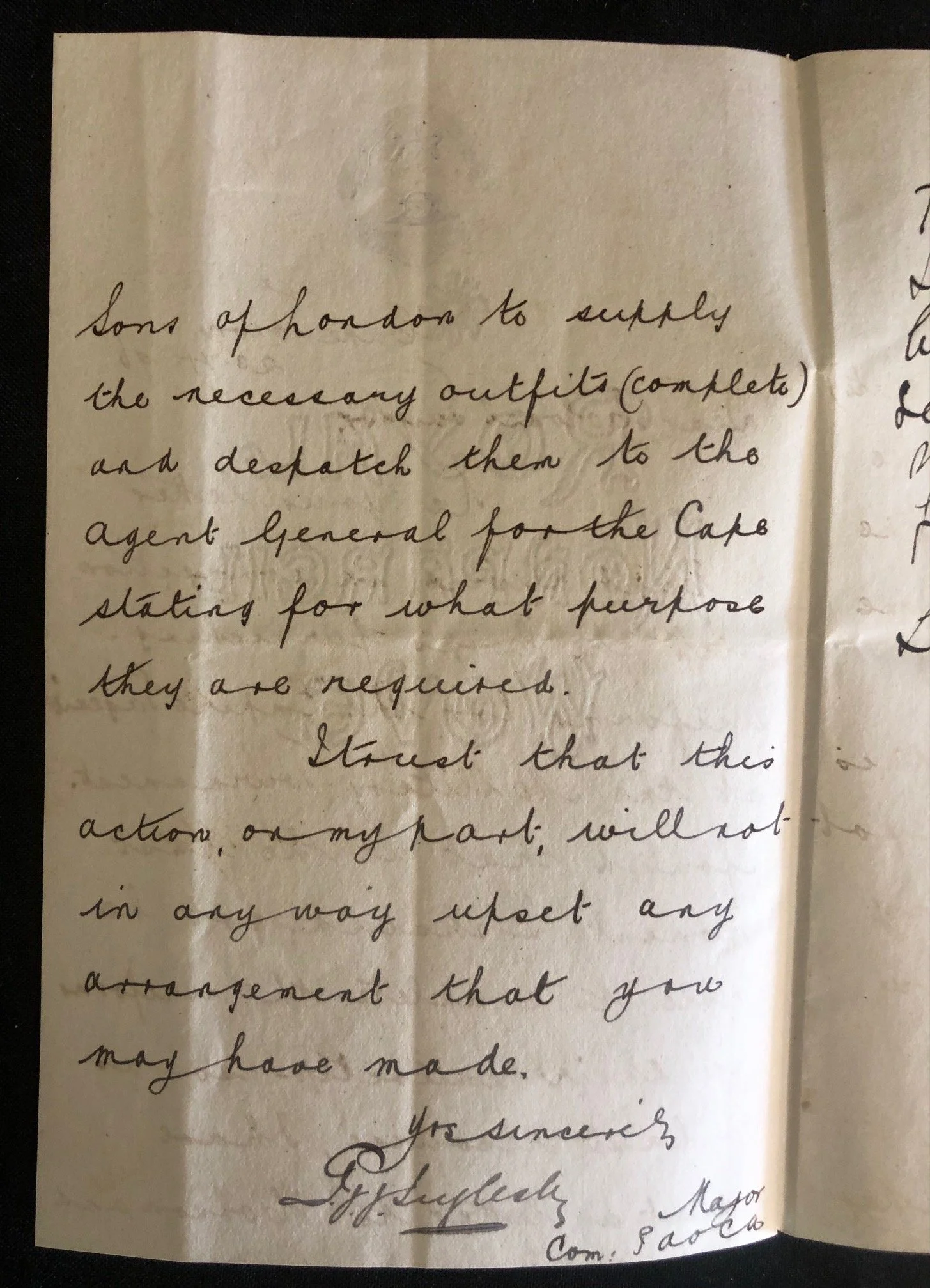
To prevent a major public embarrassment on the imperial stage, the Major bypassed local manufacturing entirely. As a "last resource," he contacted Hobson & Sons of London—a legendary British military outfitter and tailor founded in 1850 that is still in existence today. By sending the patterns directly to the London contractors, the Cape Artillery managed to have their "necessary outfits" manufactured locally in Britain, ensuring the South African gunners could march flawlessly in their distinct uniforms.
These documents offer an exceptional, behind-the-scenes look at how colonial pride and imperial theatre depended entirely on the frantic pens of officers and the quick turnaround of London tailors.
125mm x 203mm
3 page manuscript letter.
R1,000