Manuscript Letter by Lord Romilly, Master of the Rolls (and Savior of British History) c.1860’s
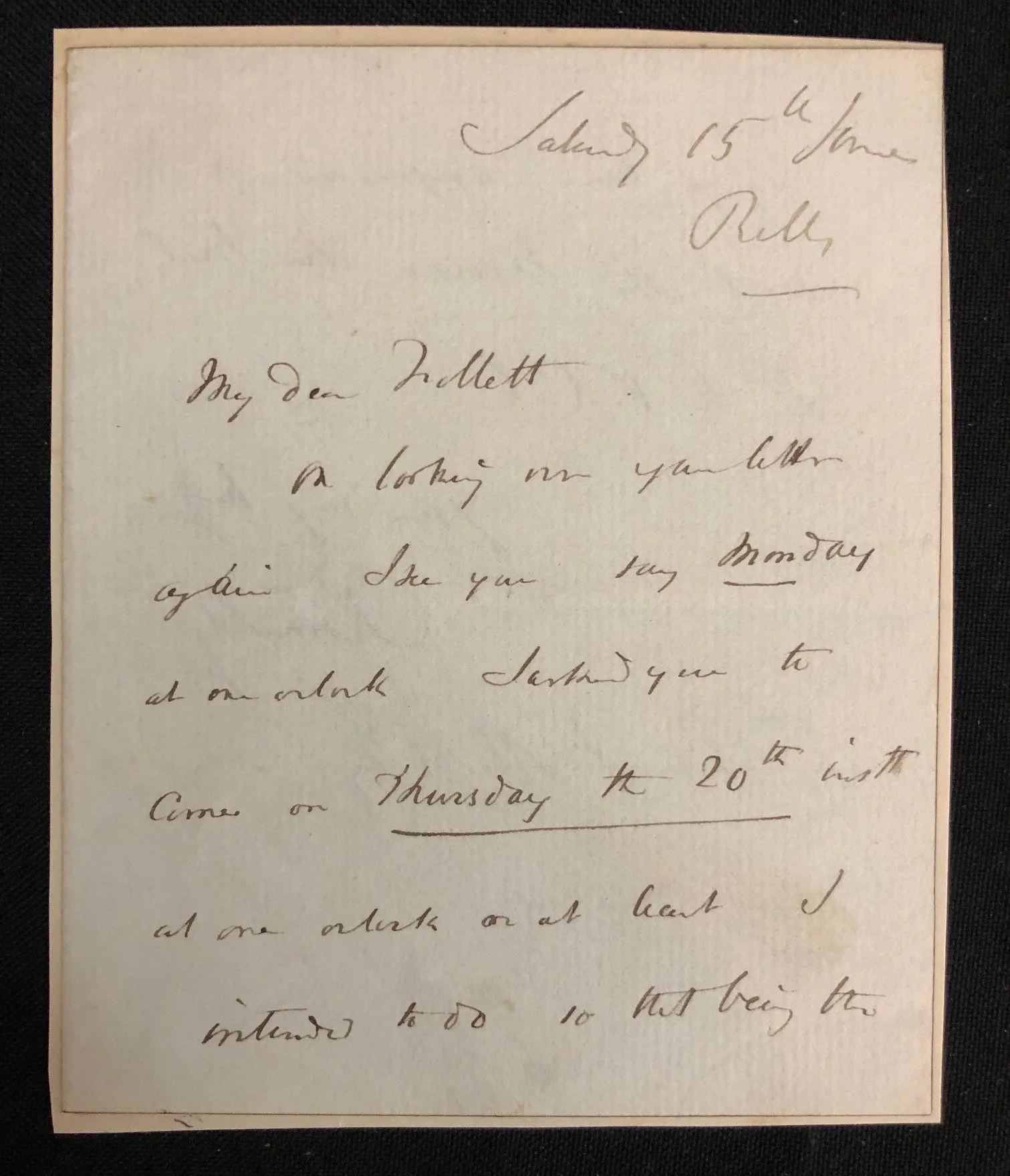
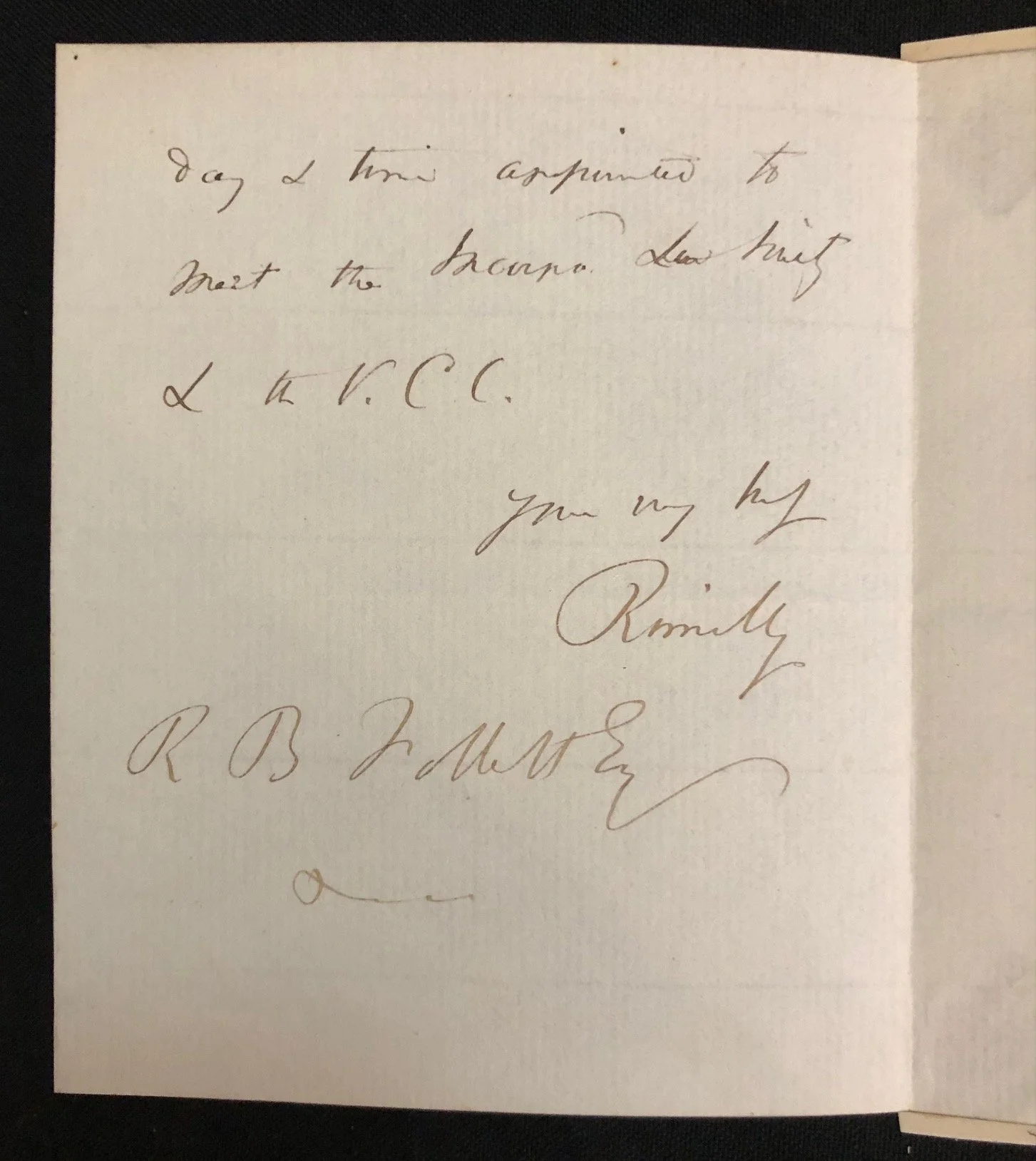
This legal correspondence, written from the Rolls Office on Saturday, June 15th and signed by John Romilly, offers a fascinating glimpse into Victorian legal administration, land reform, and the inner workings of the English judiciary.
The letter is written and signed by Sir John Romilly (1st Baron Romilly), who served as the Master of the Rolls from 1851 to 1873. The word written under the date is "Rolls", denoting his official chambers.
While Romilly was a prominent judge and MP, his greatest legacy is monumental to historians and archivists: he threw open the Public Records of Great Britain to the public free of charge. Before Romilly, state papers and historical manuscripts were locked away, disorganized, and subject to heavy fees. He organized the massive preservation project that came to be known as the Rolls Series, hiring scholars to catalog and publish Britain's medieval state papers, effectively founding modern British archival research.
The Recipient: R. B. Follett and the Reform of Bleak House
The letter is addressed at the bottom to R. B. Follett, Esq. (Robert Bayly Follett). Follett was a highly influential legal official who served as a Taxing Master of the High Court of Chancery.
This puts the letter squarely in the middle of the mid-Victorian overhaul of the Court of Chancery. For generations, Chancery was notoriously corrupt, slow, and expensive—a system famously satirized by Charles Dickens in Bleak House (published in 1852–1853), where cases dragged on for decades until the estates were entirely consumed by legal fees. As Master of the Rolls, Romilly was a key judicial reformer, and his meetings with Taxing Masters like Follett were part of the daily, gritty administrative work required to clean up and streamline this broken court system.
The Inclosure Commissioners
Romilly explains that he needs to meet on Thursday the 20th to "meet the Inclosure Commrs" (Inclosure Commissioners).
The Inclosure Commissioners were a powerful statutory body created by the General Inclosure Act of 1845. They were tasked with overseeing the "enclosure" of England's remaining common lands—converting ancient, shared agrarian fields, pastures, and wastes into fenced, private property.
The work of these Commissioners fundamentally and permanently reshaped the British landscape and social fabric:
It increased agricultural efficiency and consolidated the wealth of large landowners.
Conversely, it stripped smallholders and peasants of their traditional grazing rights, driving massive waves of rural migration into industrializing cities.
Dating the Document
By matching the calendar days mentioned—where Saturday is the 15th of June and the upcoming Thursday is the 20th—combined with Romilly's tenure as Master of the Rolls, we can pin this letter down to either 1861 or 1867. It captures these high-ranking Victorian officials coordinating calendars to arbitrate land rights and legal costs during an era of profound socio-economic transformation.
97mm x 117mm
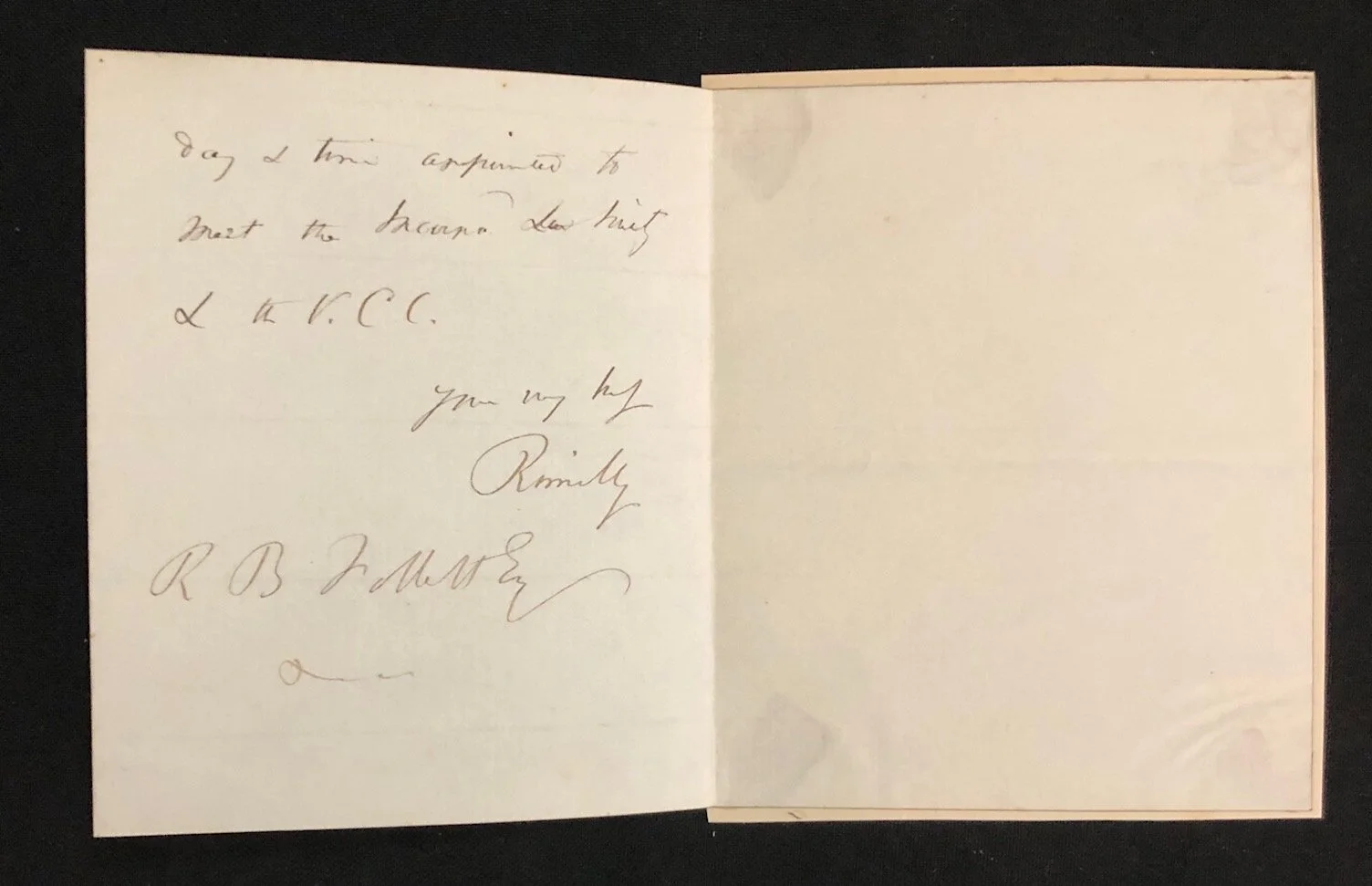
Manuscript letter. Back of letter laid down onto card.
R1,250