Letter from Thomas Huxley ("Darwin's Bulldog") to Captain Donnelly RE the "South Kensington" Vision (1867)
This remarkable 1867–1868 correspondence offers an inside look at the creation of the modern British civil service, the evolution of public education, and the rise of London's great museum culture.
The Recipient: Captain Donnelly and the "South Kensington" Vision
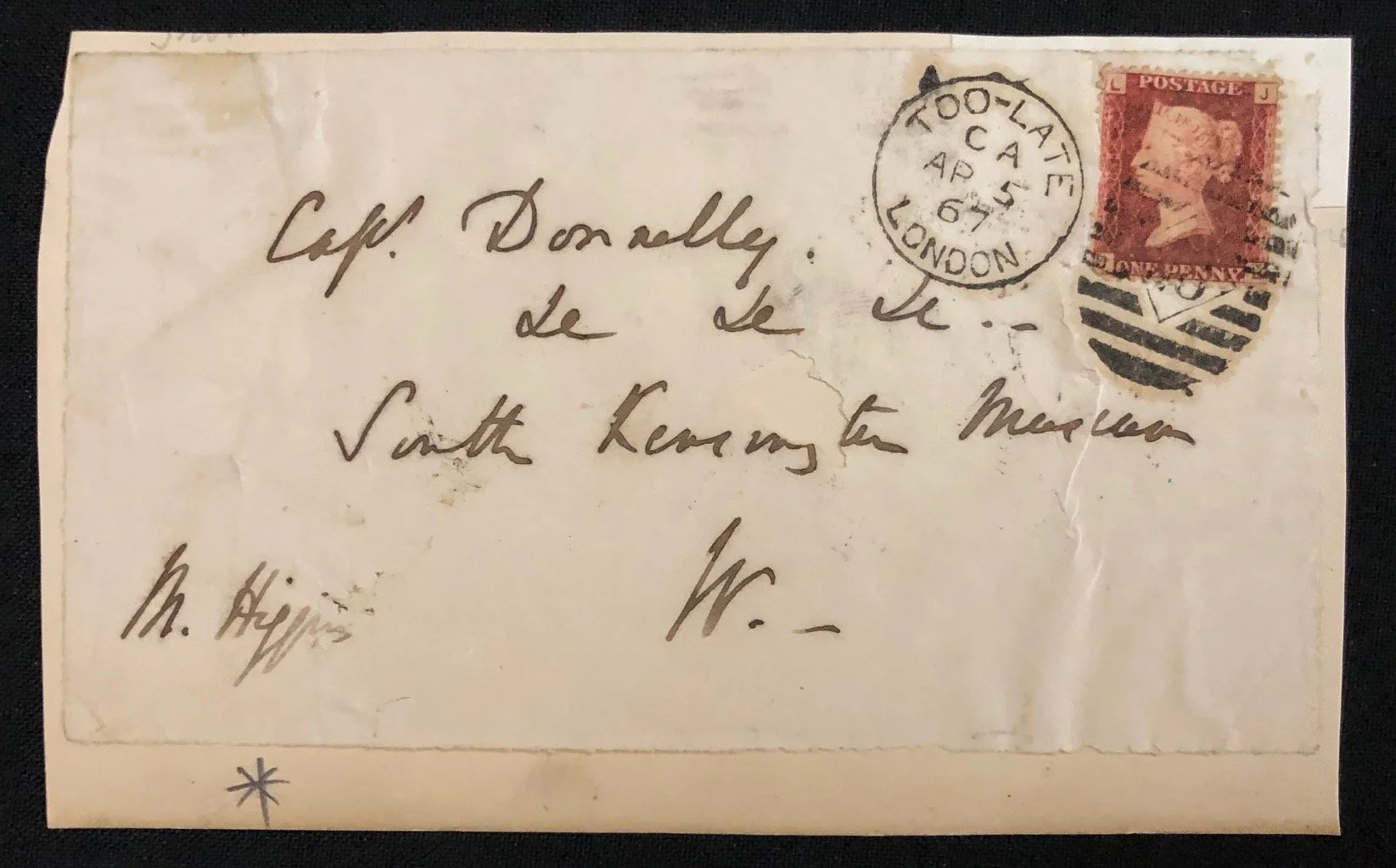
The envelope is addressed to "Capt. Donnelly ... South Kensington Museum."
This is Sir John Fretcheville Dykes Donnelly, a brilliant Royal Engineers officer who became one of the most influential Victorian administrators of science and art education. South Kensington was the epicentre of "Albertopolis"—the grand cultural complex built using the profits of the 1851 Great Exhibition under the direction of Prince Albert.
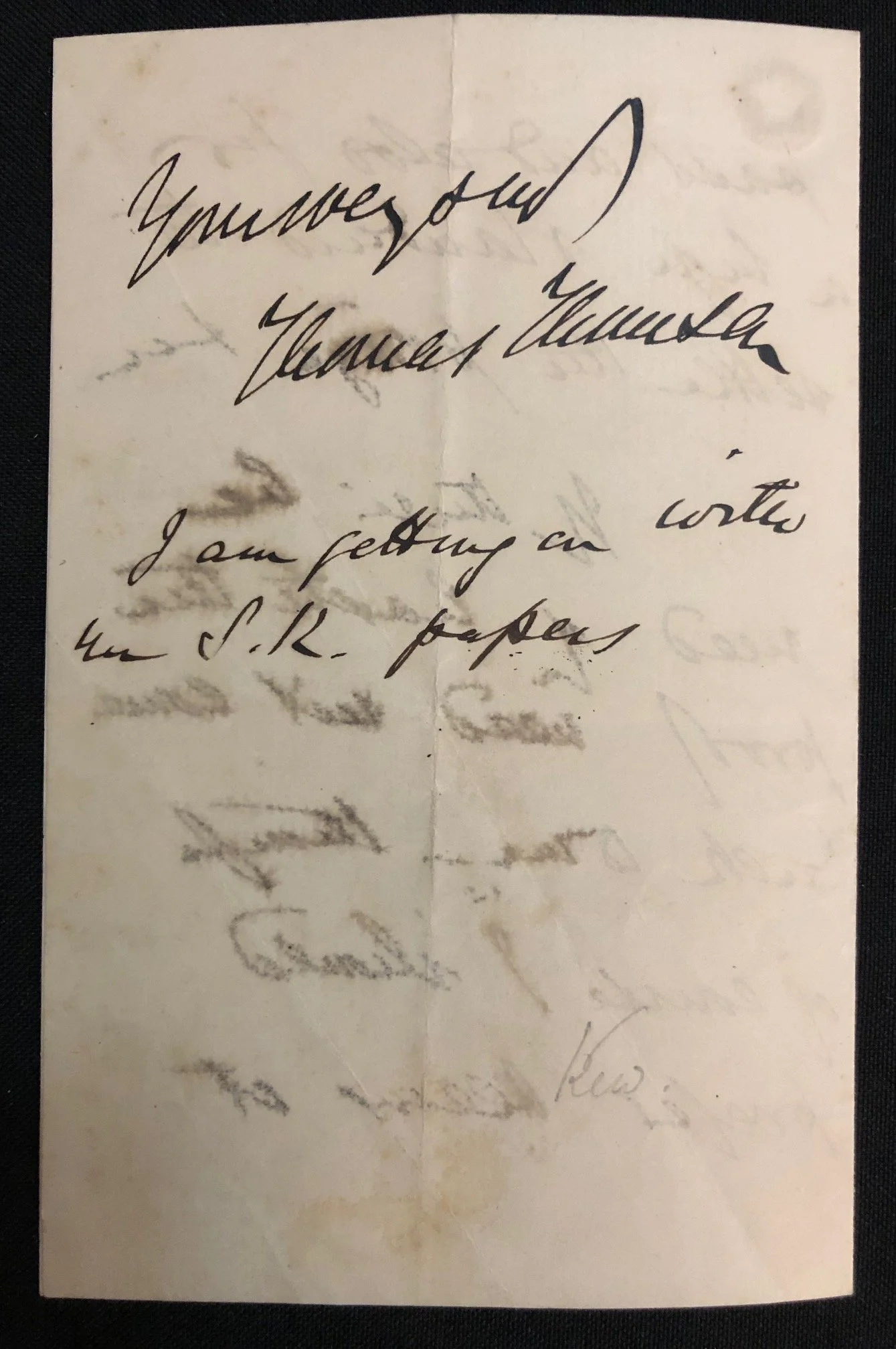
Donnelly was appointed to run the Science and Art Department (S.D.), which is explicitly referenced by the sender ("I am getting on with the S.D. papers"). Operating out of the South Kensington Museum (now the Victoria and Albert Museum), Donnelly was tasked with a monumental goal: standardized national testing and curriculum development to drag Britain's technical and artistic skills into the industrial age.
The Sender: Thomas Huxley ("Darwin's Bulldog")
The signature reveals the author of this letter: Thomas Huxley (Thomas Henry Huxley).
Huxley was one of the giants of 19th-century science. Famously nicknamed "Darwin's Bulldog" for his fierce, relentless public defense of Charles Darwin’s theory of evolution, Huxley was also an incredibly dedicated advocate for educational reform. He believed passionately that science education should not be a luxury for the elite but a standardized discipline available to the working and middle classes.
To achieve this, he collaborated intensely with Captain Donnelly and the Science and Art Department, personally drafting, reviewing, and grading national examination papers for prospective teachers and students across the British Empire.
Behind the Scenes of Victorian Exam Standardization
The inner pages of the letter showcase Huxley’s fastidious work ethic as an examiner trying to standardize a brand-new testing apparatus. Writing to Donnelly about a set of upcoming tests, Huxley notes:
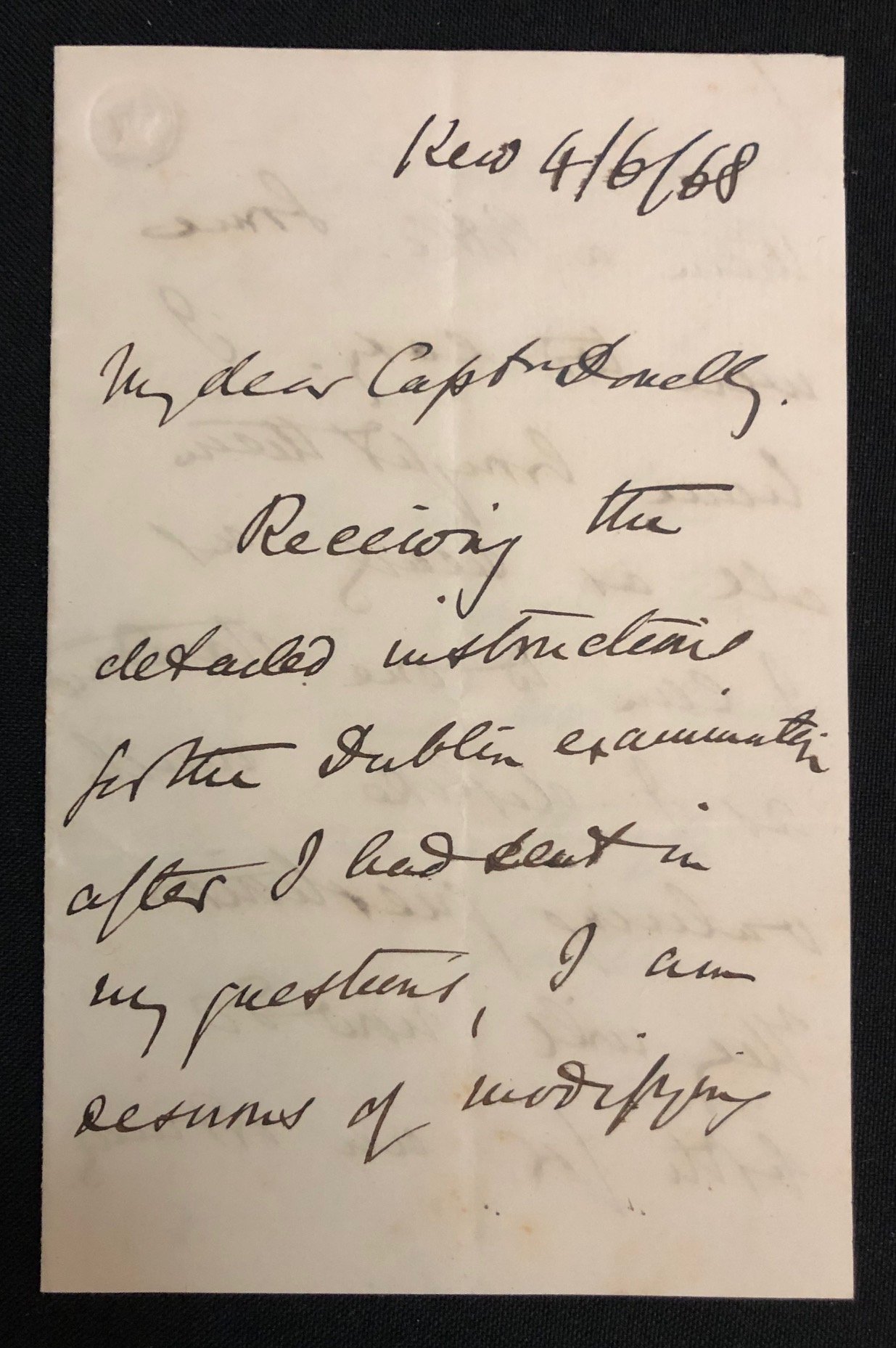
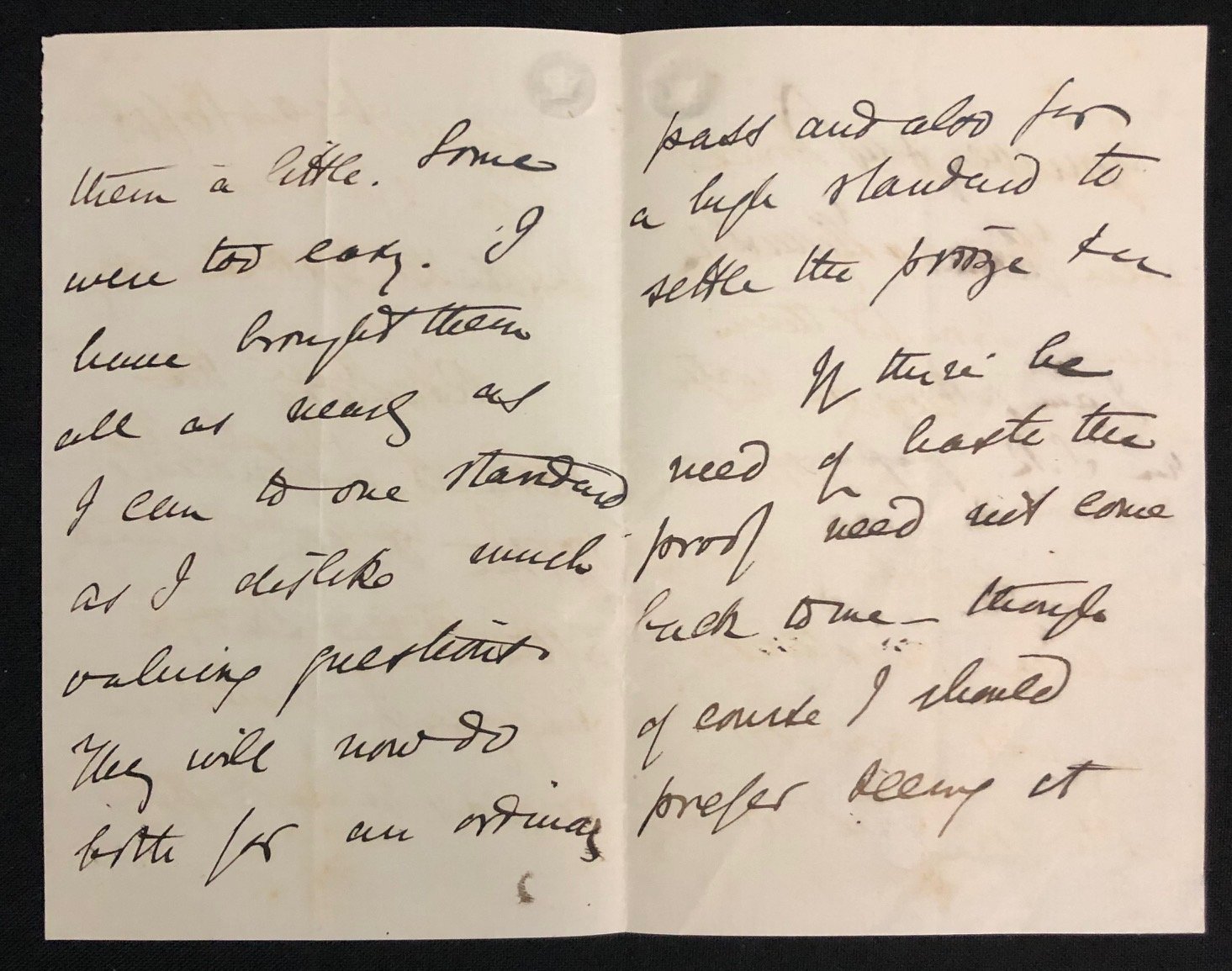
"Receiving the detailed instructions for the Dublin examination after I had sent in my questions, I am desirous of modifying them a little. Some were too easy. I have brought them all as near as I can to one standard as I dislike much varying questions."
He goes on to explain that his adjusted questions will now serve both for an "ordinary pass and also for a high standard to settle the prize..."
This passage captures the exact moment the British state was transitioning away from aristocratic patronage and moving toward a modern, meritocratic civil service and educational framework determined by rigorous, uniform examinations.
Postal History & A "Too Late" Stamp
The envelope features a rare piece of postal history: a crisp, circular "TOO-LATE / LONDON" handstamp dated AP 5 / 67 (April 5, 1867), alongside a classic Victorian One Penny Red stamp.
In the mid-19th century, London operated on an incredibly fast, multi-post daily system (preceding the invention of the telephone). If a letter was dropped at a post office or station after the final daily sorting box for that specific district or outgoing mail coach had closed, it was stamped "Too Late." This meant it would miss the evening dispatch and be held over until the morning—a Victorian equivalent of missing the shipping cutoff time.
A later docketing note at the top of the letter itself marks it as "Recd 4/6/68" (Received June 4, 1868), indicating that Huxley and Donnelly's bureaucratic correspondence regarding these national test standards spanned across multiple exam cycles over these two years.
Manuscript letter: 95mm x 150mm
Front of envelope laid down; some minor foxing and bleeding of ink.
R1,250