Manuscript Letter: English landscape and genre painter Thomas Barker of Bath (1838)
Original, handwritten letter by the celebrated English landscape and genre painter Thomas Barker of Bath (1769–1847).
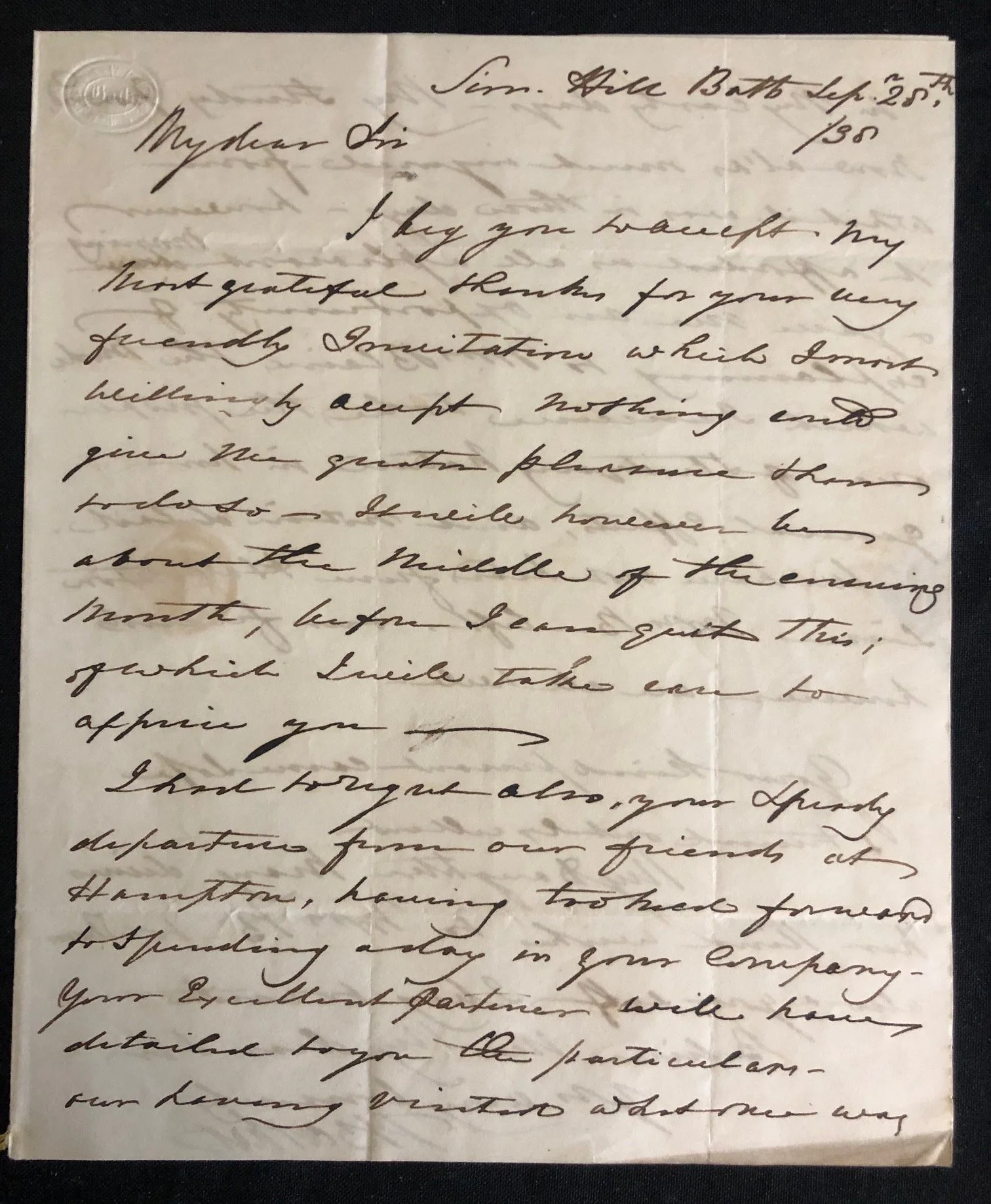
Sent from his custom-built mansion at Sion Hill, Bath, on September 25th, 1838, the letter is addressed to D.R. Blaine, Esq. in London.
A Manifesto on the British Romantic Philosophy of Art
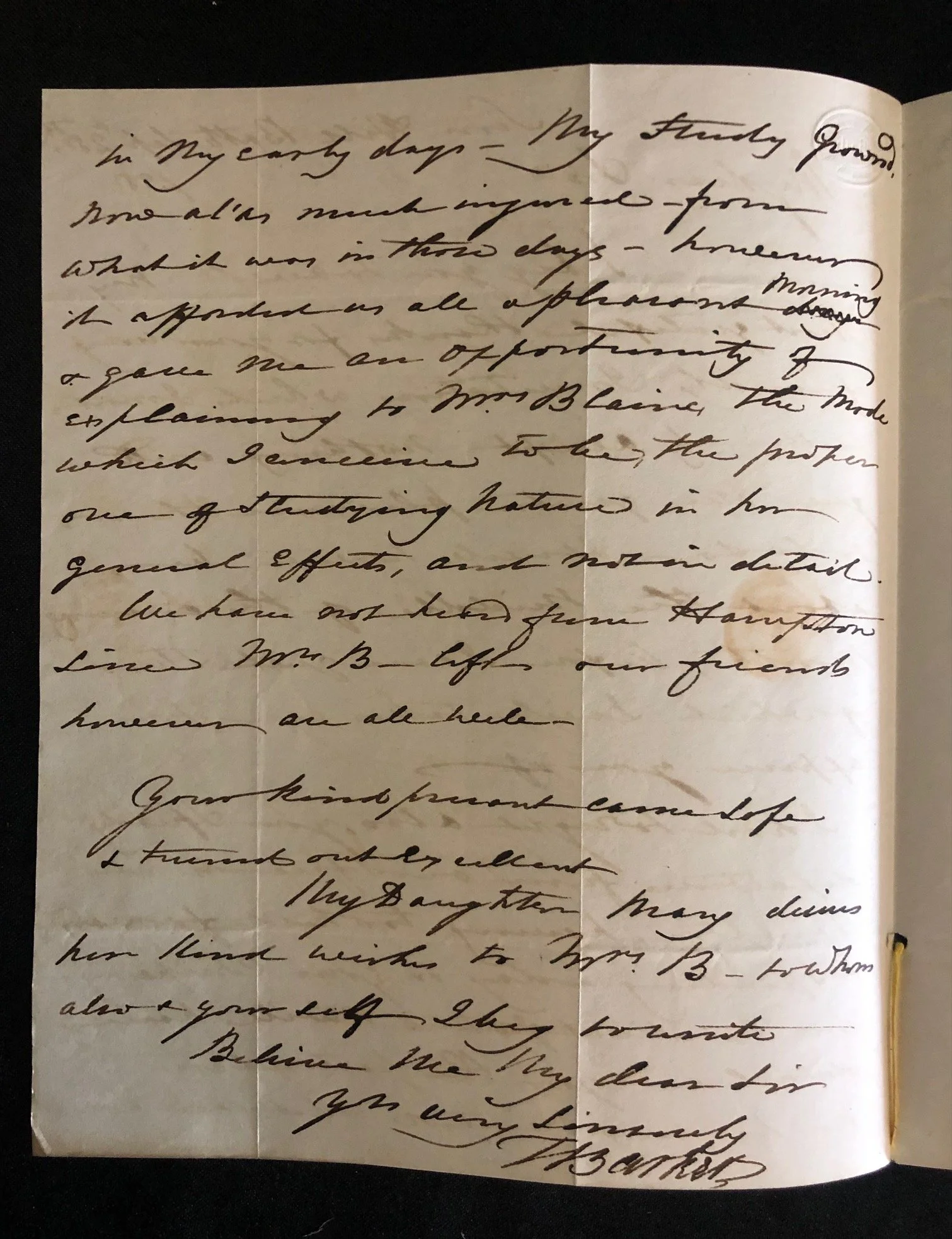
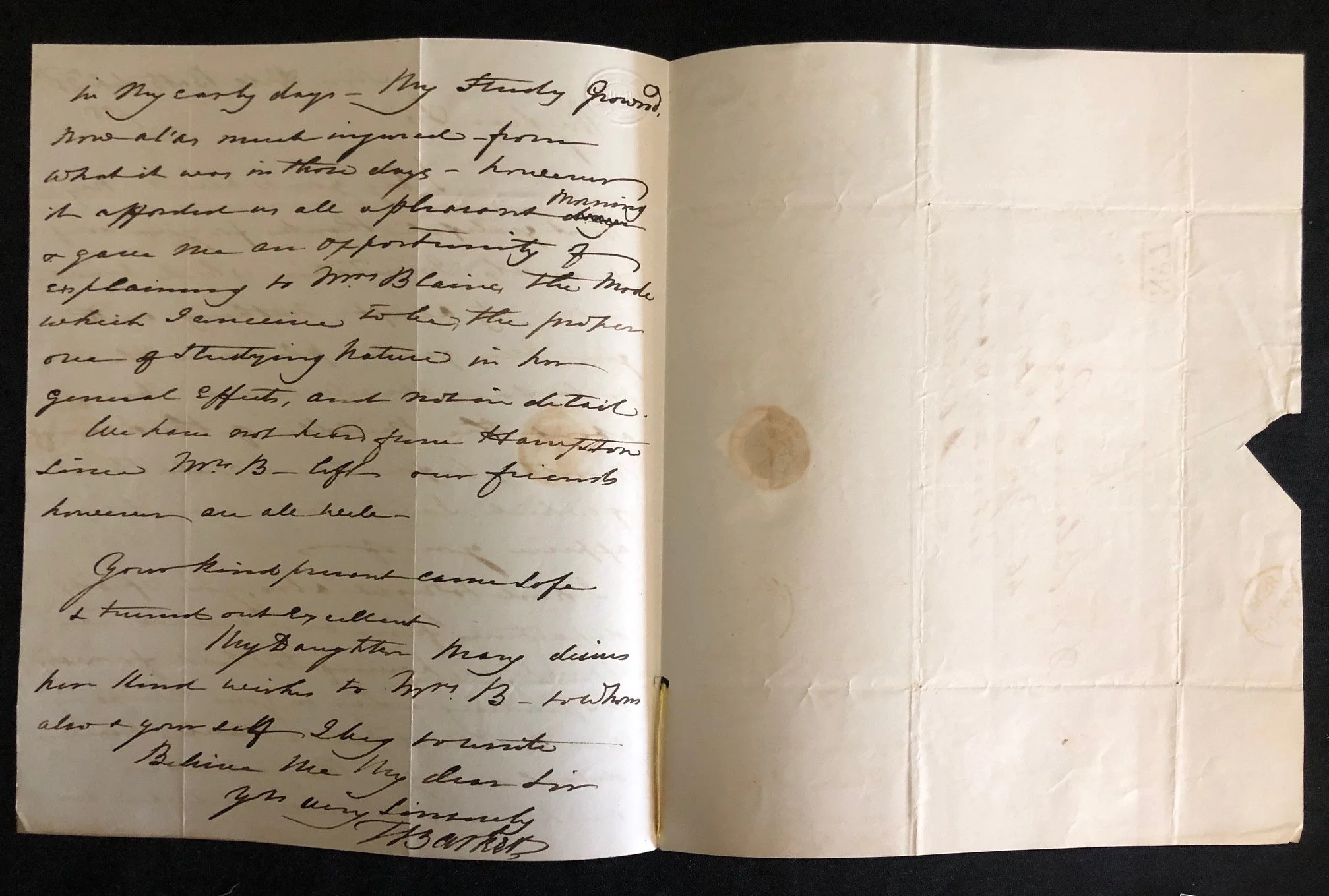
Barker describes taking the recipient's wife, Mrs. Blaine, on a morning walk through his old painting grounds ("My Study Ground"), lamenting that it is now "much injured from what it was in those days."
He then delivers a beautiful, concise statement of his artistic philosophy:
"...and gave me an opportunity of explaining to Mrs Blaine the mode which I conceive to be the proper one of studying Nature in her general effects, and not in detail."
This line captures the heart of a fierce, century-long debate in British art history. Barker was heavily influenced by Thomas Gainsborough and the "Picturesque" movement, which prioritized captured light, atmosphere, and "general effect" over meticulous, microscopic accuracy. Just a decade after this letter was written, the Pre-Raphaelite Brotherhood would form and completely invert this philosophy, demanding the exact opposite—uncompromising, scientific detail. Barker’s letter stands as a proud defense of the older Romantic tradition.
The Recipient: A Champion of Artists' Rights
The recipient addressed on the cover is Delabere Roberton Blaine, is a fascinating historical figure in his own right. Blaine was a London lawyer who became one of Victorian Britain's foremost experts and advocates for artistic copyright. He fought passionately against the rampant forgery of artists' monograms, unauthorized reproductions, and the lack of legal protection for painters and sculptors—ultimately playing a key role in framing the Fine Arts Copyright Act of 1862. Seeing Barker of Bath cultivate a warm, personal friendship with Blaine ("My Daughter Mary desires her kind wishes...") shows the tight-knit network between prominent artists and the legal minds fighting to protect their livelihoods.
Postal History: The Twilight of the "Old System"
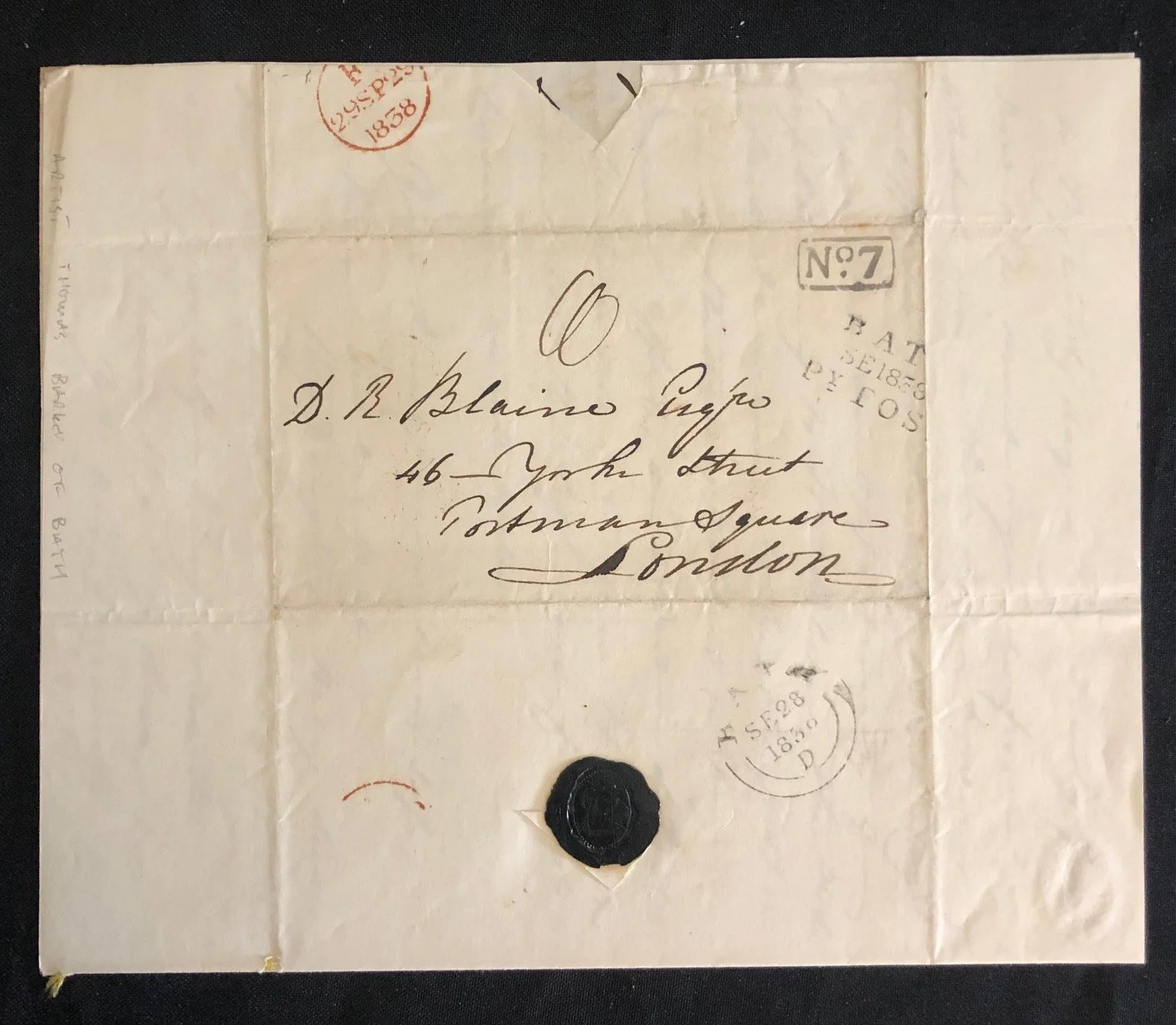
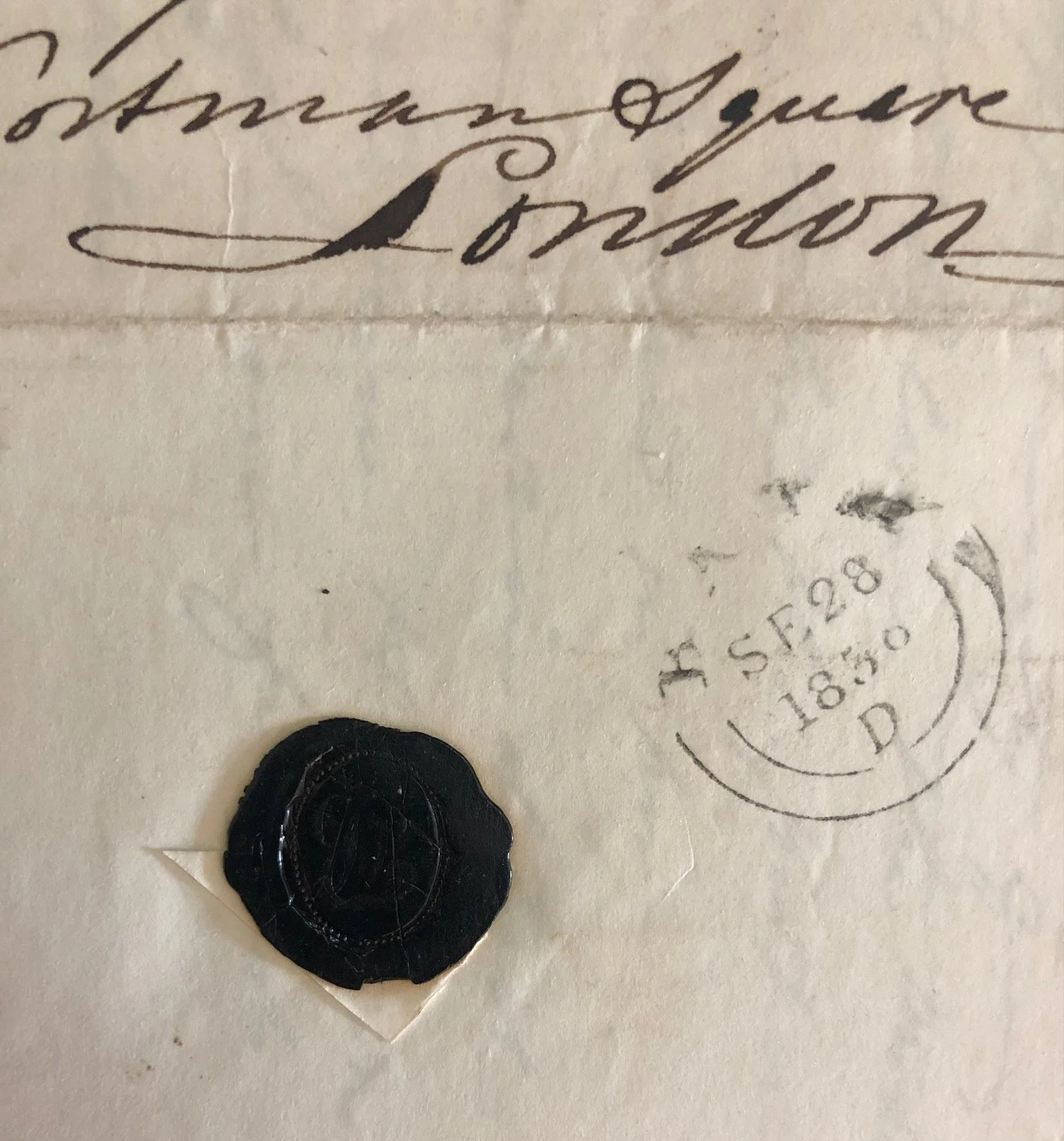
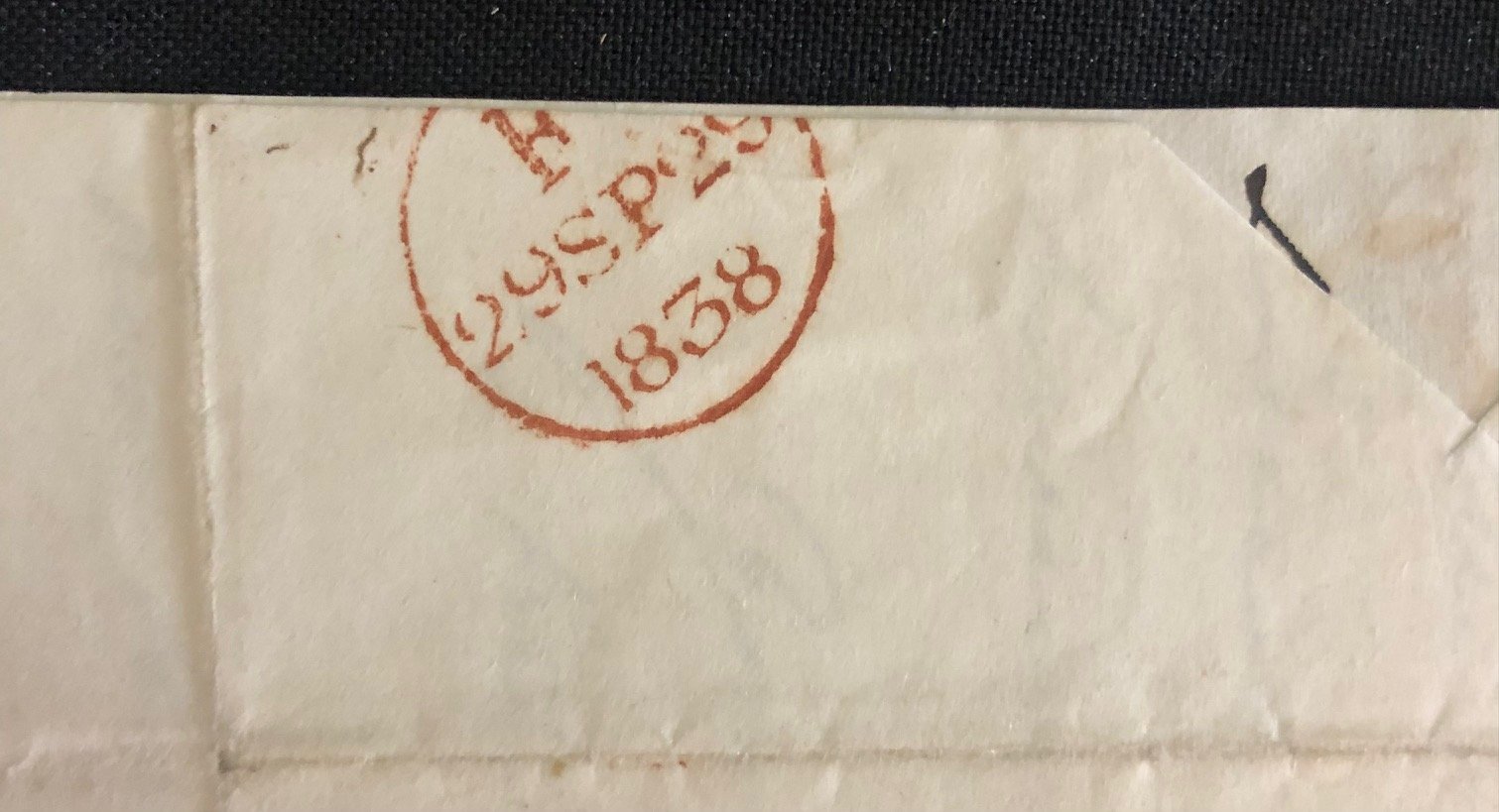
From a postal history perspective, the cover shown is an excellent artifact of the Pre-Uniform Penny Post era with a hand-stamped "N Bathurst" / "№ 7" and the circular Bath postmarks dated September 28, 1838.
There are no adhesive postage stamps on this letter because the world's first stamp (the Penny Black) wouldn't be introduced until 1840.
Instead, letters were folded up into their own envelopes (stampless covers), sealed with black wax (visible near the bottom), and heavily taxed based on the number of sheets and the distance traveled—a luxury reserved only for the wealthy, like successful artists and London lawyers.
The Grandeur of Sion Hill
Barker writes from "Sion Hill Bath". At the peak of his fame, Barker's rustic scenes (like The Woodman) were so phenomenally popular they were reproduced on everything from Staffordshire pottery to Worcester china. He amassed enough wealth to build Doric House at Sion Hill, a magnificent neoclassical mansion complete with a massive 30-foot picture gallery. This letter was penned inside the house during the twilight years of his life, providing an intimate look into the domestic and professional world of a Georgian art icon.
Some tears and offsetting.
188mm x 227mm
R2,500