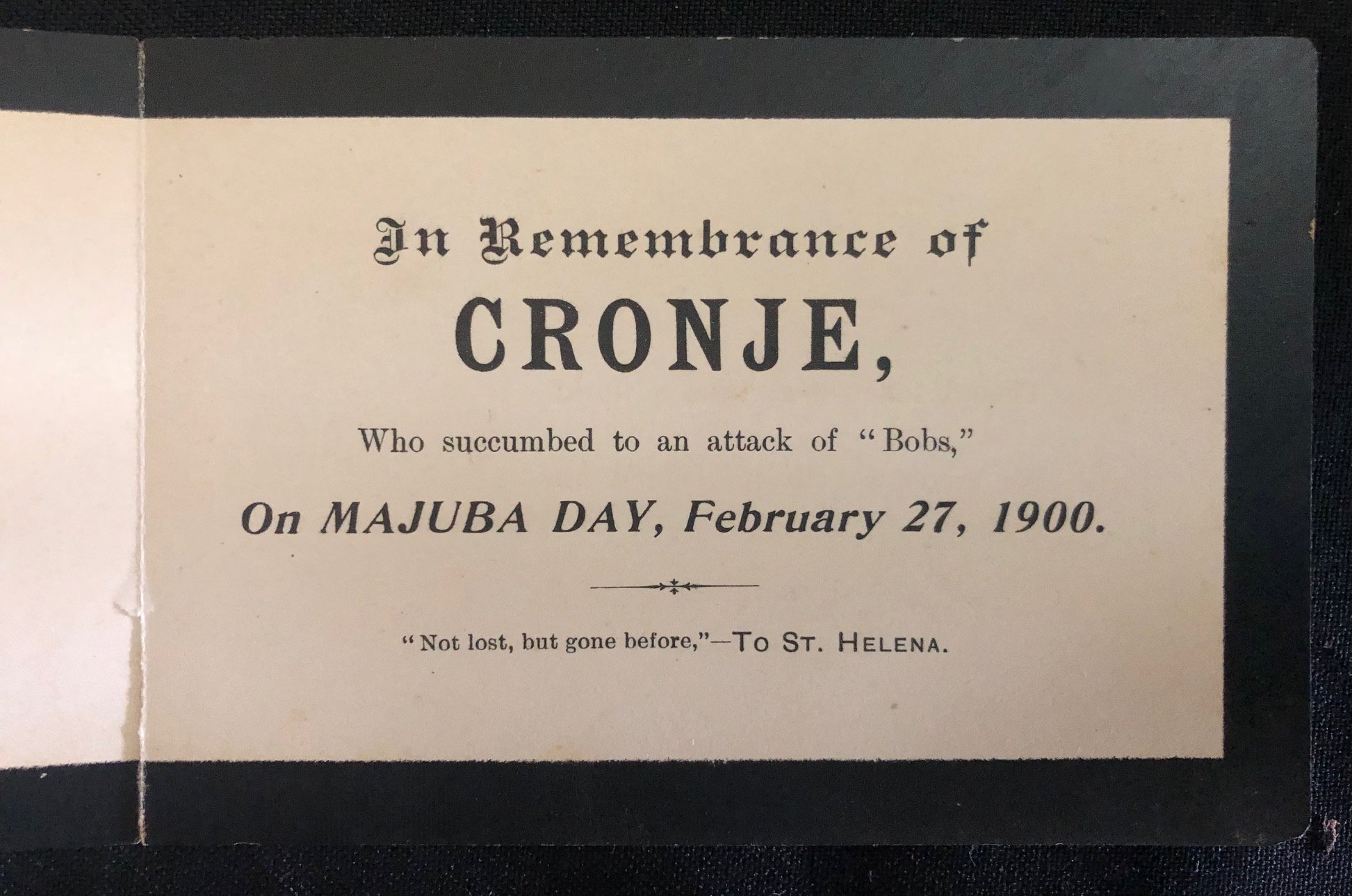
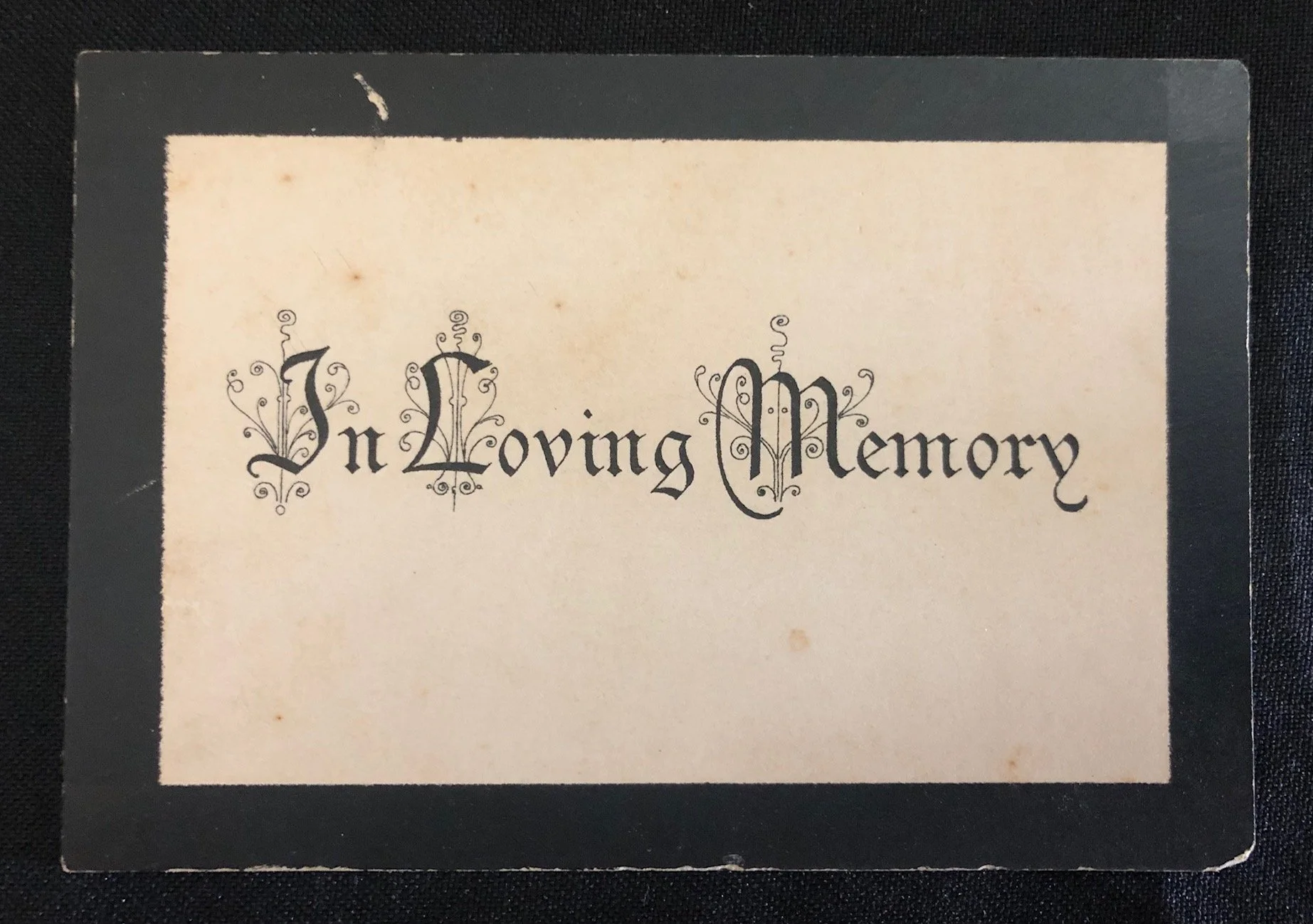
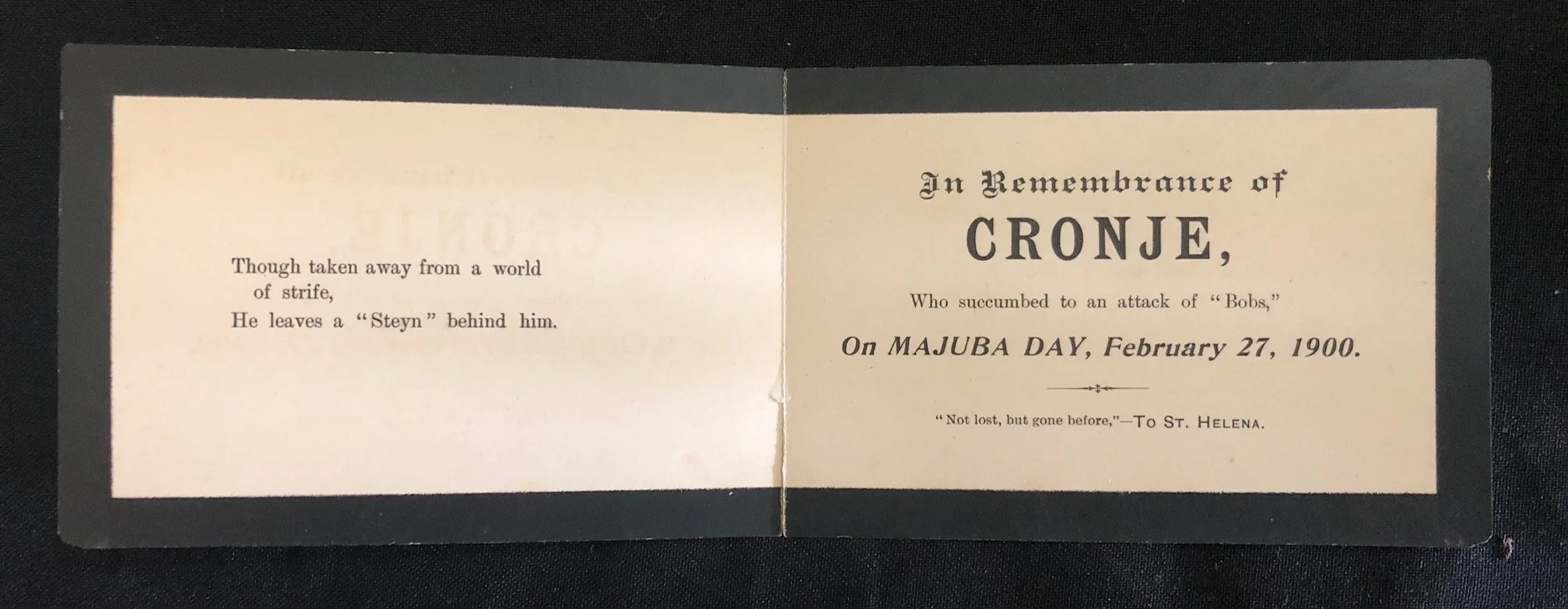
Card mocking the surrender of Boer General Piet Cronjé to Field Marshal Lord Roberts (1900)
This printed piece is a British satirical "in memoriam" / mock mourning card produced during the Second Anglo-Boer War (1899–1902) to commemorate and mock the surrender of Boer General Piet Cronjé to Field Marshal Lord Roberts.
General Piet Cronjé
Boer General Piet Cronjé commanded the Boer forces during the Siege of Kimberley and early western campaign battles.
After being surrounded by British forces led by Field Marshal Lord Roberts at the Battle of Paardeberg, Cronjé was forced to surrender with over 4,000 burghers.
"Succumbed to an attack of 'Bobs'"
"Bobs" was the nickname used across the British Empire for Field Marshal Frederick Sleigh Roberts (Lord Roberts of Kandahar).
The phrasing humorously frames Lord Roberts' military maneuver and victory as a fatal illness or medical affliction that brought about Cronjé's military "death" (surrender).
"MAJUBA DAY, February 27, 1900"
February 27 held immense psychological and symbolic weight for both sides. Exactly 19 years earlier, on February 27, 1881, the Boers decisively defeated the British at the Battle of Majuba Hill during the First Boer War.
Lord Roberts deliberately forced Cronjé's surrender on February 27, 1900, to avenge the historic defeat at Majuba Hill, proclaiming that the ghost of Majuba had finally been laid to rest.
"Not lost, but gone before' — To ST. HELENA"
Following his surrender, Cronjé and his wife were exiled as prisoners of war to the remote South Atlantic island of St. Helena (where Napoleon Bonaparte had previously been exiled), remaining there until the end of the war in 1902.
The traditional Victorian epitaph "Not lost, but gone before" is sarcastically repurposed here to refer to his forced exile to St. Helena rather than a journey to the afterlife.
Background on Satirical Boer War Cards
During the Anglo-Boer War, black-bordered "mock mourning cards" were popular souvenir ephemera printed in Britain and distributed across Commonwealth nations. They mimicked the strict formal etiquette of Victorian death notices, utilizing standard black borders and Victorian funerary typography to celebrate major British military victories and lampoon Boer leaders such as Paul Kruger and Piet Cronjé.
115mm x 80mm closed.
Wear to edges; splitting down the middle.
R2,000