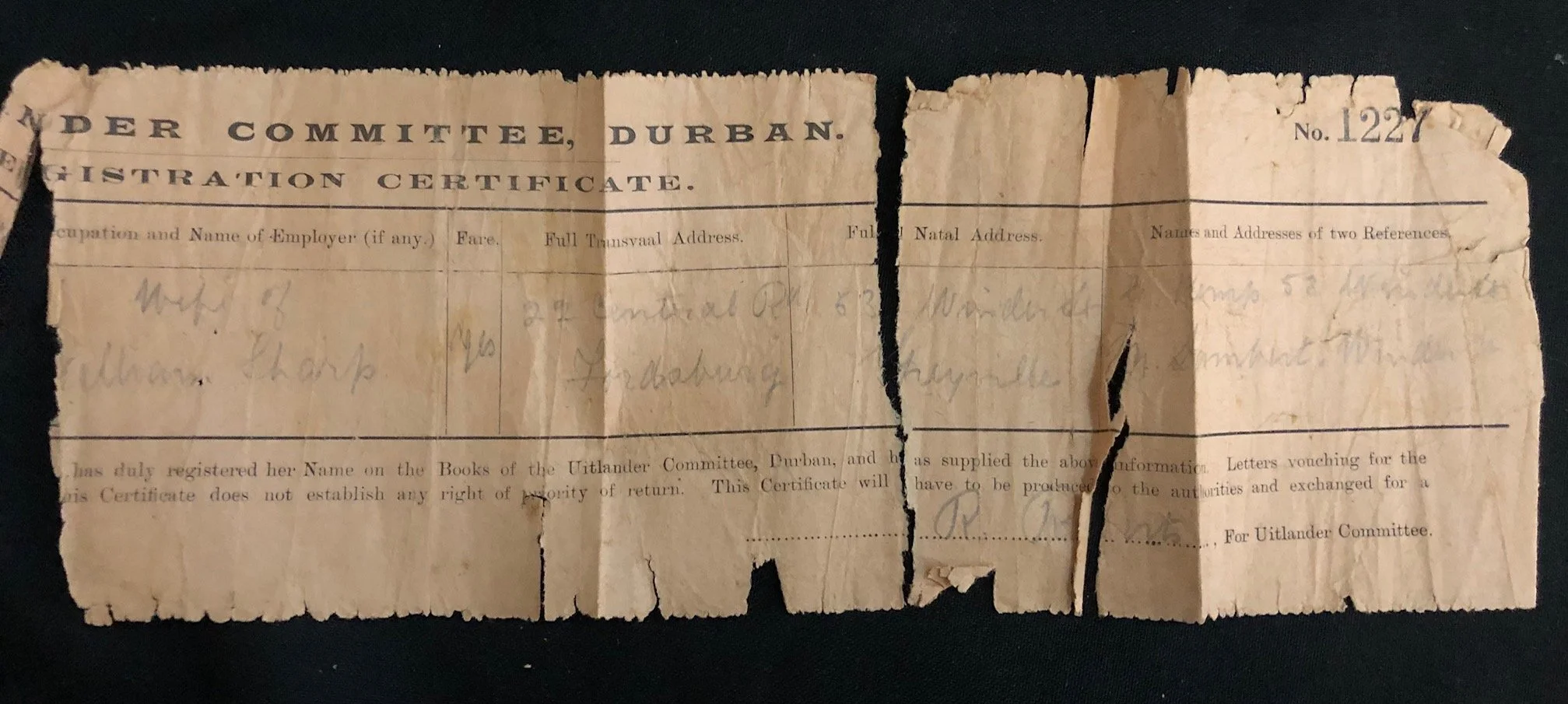
Anglo-Boer War refugee document issued in Natal for a British/foreign refugee fleeing Johannesburg
Exodus from the Ridge of White Waters: The Story Behind Certificate No. 1227
In late 1899, as the diplomatic deadlock between Paul Kruger’s South African Republic and the British Empire spiraled into open conflict, a wave of panic swept across the Witwatersrand. Tens of thousands of Uitlanders—the foreign miners, tradesmen, and families who had poured into Johannesburg following the 1886 gold rush—found themselves caught in the crosshairs of war. Gold mines suspended operations, businesses shuttered, and the streets of Johannesburg filled with thousands desperate to secure passage out of the Transvaal before the first shots were fired.
Among those fleeing was Mrs. William Sharp, a resident of 22 Central Road in Fordsburg—a bustling, working-class suburb hard against the gold mines. Leaving behind her home and the uncertain fate of the Rand, she joined the mass exodus onto packed, suffocating refugee trains headed down the escarpment toward the British colony of Natal.
Upon arriving in the humid coastal port of Durban, exhausted refugees were met by civic relief organizations attempting to manage the human tide. It was here that Mrs. Sharp presented herself to local officials and received Registration Certificate No. 1227, issued by the Uitlander Committee, Durban.
The small paper document served as a vital lifeline in exile. With her occupation recorded simply as the "Wife of William Sharp" and her new temporary residence listed at 53 Windermere Road, Greyville, the certificate formally placed her on the municipal registers. It entitled displaced families to emergency relief funds, food rations, and temporary housing across Natal while the war raged in the interior.
Yet, embedded in the certificate’s fine print was a stark reminder of the upheaval:
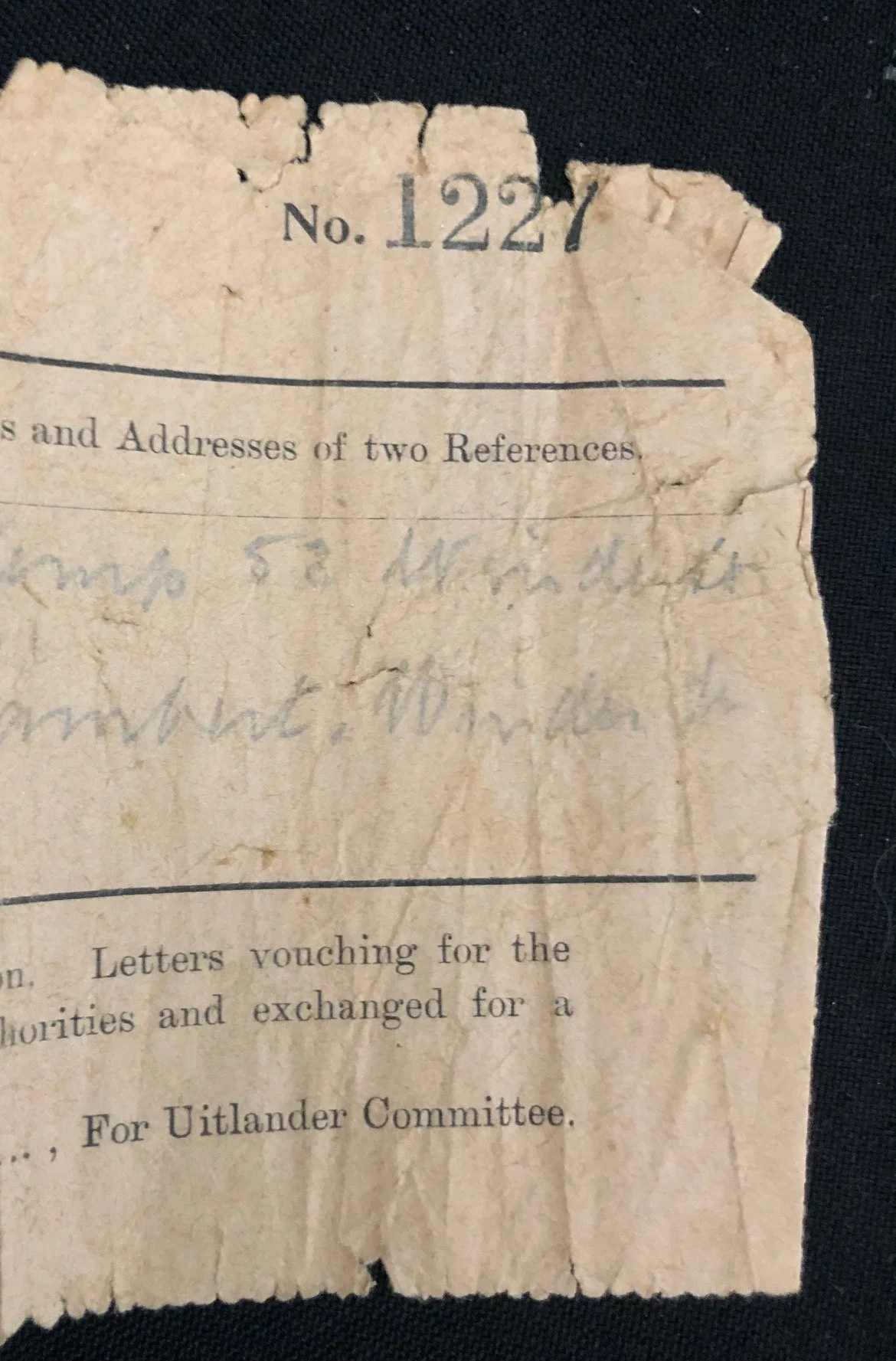
"This Certificate does not establish any right of priority of return. This Certificate will have to be produced to the authorities and exchanged for a permit to return..."
For Mrs. Sharp and thousands like her, Certificate No. 1227 was both a temporary anchor in Durban and a prized ticket home—a paper token representing the promise that, once the dust of war settled over the highveld, she would one day be allowed to return to Central Road. Today, this modest slip of paper remains a poignant artifact of urban displacement, capturing the human cost and bureaucratic reality of the Anglo-Boer War's refugee crisis.
This is an Anglo-Boer War relief and refugee document issued in Natal (Durban) for a British/foreign refugee fleeing the Transvaal around 1899–1900.
Document Details & Transcription
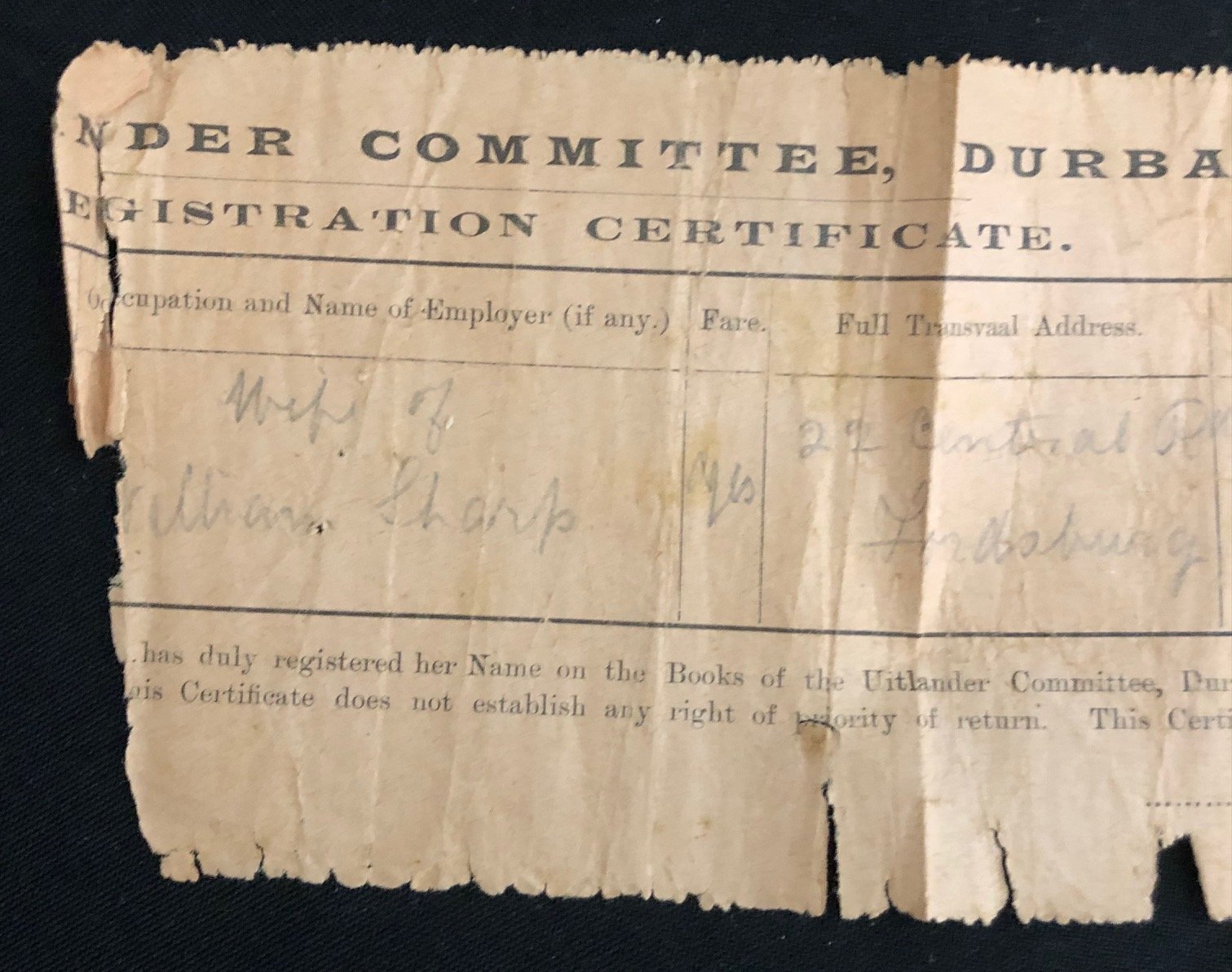
Header: [UITLA]NDER COMMITTEE, DURBAN. / REGISTRATION CERTIFICATE. / No. 1227
Occupation & Employer: Written in pencil as "Wife of William Sharp"
Full Transvaal Address: "22 Central Rd. Fordsburg" (a prominent mining neighborhood in Johannesburg)
Full Natal Address: "53 Windermere Rd., Greyville" (Durban)
Printed Conditions: "has duly registered her Name on the Books of the Uitlander Committee, Durban, and has supplied the above information... This Certificate does not establish any right of priority of return. This Certificate will have to be produced to the authorities and exchanged for a [permit to return]..."
Historical Context & Significance
The Uitlander Exodus (1899): In the months leading up to the outbreak of the Second Anglo-Boer War in October 1899, tens of thousands of Uitlanders (foreign, mostly British, workers and residents living in the Transvaal goldfields) fled Johannesburg and Pretoria. Trains crammed with refugees headed to coastal ports under British control, predominantly Durban, Pietermaritzburg, and Cape Town.
The Relief Committees: Upon arrival in Natal, bodies like the Durban Uitlander Committee were formed to track refugees, coordinate temporary housing, distribute emergency financial relief, and maintain registered lists of displaced residents awaiting permission to return once British forces captured Johannesburg.
Fordsburg Connection: Fordsburg was a key working-class suburb of early Johannesburg established shortly after the discovery of gold on the Witwatersrand. Its residents were among the hardest hit by the sudden shutdown of the gold mines during the war.
275mm x 100mm
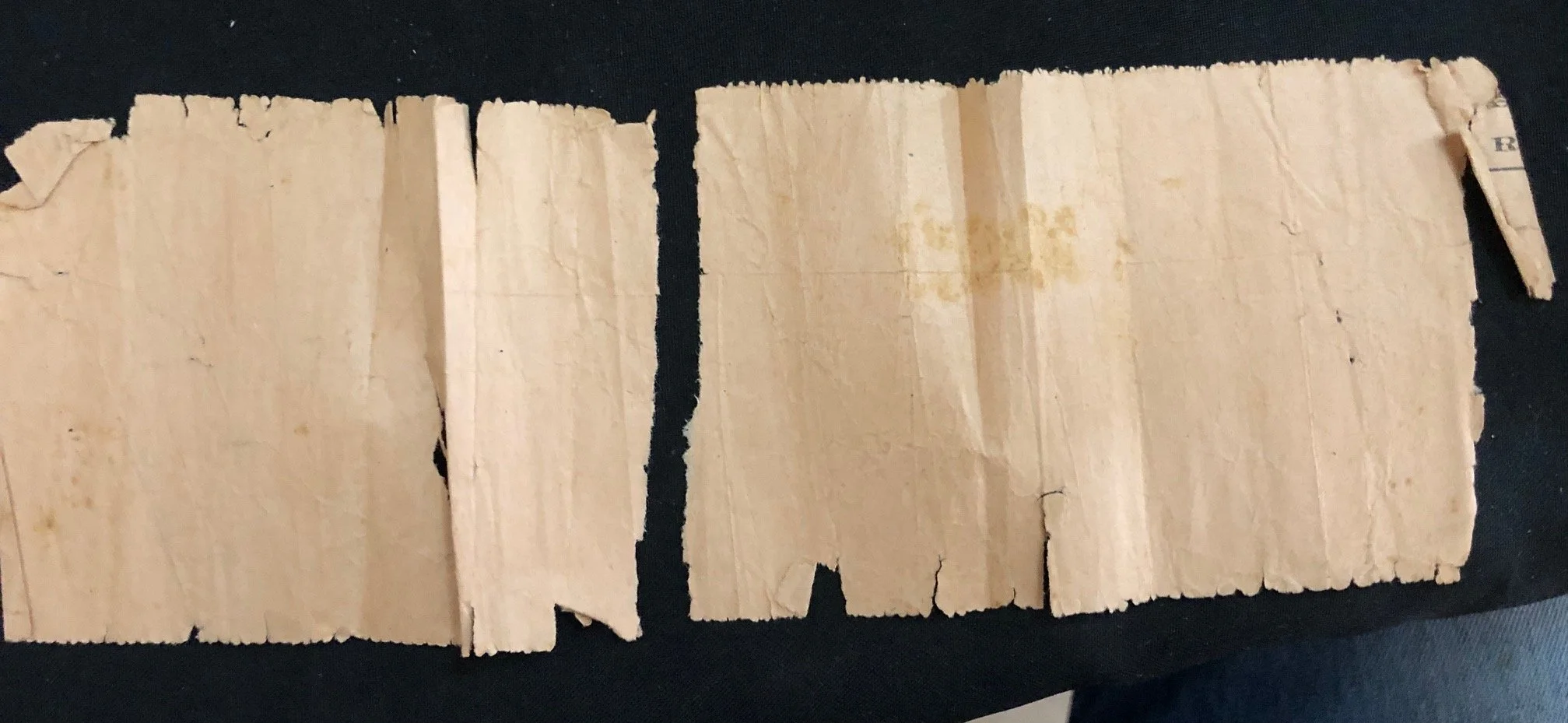
In distressed condition. Incomplete.
R2,000