Side Lights on South Africa by Margaret Rose McAdam (1899)
This copy of Side Lights on South Africa, is an interesting artifact of political journalism from the exact flashpoint of the Anglo-Boer War.
Two layers of historical context make this December 1899 Charles Scribner's Sons edition fascinating: the identity of its author and the high-stakes timing of its publication.
The Woman Behind the Pseudonym
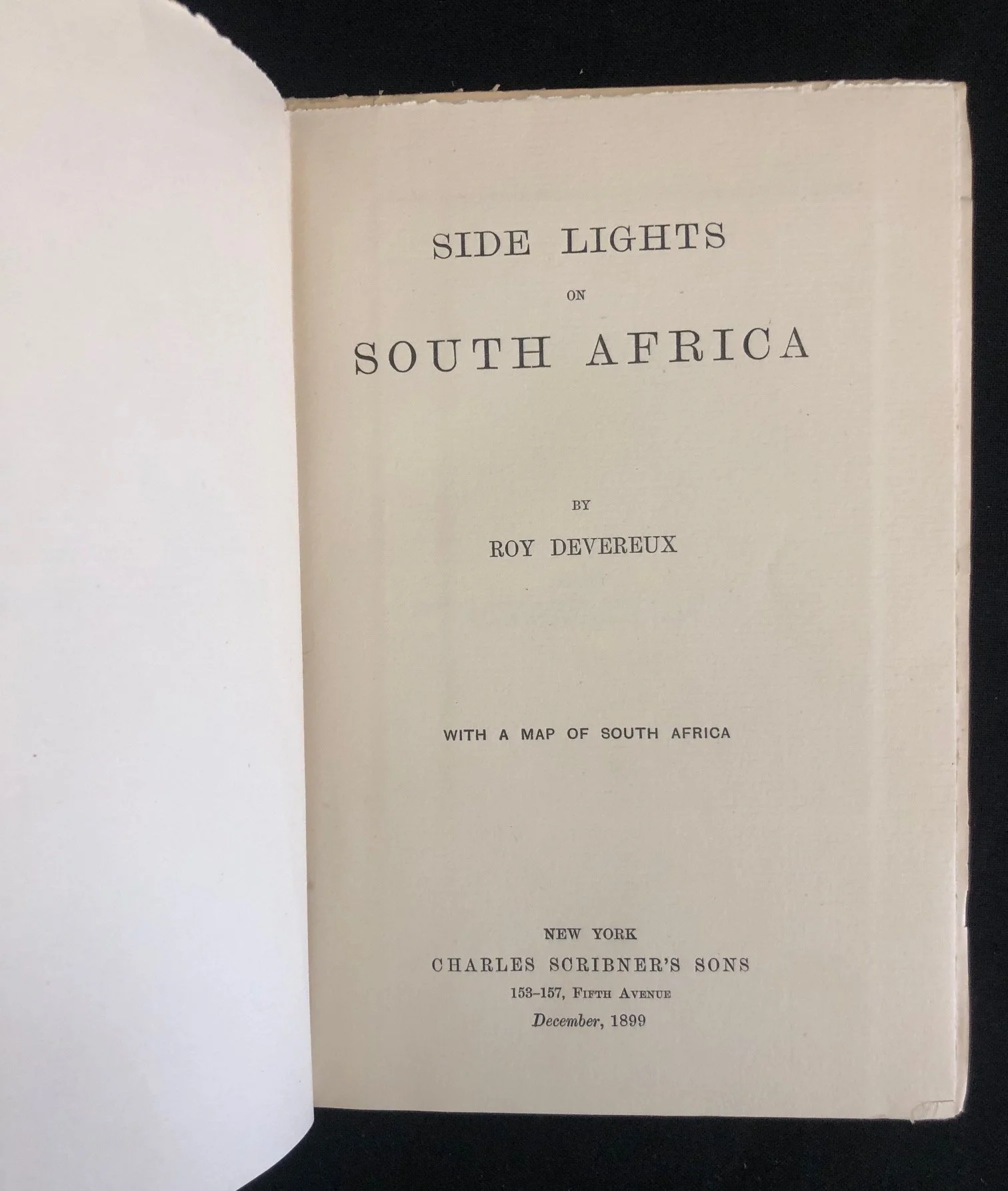
While the title page credits "Roy Devereux," the book was actually written by an avant-garde, boundary-pushing woman named Margaret Rose McAdam (better known by her married name, Rosalie Devereux Pember).
Before turning her attention to geopolitical reporting, she was a prominent voice of the late-Victorian "New Woman" movement. In 1896, she published a radical feminist text titled The Ascent of Woman, which tackled female independence, sexuality, and fashion.
When the threat of war in South Africa began to dominate the global stage, she adopted her gender-neutral journalistic pen name and traveled south as an intrepid foreign correspondent, a highly unusual and dangerous path for a woman at the close of the 19th century.
Prophetic Timing: December 1899
The publication date printed at the bottom of the title page—December, 1899—is critical.
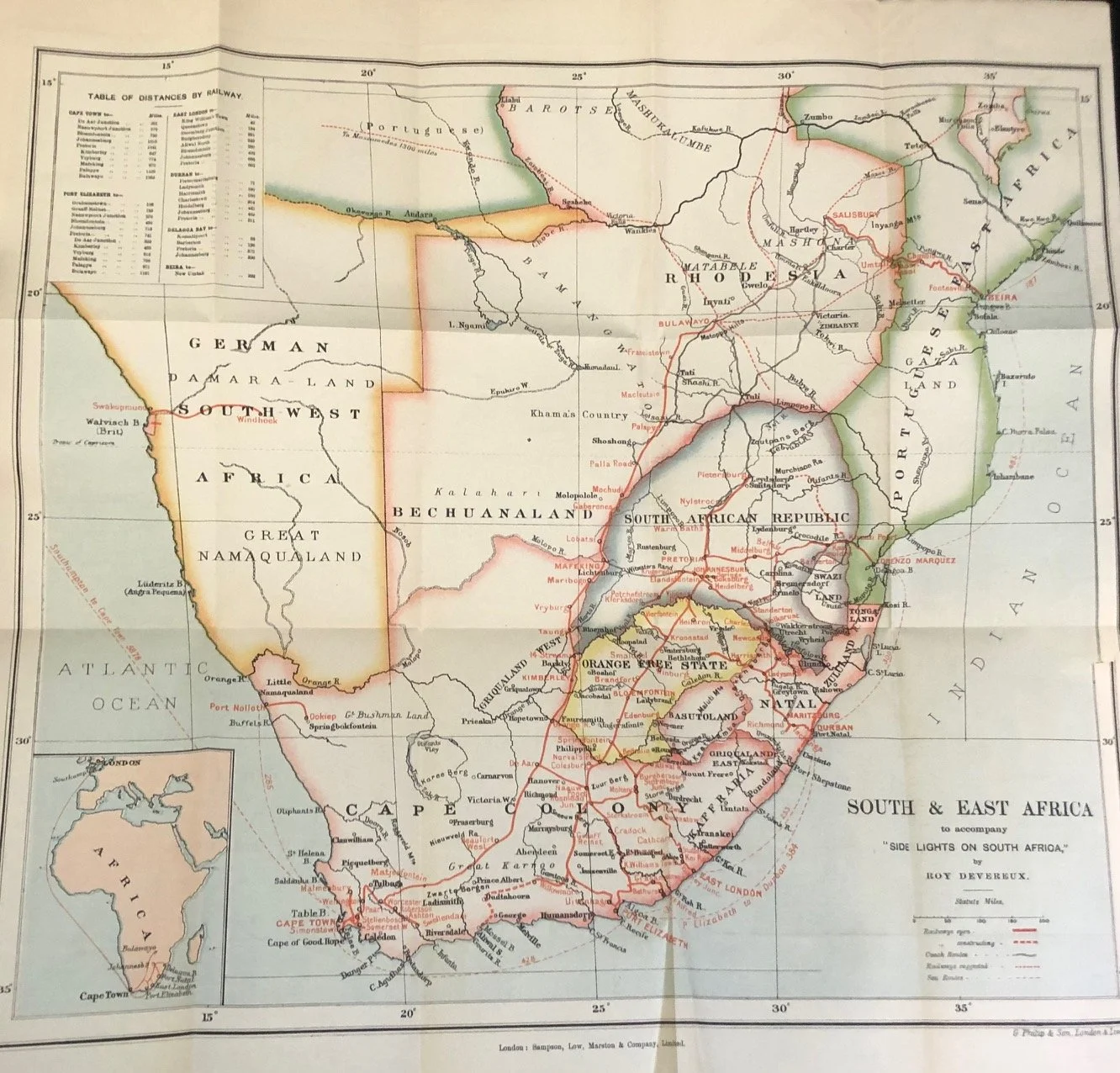
The Second Anglo-Boer War broke out on October 11, 1899. This means that when Charles Scribner's Sons rushed this edition to the press in New York, the war was only a couple of months old. Margaret had traveled across South Africa during the highly tense build-up to the conflict, visiting the Cape Colony, Natal, the Orange Free State, and the Transvaal Republic.
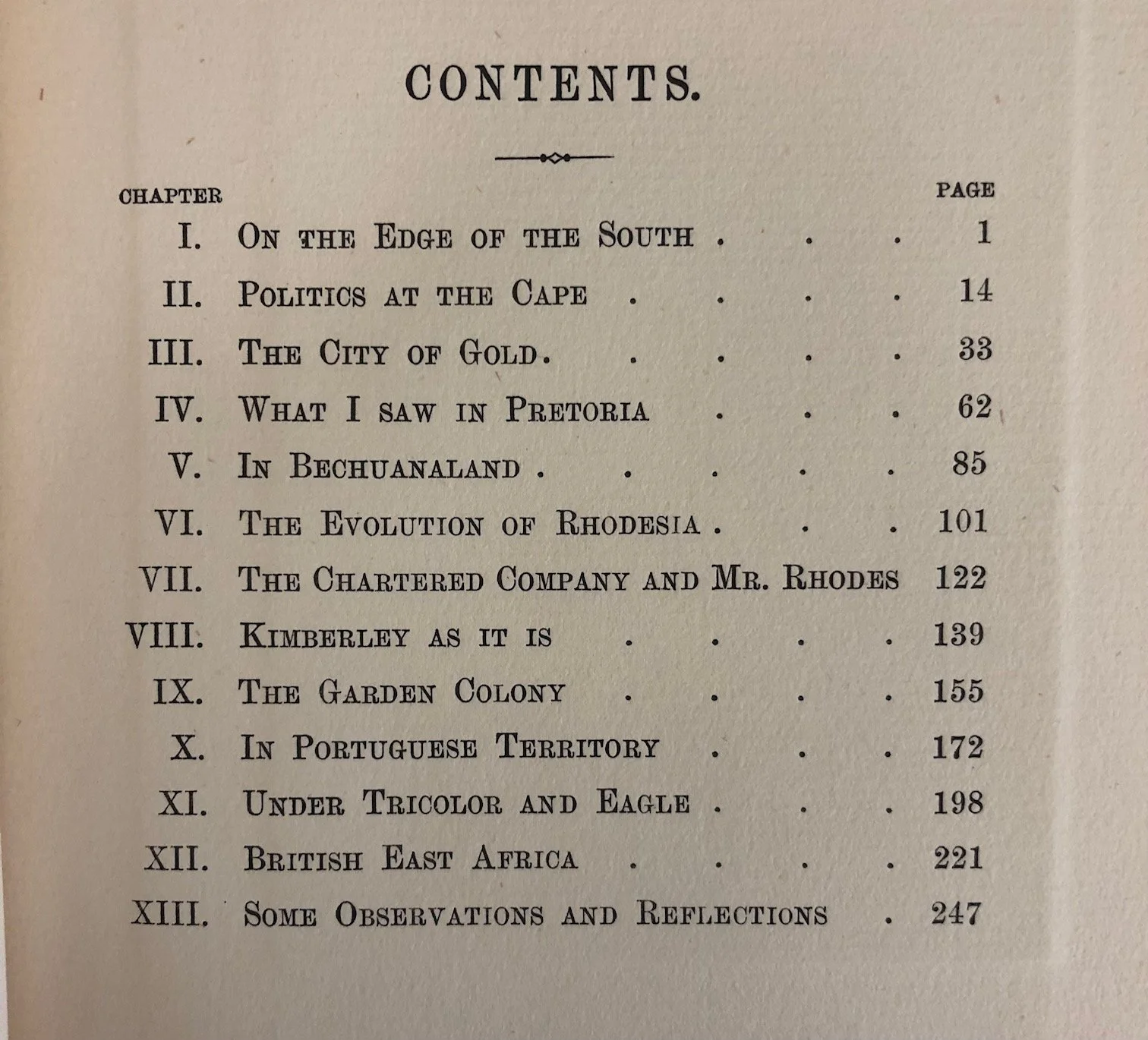
Her chapters include firsthand observations of major historical figures just before they were thrust into open combat, including:
President Paul Kruger, whom she interviewed in Pretoria.
Cecil Rhodes, whose massive political footprint she analyzes.
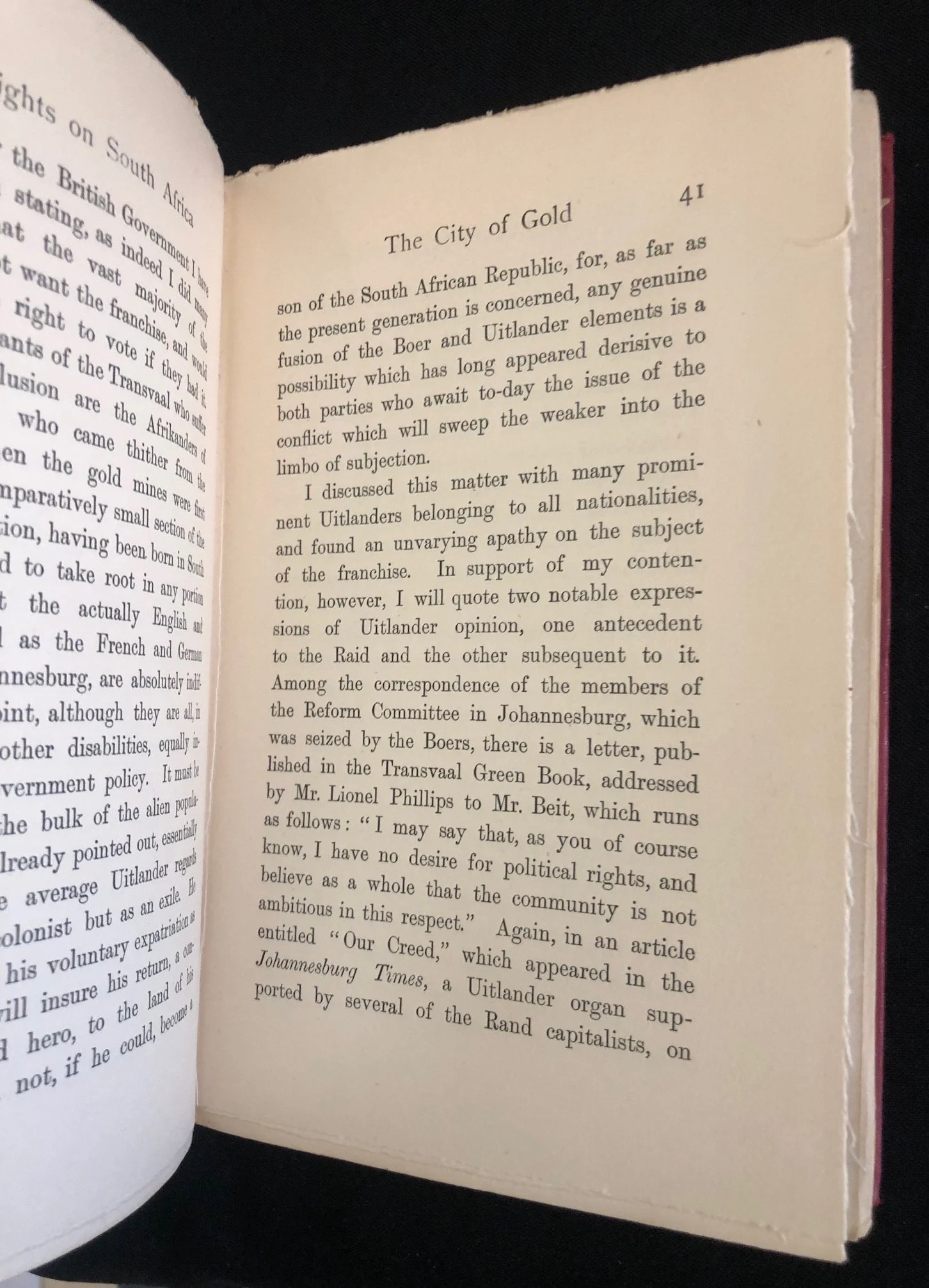
The state of the Witwatersrand goldfields and the grievances of the Uitlanders (foreign miners).
The American Appetite for the Conflict
The fact that this copy was published by Scribner's in New York (rather than the parallel London edition by Sampson Low) highlights how intensely interested the American public was in the conflict. The global book market rushed out travelogues and political summaries like this one to satisfy an audience eager to understand the geography, the mineral wealth, and the opposing forces involved in the sudden explosion of war in South Africa.
It stands as a brilliant time capsule—written by a pioneering woman writer masquerading under a male pseudonym, capturing the old South African republics at the exact moment they were about to be irrevocably altered by war.
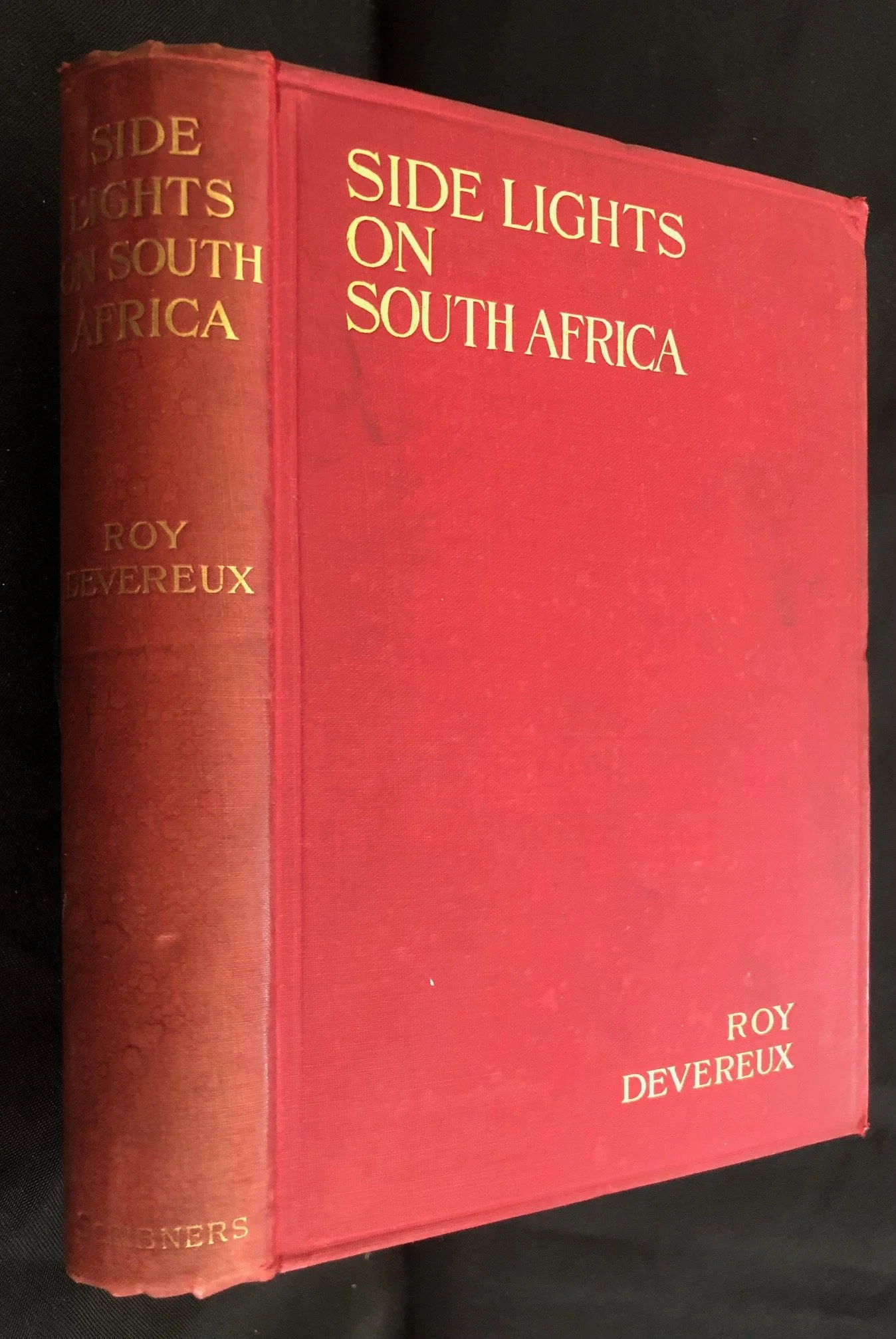
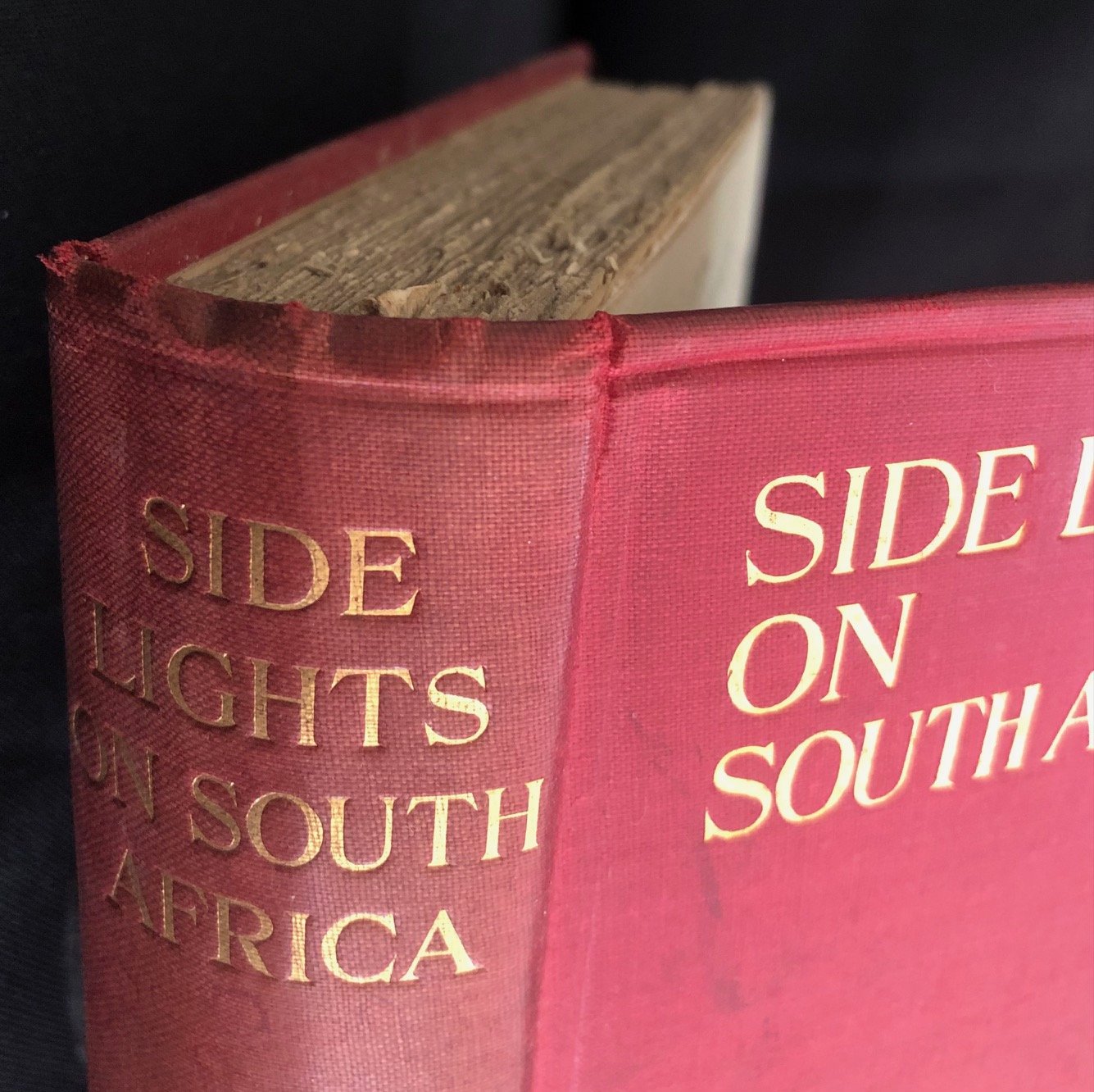
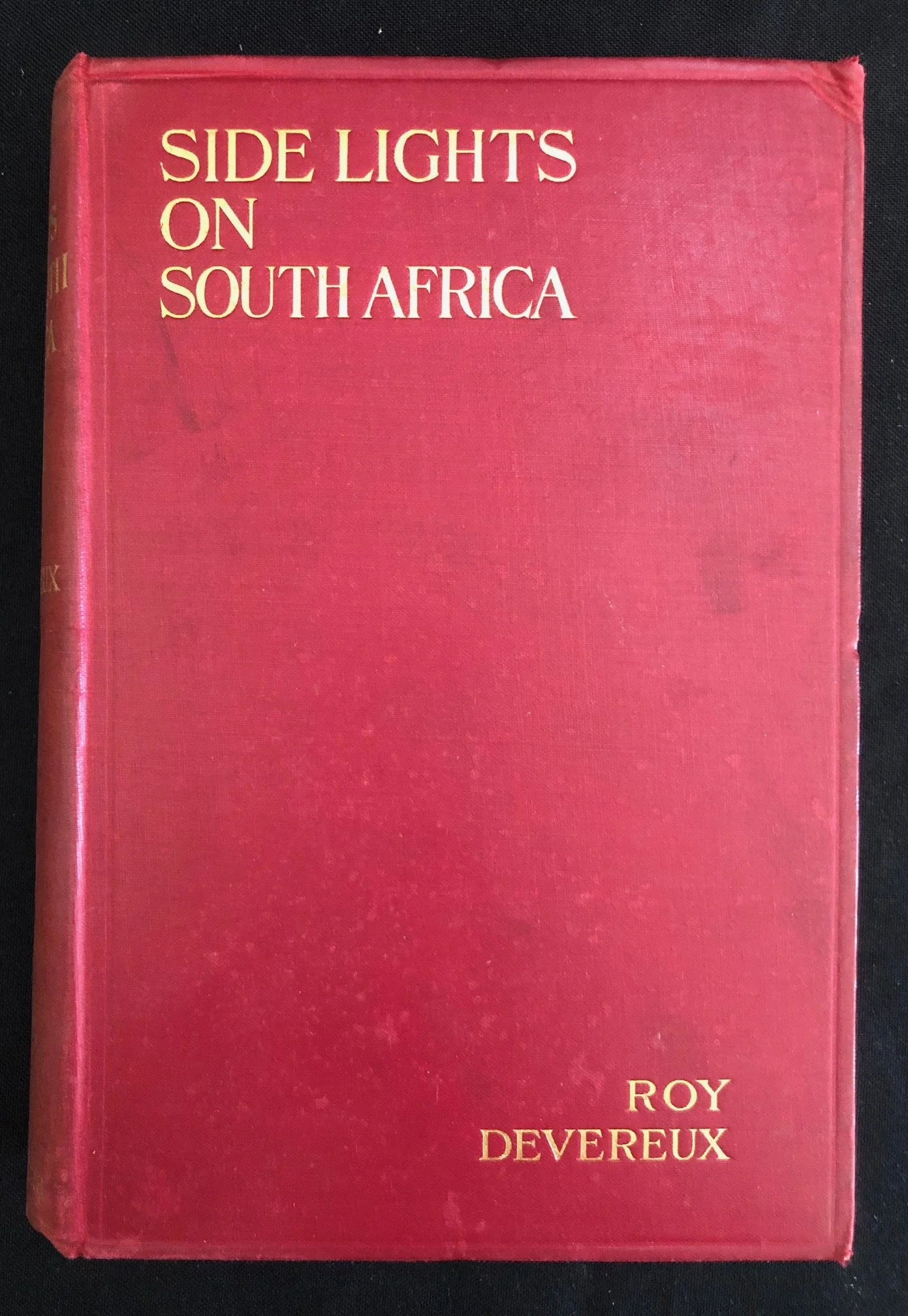
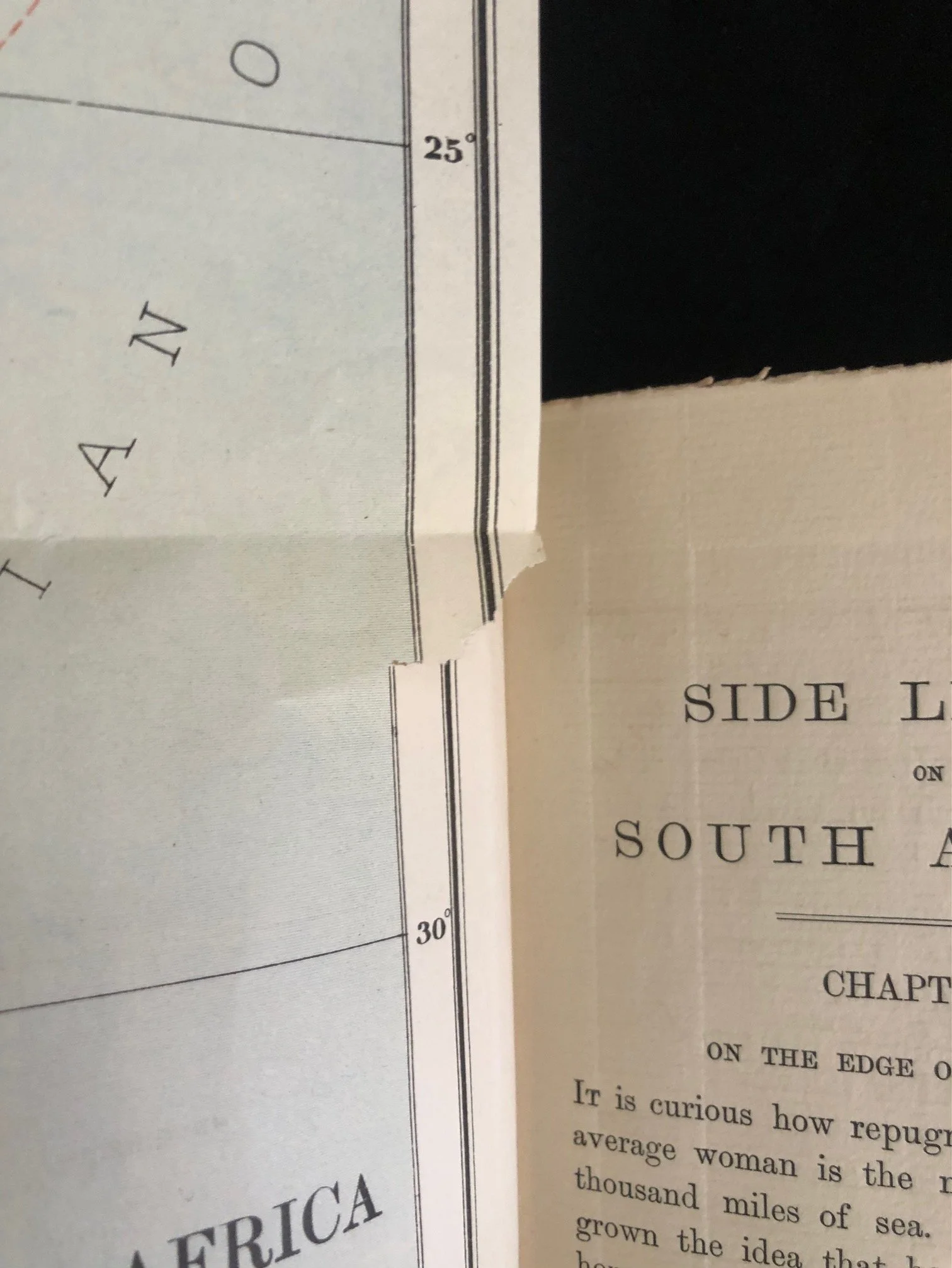
Complete; minor wear to the binding; slight spotting on the boards; small tear on the map.
140mm x 200mm x 20mm
R1,000