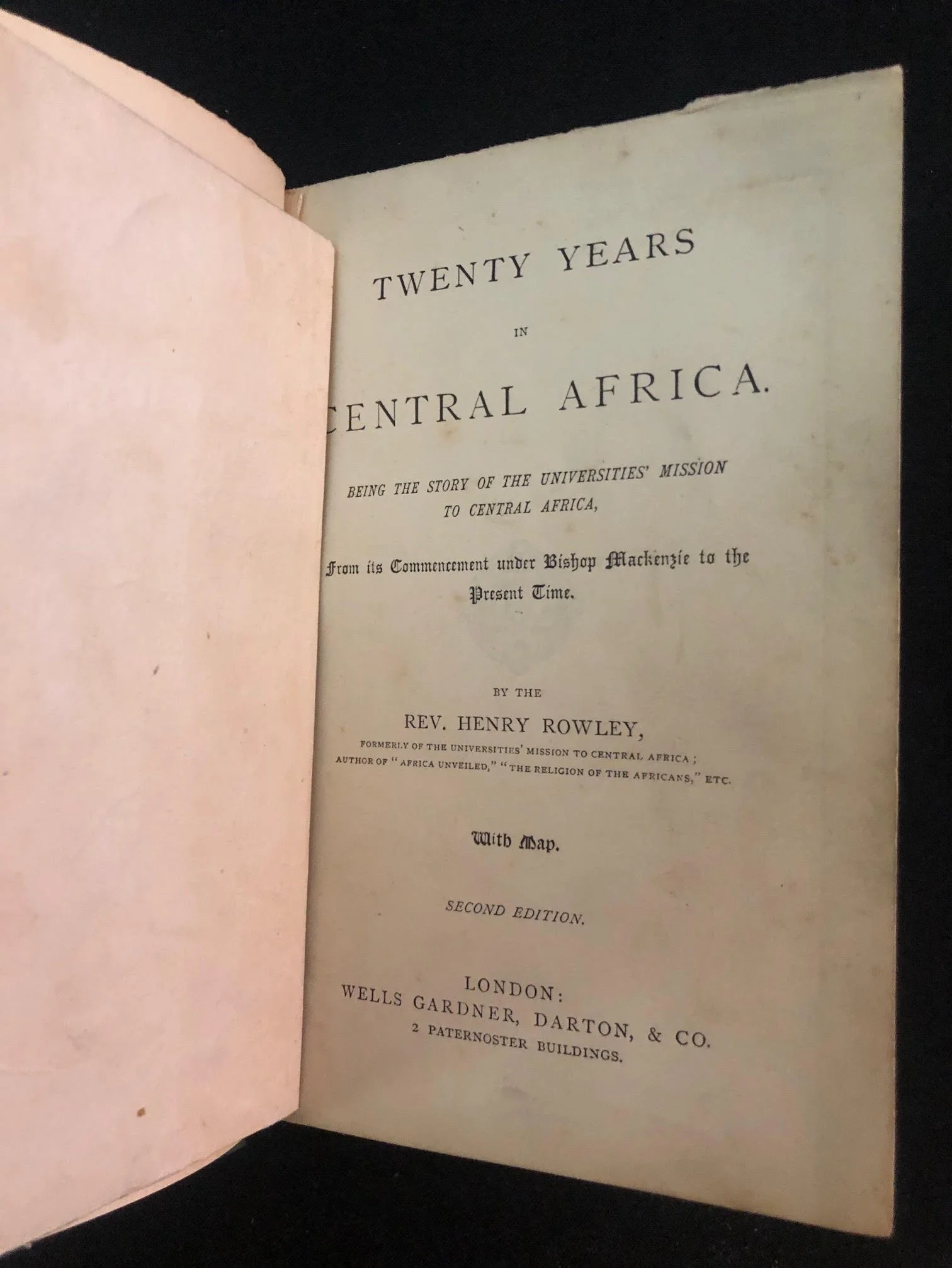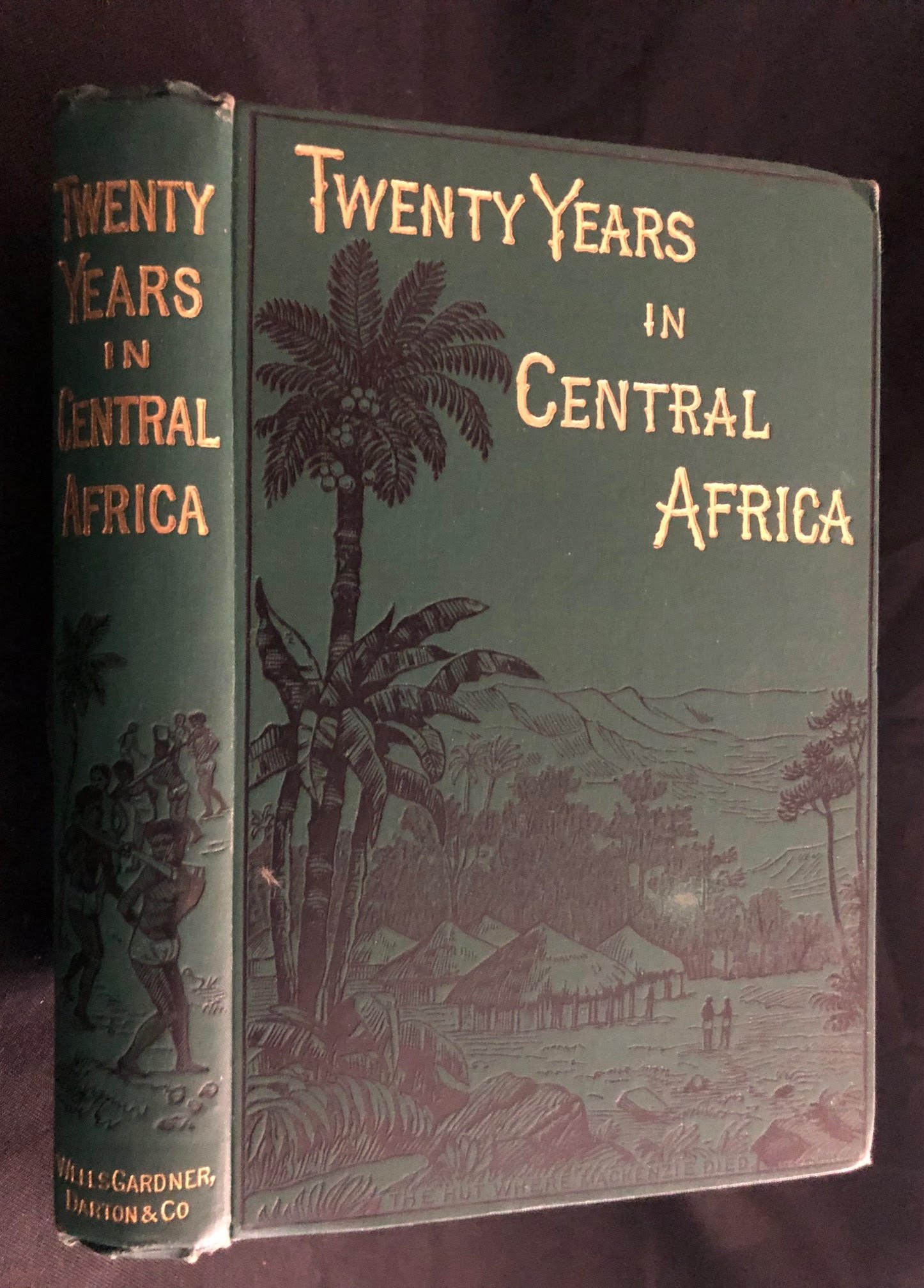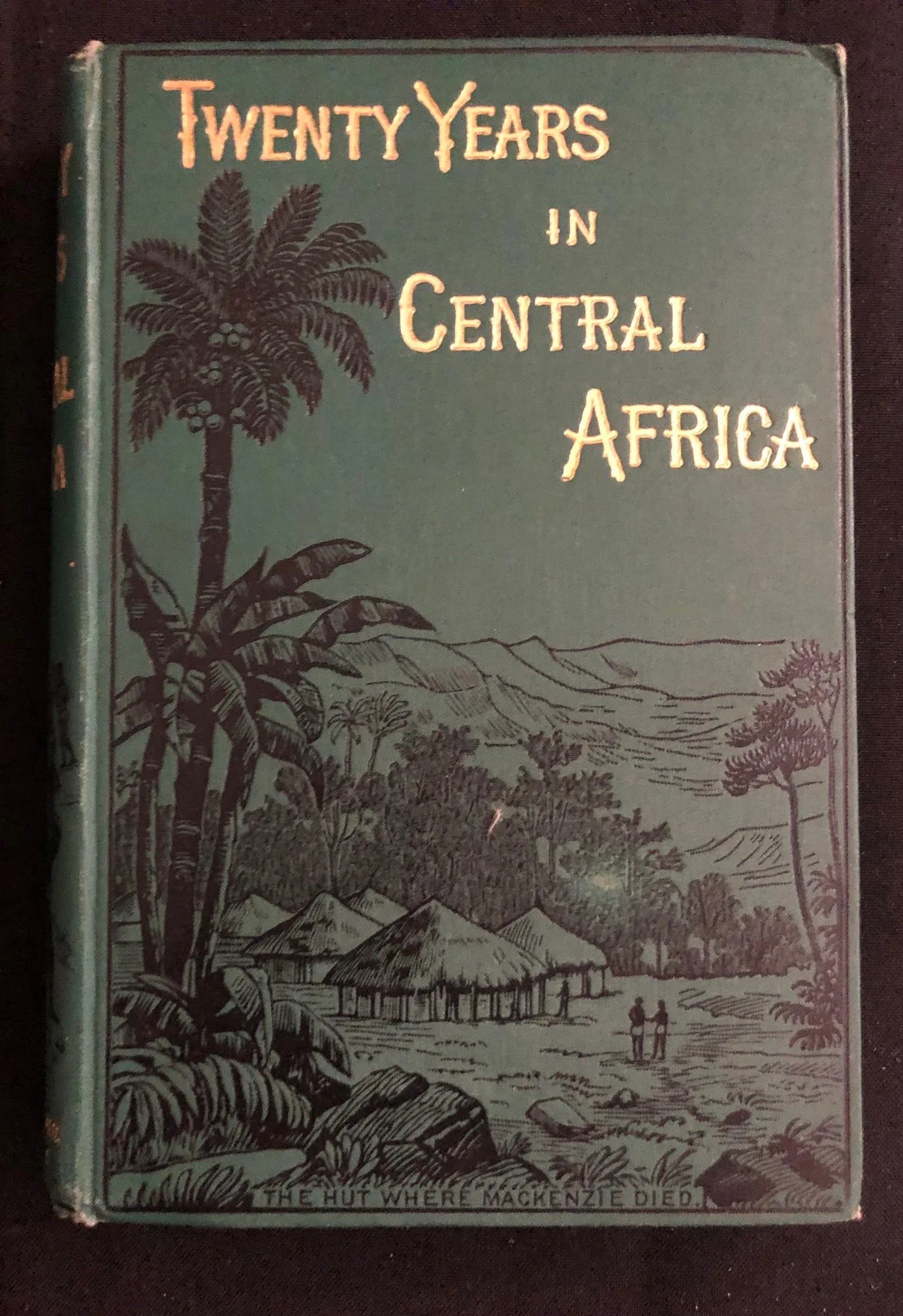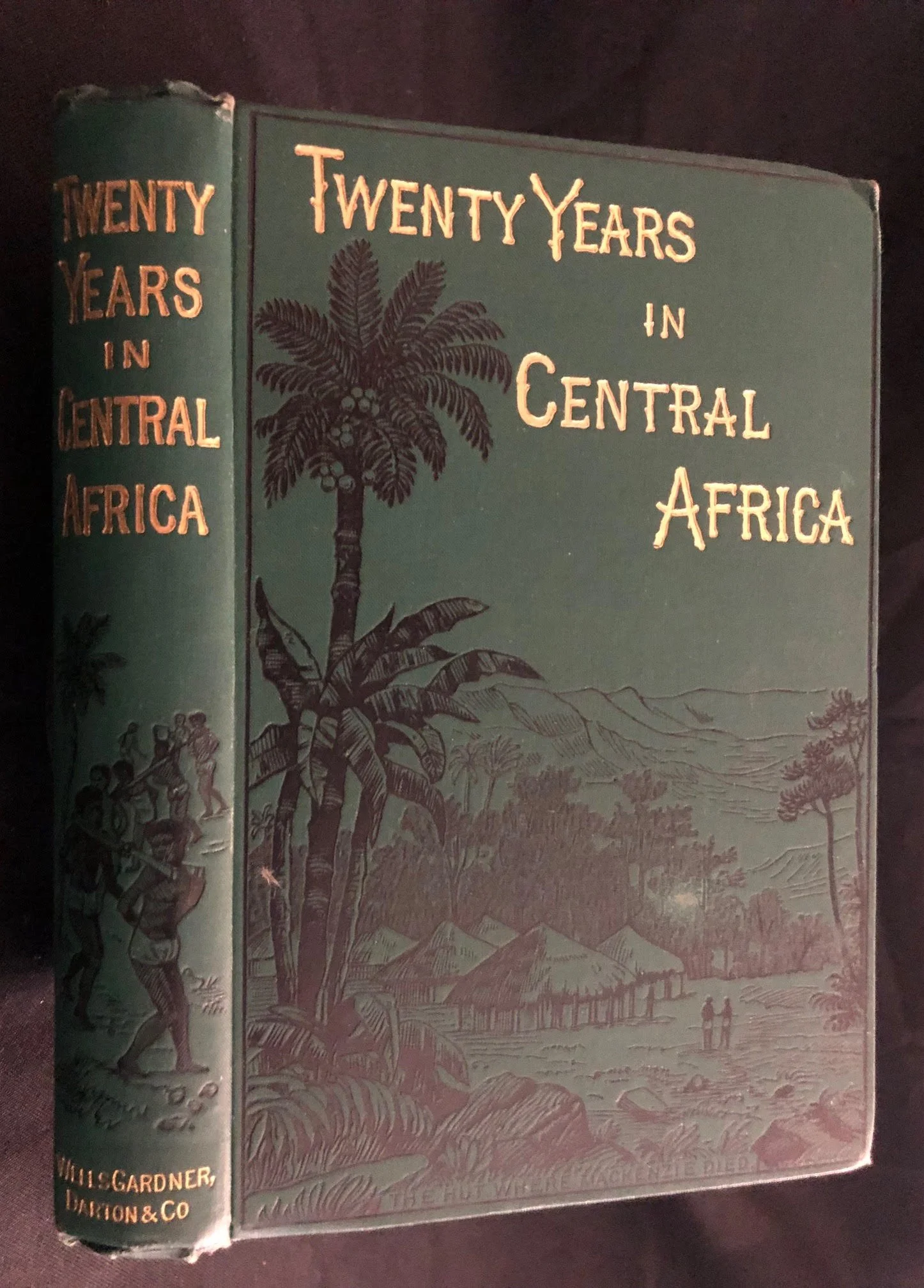
Rev. Henry Rowley’s Twenty Years in Central Africa. 1882.
Published in London around 1881–1882 by Wells Gardner, Darton & Co., the second edition of Rev. Henry Rowley’s Twenty Years in Central Africa captures one of the most dramatic—and fiercely debated—episodes in Victorian missionary and exploration history: the catastrophic early years of the Universities' Mission to Central Africa (UMCA) and its fallout with David Livingstone.
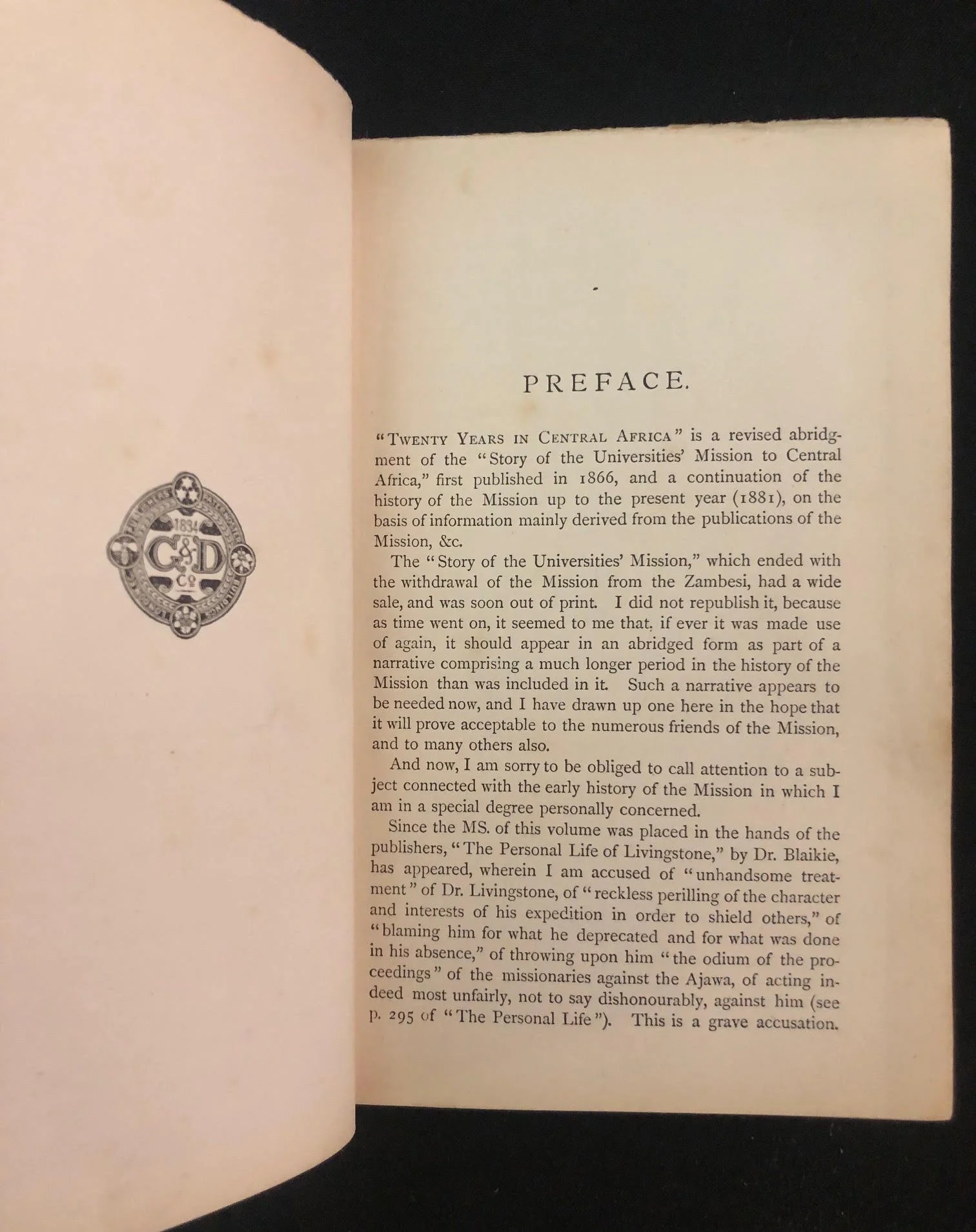
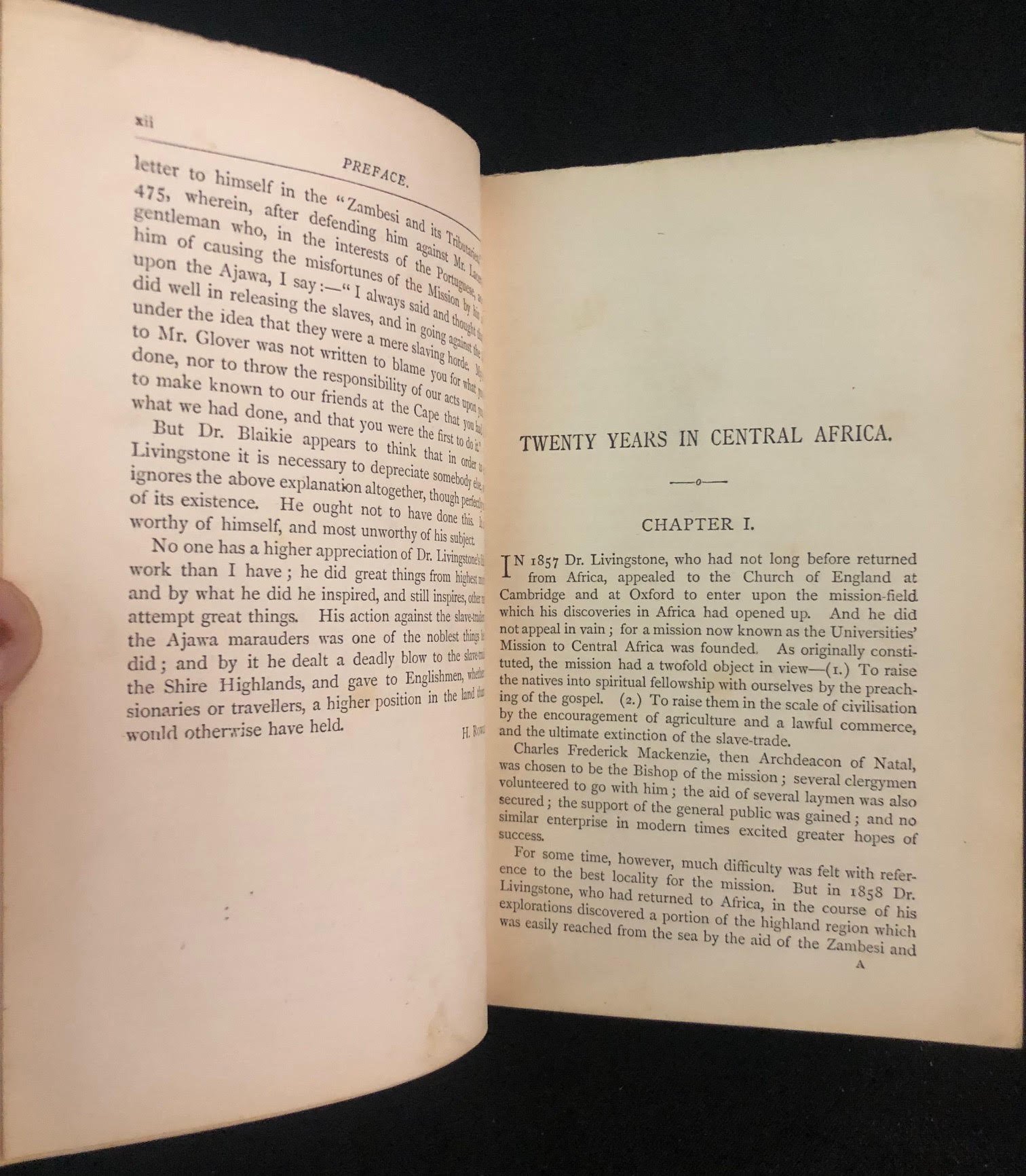
A Victorian Public Relations War Over Livingstone's Legacy: Look closely at the end of the Preface—Rowley is publicly sparring with Dr. William Garden Blaikie, whose famous ‘The Personal Life of David Livingstone’ had just been published in 1880. When Bishop Charles Mackenzie and his Anglican missionaries followed Livingstone up the Zambezi and Shire Rivers in 1861, they got drawn into armed skirmishes against Yao ("Ajawa") slave raiders to free captives. The mission collapsed into tragedy: Bishop Mackenzie and several colleagues died of malaria and blackwater fever within months, and critics in Britain accused the clergy of abandoning peaceful evangelism for frontier warfare. Rowley uses his preface to push back against Blaikie’s attempt to shield Livingstone’s reputation by subtly shifting the blame onto the late Bishop Mackenzie.
The Natal Connection: Before he was consecrated in Cape Town as the first missionary bishop to Central Africa in 1861, Charles Frederick Mackenzie was the Archdeacon of Natal (working alongside Bishop John Colenso in Pietermaritzburg). Several of the mission’s key lay helpers—including Zulu/Natal-trained artisans and guides—came directly out of Natal to help establish the ill-fated Magomero mission station in modern-day Malawi.
An Eyewitness Survivor's Account: Henry Rowley was one of the very few original 1861 pioneers to survive the Shire Highlands ordeal and return to England alive (he had earlier written The Story of the Universities' Mission to Central Africa in 1866). Here, writing twenty years after the mission's founding, he tracks how the UMCA survived its initial disaster by relocating its headquarters offshore to Zanzibar under Bishop Tozer and Bishop Steere—where it famously built Christ Church Cathedral directly on the site of the old Zanzibar slave market—before eventually pushing back inland toward Lake Nyasa (Lake Malawi).
A Classic Reference for Anthropologists: Beyond missionary history, Rowley’s firsthand observations of Yao, Mang'anja, and Makololo customs, rainmaking rituals, and social structures along the Shire River were so detailed that Sir James George Frazer later cited this exact book multiple times in The Golden Bough.
135mm x 192mm
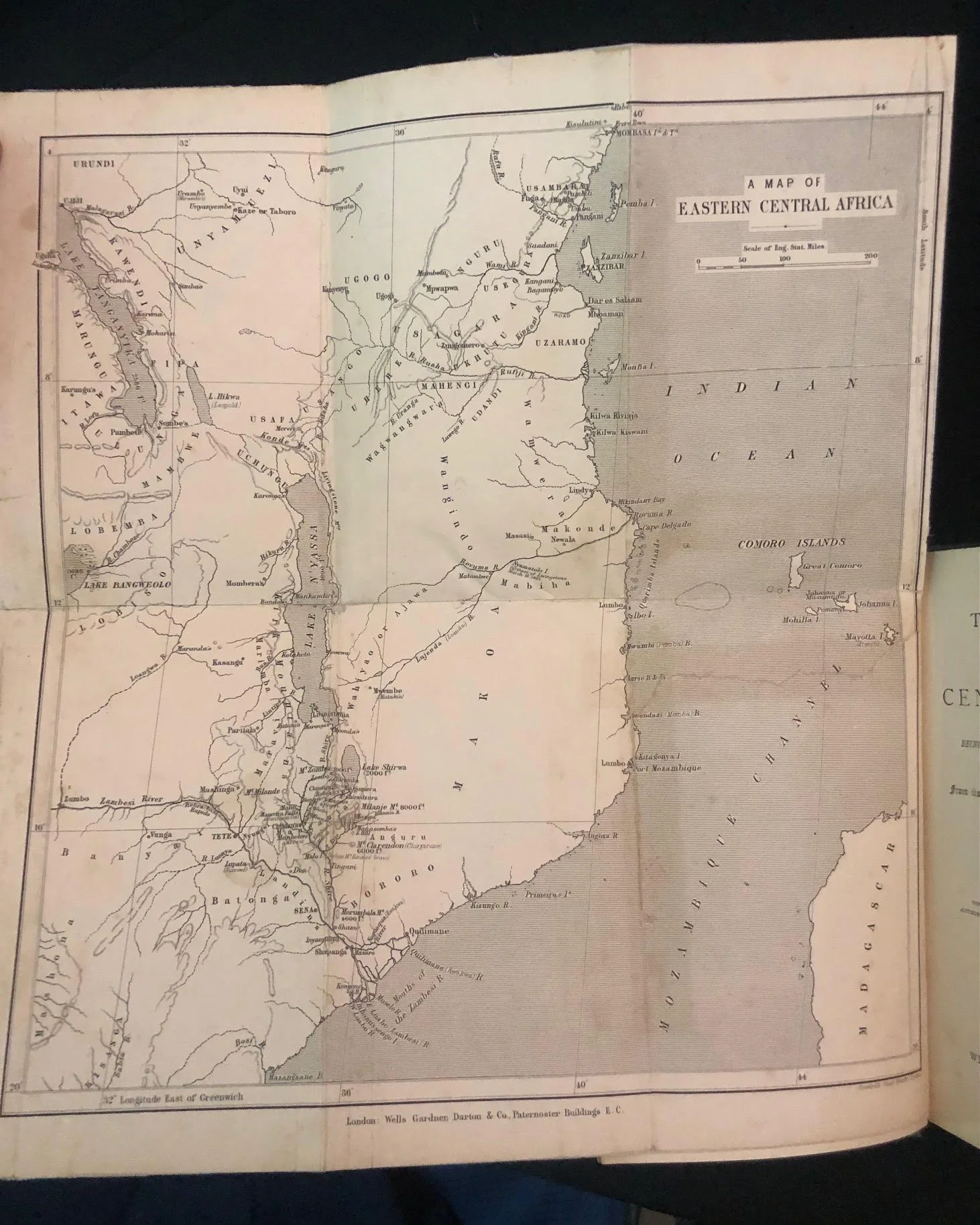
Minor edge wear; map repaired with rebacking; slight staining to the edges
R4,000