The Lake Regions of Central Africa by Bayard Taylor (1874)
The Lake Regions of Central Africa, compiled by Bayard Taylor and published by Scribner, Armstrong, and Co. in 1874, sits at a fascinating intersection of 19th-century American armchair exploration, intense public curiosity about the "Source of the Nile," and a highly personalized mark of ownership.
The 1874 Context: The Peak of "Nile Mania"
The year of this publication, 1874, is highly significant in the history of African exploration.
Just one year prior, in May 1873, David Livingstone died in Chief Chitambo's village in modern-day Zambia. His body was preserved, carried to the coast by his loyal attendants Chuma and Susi, and brought back to England, where he was buried in Westminster Abbey in April 1874—the year this book was printed.
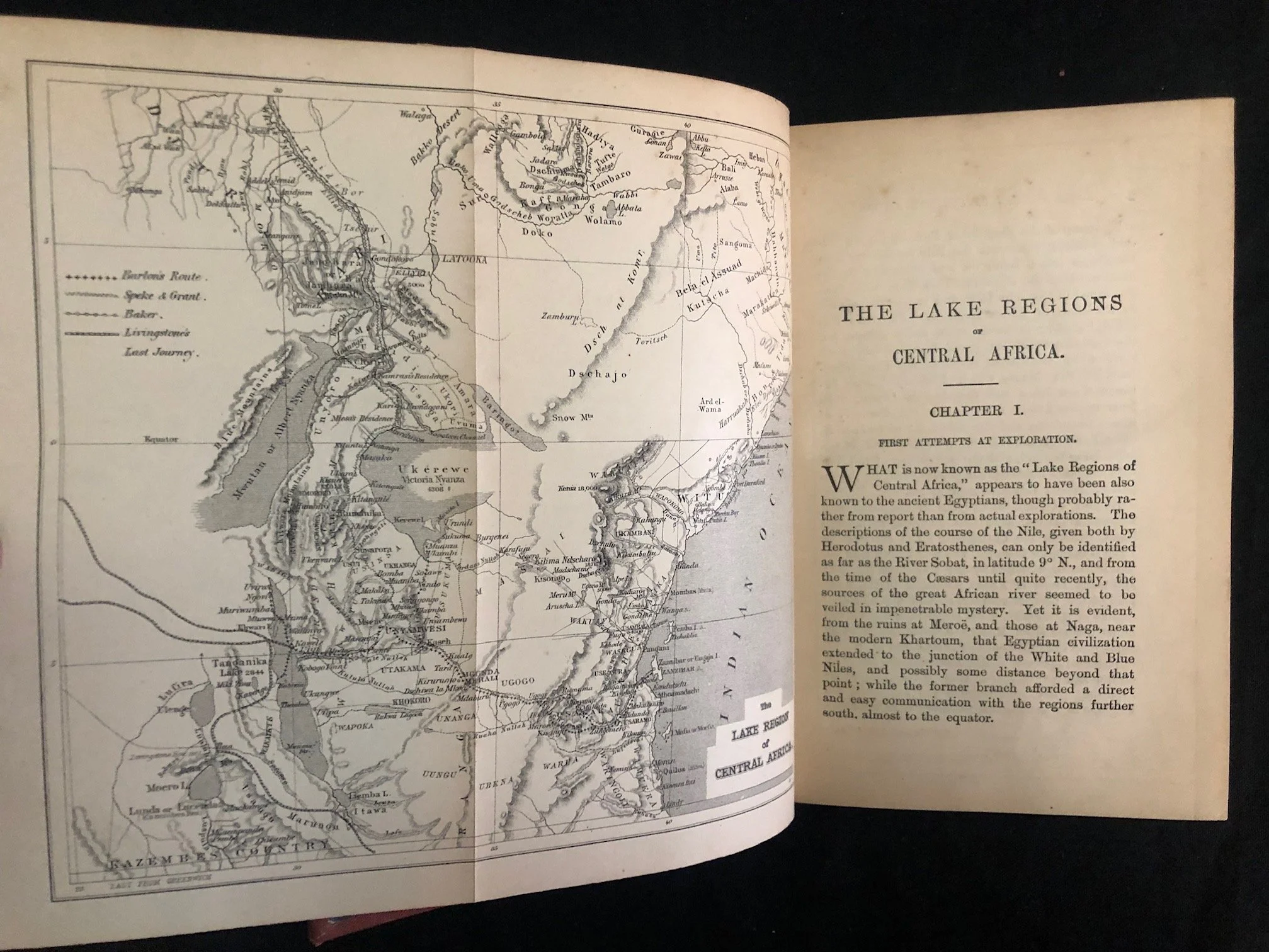
Public fascination with the region was at an absolute fever pitch. Publishers were rushing to compile narratives to satisfy a market obsessed with the geographic mysteries of the African Great Lakes (Lake Tanganyika and Lake Victoria) and the ongoing search for the Nile's true source.
Bayard Taylor: The Ultimate 19th-Century Travel Curator
While the book covers the gruelling exploits of British explorers like Richard Francis Burton, John Hanning Speke, James Augustus Grant, and David Livingstone, it was compiled by an American: Bayard Taylor.
Taylor was one of the most famous American travel writers, translators, and lecturers of the 19th century.
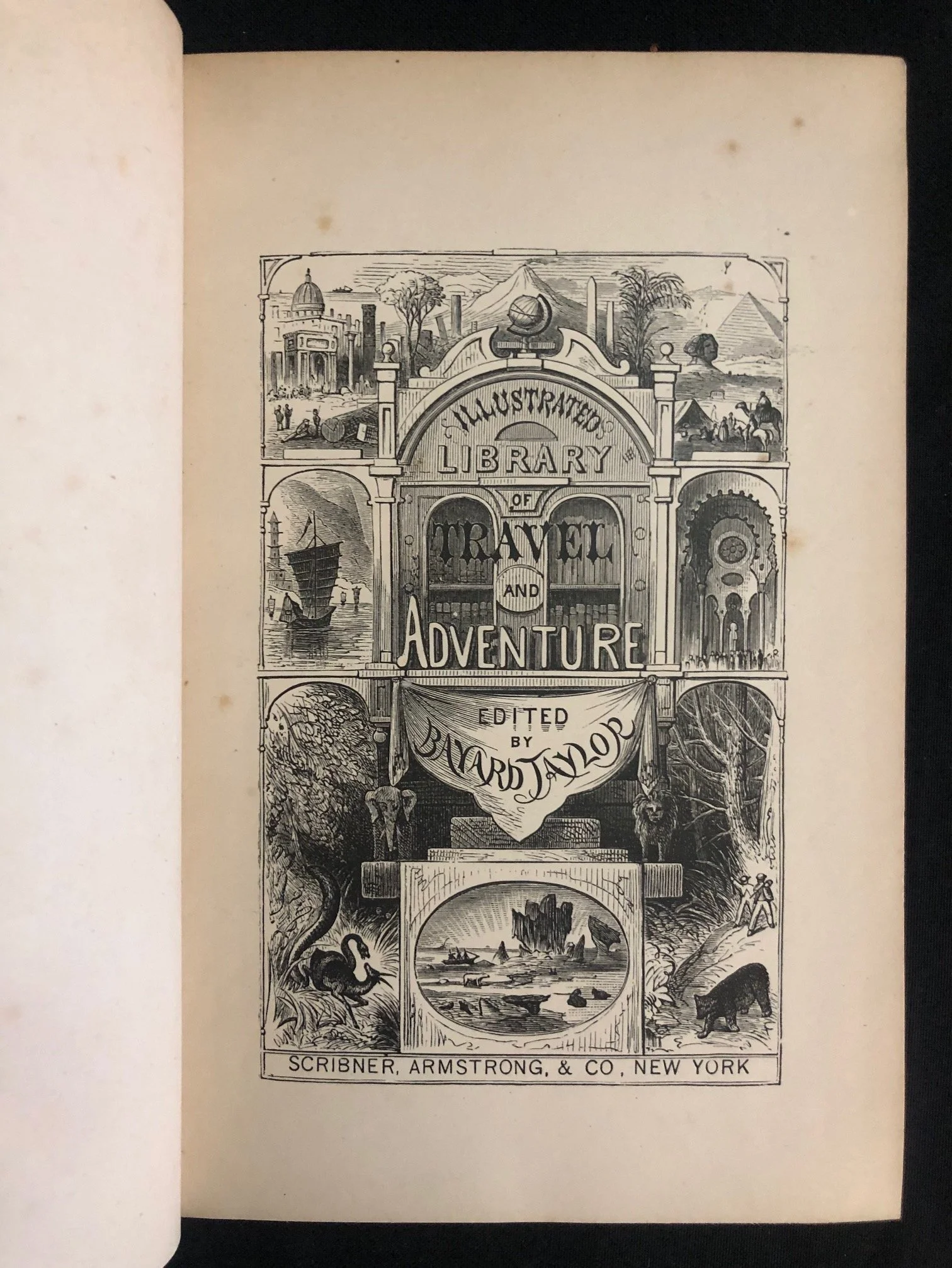
Rather than exploring these specific lake regions himself, Taylor acted as a curator for the American public. This volume was part of Scribner’s successful Illustrated Library of Travel, Exploration, and Adventure.
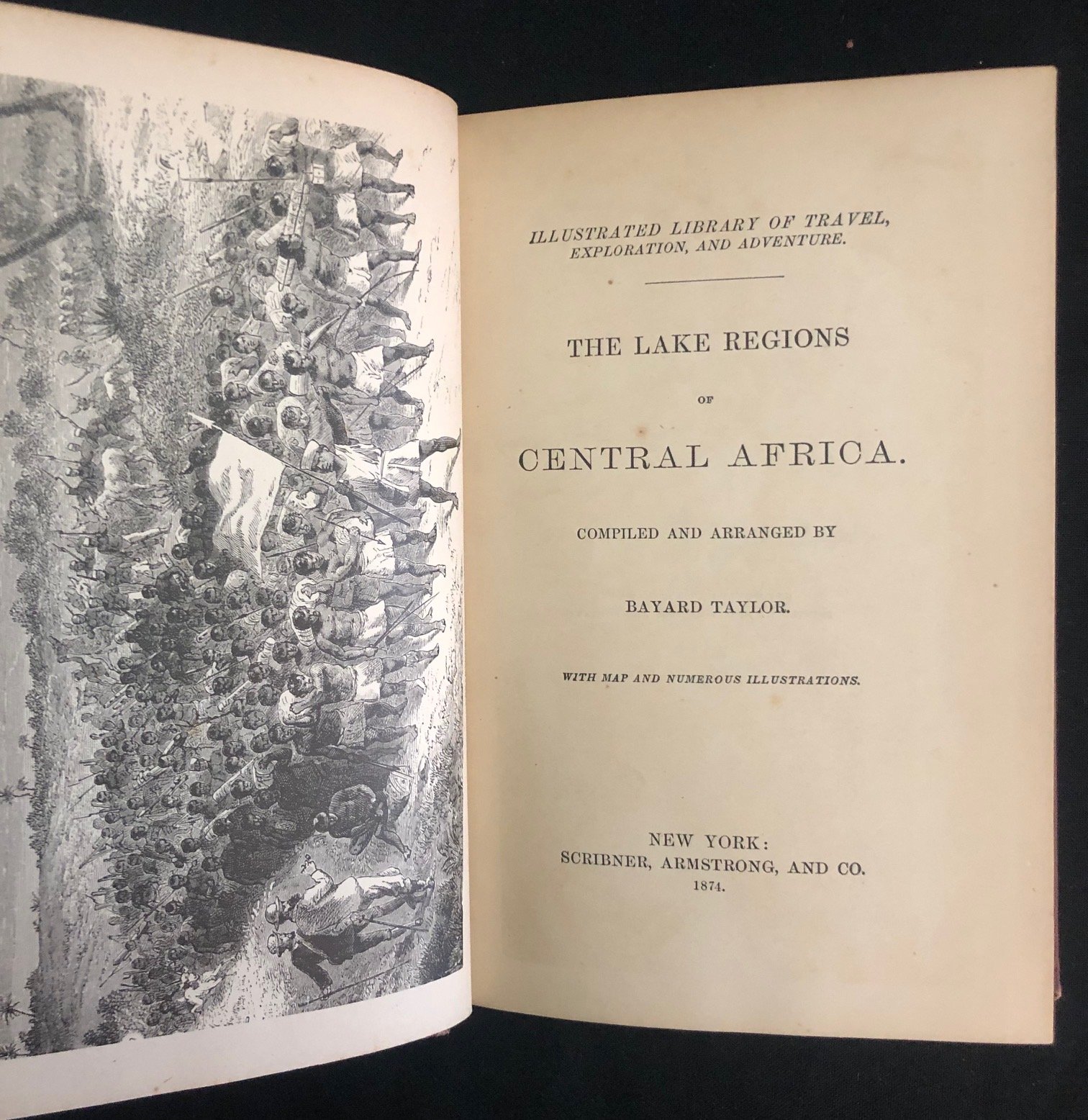
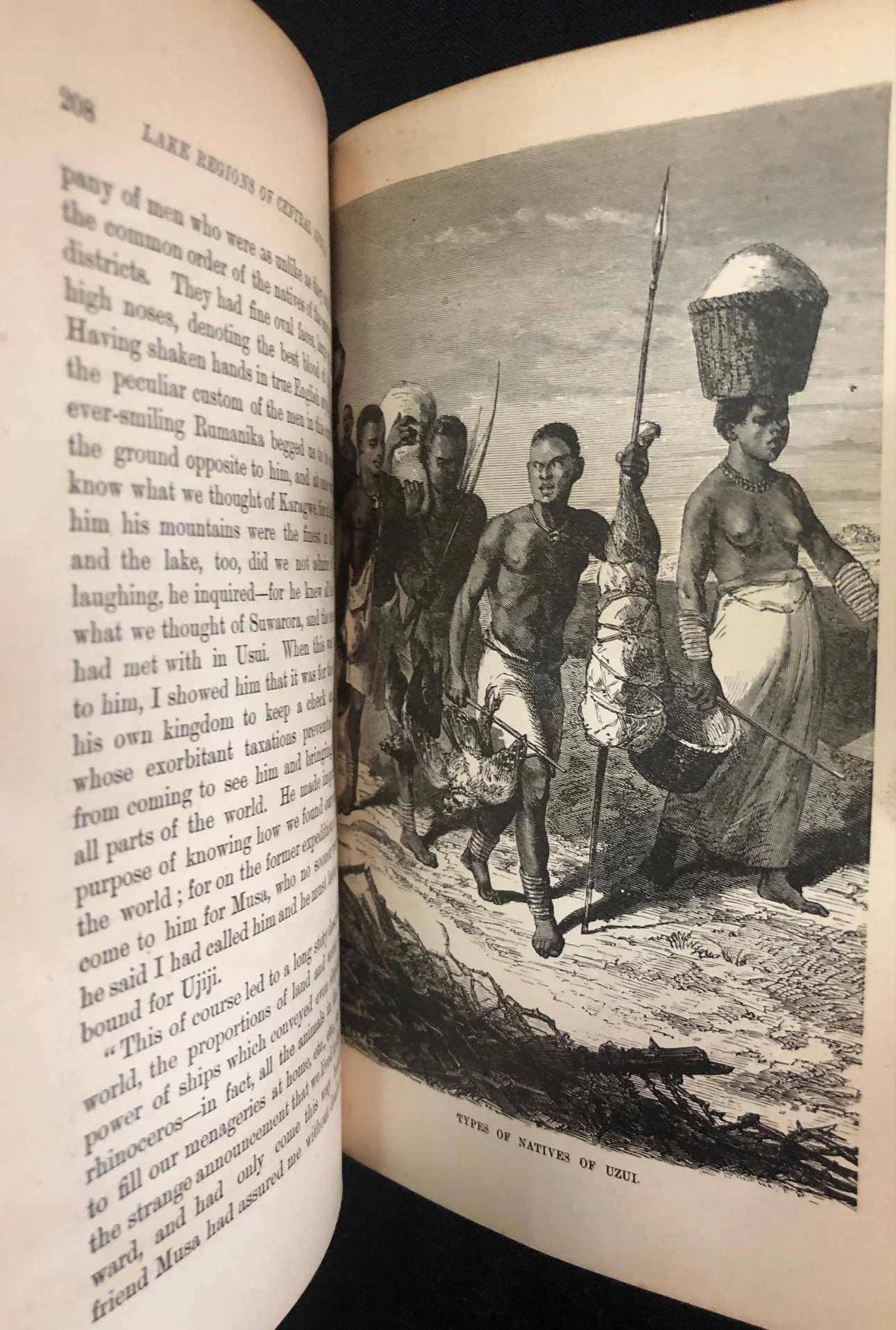
It democratized British imperial exploration for a post-Civil War American audience, repackaging massive, expensive multi-volume British exploration journals into highly readable, richly illustrated, single-volume compilations. The dramatic frontispiece illustration depicting an expedition on the march is typical of the evocative wood engravings used to captivate readers.
Provenance: The Unique Mark of Charles Everett Warren
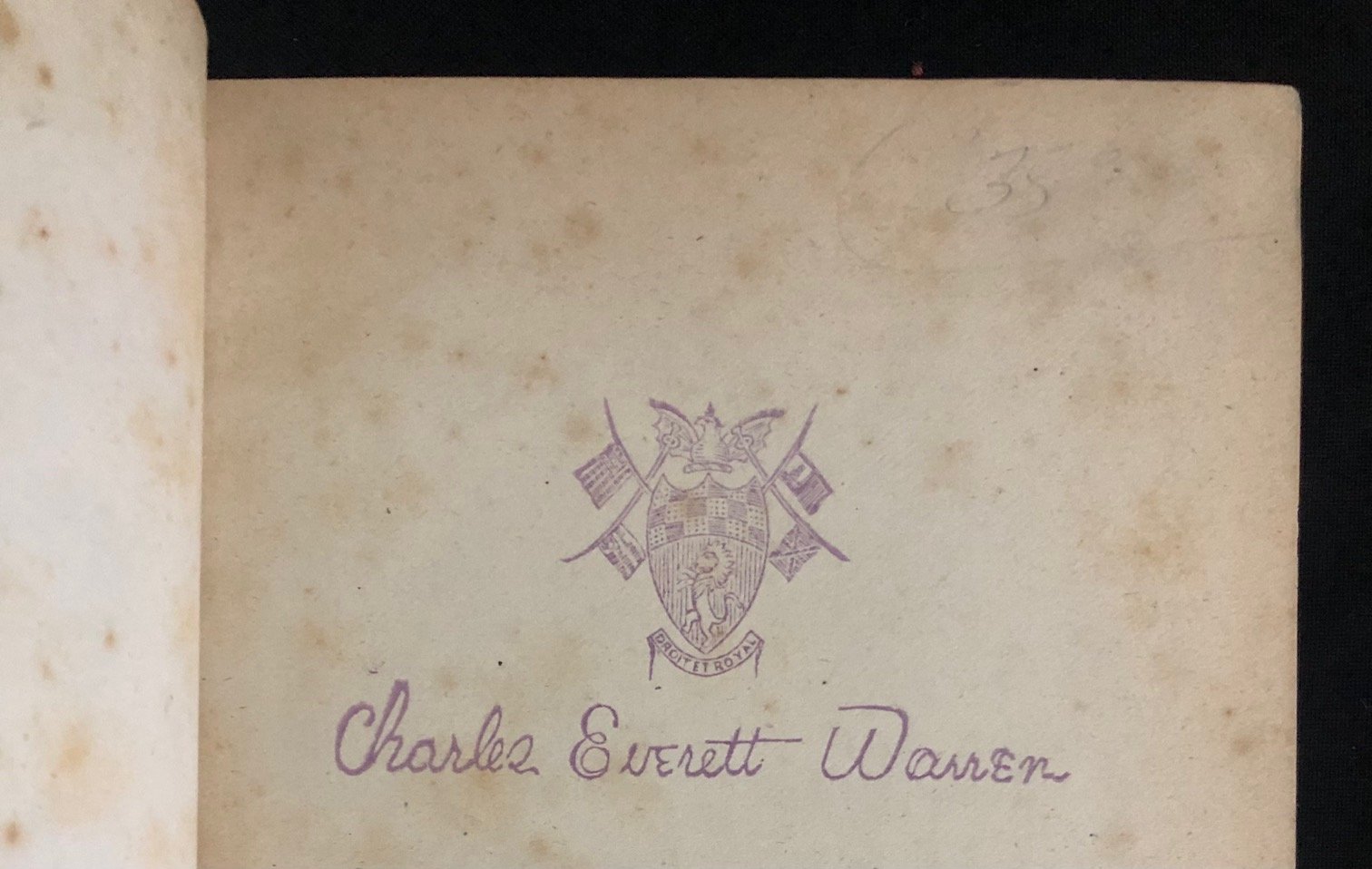
The history of this copy is enriched by the ownership stamp shown on the front end paper, Charles Everett Warren, accompanied by an intricate, hand-stamped or printed crest featuring a lion rampant, flags, a wyvern/dragon crest, and the motto "Droit et Royal" (Just and Royal).
Dr. Charles Everett Warren (1858–1916) was a prominent Boston-born physician, editor, and author who graduated from Harvard Medical School in 1883. Beyond medicine, he was a true Renaissance man of the late Victorian era—a frequent contributor to literary magazines, a compiler of medical lore, and an avid book collector with a deep interest in history, genealogy, and heraldry.
The elaborate crest and stylized purple ink signature are classic examples of late 19th-century bibliophilia. Warren was known to design and use his own heraldic markers and bookplates. Finding his signature in an exploration volume like this highlights how these books were prized possessions in the private libraries of American intellectuals and professionals during the Gilded Age.
140mm x 195mm x 30mm
Boards fishmothed; top of spine slightly chipped; general wear; prelims mellowed a bit.
R2,500