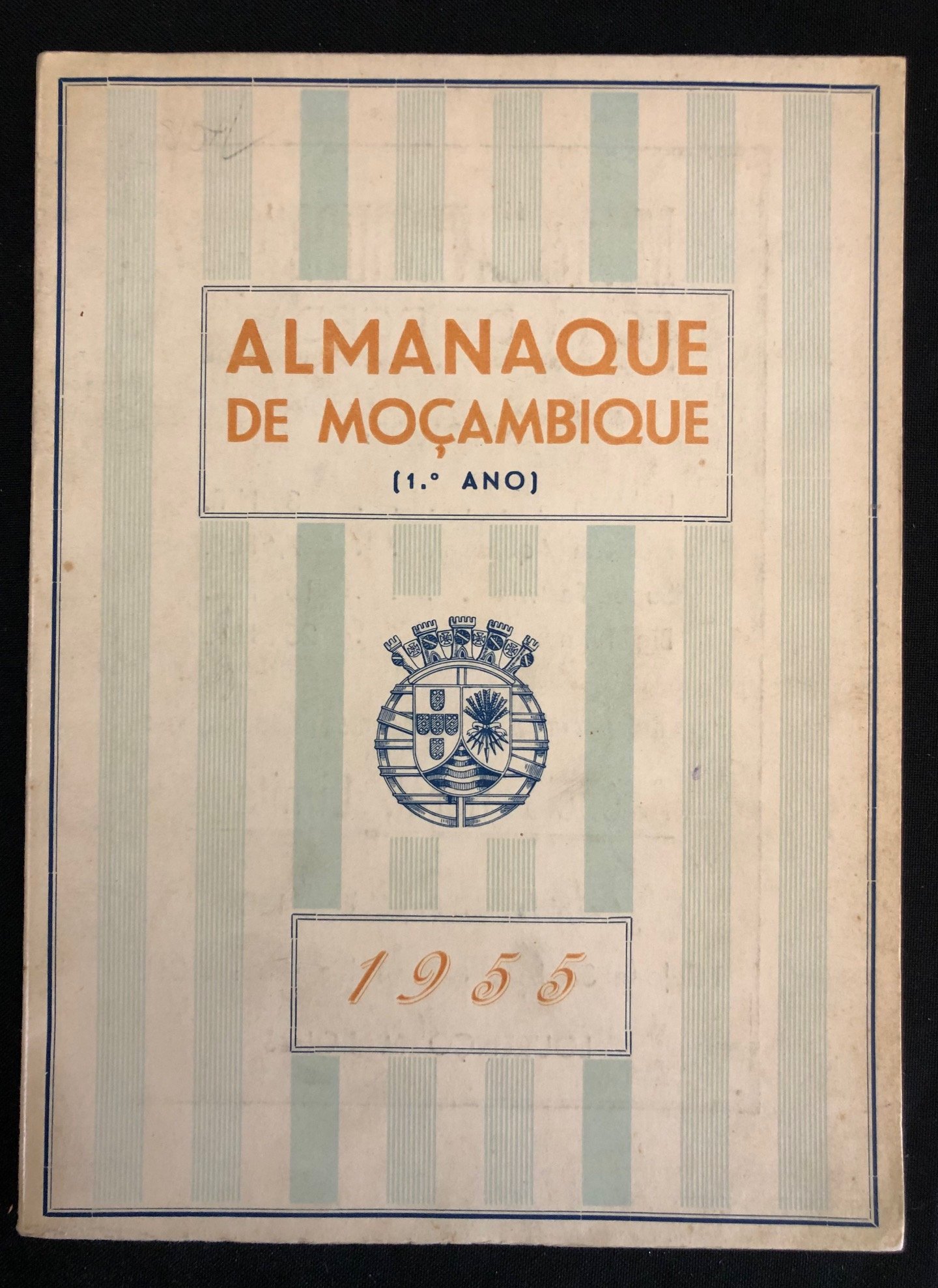
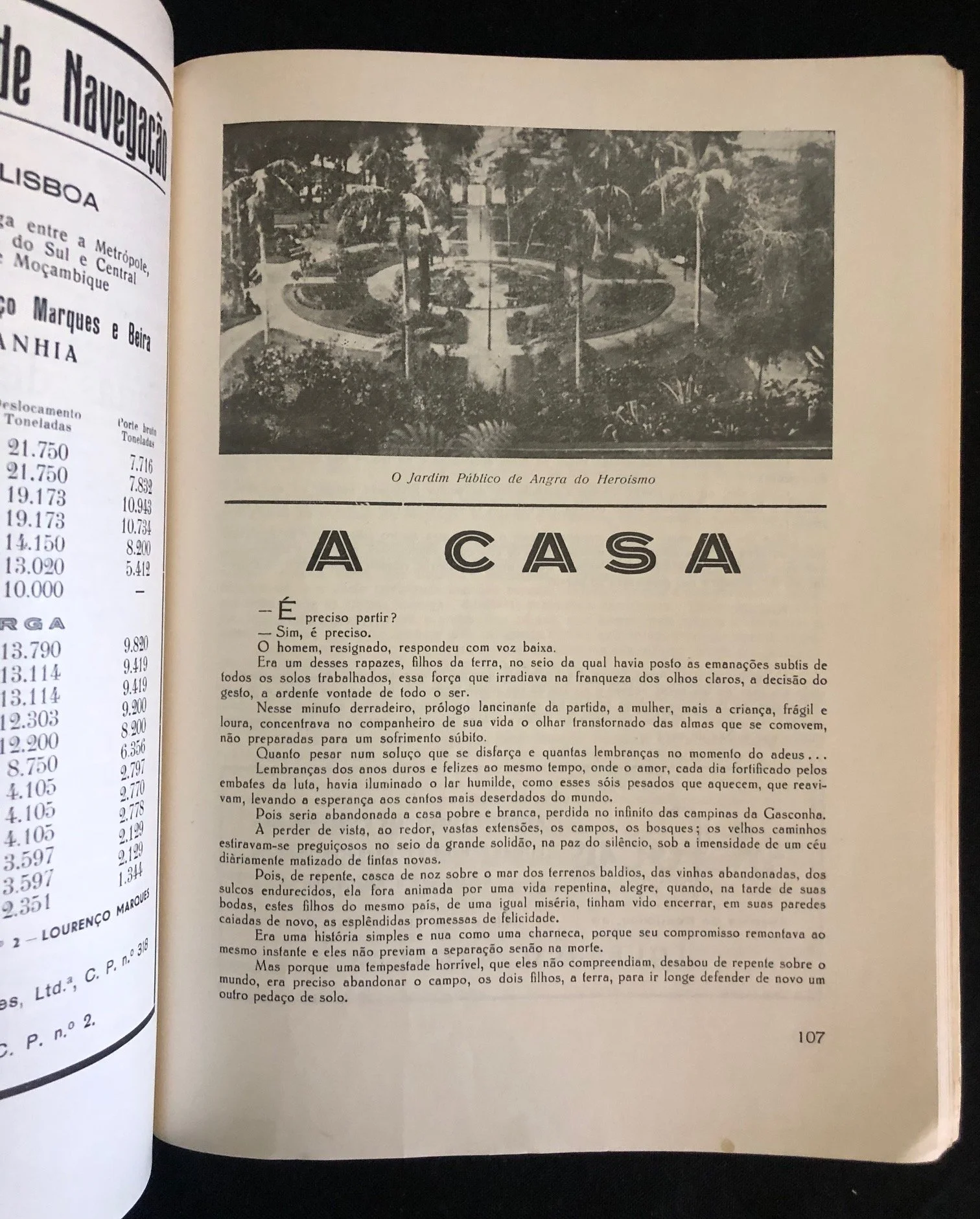
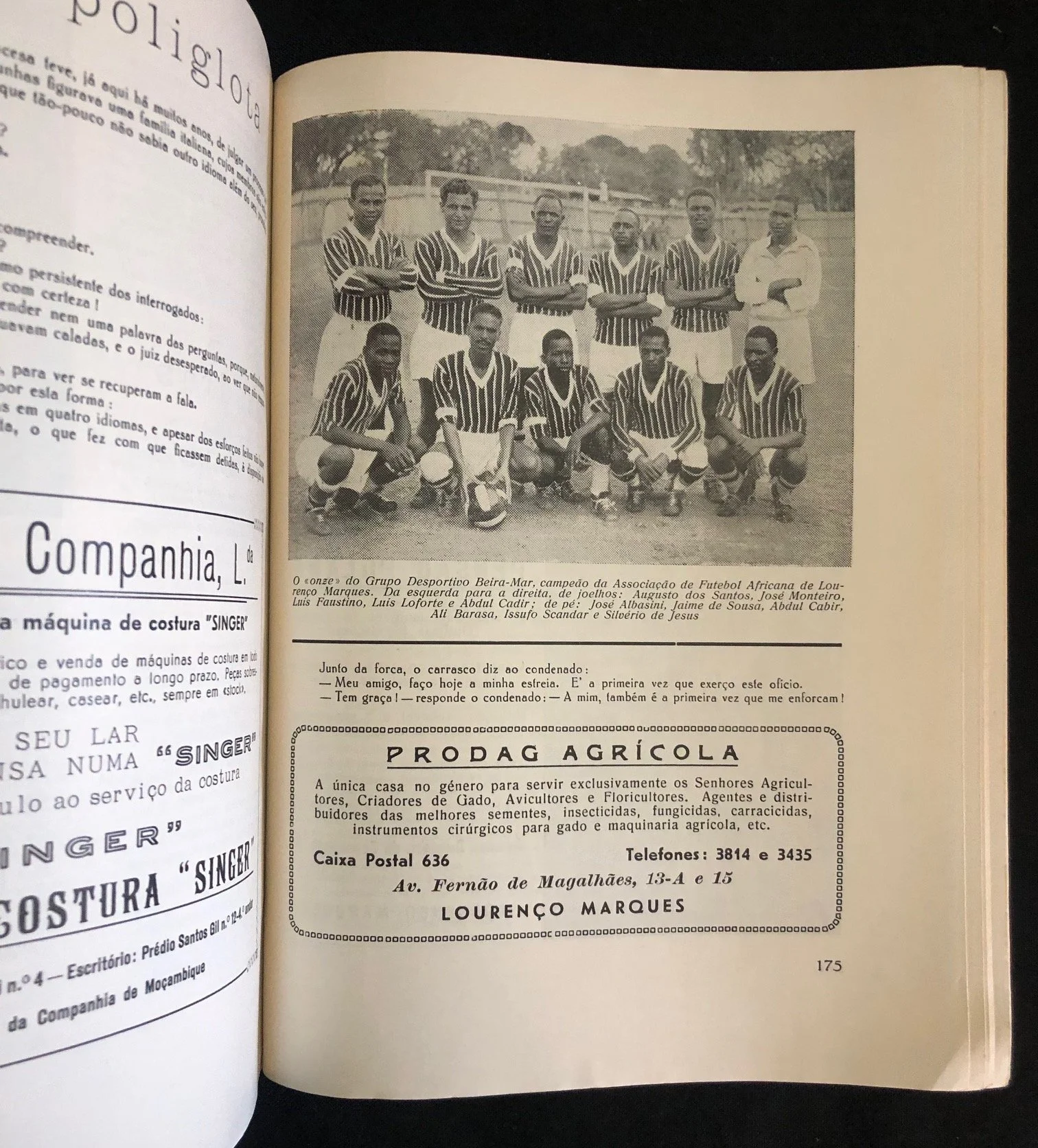
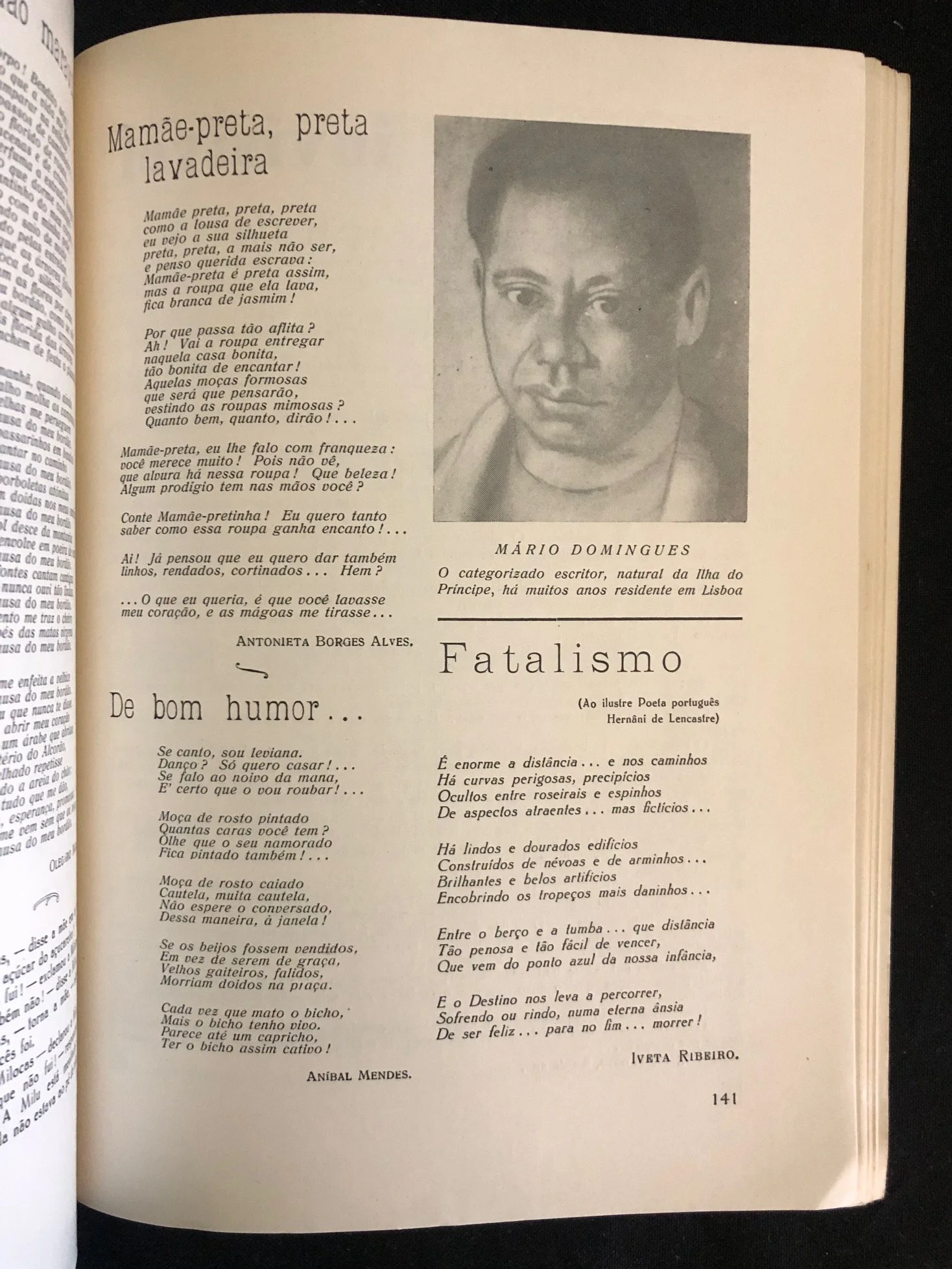
The Almanaque de Moçambique 1955, (1.º Ano) First issue.
The Almanaque de Moçambique 1955, noted explicitly as (1.º Ano)—the very first year of its publication.
Almanacs of this nature are goldmines for social historians, but the mid-1950s context of this particular volume makes it a vital artifact of late-stage Portuguese colonialism and the ideological machinery of the Estado Novo (New State) dictatorship.
The Ideological Blueprint: "Aquém e d’Além Mar"
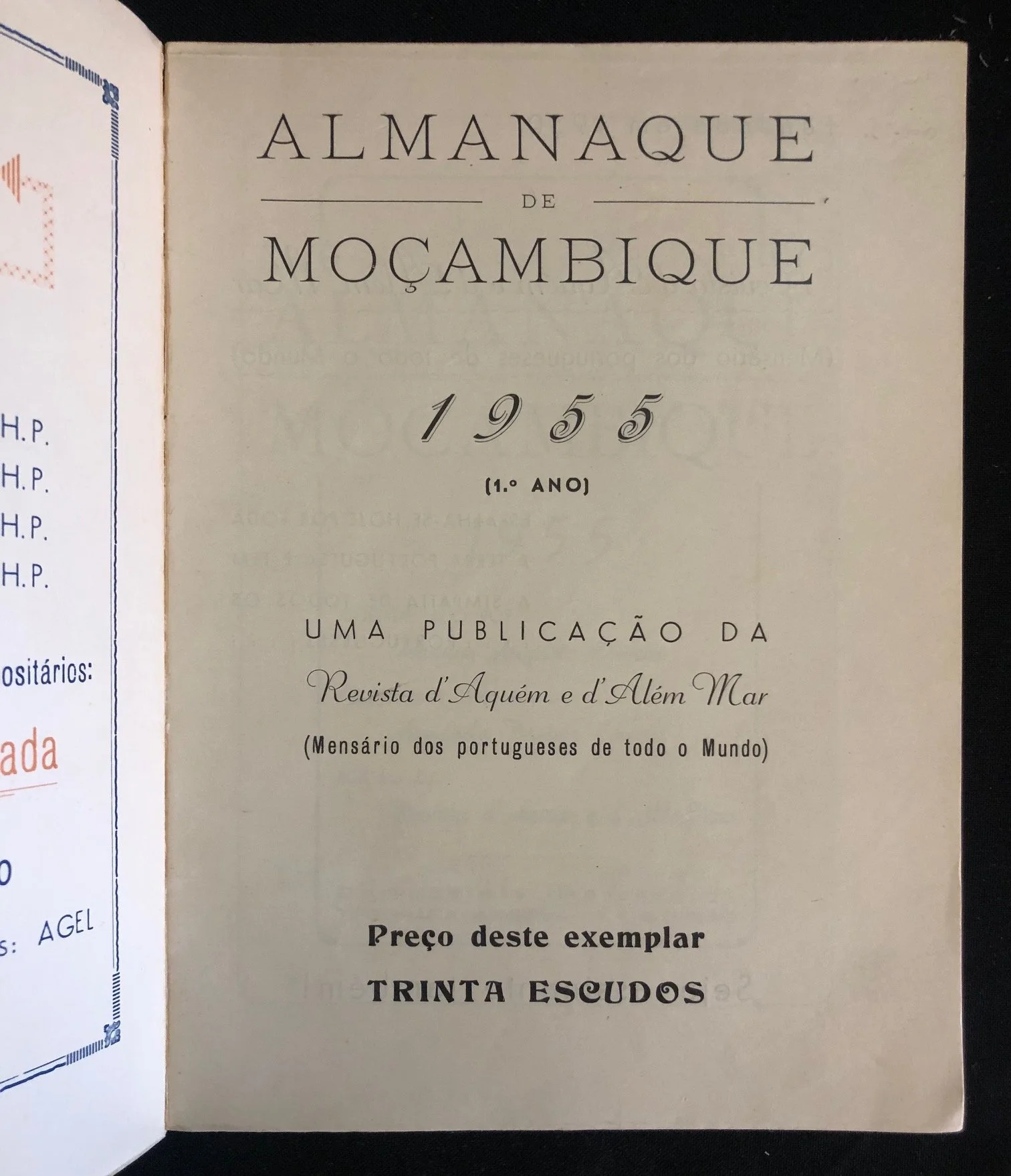
The almanac is listed as a publication of the Revista d’Aquém e d’Allem Mar, subtitled (Mensário dos portugueses de todo o Mundo)—"Monthly magazine of the Portuguese of the whole World."
The phrase "Aquém e d’Além Mar" (Here and Beyond the Sea) was not just a poetic title; it was a foundational political slogan of António de Oliveira Salazar’s regime.
To counter the post-WWII international wave of decolonization, the Portuguese dictatorship heavily promoted the doctrine of Lusotropicalism.
This ideology asserted that Portugal was not a colonial empire with subjugated territories, but rather a single, pluricontinental, and multi-racial nation whose provinces just happened to be separated by oceans.
By framing Mozambicans and continental Portuguese as part of the same global collective ("portugueses de todo o Mundo"), this almanac served as an ideological tool to normalize and reinforce Portuguese identity across the Indian Ocean.
A Bureaucratic Snapshot of a Changing Colony
As the inaugural edition (1.º Ano), the 1955 almanac was designed to map out the entire administrative, economic, and social structure of Mozambique at a massive economic turning point.
The early 1950s marked the launch of Salazar's first Plano de Fomento (Development Plan), which poured massive state investment into Mozambique's infrastructure—expanding the ports of Lourenço Marques (Maputo) and Beira, building dams, and expanding railways to service landlocked British neighbors like Southern Rhodesia and South Africa.
For historians, these first-year almanacs provide an invaluable, meticulous directory of exactly who held power: listing every colonial bureaucrat, military officer, merchant, church official, and commercial enterprise operating in the territory at the apex of late colonial economic growth.
The Price and the Economy: "Trinta Escudos"
At the bottom of the page, the price is boldly listed as Trinta Escudos (30 Escudos).
The Portuguese Escudo was introduced to Mozambique to replace the old British-influenced Mozambican Pound system, further tying the local economy directly to the central bank in Lisbon. A price of 30 Escudos in 1955 tells us exactly who the intended audience was: the ruling class. This was a substantial amount of money, meant for literate Portuguese settlers, civil servants, and commercial business owners. It was completely out of reach for the vast majority of the indigenous African population, who were legally classified as indígenas under the restrictive, exploitative indigenato labor laws of the era.
165mm x 225mm
Minor wear to the paper wrappers.
No map, as published.
R1,000