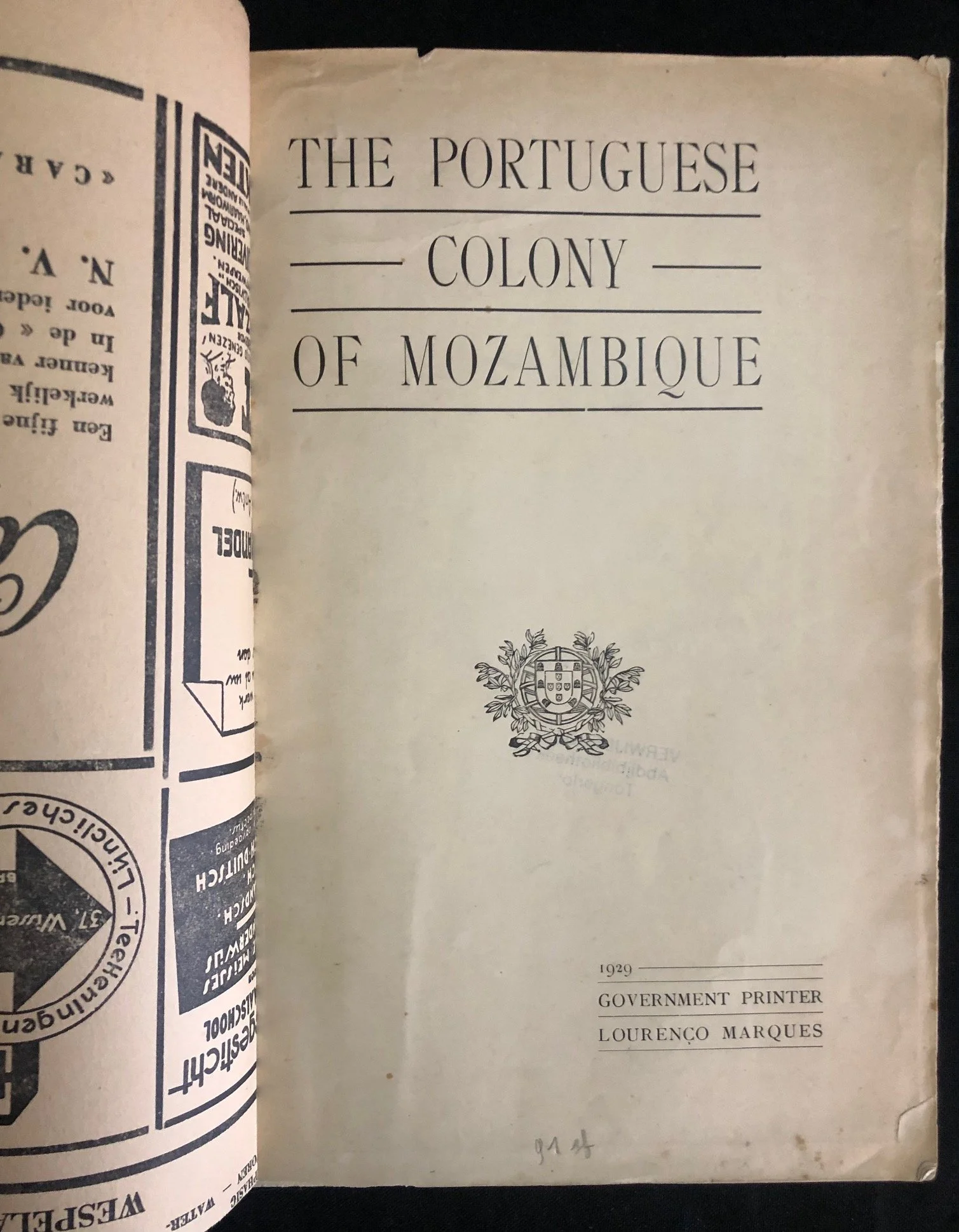
The Portuguese Colony of Mozambique (1929)
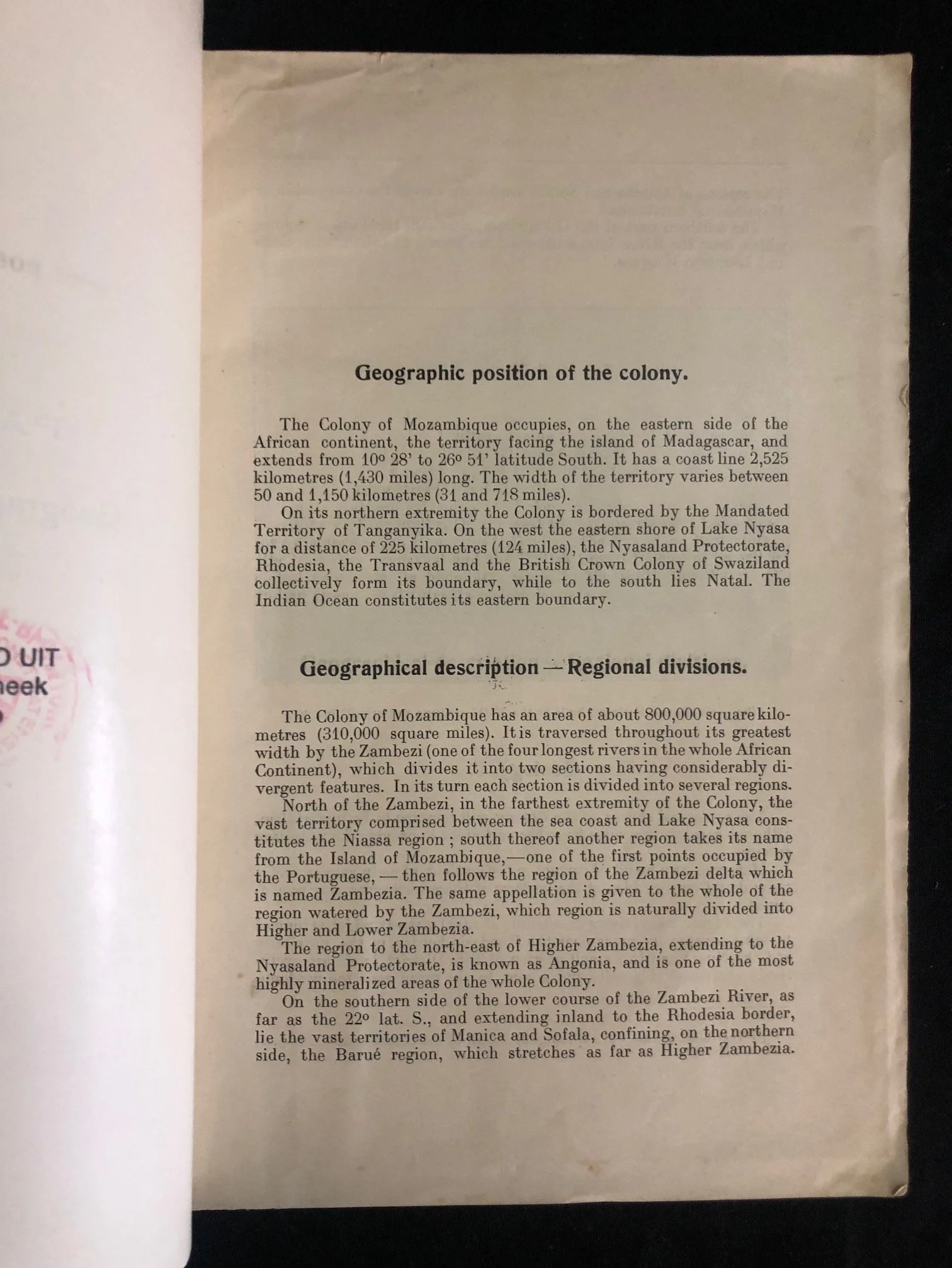
The Portuguese Colony of Mozambique published in 1929 by the Government Printer in Lourenço Marques has a fascinating dual history—both in its regional context and its provenance.
A Snapshot of the Imperial "Statu Quo" Before the Salazar Era
1929 was a crucial transitional year in Portuguese colonial history.
Following the 1926 military coup in Portugal, the nation was transitioning into what would become António de Oliveira Salazar’s Estado Novo (New State).
In 1930, just a year after this book was printed, Portugal enacted the Acto Colonial (Colonial Act), which strictly centralized control over colonies like Mozambique, centralizing administration and ending the practice of leasing vast tracts of land to private charter companies (like the Mozambique Company).
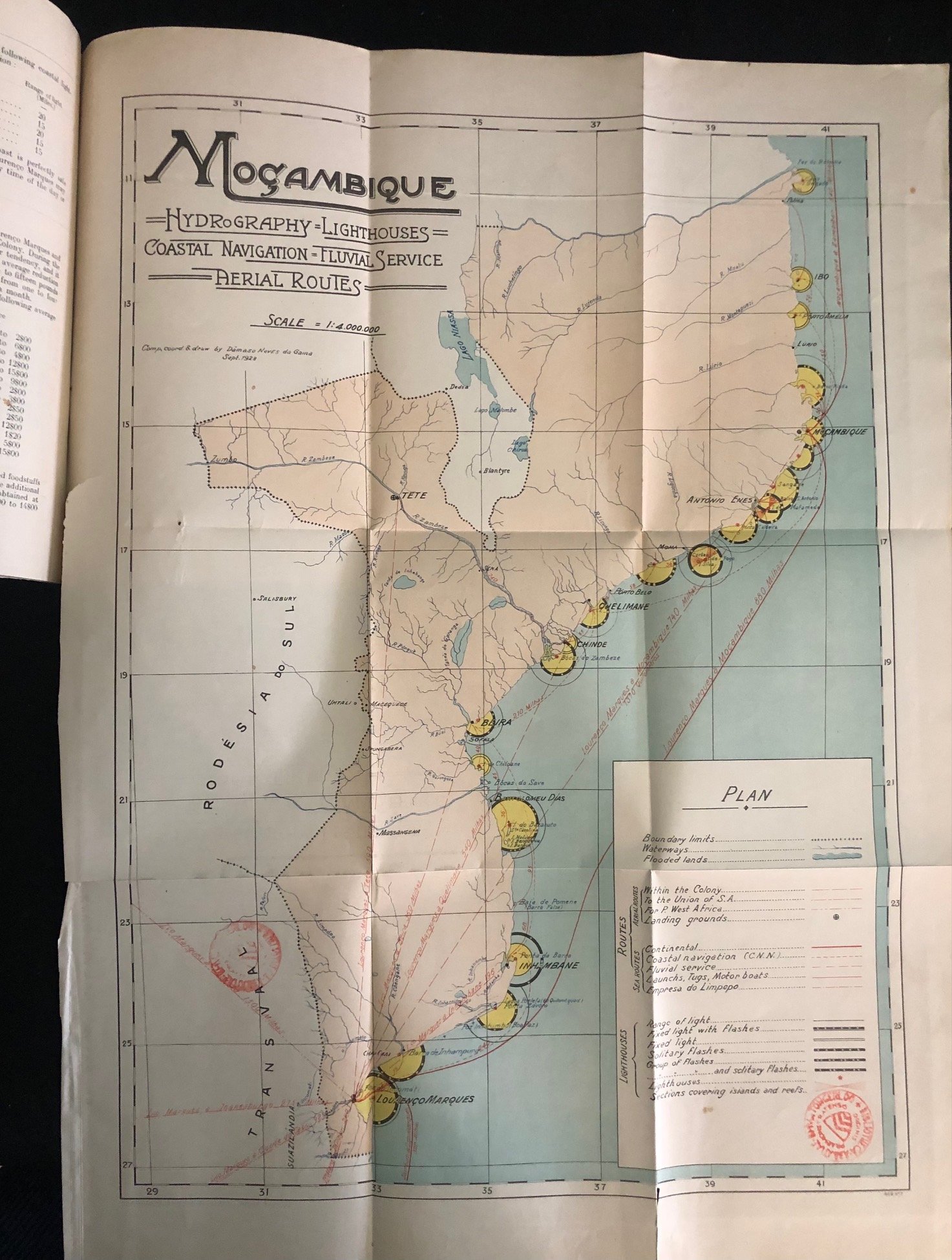
This 1929 publication represents the tail end of the old administrative era, serving as an official "stock-take" of the colony’s infrastructure—including the hydrography, lighthouses, and fledgling aerial routes mapped out. This just before the regime overhauled its imperial strategy.
The Premonition of Modern Transit: Early "Aerial Routes"
The map is titled Moçambique: Hydrography, Lighthouses, Coastal Navigation, Fluvial Service, Aerial Routes.
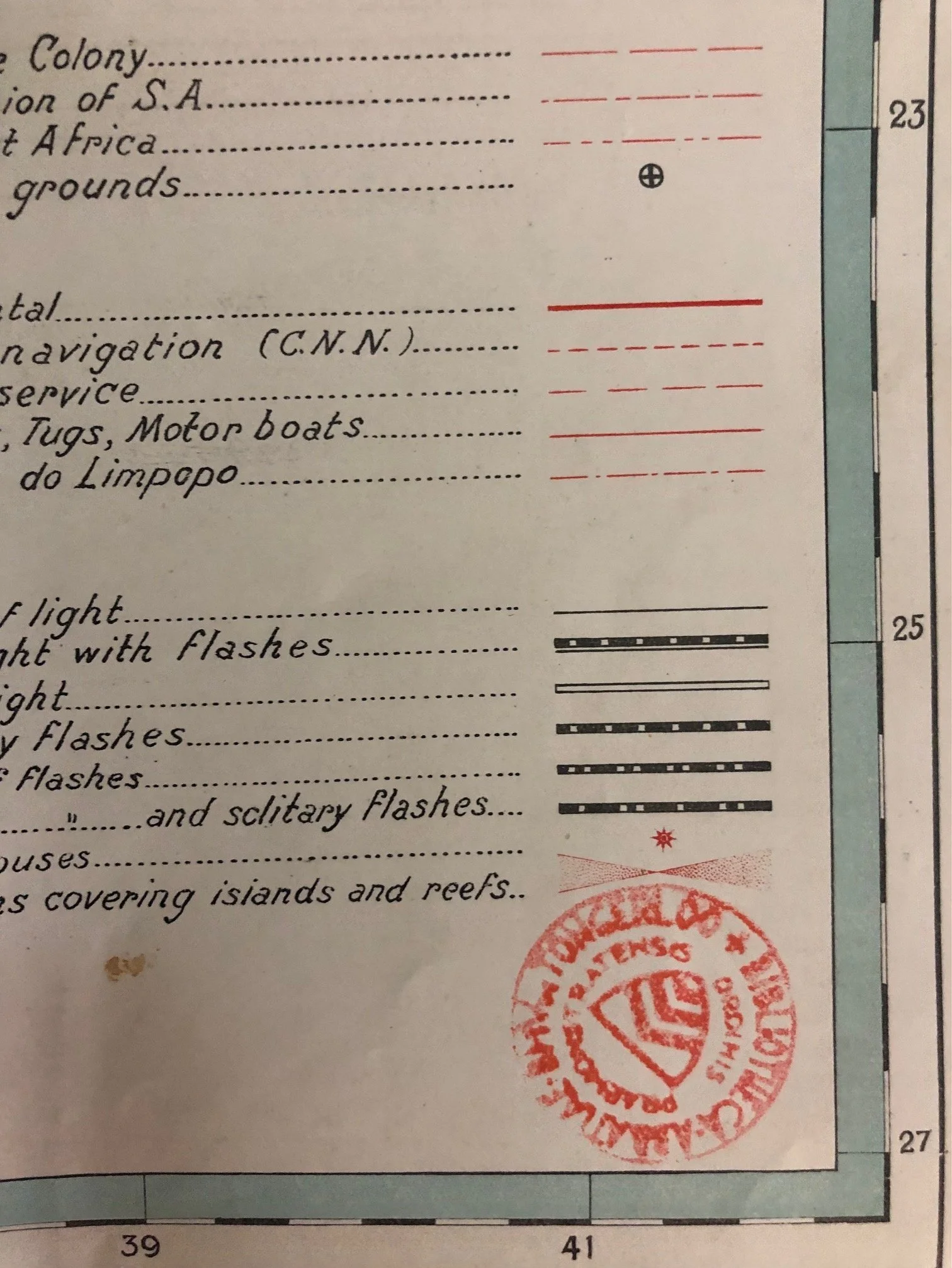
What makes this particularly interesting for 1929 is the inclusion of "Aerial Routes" and "landing grounds" (detailed in the legend and plotted along the coast).
Aviation in Southern Africa was in its infancy in the late 1920s. Commercial aviation in Mozambique didn't truly formalize until the creation of DETA (the colonial state airline) in 1936. Mapping out flights alongside traditional maritime lighthouses in 1929 shows a highly forward-looking, strategic effort by the Lourenço Marques government to position the colony as a modern transit hub connecting South Africa, Rhodesia, and East Africa.
Fascinating Provenance: The Tongerlo Abbey Stamp
The physical journey of this specific book adds an incredible layer of history. The book bears a red circular ink stamp that reads Bibliotheca Abbatiae Parcensis or a similar Premonstratensian (Norbertine) order variant, overlaid with a bold de-accession stamp:
"VERWIJDERD UIT Abdijbibliotheek Tongerlo" (Removed from the Abbey Library of Tongerlo)
Tongerlo Abbey is a famous Premonstratensian monastery in the province of Antwerp, Belgium, founded in 1130.
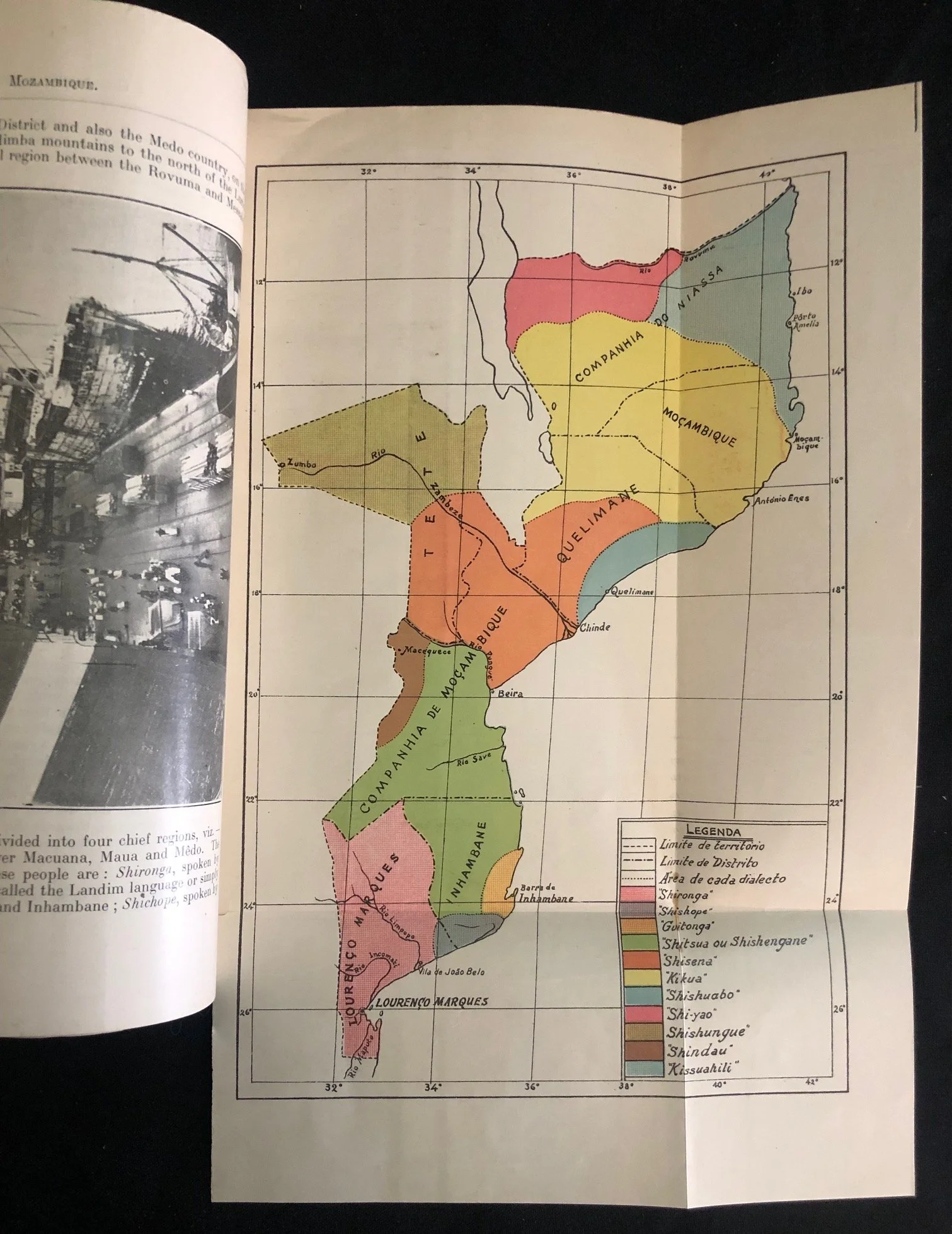
The Missionary Connection: Why would a Flemish monastery in Belgium have an official, English-language administrative handbook on Portuguese Mozambique printed in Lourenço Marques? During the late 19th and 20th centuries, Belgian religious orders were heavily involved in African missionary work. While Belgium's primary focus was the Congo, Roman Catholic missionary networks frequently traded literature, maps, and geographical surveys across colonial borders to understand regional logistics, health hazards, and language groups.
This book survived the shelves of a historic European abbey before being formally de-accessioned ("Verwijderd") and making its way back to Southern Africa.
170mm x 245mm
Ex library copy with stamps; lacking original wrappers; some minor wear and thumbing.
R1,500