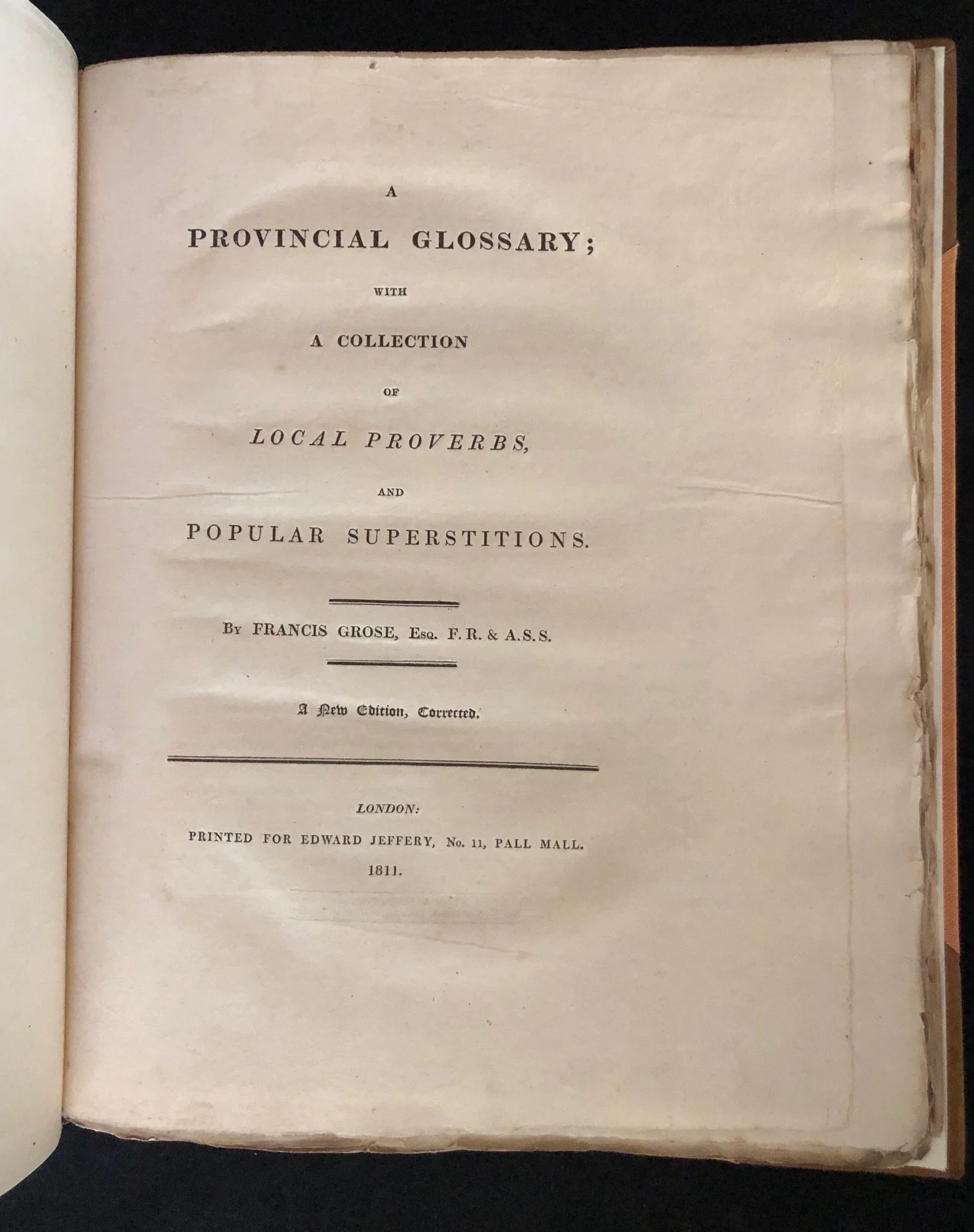
Francis Grose’s A Provincial Glossary; with a Collection of Local Proverbs, and Popular Superstitions (1811)
This is the large paper edition of 1811. The first edition came out in 1787.
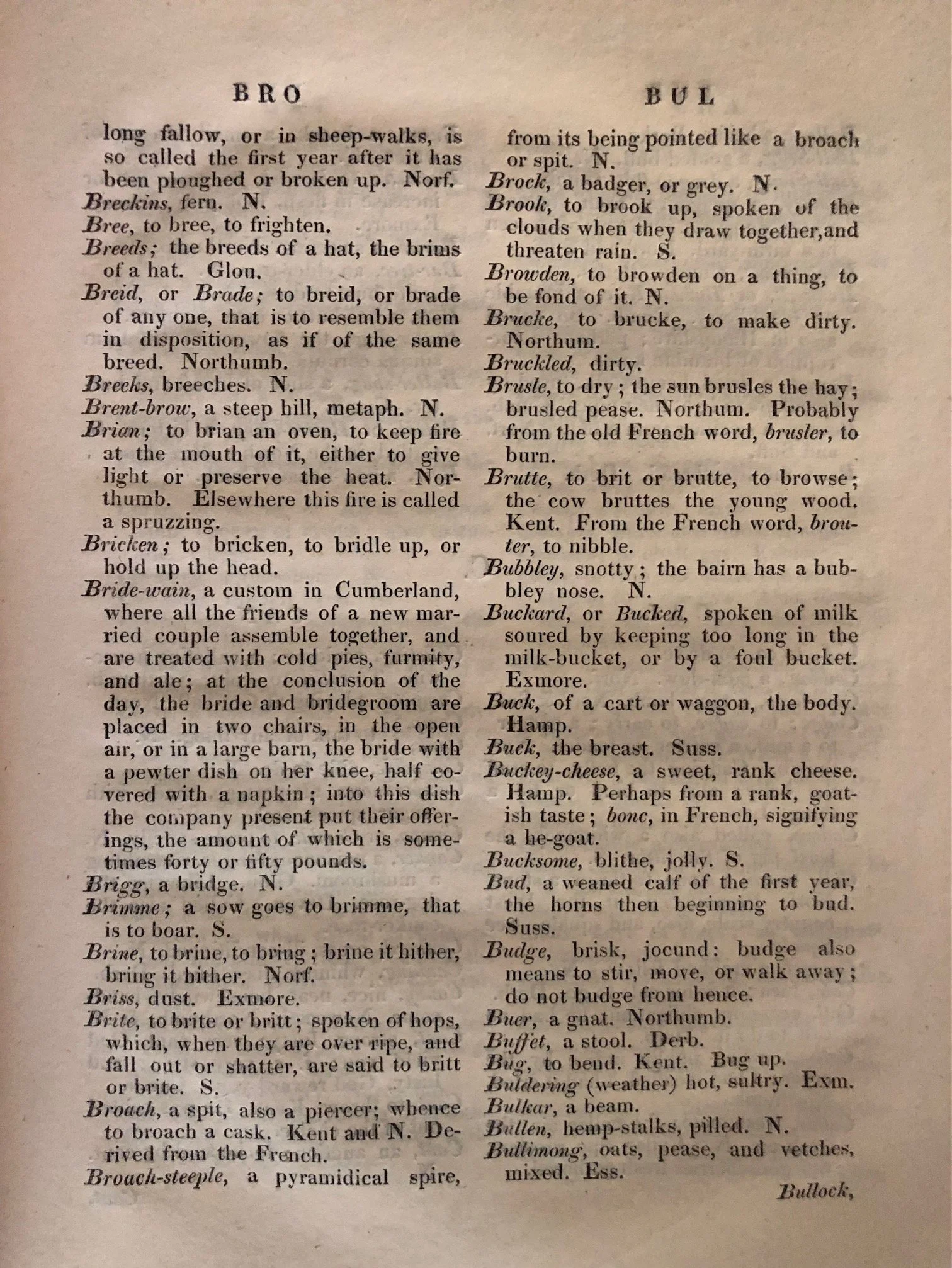
Francis Grose’s A Provincial Glossary; with a Collection of Local Proverbs, and Popular Superstitions (this edition published by Edward Jeffery in 1811) occupies a unique and influential place in 18th- and 19th-century English lexicography.
The Pioneer of "Vulgar" and Regional English
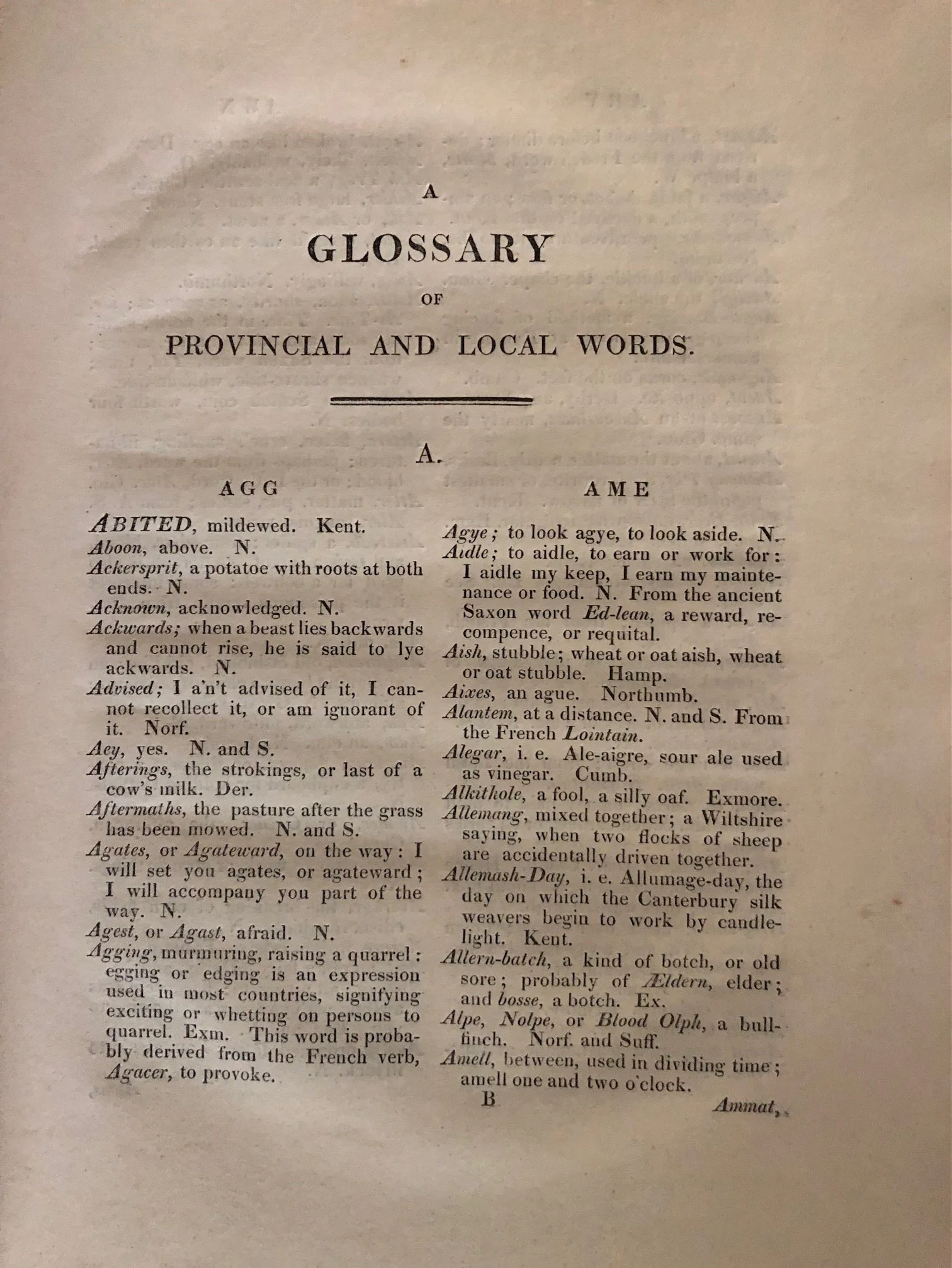
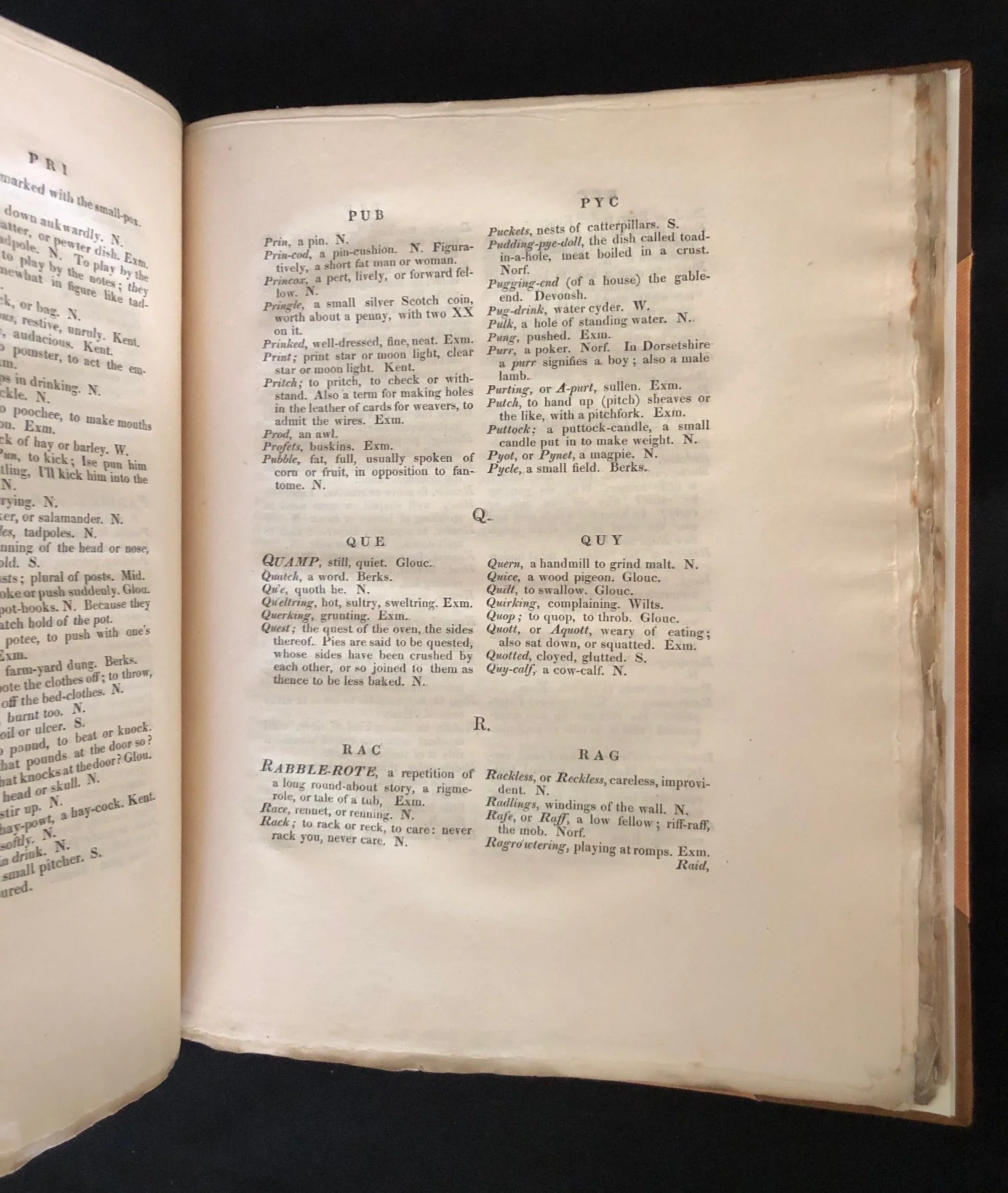
Before Francis Grose, English dictionaries—most notably Samuel Johnson’s—focused almost exclusively on standard, polite literary English. Grose, an antiquary and draughtsman, was among the very first scholars to treat regional dialects, local idioms, cant, and slang with serious historical interest rather than dismiss them as mere illiterate corruption. His collections (which also include his famous 1785 Classical Dictionary of the Vulgar Tongue) laid the groundwork for modern dialectology and lexicography, serving as an invaluable direct source for the later Oxford English Dictionary.
Robert Burns and "Chiel Amang You Takin' Notes"
Grose travelled extensively through England, Wales, and Scotland collecting local antiquities, folklore, and regional vocabulary. While touring Scotland to gather material, he befriended the Scottish poet Robert Burns. Burns was so fond of the eccentric, portly antiquary that he immortalized Grose in his famous 1789 poem "On Captain Grose's Peregrinations Through Scotland", which contains the famous lines:
"A chield's amang you takin' notes, / And, faith, he'll prent it."
Burns even wrote his masterpiece poem "Tam o' Shanter" specifically at Grose's request, to accompany a drawing Grose had made of Alloway Kirk.
Early Documentation of Folk Beliefs and "Low Culture"
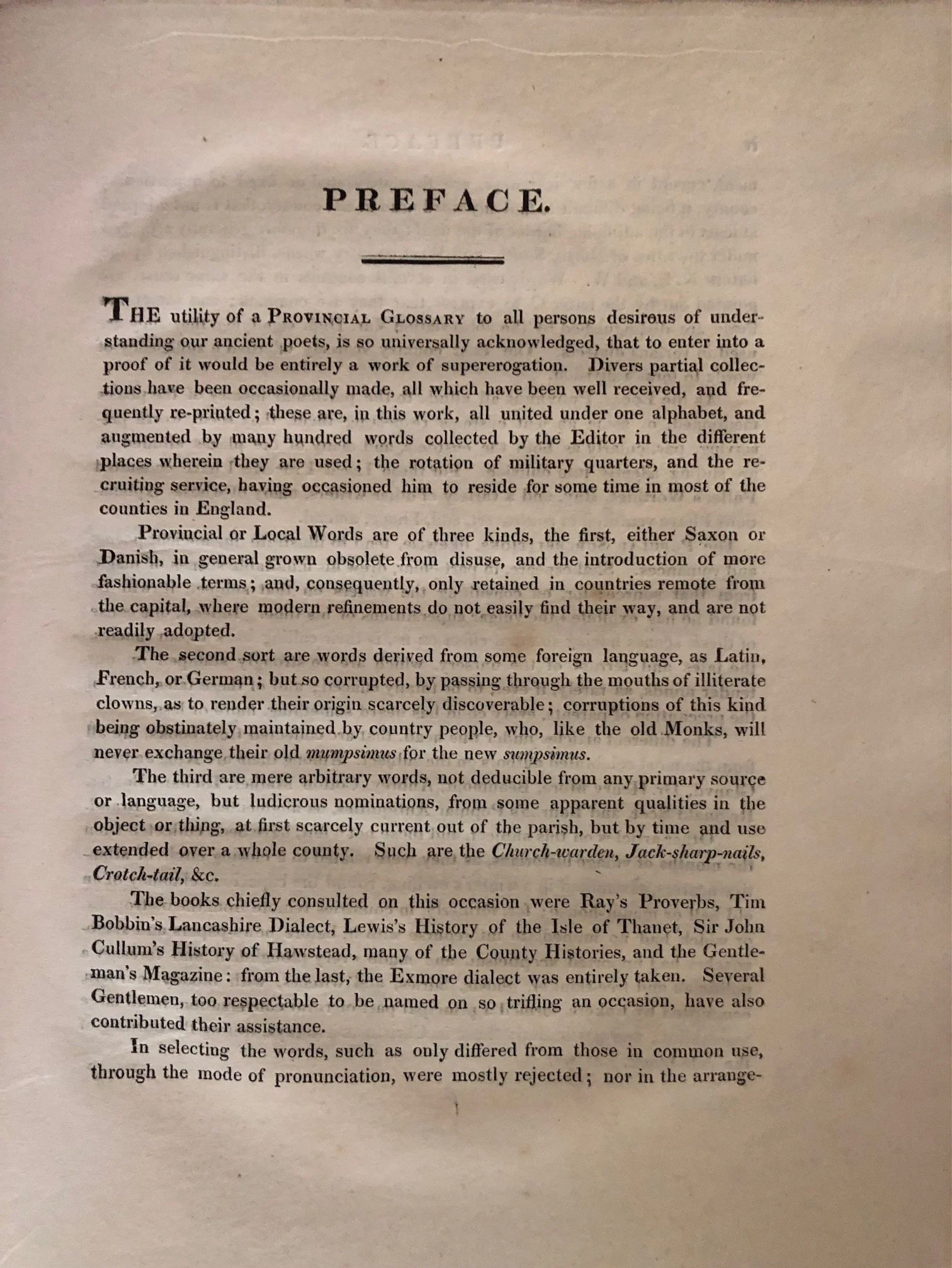
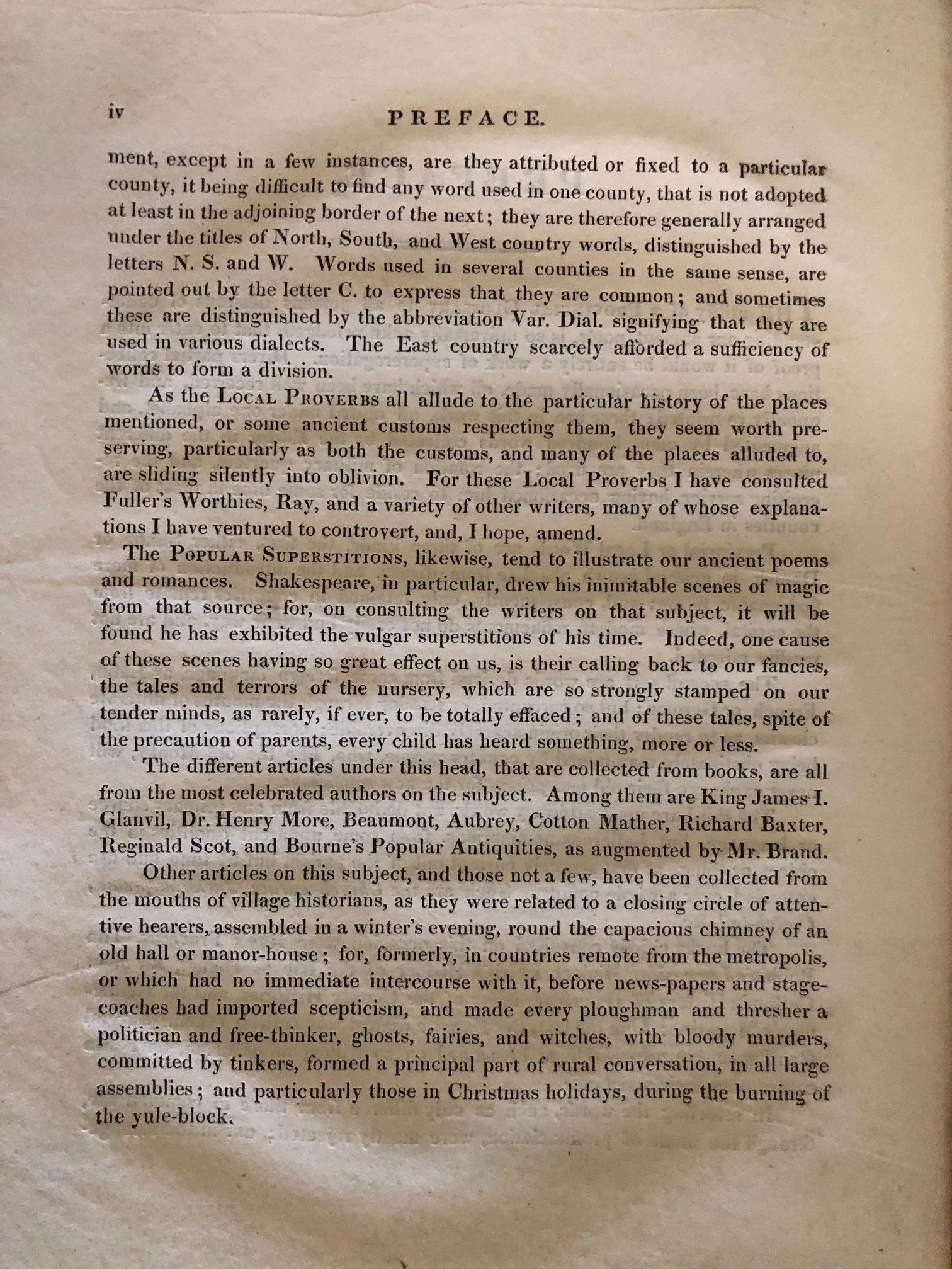
In the preface, Grose explicitly notes how rural oral traditions were beginning to disappear as stagecoaches, newspapers, and modern mobility brought London culture to the provinces. He recorded folklore, ghost stories, witch lore, and provincial superstitions directly from "the mouths of village historians"—capturing a snapshot of English rural folk culture right at the dawn of the Industrial Revolution, just before mass urbanization changed rural speech forever.
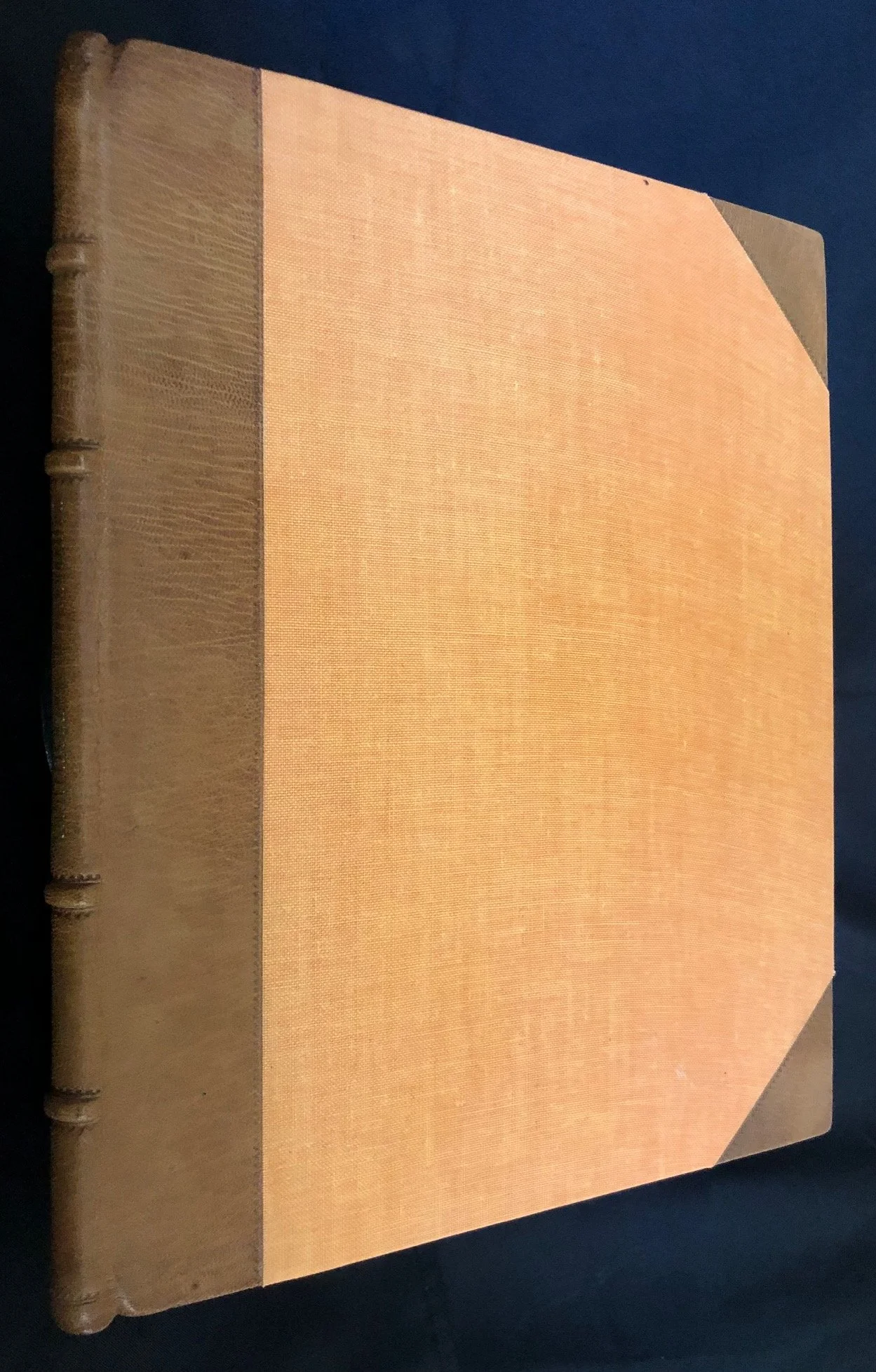
250mm x 320mm x 10mm
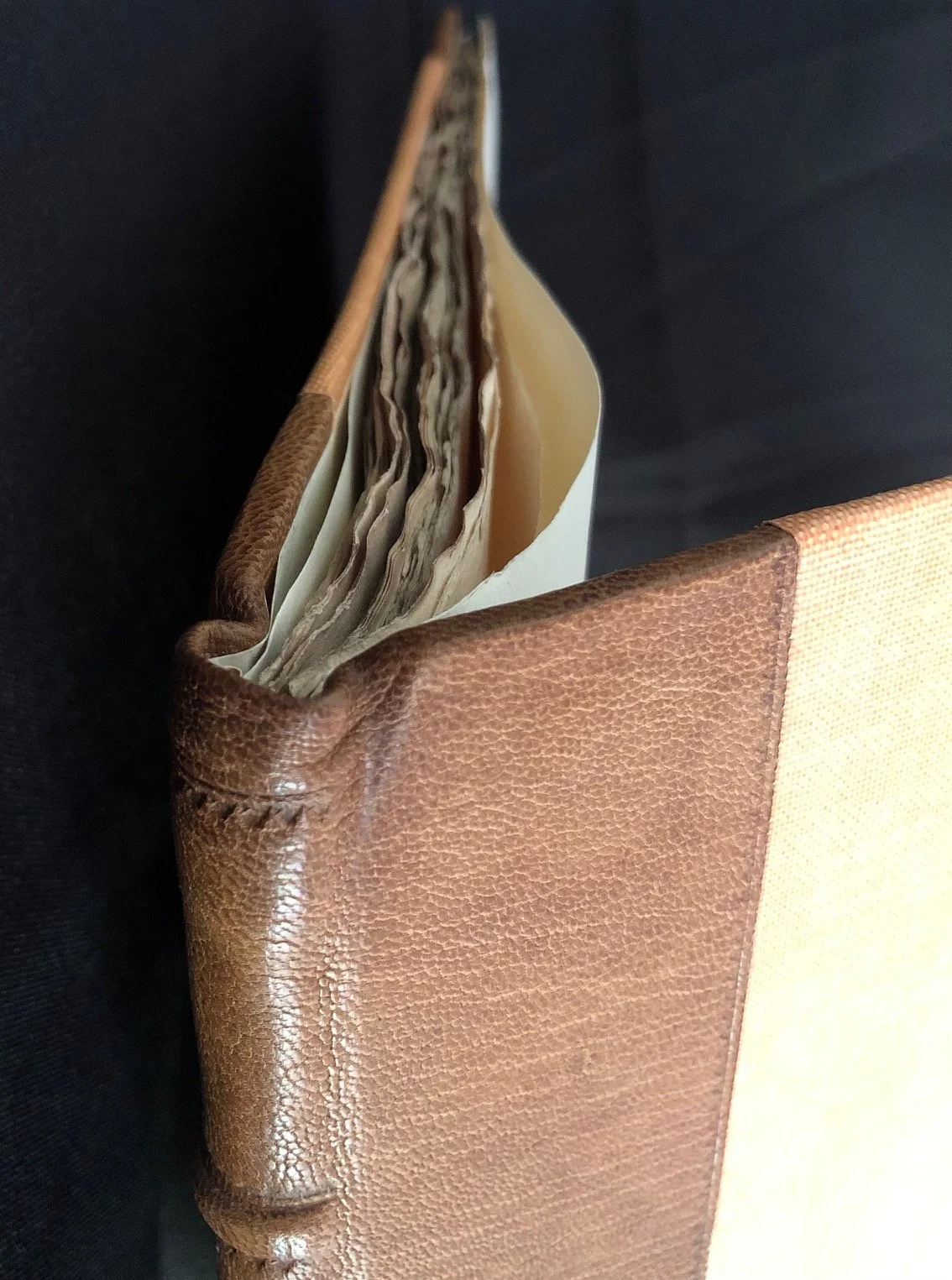
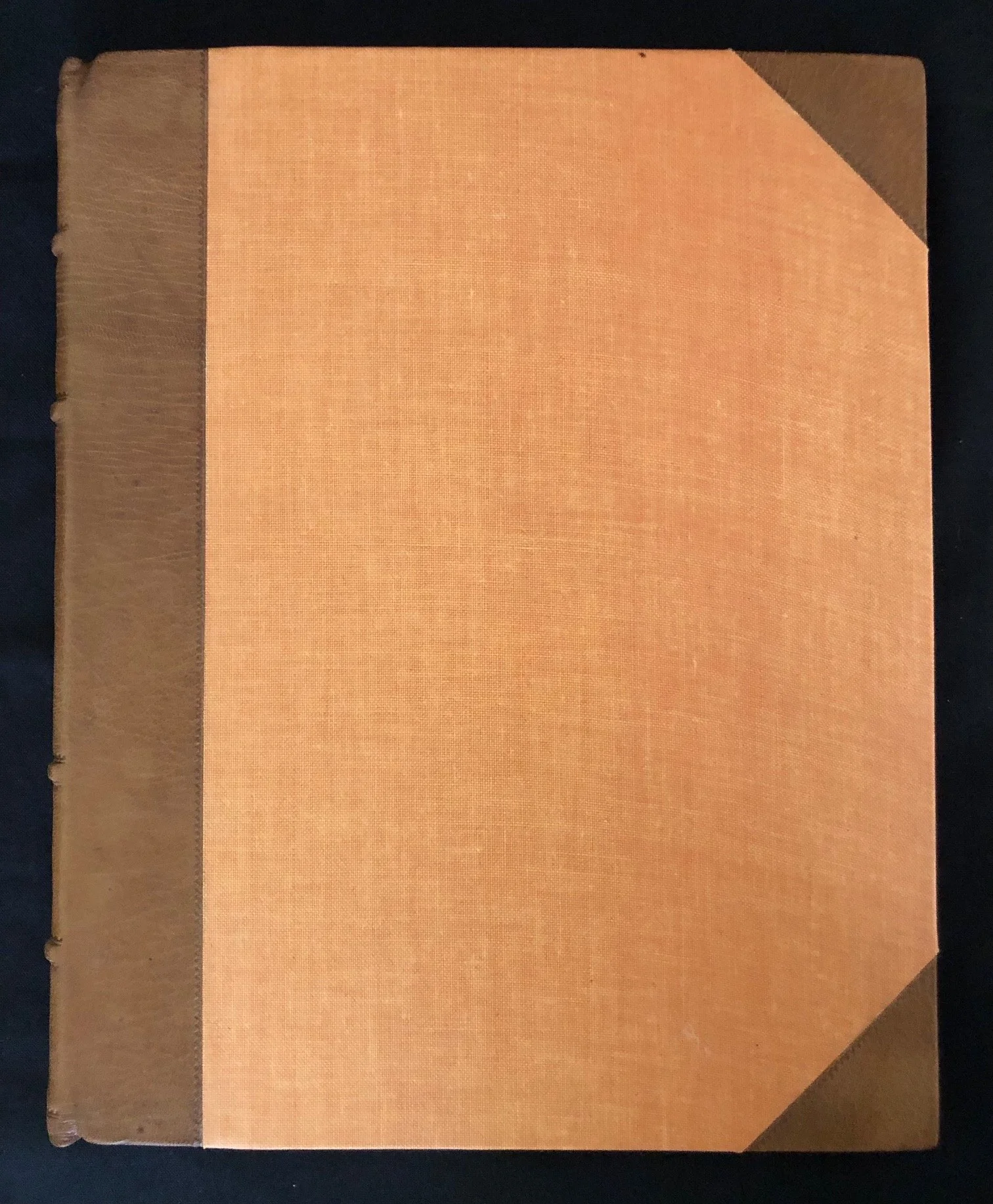
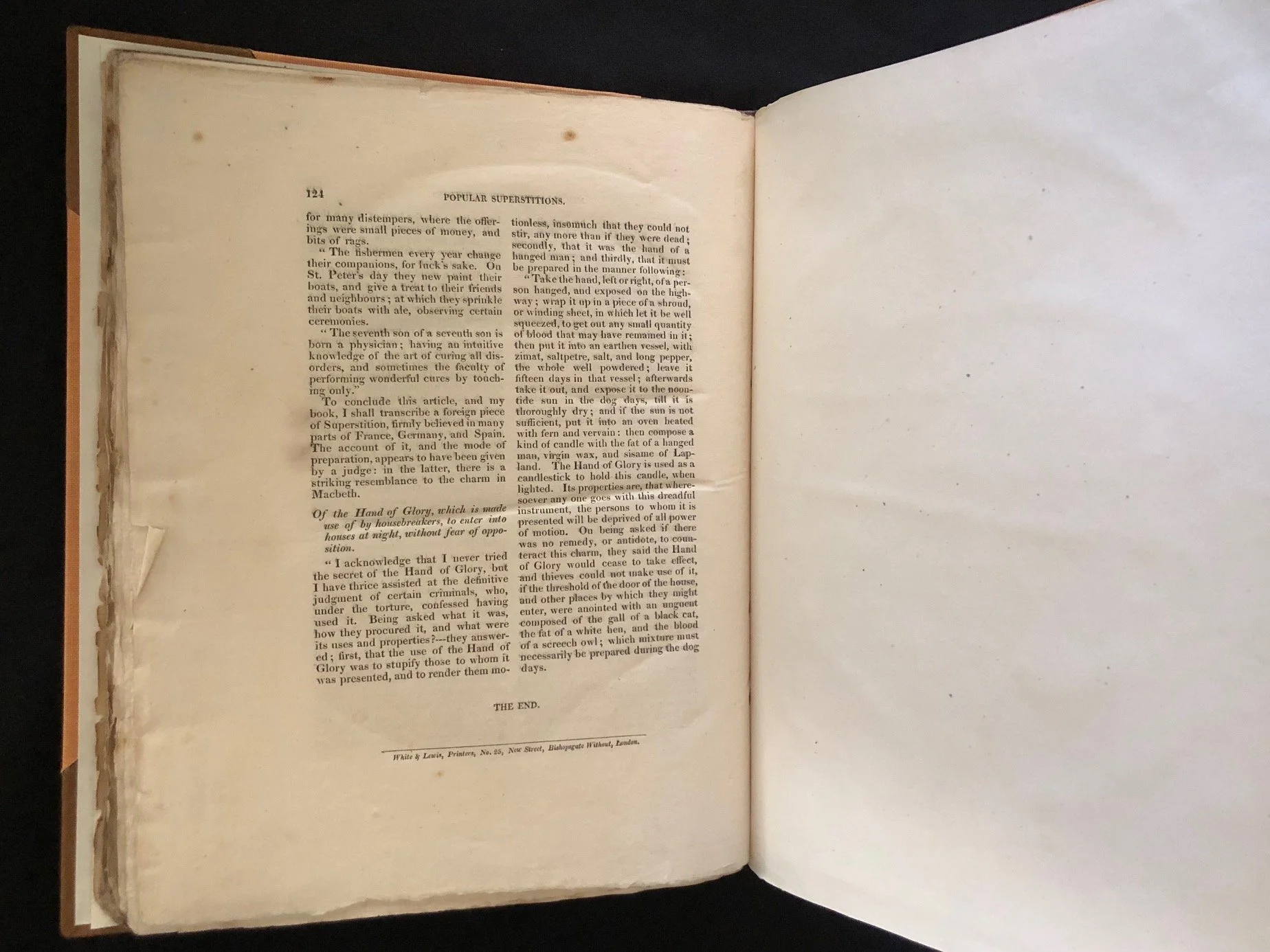
Rebound in half leather. Complete. This is the large paper edition of 1811. The first edition came out in 1787. iv; 56 pages; Local Proverbs: pages 57 - 124.
R2,750