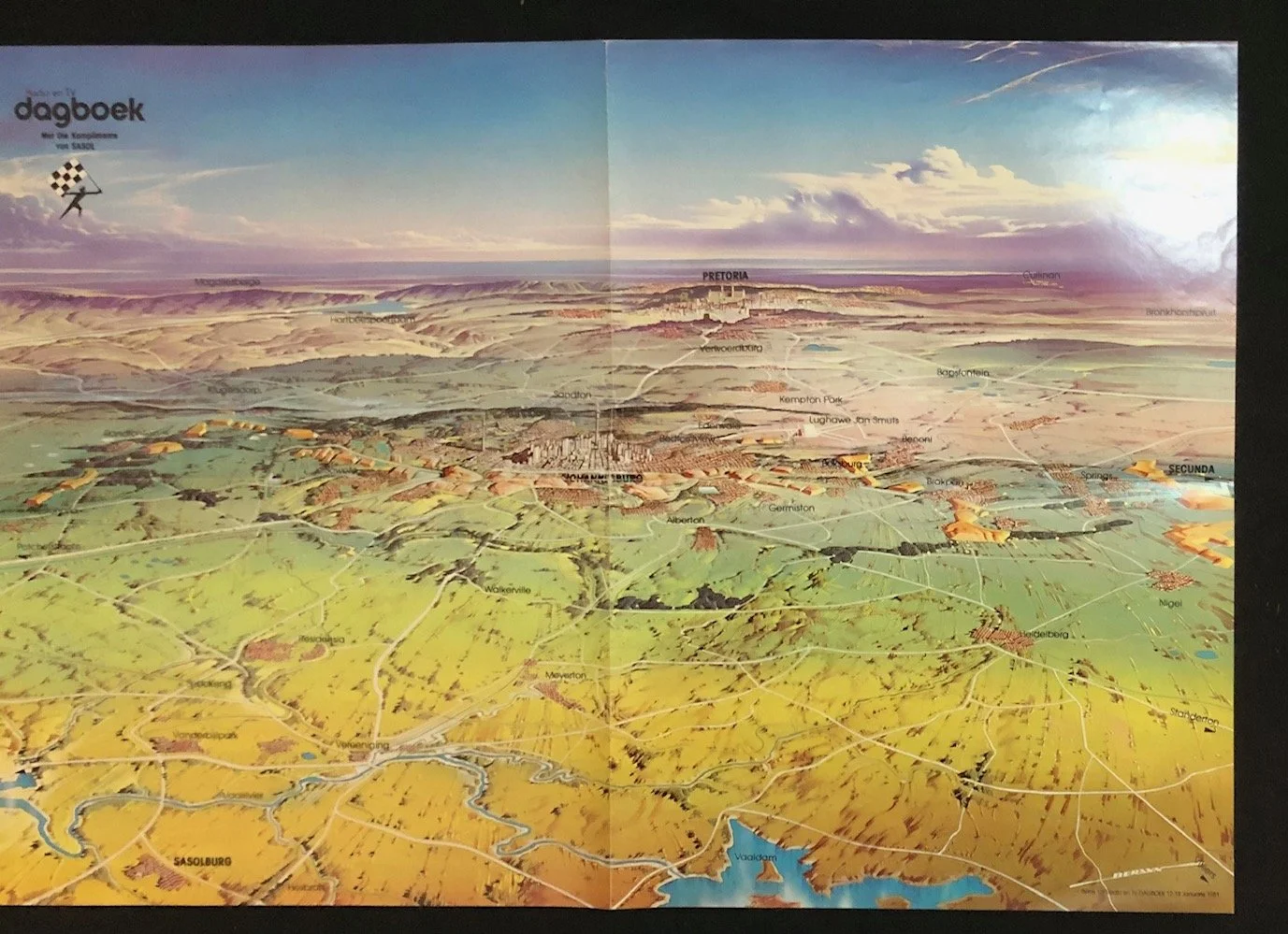
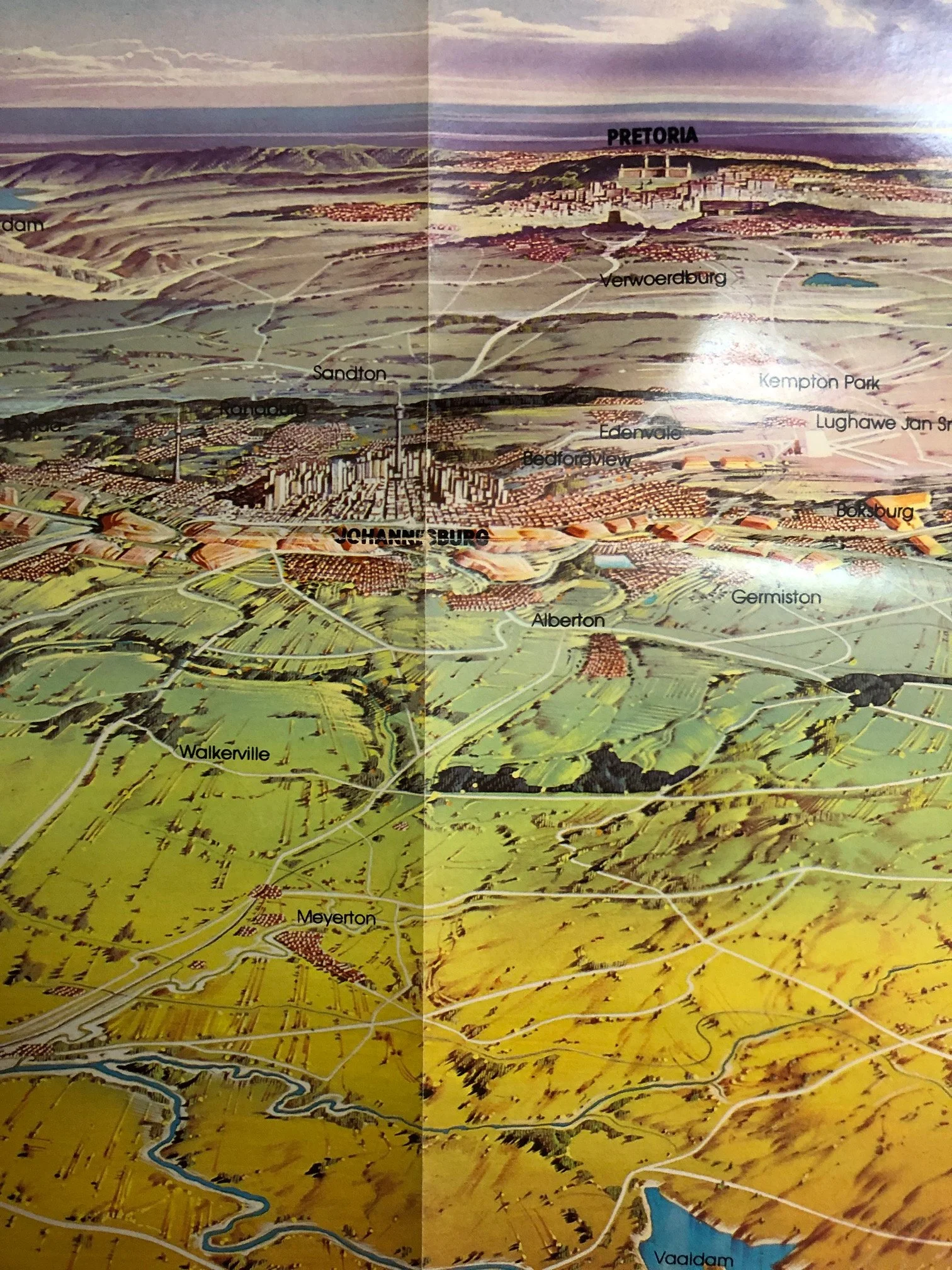
The Witwatersrand Gold Mines, insert from Radio en TV Dagboek (Radio and TV Diary) 1981.
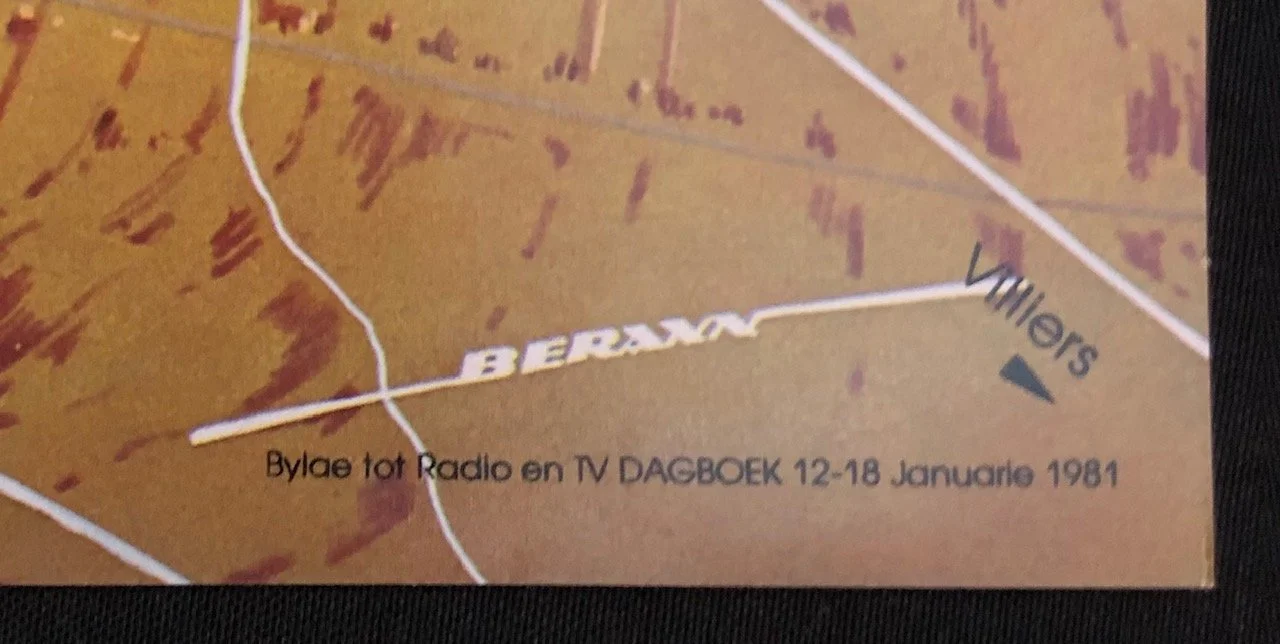
The publication date printed in the bottom-right corner reveals this was a centerfold insert from January 1981. This timing is incredibly significant. Following the 1979 Iranian Revolution, South Africa had just lost its primary source of crude oil imports. In response, the state-backed SASOL (South African Synthetic Oil Corporation) was in a frantic, massive phase of expansion to achieve fuel self-sufficiency by turning coal into oil.
The map strategically highlights the focal points of this industrial empire, explicitly labeling Sasolburg (the original 1950s company town) in the lower left, and Secunda (the massive new plant complex founded in the late 1970s to ramp up production) on the far right.
2. The Rise of Television and Perskor Media Culture
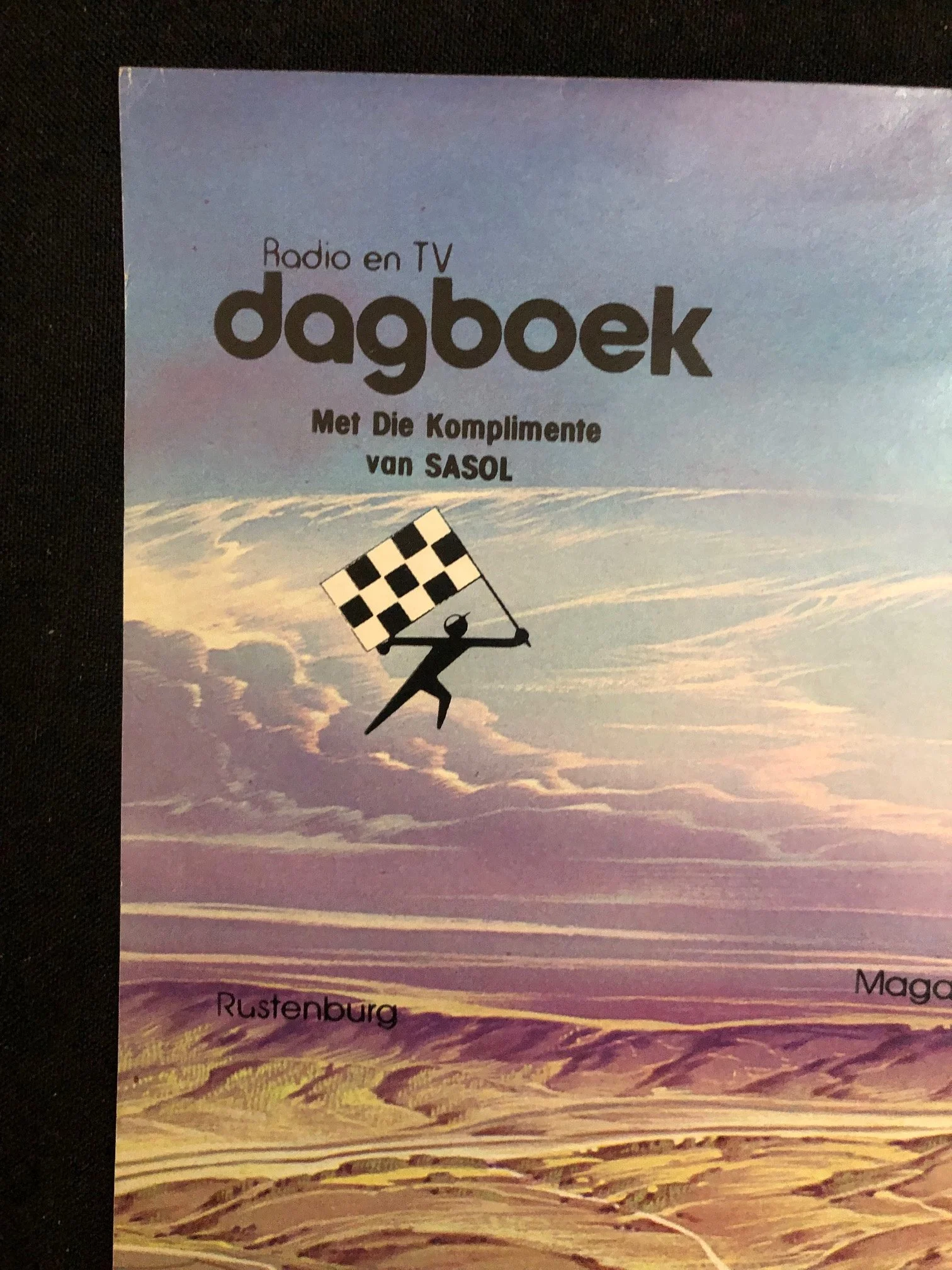
The insert comes from Radio en TV Dagboek (Radio and TV Diary), a prominent Afrikaans-language weekly magazine published by the media conglomerate Perskor.
By January 1981, nationwide television broadcasting in South Africa was still in its relative infancy, having only officially launched five years prior in 1976. Magazines like Radio en TV Dagboek became massive cultural touchstones, providing the public with schedules, celebrity profiles, and household inserts. Corporate giants like SASOL frequently sponsored these massive-circulation weekly inserts to build public goodwill and emphasize national progress.
3. A Distinctive Visual Style: The "Bervin" Perspective
The map is signed in the bottom right corner by the illustrator Bervin (a pseudonym or signature style used for large-scale commercial panoramas of the era).
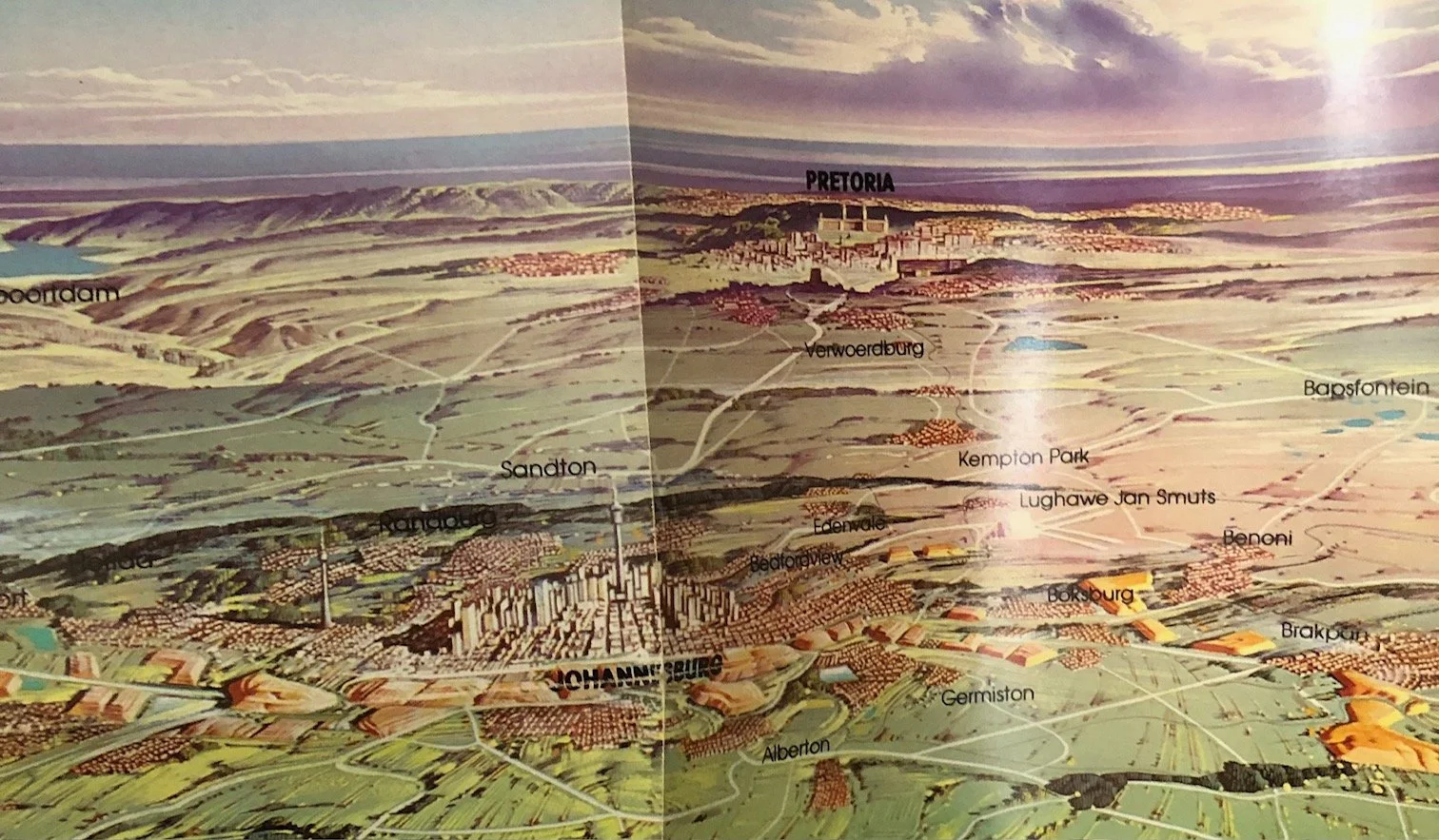
Rather than using standard cartographic conventions, the artist utilizes a highly stylized, elevated bird's-eye perspective looking north from over the Vaal River and the Vaal Dam. It dramatically compresses the geography of the Highveld, showcasing the dense, vertical skyline of Johannesburg at the center, trailing off toward the Union Buildings in Pretoria along the horizon, flanked by the Magaliesberg mountains.
545mm x 380mm
Minor wear; folded.
R750