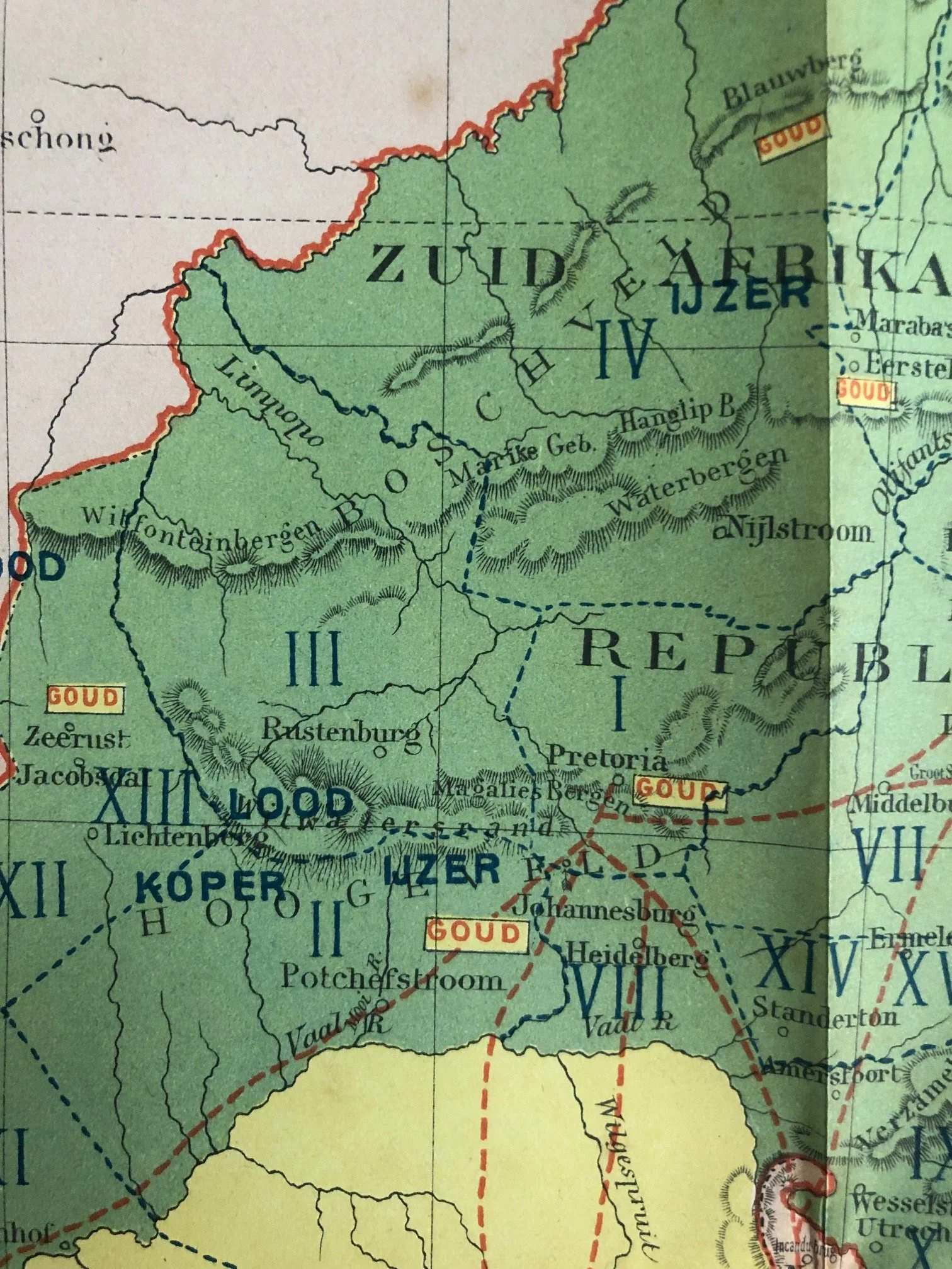
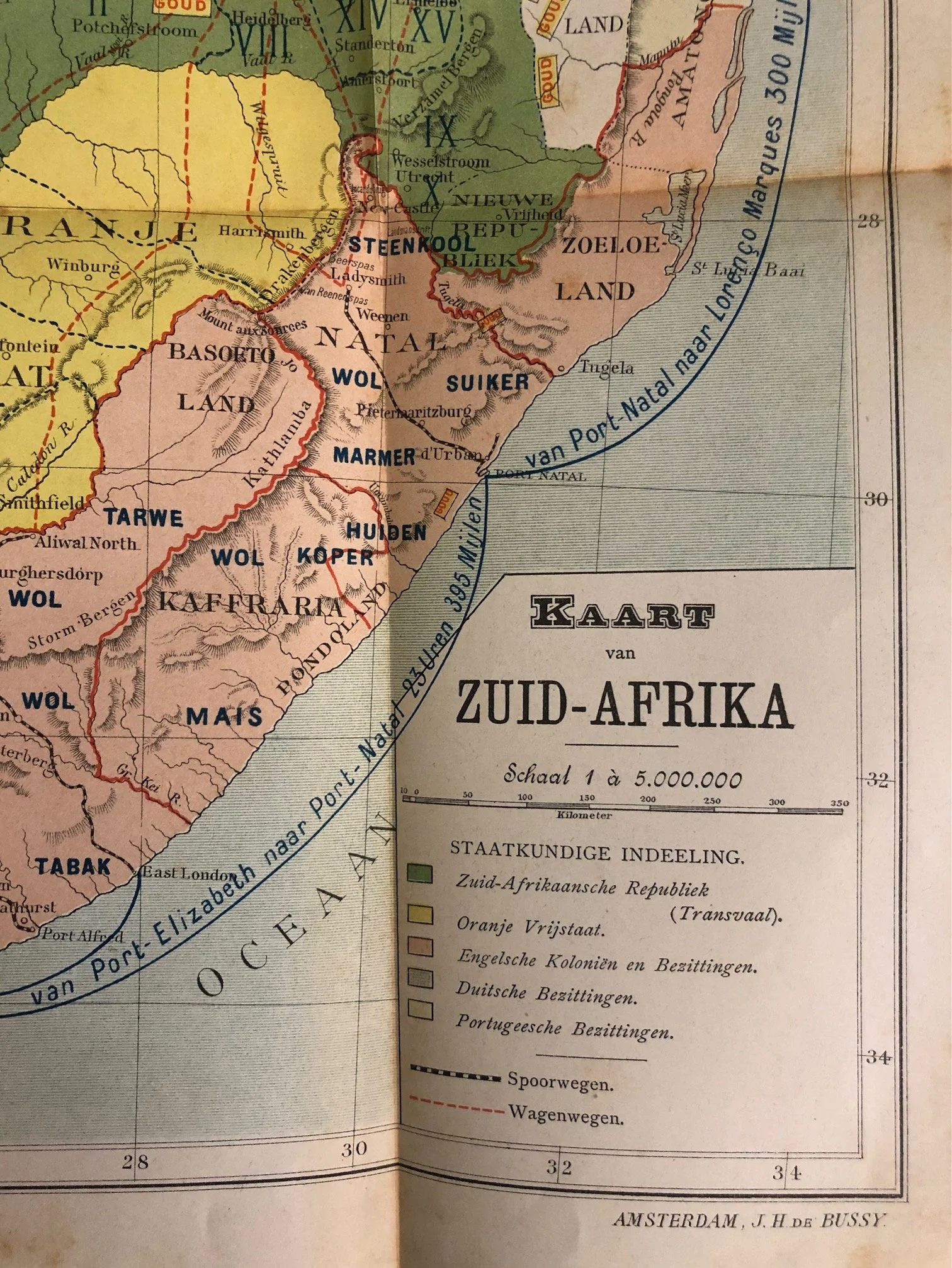
Transvaal en Omliggende Landen (Transvaal and Surrounding Lands) 1889
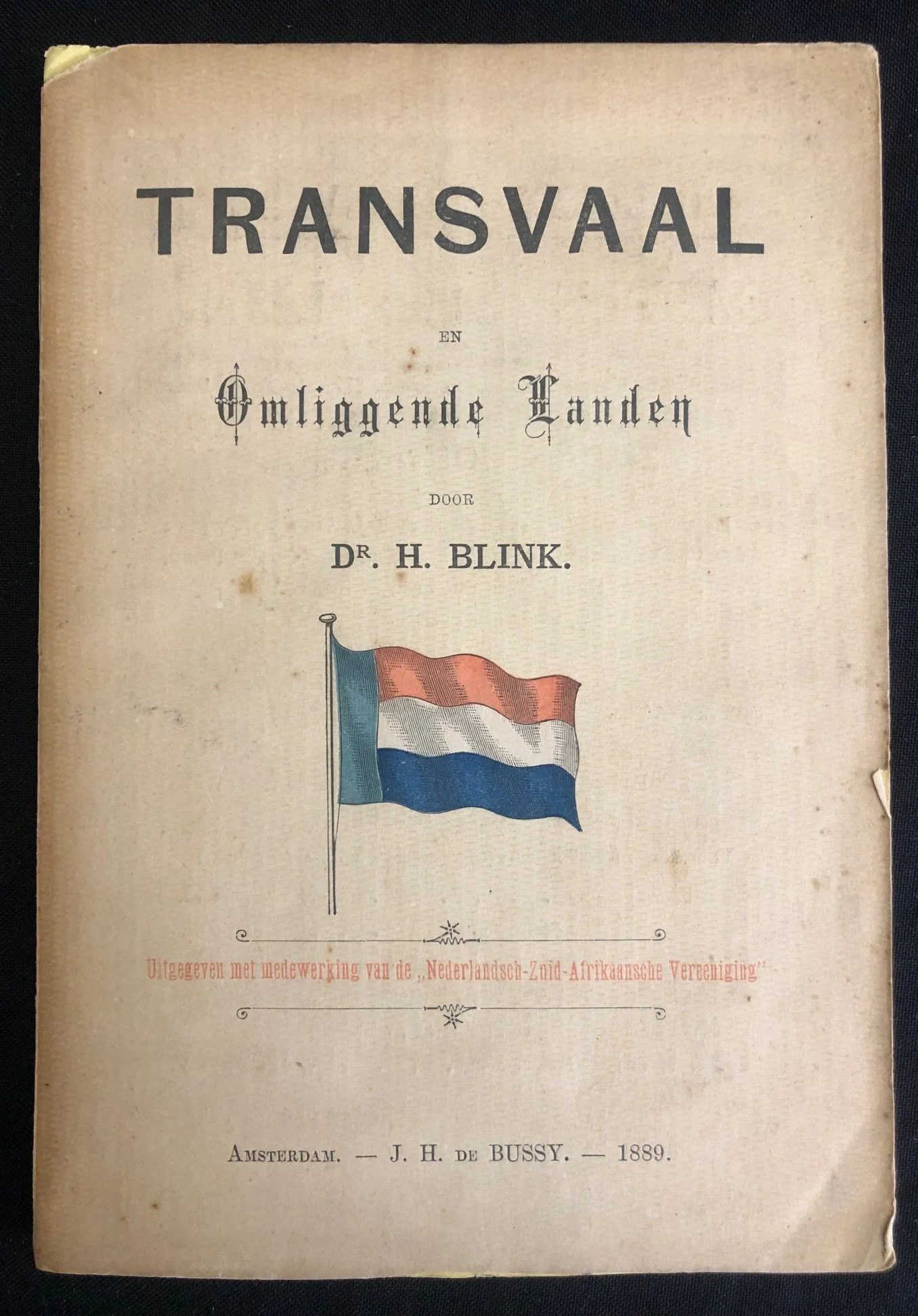
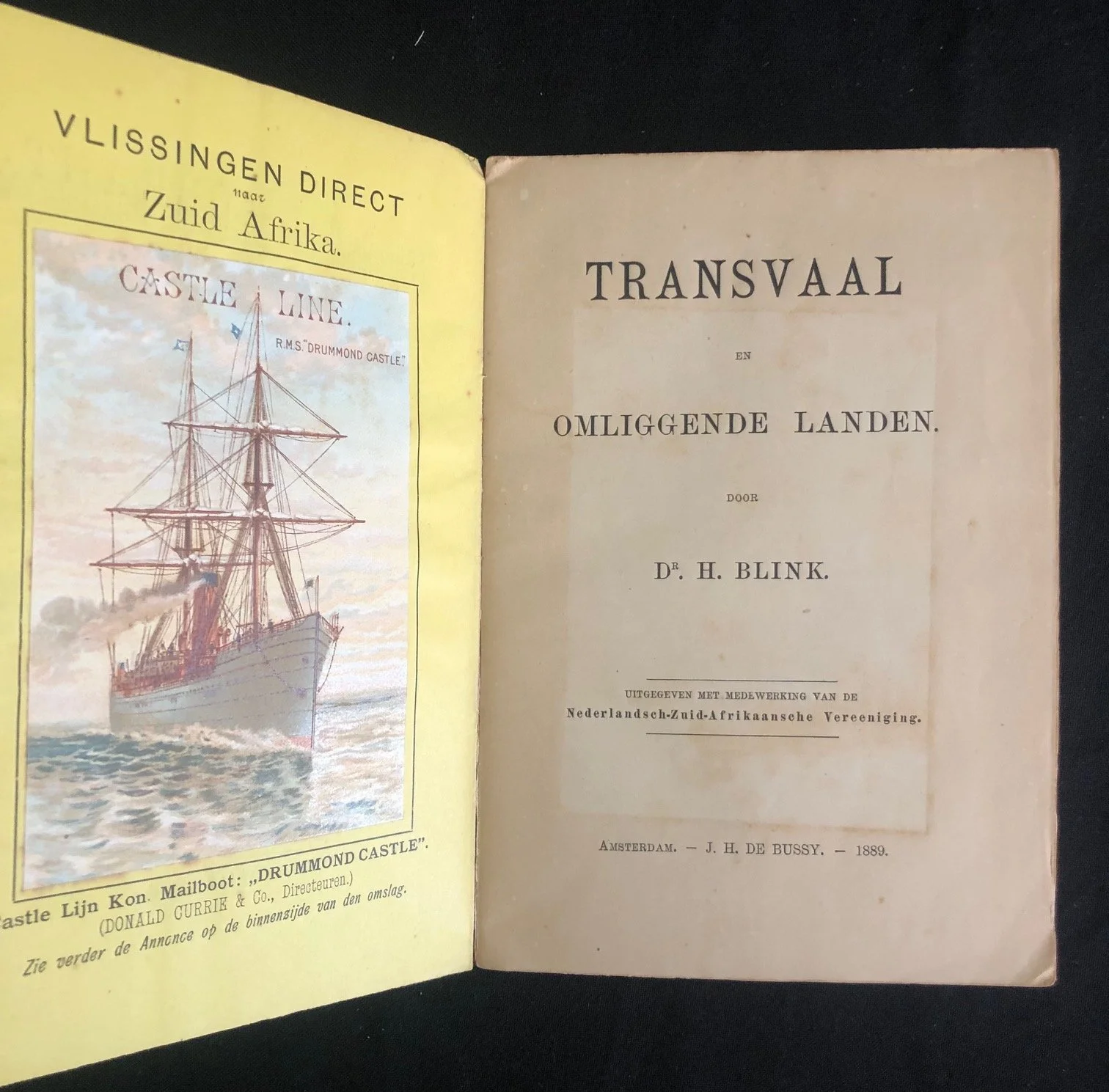
Transvaal en Omliggende Landen (Transvaal and Surrounding Lands), written by the Dutch geographer Dr. Hendrik Blink and published in Amsterdam by J.H. de Bussy in 1889.
The Witwatersrand Gold Rush
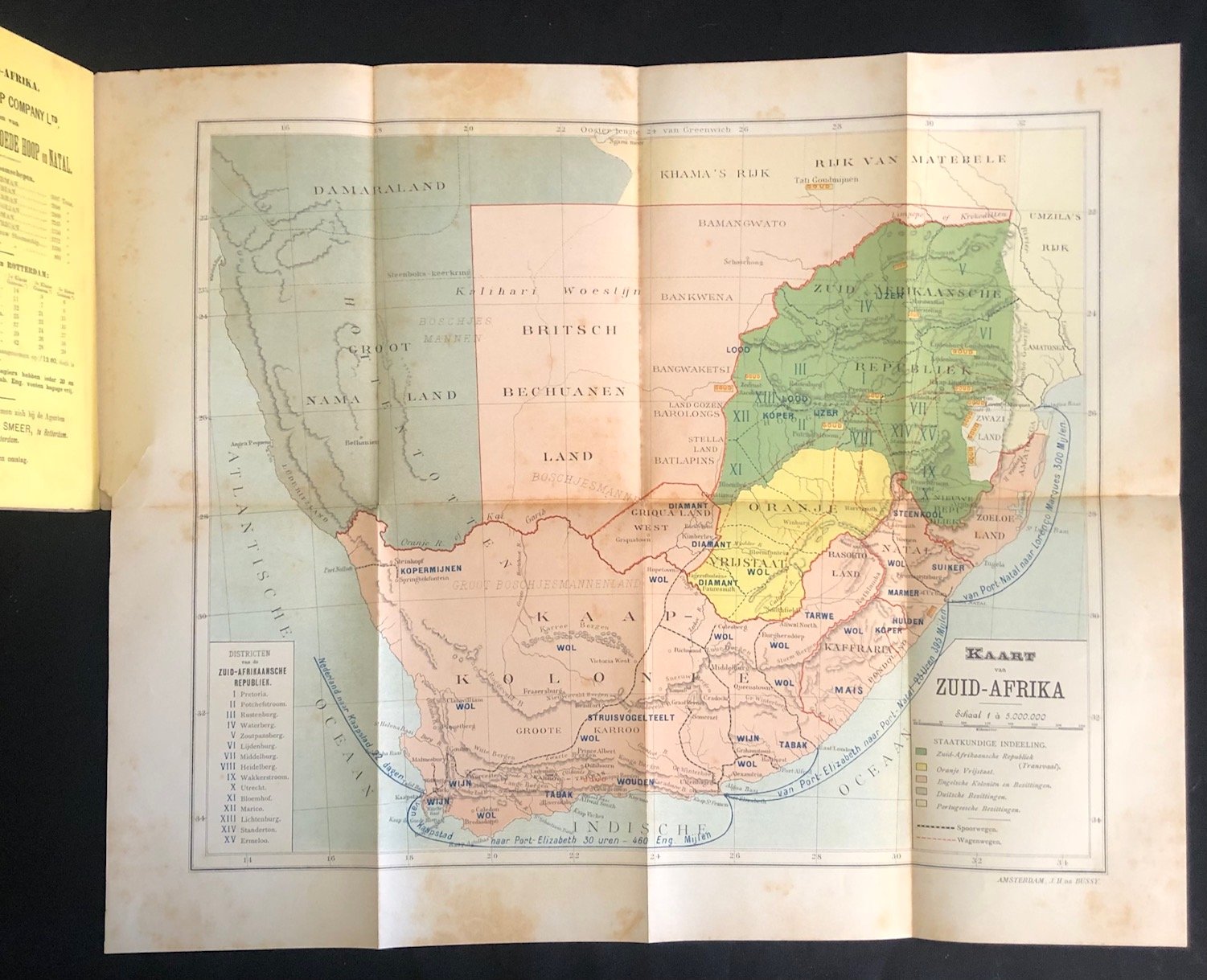
In 1889, the South African Republic (Zuid-Afrikaansche Republiek or ZAR, colloquially the Transvaal) was undergoing a seismic, chaotic transformation. The Witwatersrand Gold Rush had been triggered just three years prior, in 1886.
Johannesburg was morphing overnight from a dusty tent camp into a sprawling mining boomtown. European powers, particularly Great Britain, were watching the sudden wealth of this independent Boer republic with intense interest. Dr. Blink’s geographical overview was written precisely to educate a curious European public on the layout, resources, and volatile political landscape of a region that was rapidly becoming the economic center of gravity in Southern Africa.
The Nederlandsch-Zuid-Afrikaansche Vereeniging (NZAV)
The red text near the bottom of the cover notes that the booklet was published “met medewerking van de ‘Nederlandsch-Zuid-Afrikaansche Vereeniging’” (with the cooperation of the Dutch-South African Association).
The NZAV was founded in 1881, right after the First Anglo-Boer War, born out of a massive wave of pro-Boer sympathy in the Netherlands. The association aimed to strengthen cultural, linguistic, and economic ties between the Netherlands and the Boer republics.
Works like this one by Dr. Blink served as deliberate cultural diplomacy.
They were designed to foster a sense of shared "Dutch-Afrikaner" heritage and to canvas intellectual and political support for the Transvaal as British imperial pressure began to mount—pressure that would ultimately culminate in the Second Anglo-Boer War a decade later.
The Vierkleur
The Vierkleur ("Four-Color"), was the official flag of the ZAR. Designed by the Reverend Dirk van der Hoff and adopted in 1857, it cleverly superimposed a vertical green stripe (symbolizing hope and the youth of the state) onto the traditional red, white, and blue horizontal tricolor of the Netherlands. Seeing it prominently displayed on an Amsterdam-printed publication underscores the intentional visual link being made between the Netherlands and the Transvaal Republic at the close of the 19th century.
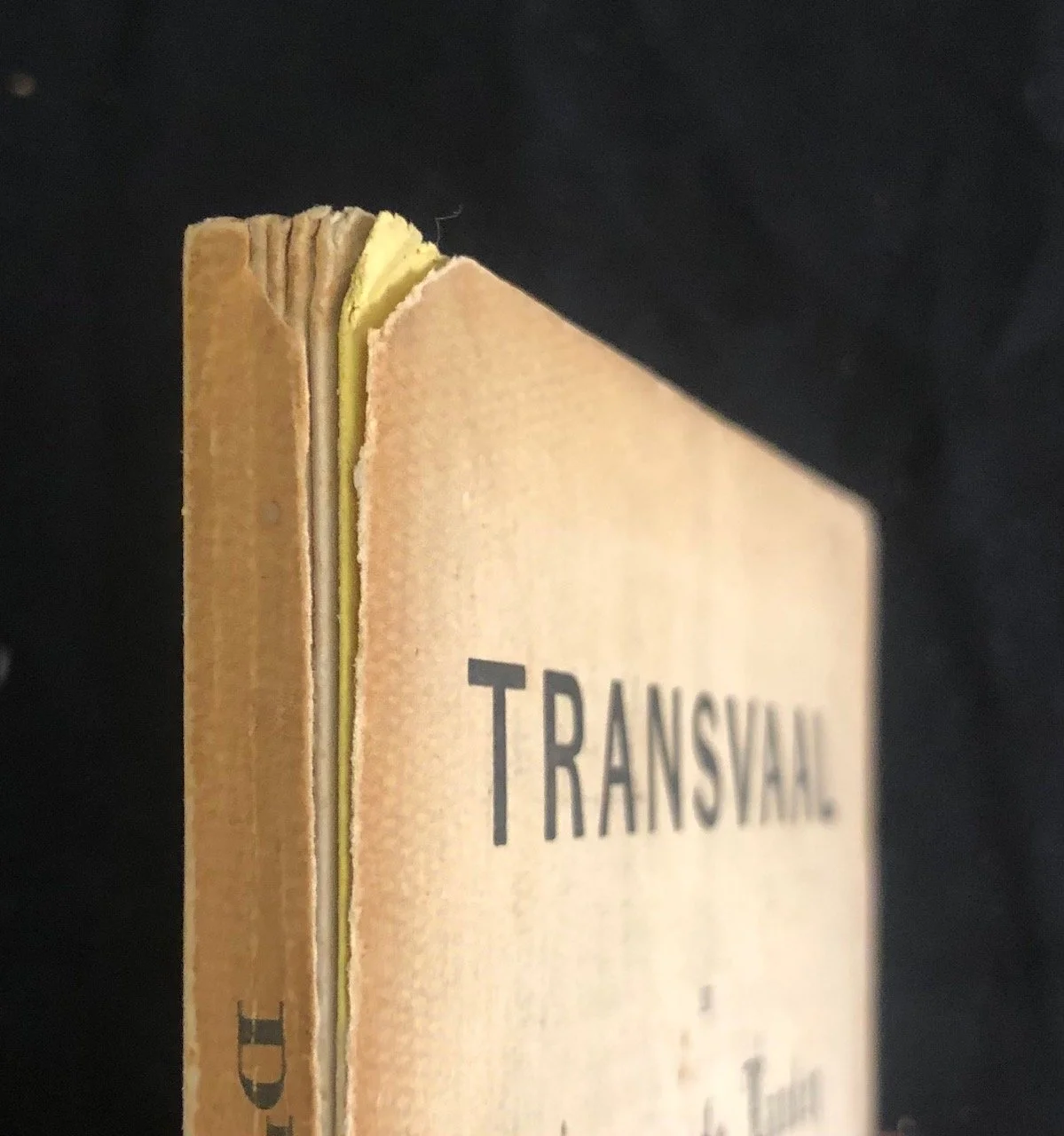
Very fragile; paper wrappers beginning to detach; foxed throughout. Complete.
138mm x 200mm x 12mm
R1.500