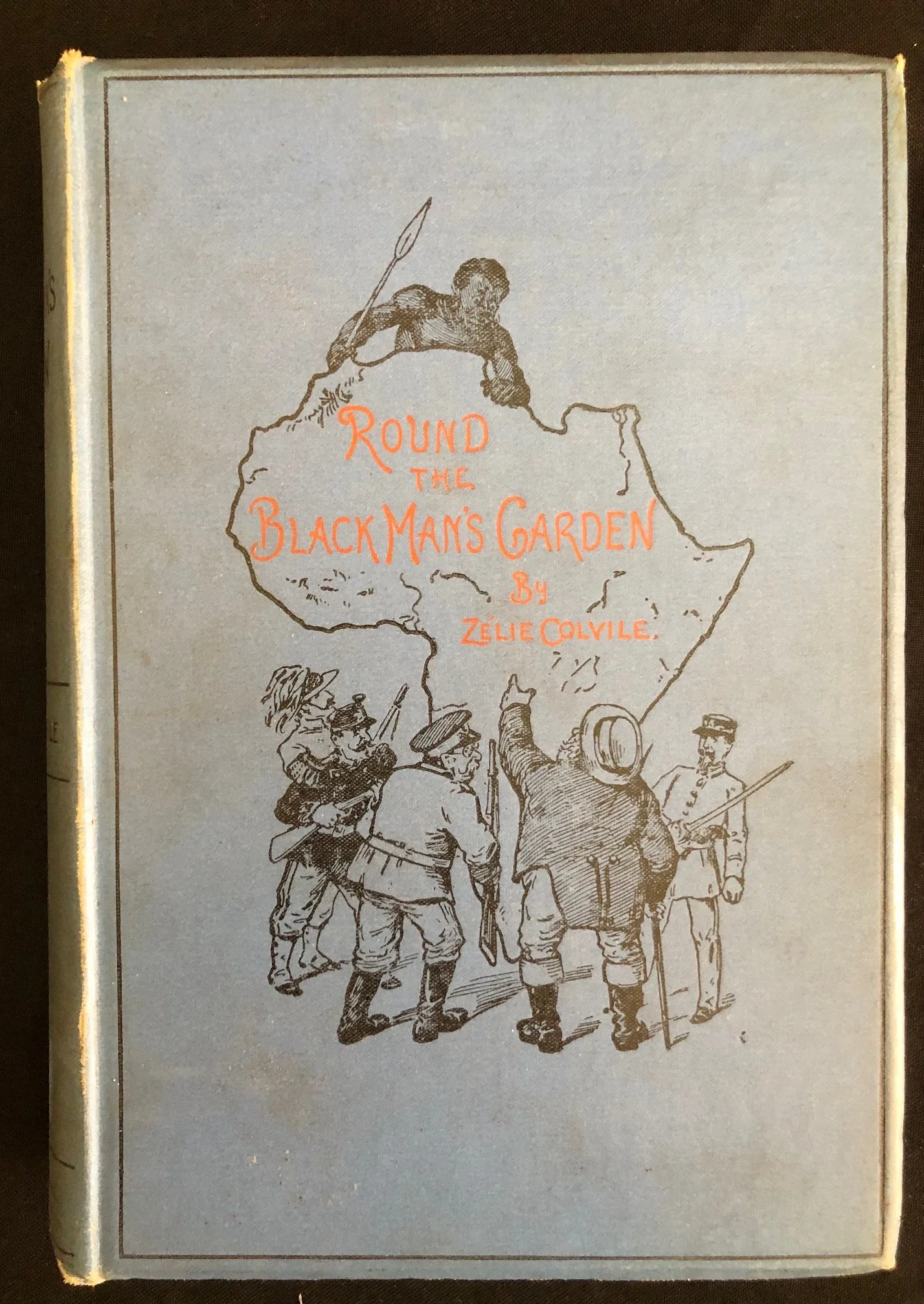
Round the Black Man's Garden by Zélie Colvile F.R.G.S (1893)
Early Johannesburg high society interest.
Ex Libris Julius Jeppe
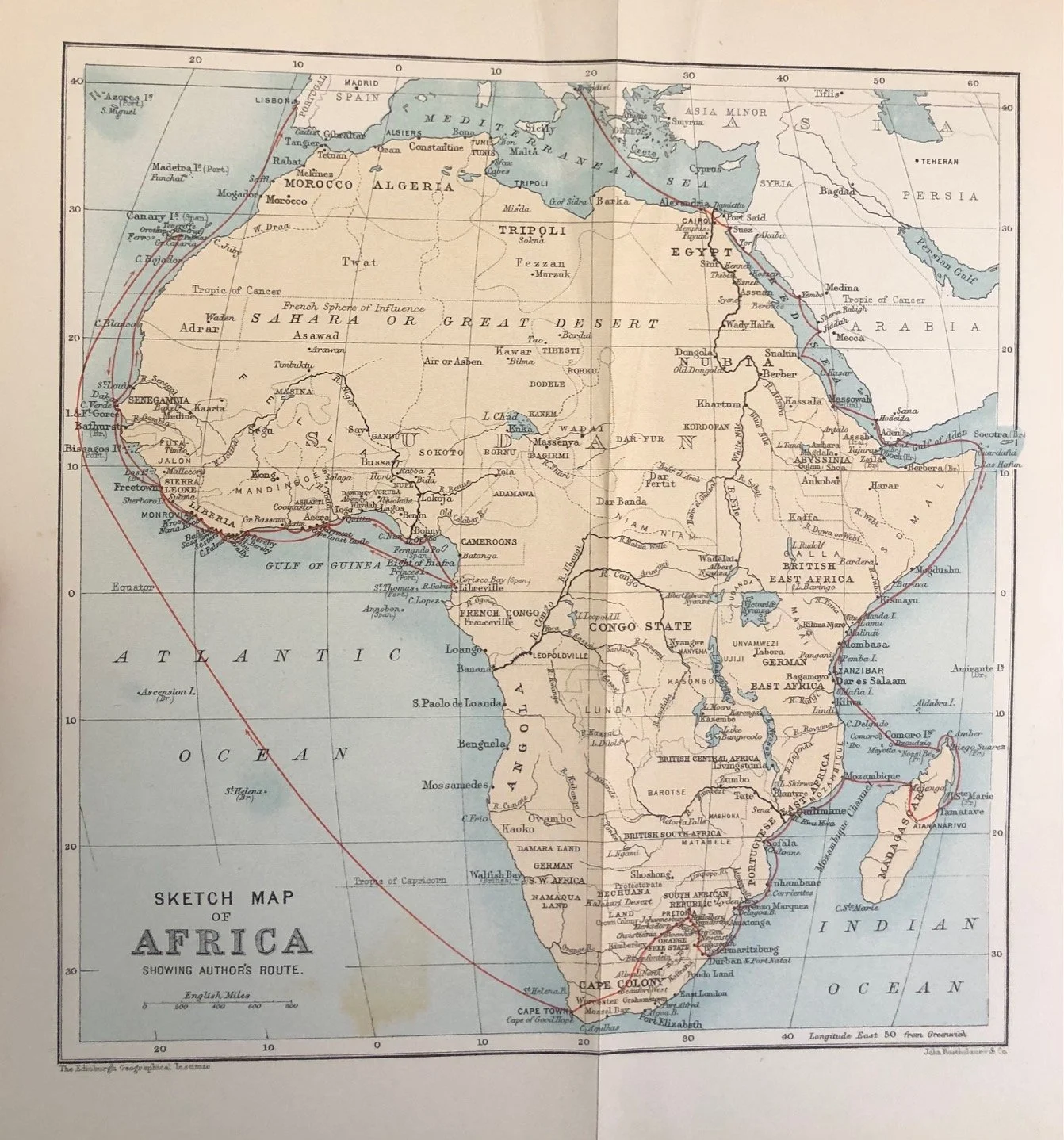
The book by Zélie Colvile (née de Préville) details a massive journey the Colviles undertook in 1892. They travelled by steamer and overland around the African continent, visiting the Cape, Delagoa Bay (Maputo), Madagascar, Zanzibar, and Mombasa.
French-born Colvile was married to Major-General Sir Henry Colvile, a British officer and diplomat. Because of her husband's high-ranking status, Zélie wasn't just a casual tourist; she had access to the elite political and colonial figures of every port they touched. Her descriptions offer a very specific, aristocratic, and unvarnished gaze at the pre- Boer War landscape of Southern and Eastern Africa just as the "Scramble for Africa" was reaching a fever pitch.
Her designation on the title page (F.R.G.S. — Fellow of the Royal Geographical Society) is particularly intriguing in terms of timing.
The year on the title page is 1893 (MDCCCXCIII). It was exactly in 1892–1893 that a fierce controversy erupted within the Royal Geographical Society over whether women should be admitted as fellows. A small group of 15 "Lady Fellows" (including Isabella Bird and Zélie Colvile) were fast-tracked into the society in late 1892 before a conservative backlash led by Lord Curzon slammed the door shut again. No more women were admitted until 1913. This book stands as a proud artefact of that brief, historic window of Victorian scientific recognition for women explorers.
The "JULIUS JEPPE." Stamp
This book belonged to Sir Julius Jeppe (1859–1929), one of the foundational figures of early Johannesburg.
Arriving on the Witwatersrand in 1886 just as gold was discovered, Julius Jeppe, along with his brother Carl and the rest of the Jeppe family, became immensely wealthy property developers. They established Johannesburg's earliest suburbs, including Fordsburg, Jeppestown, and Belgravia.
Jeppe was a towering figure in the Transvaal—knighted in 1922 for his role in developing mining, education, and infrastructure. Seeing his personal ownership stamp on a travelogue published in 1893 (just as Johannesburg was transforming from a dusty mining camp into a permanent metropolis) is fantastic. It places this very volume inside the library of one of the chief architects of the old Transvaal Republic's elite.
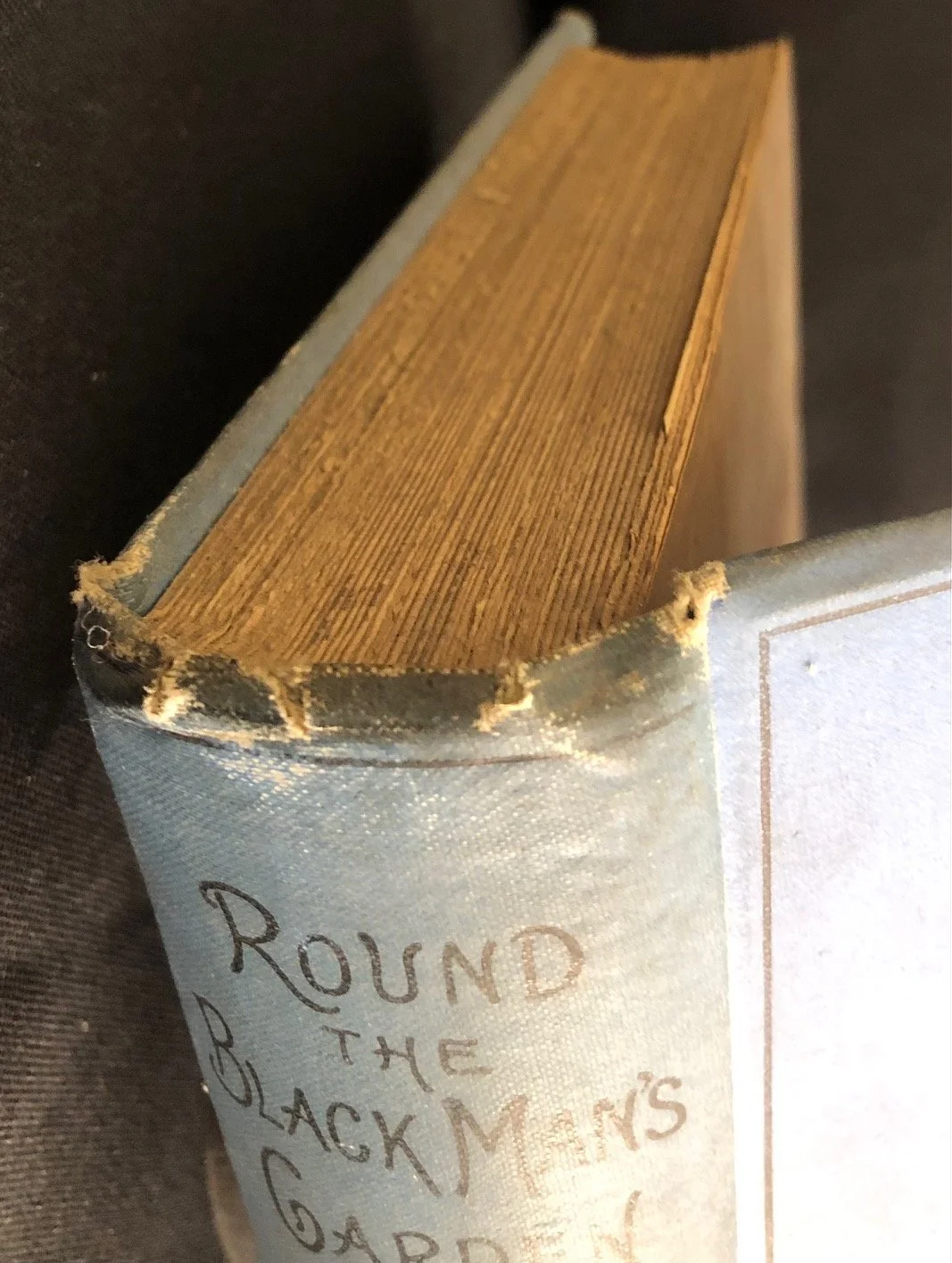
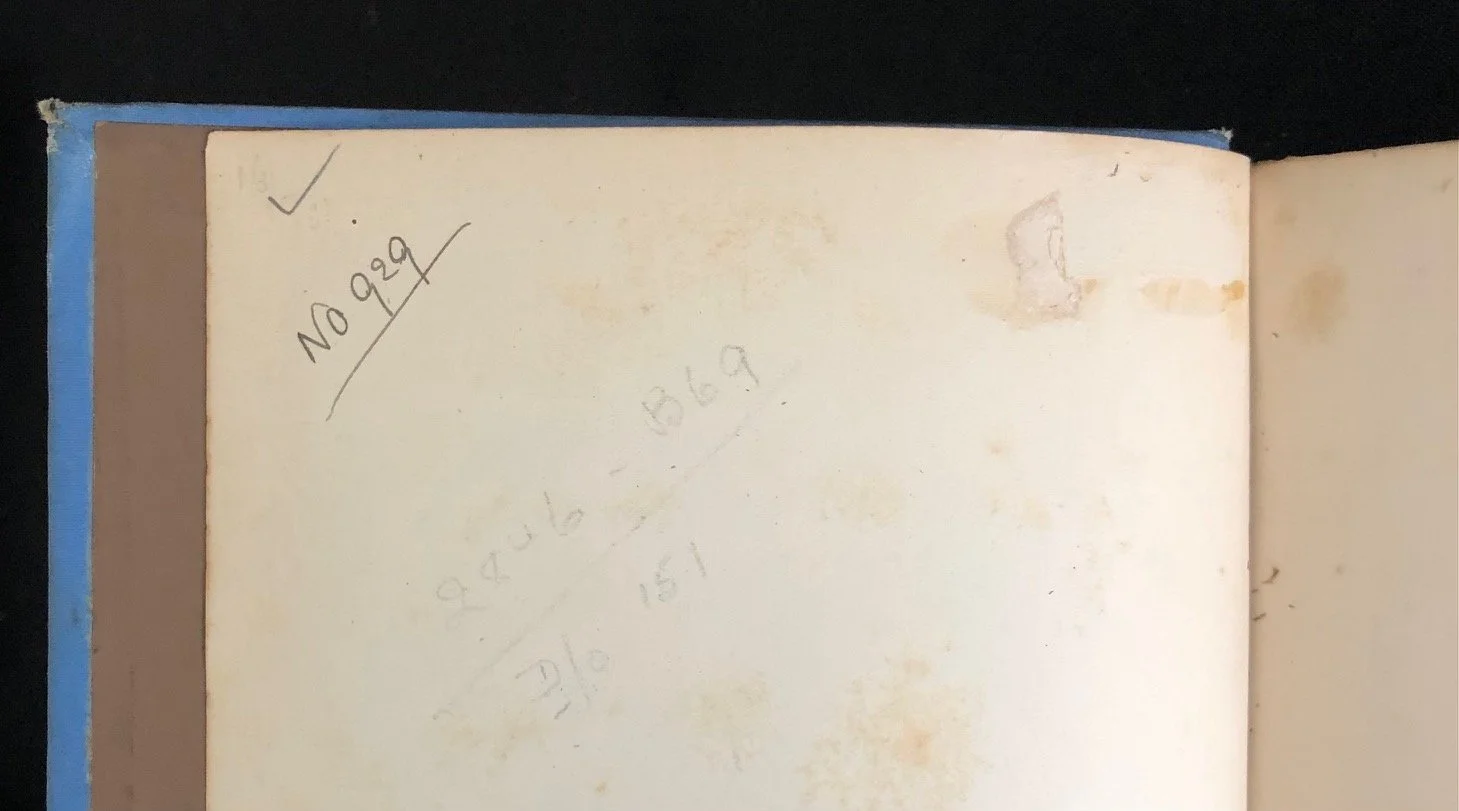
Complete; ex library copy with stamps; some scattered foxing; some pages uncut; cover worn and stained.
155mm x 218mm x 40mm
R1,500