Zulu War: Death of The Prince Imperial (1879)
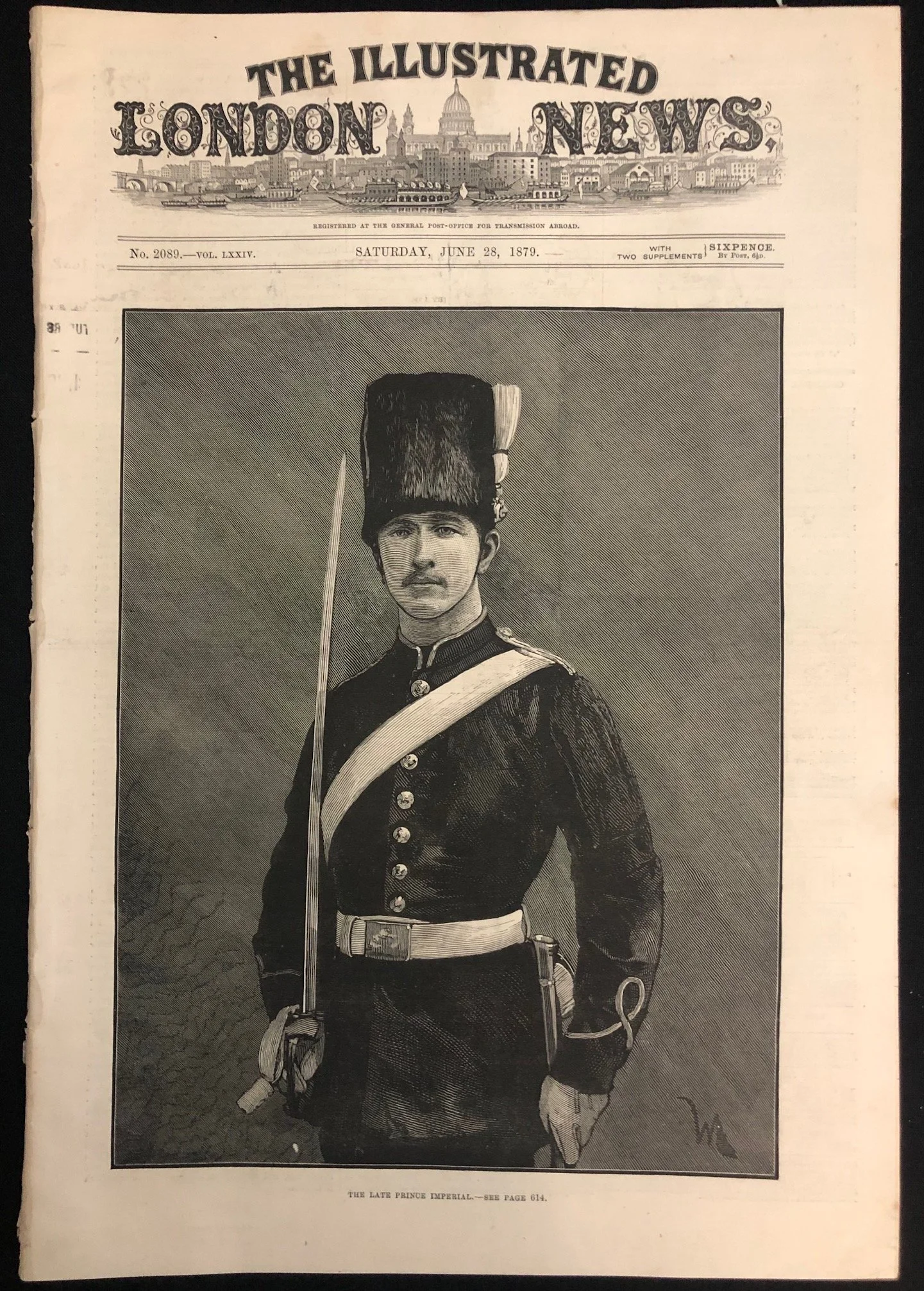
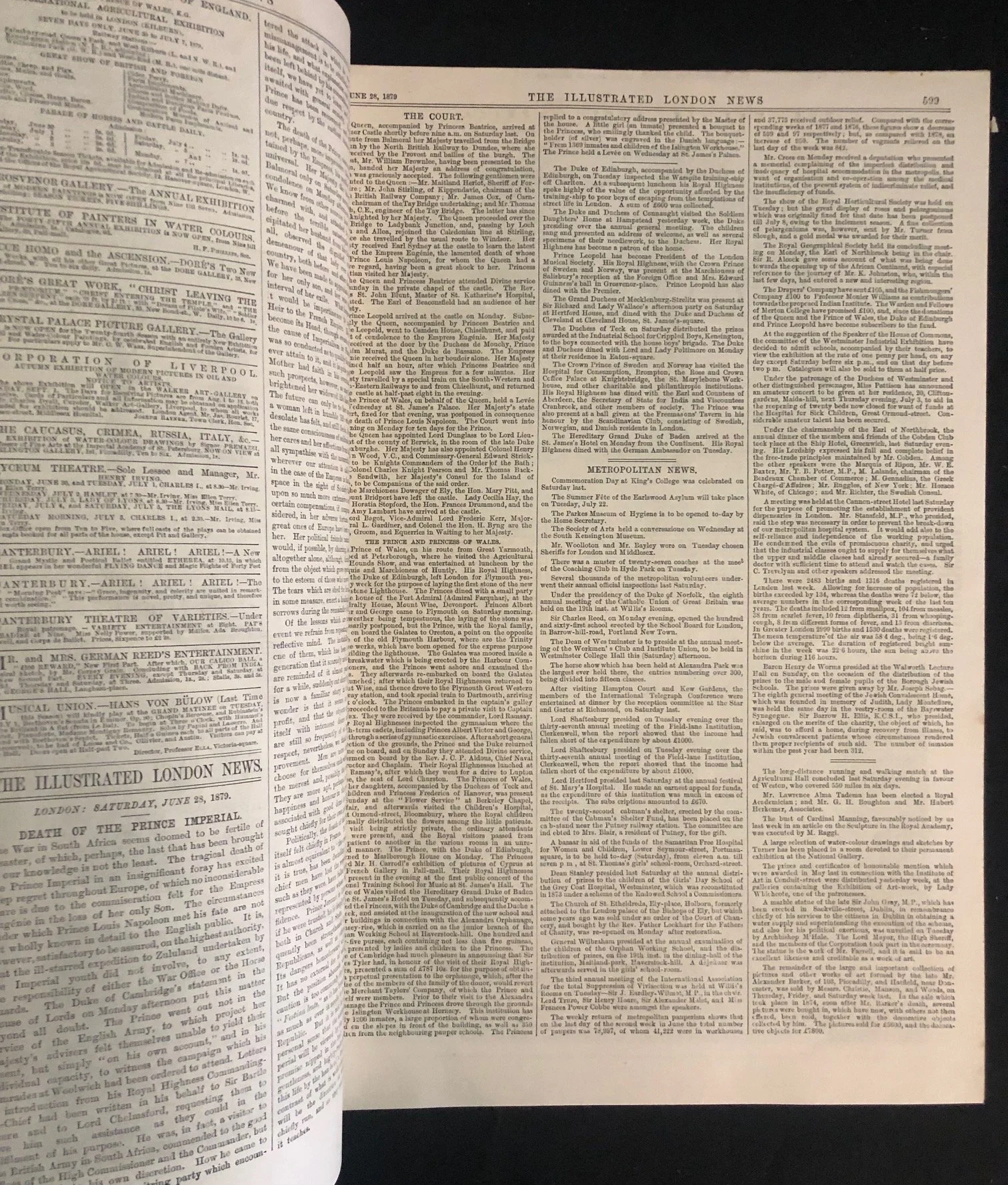
23-page excerpt from The Illustrated London News, Saturday, June 28 1879.
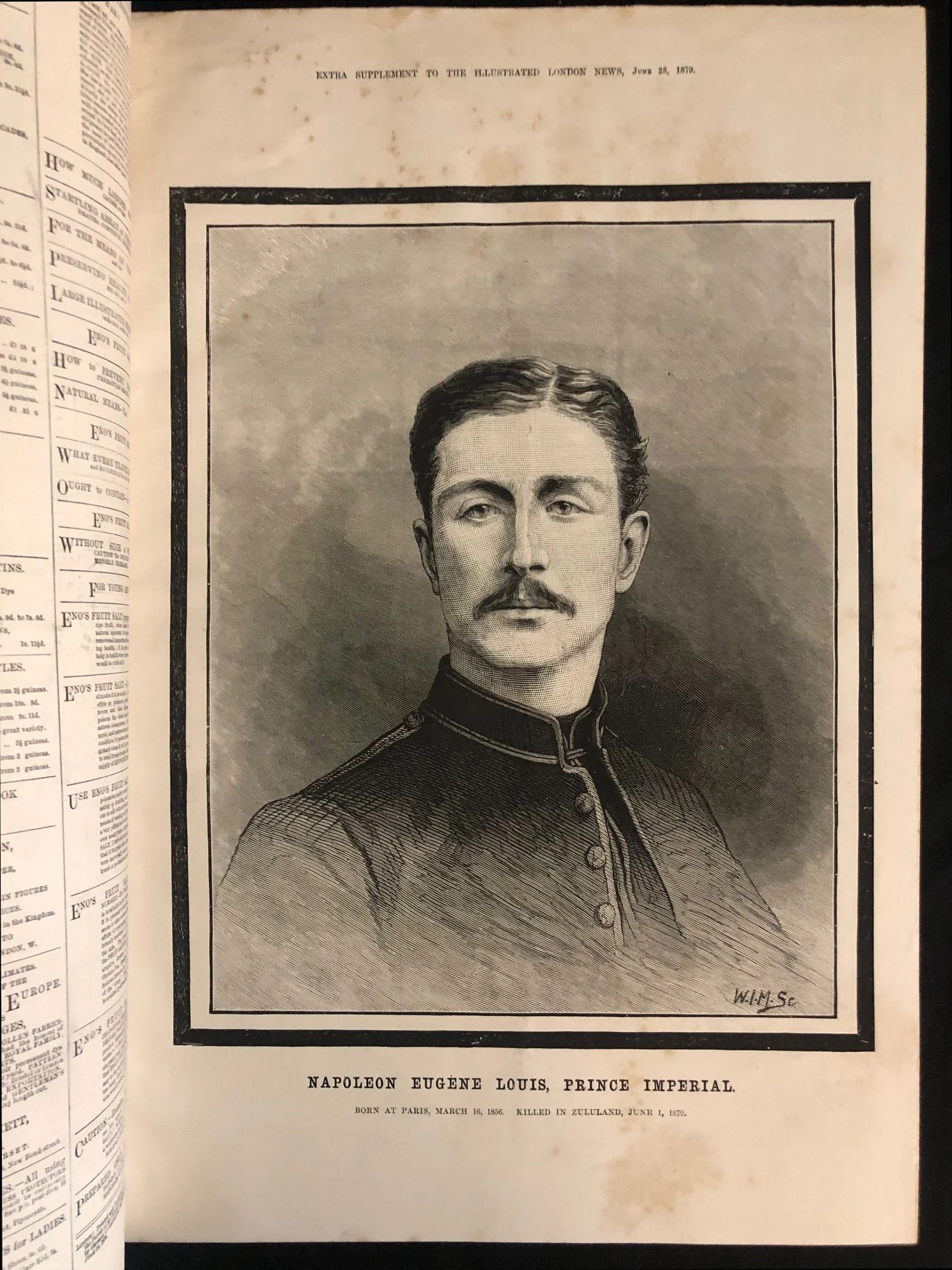
The death of Louis-Napoléon, the Prince Imperial of France, during the Anglo-Zulu War.
The engraving is captioned "The Late Prince Imperial," published just under a month after he was killed in Zululand on June 1, 1879.
The Extinction of the Bonaparte Dynasty: Louis-Napoléon was the only child of Emperor Napoleon III and Empress Eugénie. Following his father’s overthrow in 1870, he lived in exile in England. Had the French monarchy ever been restored, he would have ascended the throne as Napoleon IV.
When he was killed by Zulu warriors during a scouting mission near Ulundi, the direct imperial line of the House of Bonaparte died with him. His death effectively shattered the hopes of the French Bonapartist political faction back in Europe, solidifying the future of the French Third Republic.
A Public Relations Nightmare for the British Empire
The Prince Imperial was not supposed to be in combat. Queen Victoria and the British military high command had reluctantly allowed him to join Lord Chelmsford’s staff in South Africa as an unattached observer for "experience."
His death became a massive scandal in Victorian Britain due to the humiliating circumstances surrounding it:
The Prince’s scouting party was ambushed while at an abandoned kraal.
In the panic, the British officer in charge, Captain Carey, and his men mounted their horses and galloped away, leaving the Prince behind as his saddle strap broke.
The Prince died fighting on foot, struck by 17 assegai spears, all facing forward.
The fact that British soldiers had fled and abandoned an exiled European royal—and a guest of the Crown—sparked outrage and intense media scrutiny, dominating headlines for months.
The Graphic Journalism Era
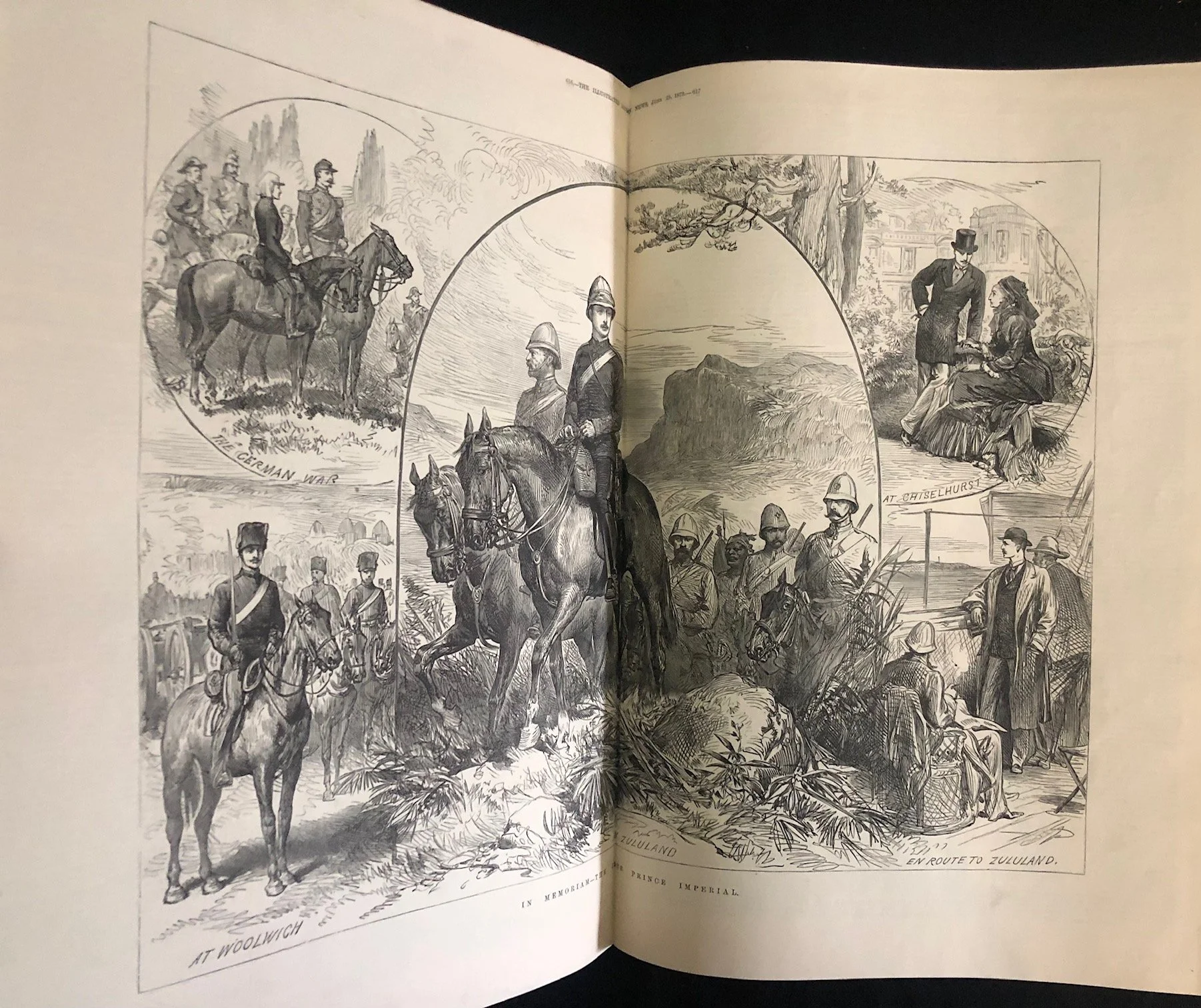
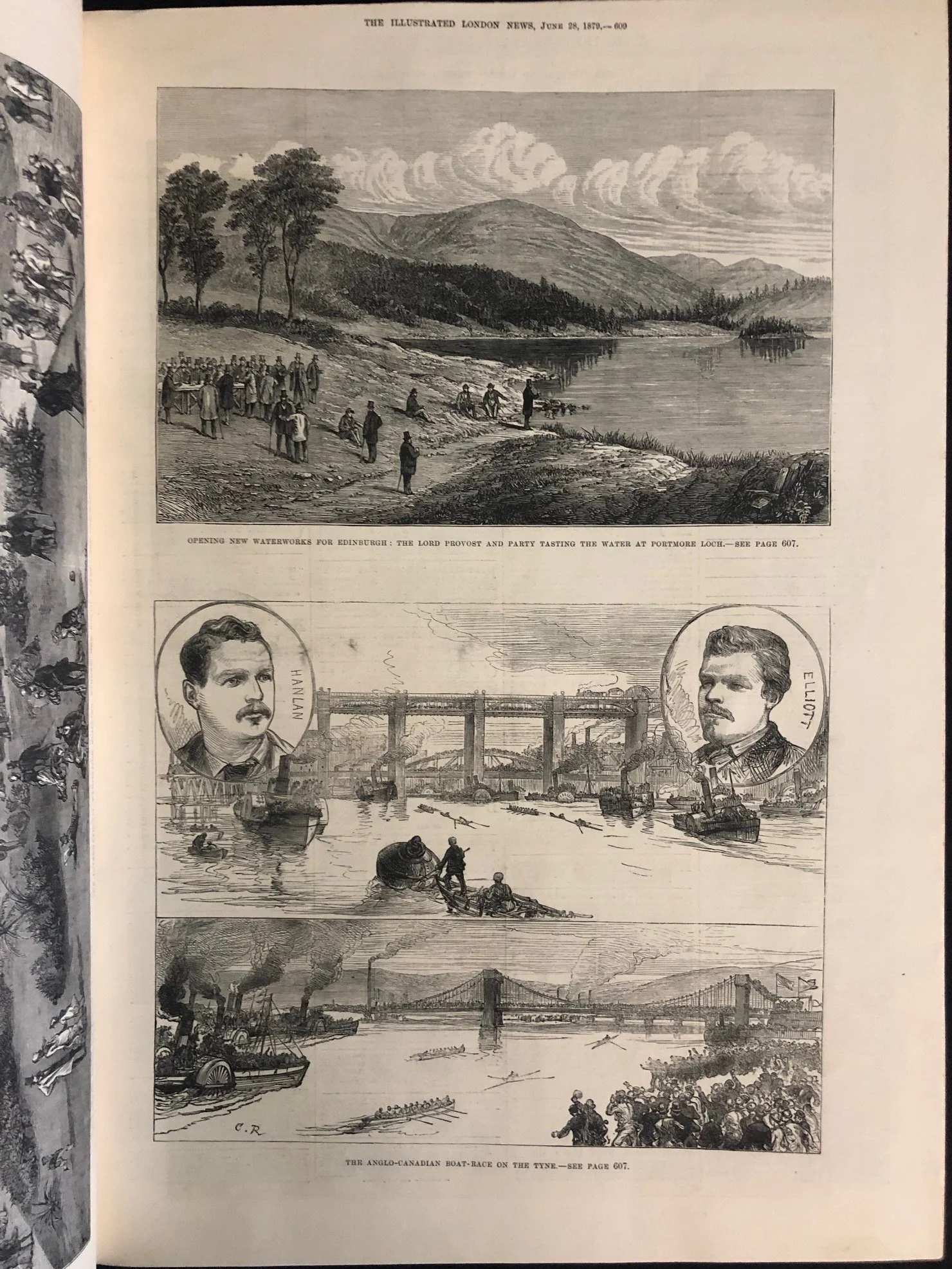
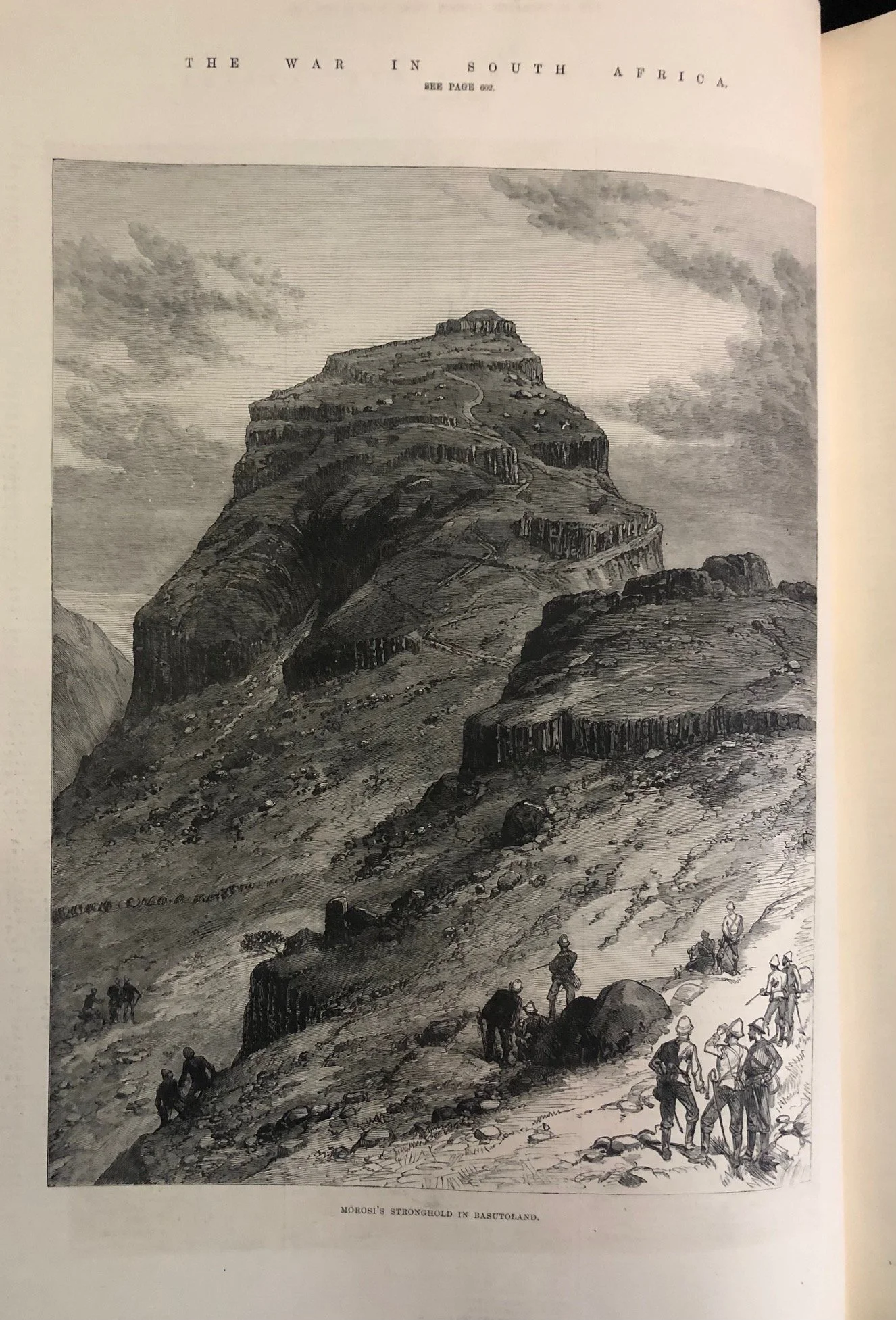
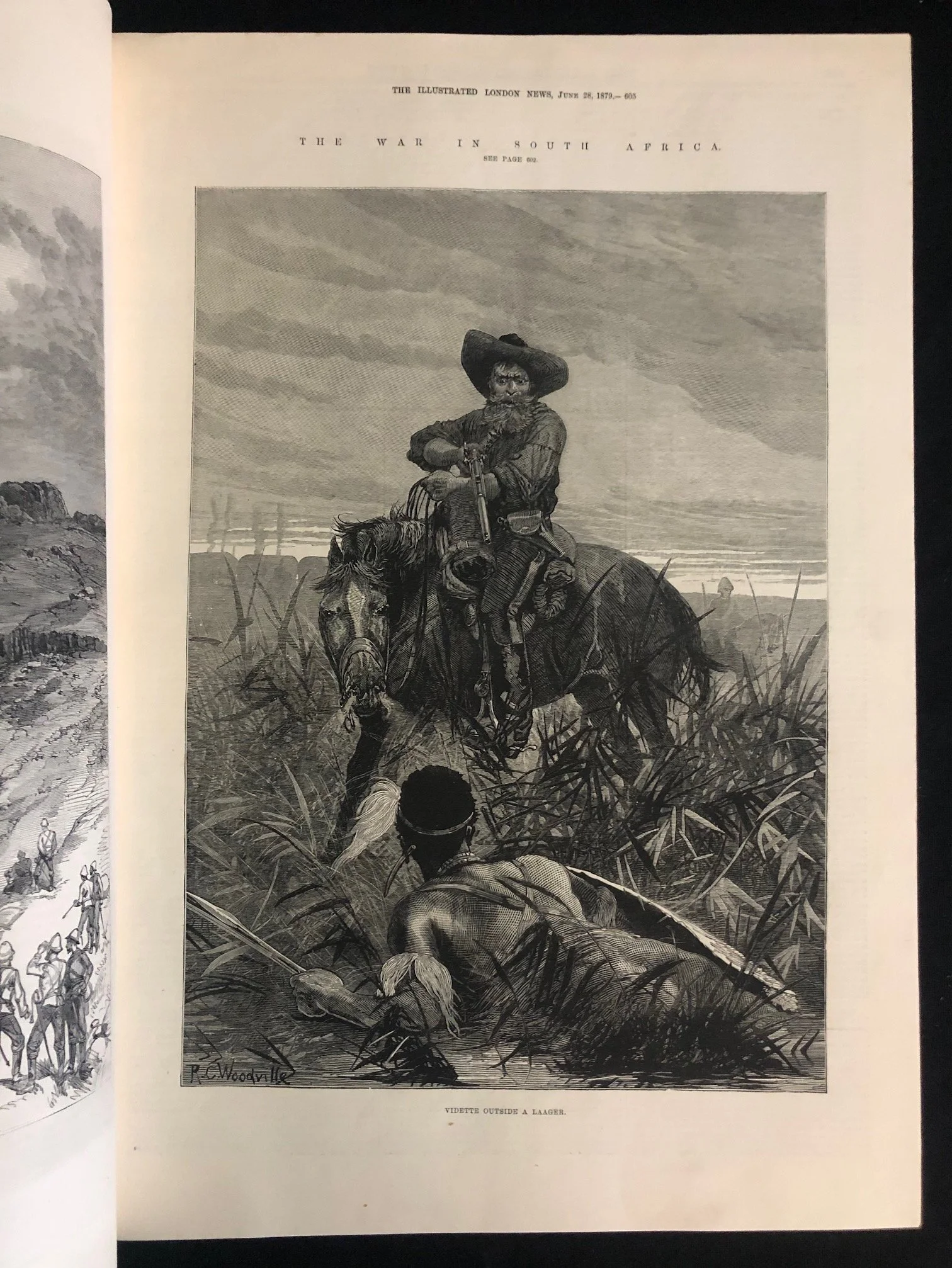
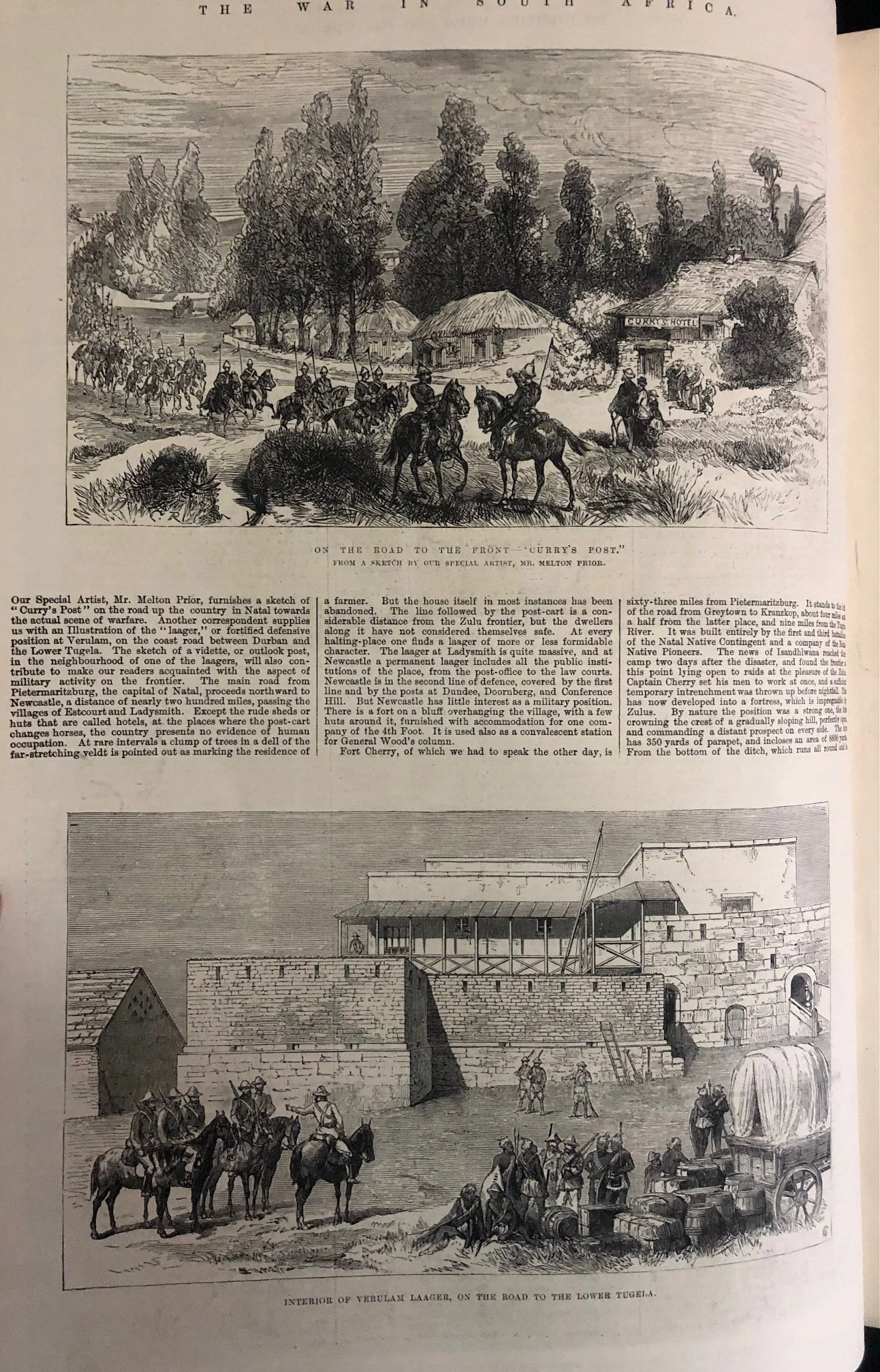
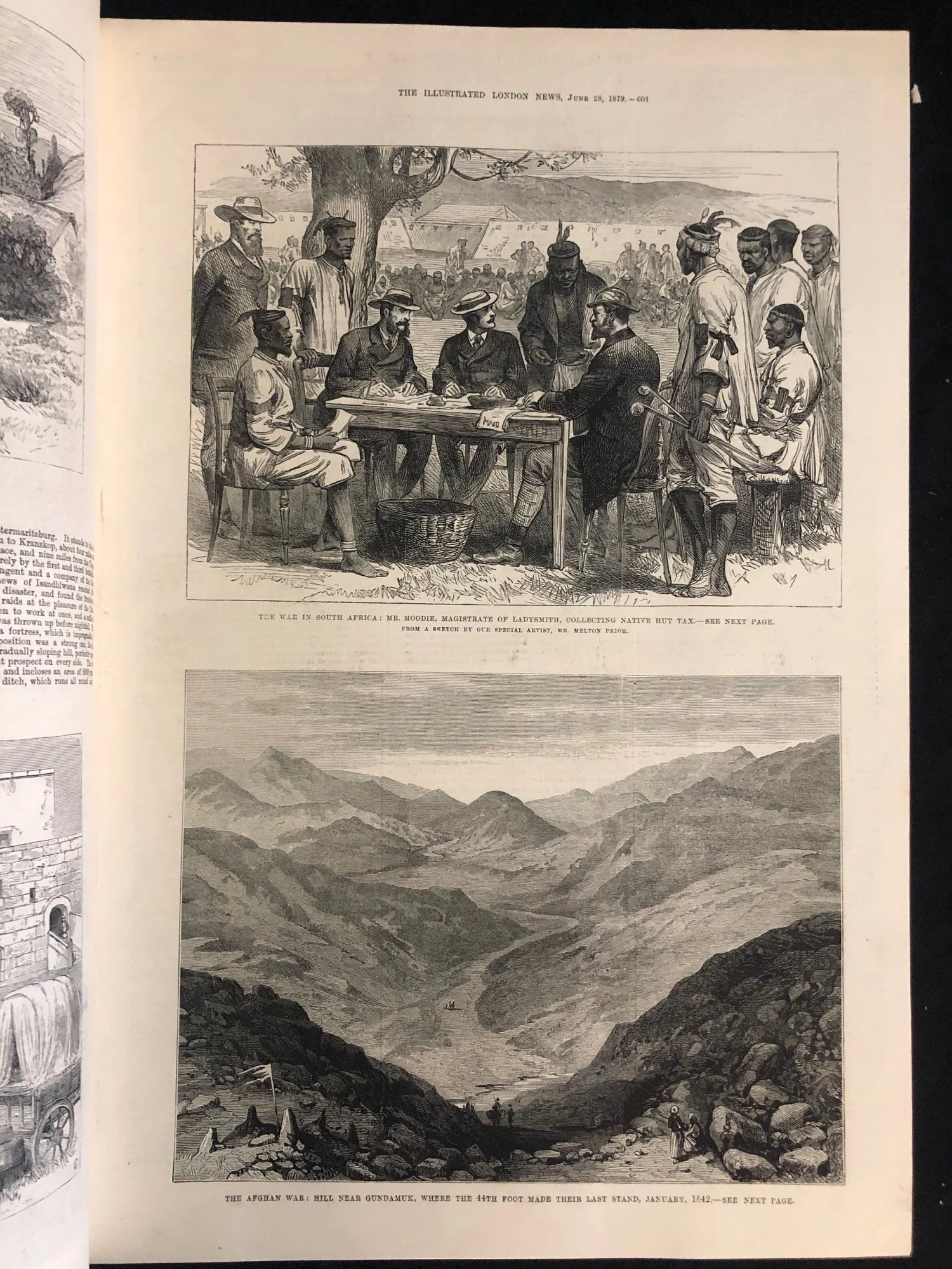
The Illustrated London News was the world’s first illustrated weekly newspaper. Issues like this one from June 1879 demonstrate the incredible power of late-Victorian media. Because cameras could not yet capture fast-moving actions or easily reproduce photos on a printing press, artists and engravers worked furiously to turn sketches sent via ship and telegraph from South Africa into dramatic, full-page wood engravings like this portrait.
This cover acted as an icon of mourning for a British public that had grown deeply invested in the young prince's life, showing him in his British military uniform (he had trained at the Royal Military Academy, Woolwich) clutching his sword—an image designed to emphasize his bravery and tragic end.
275mm x 400mm
Minor wear.
R2,000