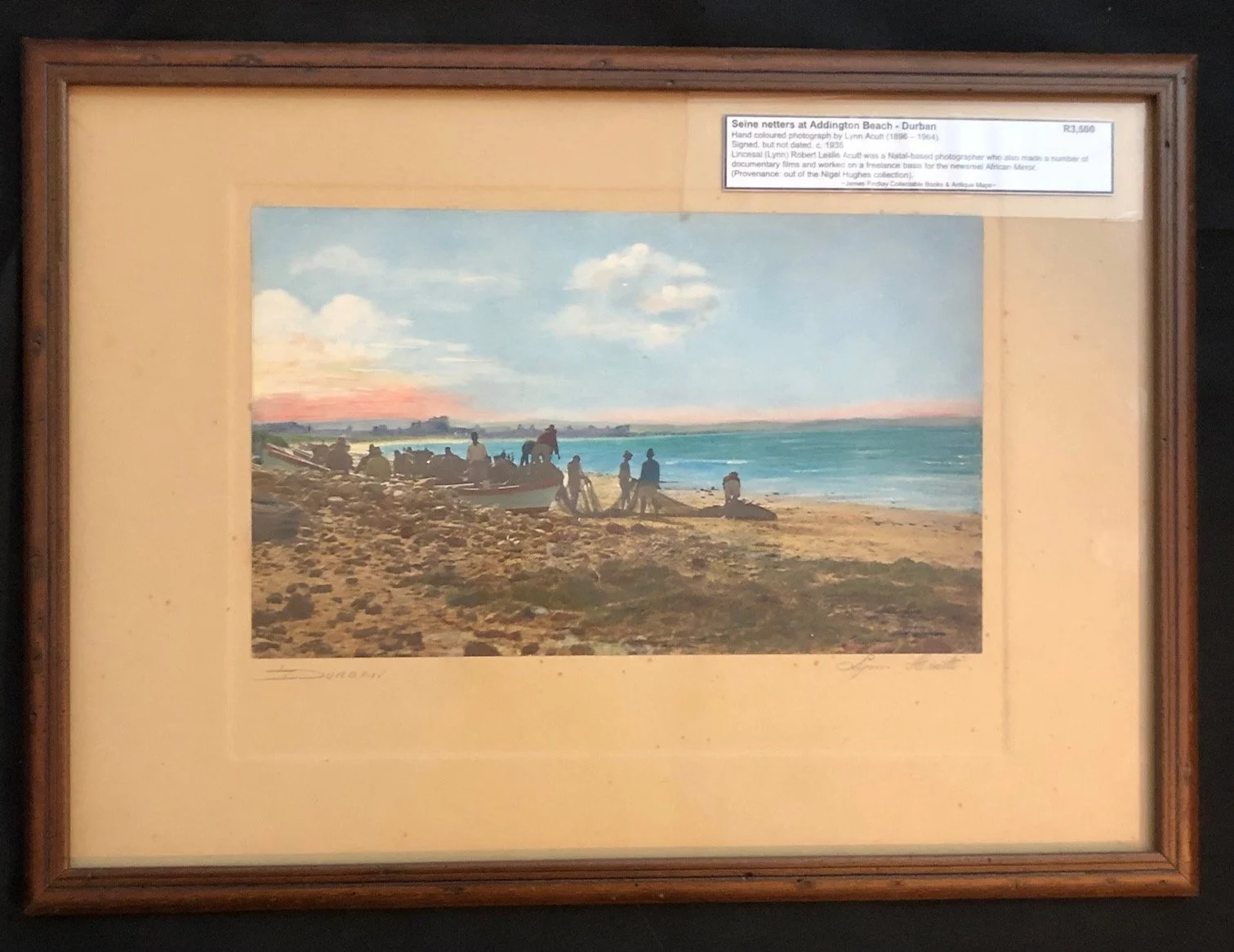
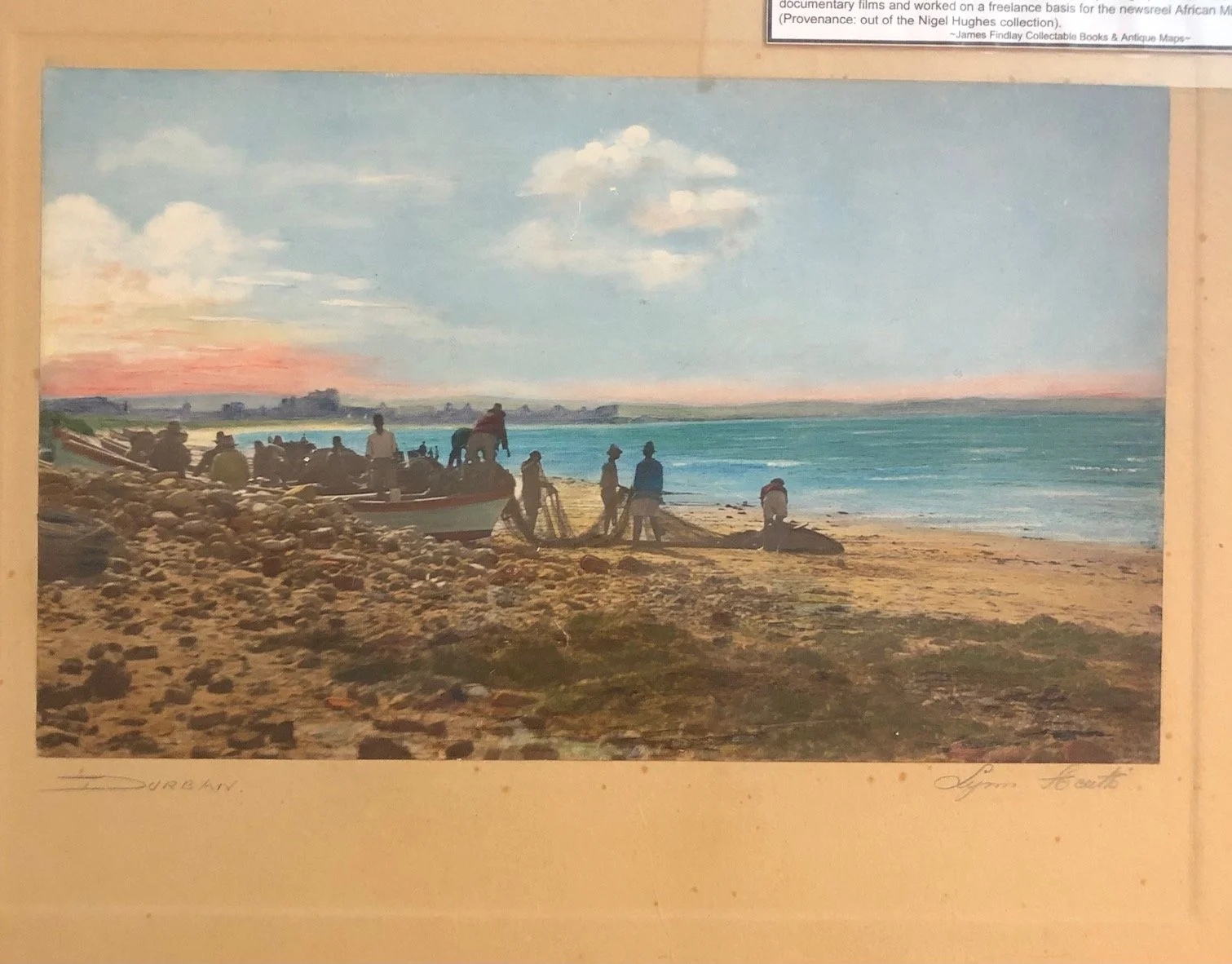
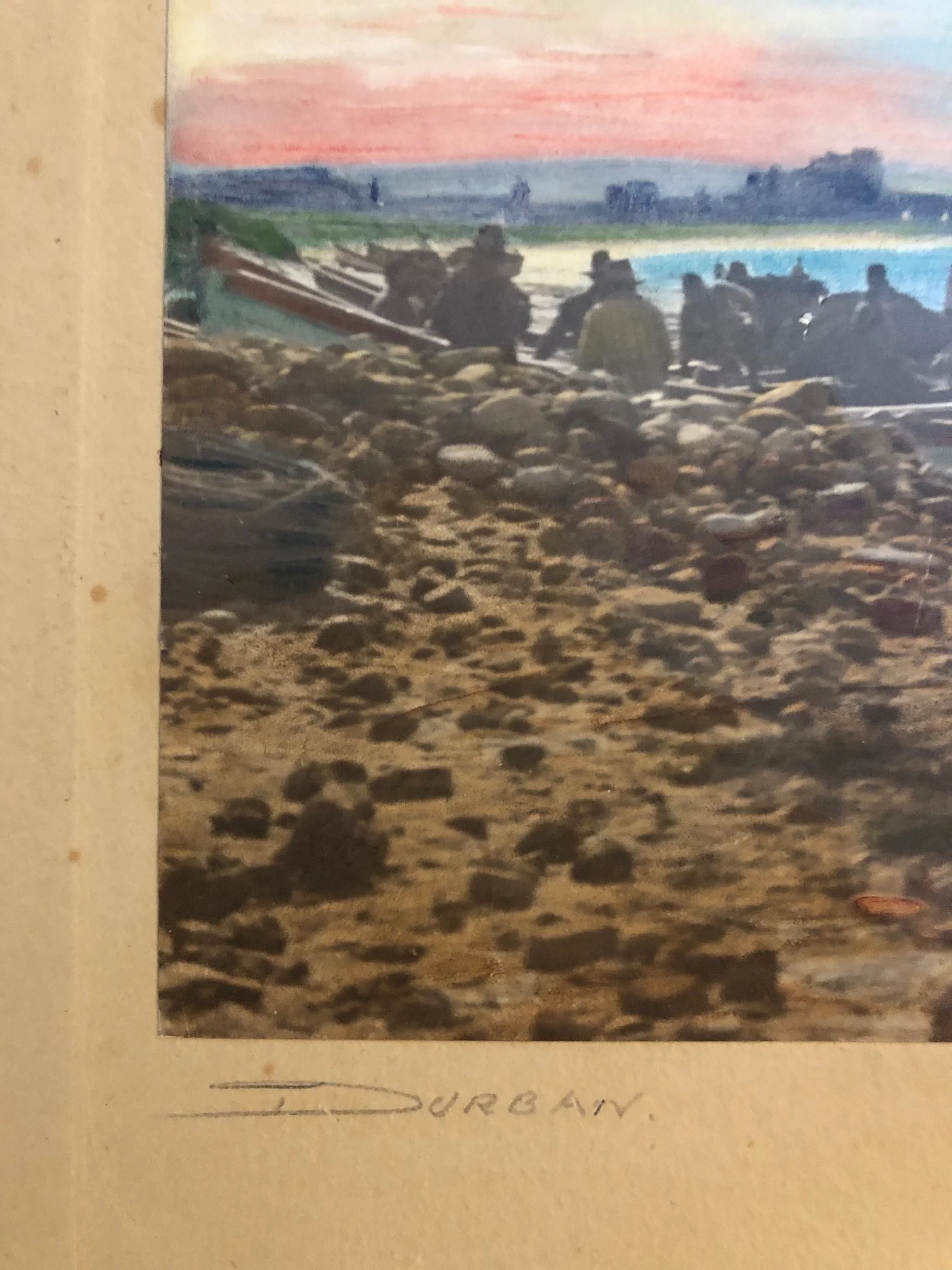
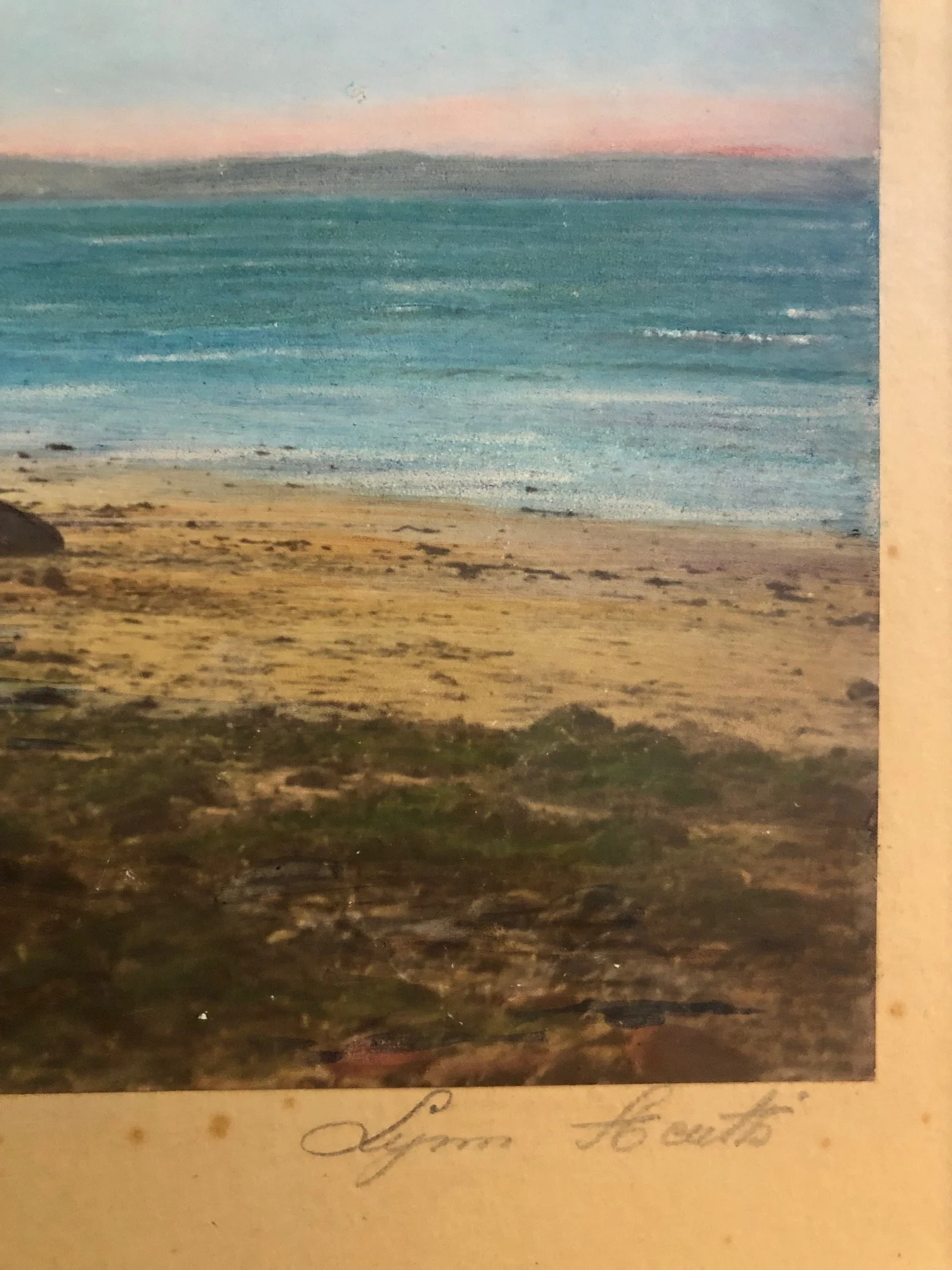
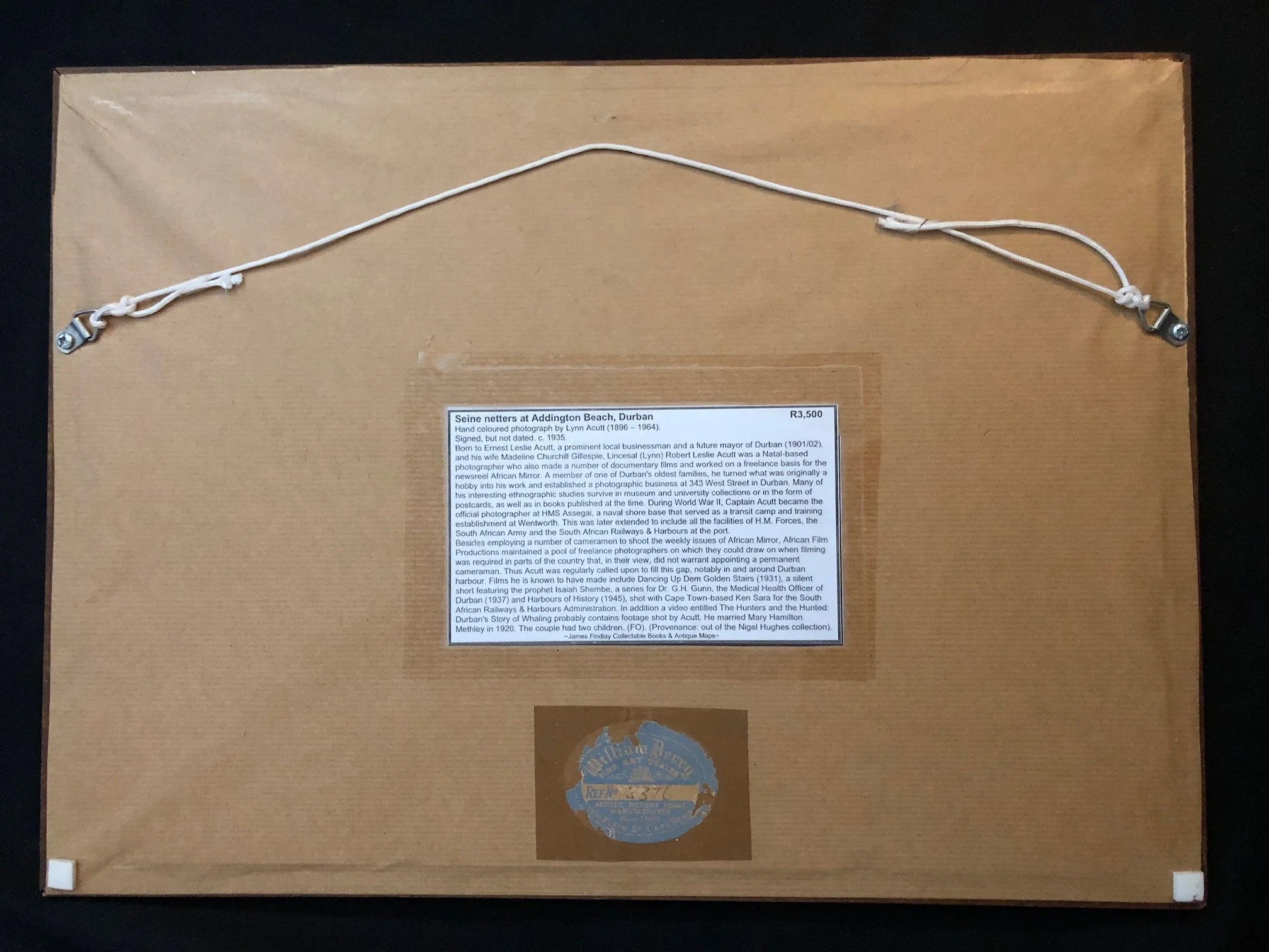
Photograph: Durban’s Seine Net Fishermen by Lynn Acutt
1930’s (possibly earlier).
A fascinating nexus of South African maritime history, local colonial elite, and early 20th-century visual media; Seine Net Fishermen (traditionally known as "seiners") on a Durban beach, with the distinct silhouette of the Durban beachfront and the Bluff layout visible in the background.
The Seine Fishing Tradition
Net fishing along the Durban back-beach and around the harbor mouth was a crucial economic and sustenance activity from the 19th century onward. Initially dominated by European immigrants (particularly Italian and Portuguese fishermen) and later heavily sustained by the local Indian community, these fishermen used wooden rowing boats to drop massive nets in a semi-circle before hauling them onto the shingle by hand.
Historically, these fishermen worked the long stretches of Durban’s beaches. However, as Durban transformed into a premier colonial holiday destination and a massive commercial port in the early 1900s, the fishermen were gradually squeezed off the main tourist beaches (like the Golden Mile) due to municipal regulations and the development of the harbor piers, making this a documentation of a rapidly changing way of life.
Lincesal Robert Leslie "Lynn" Acutt (1896–1964), was a foundational figure in Natal’s photographic and early cinematic history.
Acutt belonged to one of Durban’s most influential settler families. His father, Ernest Leslie Acutt, was a prominent businessman and served as the Mayor of Durban during the crucial period of 1901–1902.
Turning a passionate hobby into a professional career, Lynn Acutt established a highly successful photographic studio at 343 West Street, Durban. He became the go-to documentarian for the region, capturing everything from aerial views of the Durban Bay to intricate ethnographic studies of the local Zulu population.
Beyond still photography, Acutt was a freelance cameraman and filmmaker for the iconic African Mirror—the world’s longest-running newsreel. Notably, he filmed the 1931 silent short Dancing Up Dem Golden Stairs, featuring the Nazareth Baptist Church prophet Isaiah Shembe, and later co-directed the 1945 documentary Harbours of History for the South African Railways & Harbours Administration.
The Photo-Oilette / Hand-Coloured Aesthetic
While Acutt was known for crisp black-and-white press photography and postcards, this particular image has the distinct quality of a hand-coloured photographic print or an early lithographic print designed to look like an oil painting (reminiscent of the Raphael Tuck "Oilette" series of the era). This technique allowed local scenic photographs to be elevated into fine art pieces suitable for gallery framing and parlor display.
The Nigel Hughes Provenance
The small typed label at the top indicates this piece passed through the collection of Nigel Hughes. Hughes is a well-regarded authority and collector of historical South African art, particularly known for his extensive research on 19th-century artists like Thomas Baines.
This piece stands as a beautiful intersection of early Durban commerce, local artistic documentation, and the preservation of Natal's coastal heritage.
Frame size: 470mm x 345mm
R3,500