Two Transkei Land Allocation Status ref Henry Francis Fynn jnr. (1865)
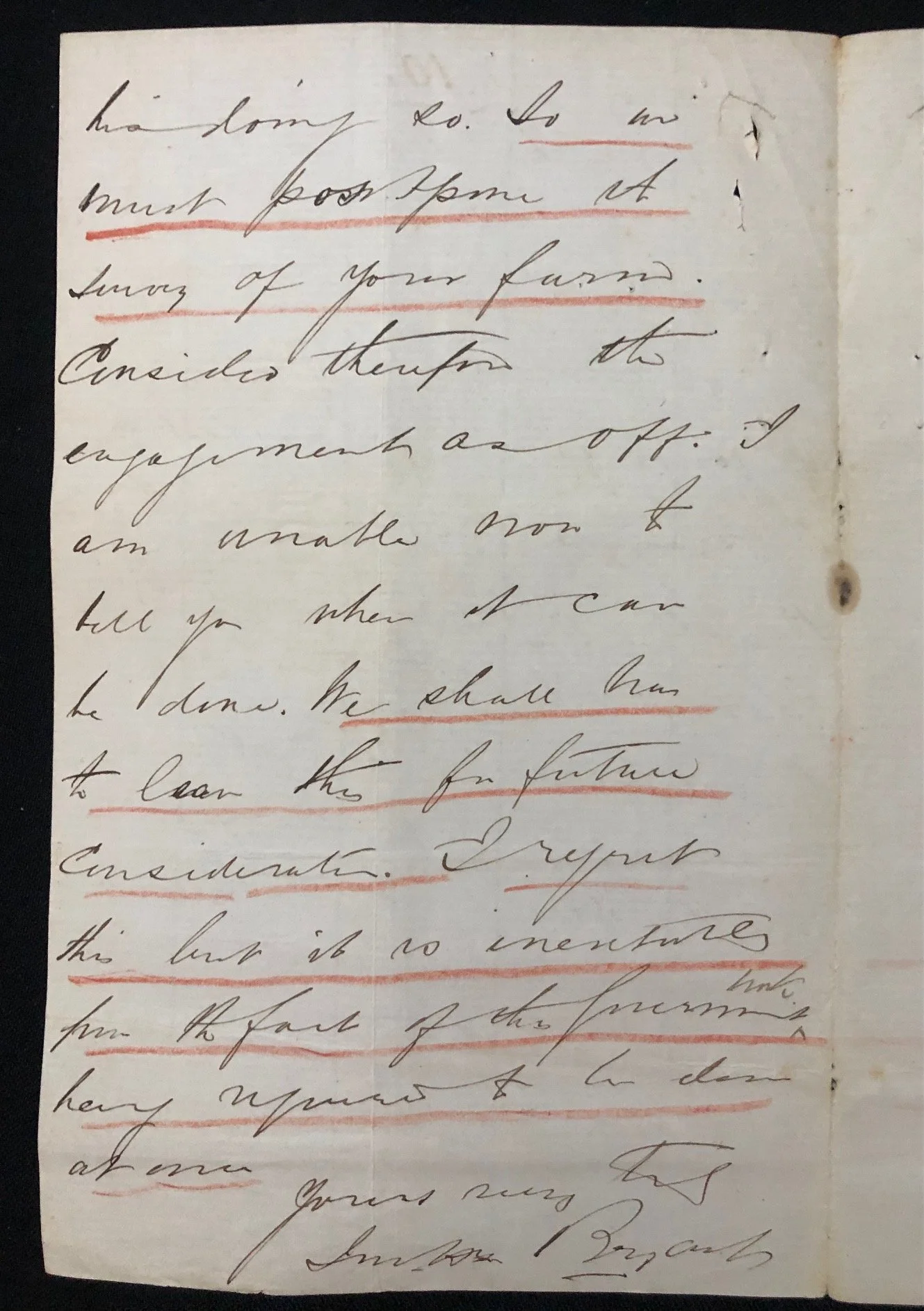
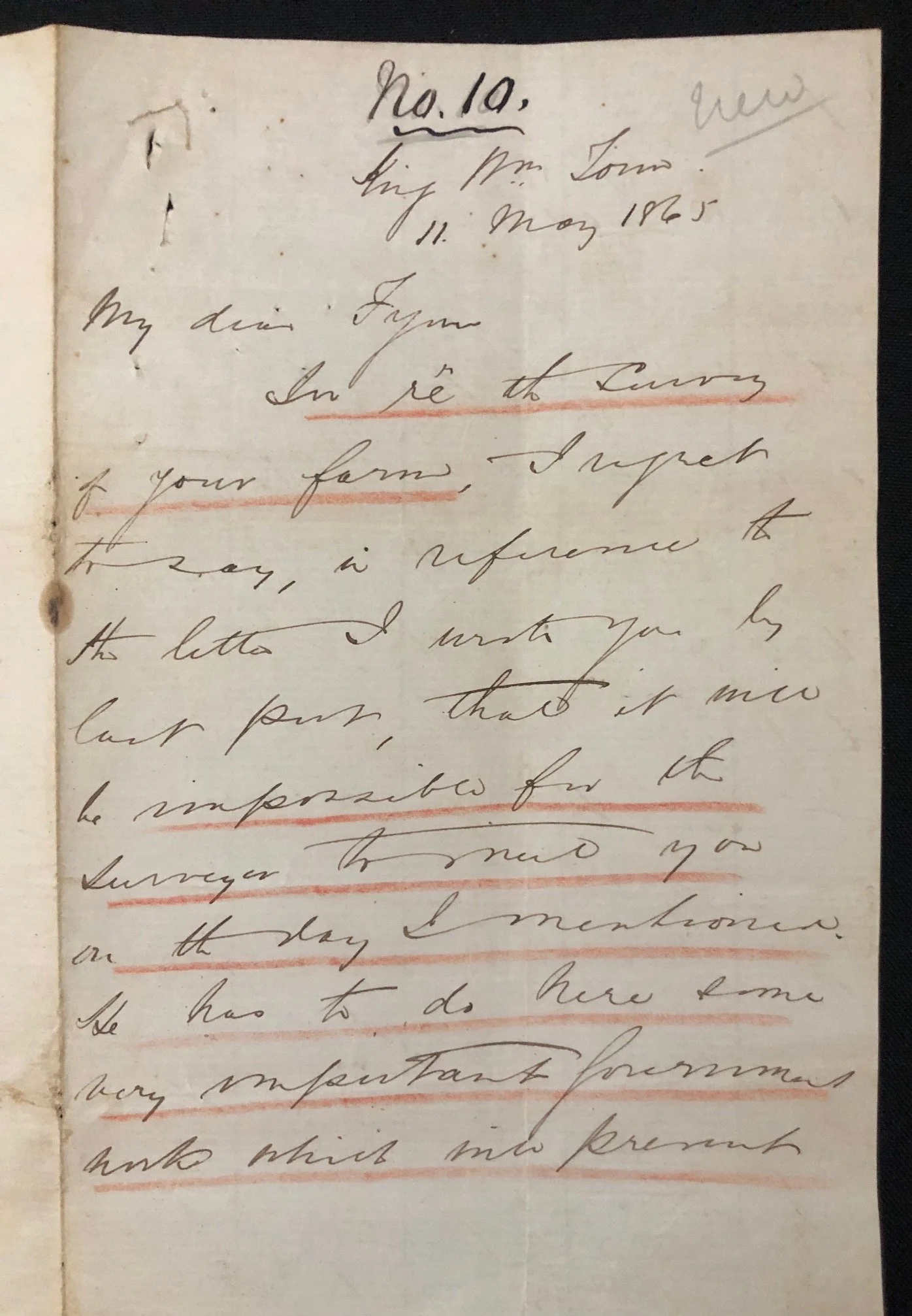
1) 2 manuscript pages.
2) 2.5 manuscript pages.
For Henry Francis Fynn jnr. these letters mark a challenging turn in the narrative established referencing previous Transkei land allocation documents.
While the March letter from Robert Graham urged Fynn to "come at once" to take possession of his farm, this letter, dated May 11, 1865, delivers the news of a bureaucratic delay.
These are written from King William’s Town (the administrative capital of British Kaffraria at the time) and signed by an official whose name appears to be S. M. Boyes (likely Simon Mansergh Boyes, who was a magistrate and official in the colonial service).
Document Details
• Date: 11 May 1865
• Location: King Wm. Town (King William’s Town)
• Sender: S. M. Boyes
• Recipient: My dear Fynn
• Reference: Marked "No. 10" at the top, continuing the filing sequence of your collection.
The tone is apologetic but firm, explaining that the official survey required to formalize the farm boundaries has been cancelled.
Page 1:
"In re the survey of your farm, I regret to say, in reference to the letter I wrote you by last post, that it will be impossible for the surveyor to meet you on the day I mentioned. He has to do here some very important government work which will prevent..."
Page 2:
"...his doing so. We must postpone the survey of your farm. Consider therefore the engagement as off. I am unable now to tell you when it can be done. We shall have to leave this for future consideration. I regret this but it is inevitable from the fact of the government work being required to be done at once."
Historical Significance
• The Surveyor’s Role: In the mid-19th century Eastern Cape, a surveyor was the most essential—and often scarcest—professional on the frontier. Without a formal survey, a settler could not obtain a legal title deed, even if they had "possession" of the land.
• Government Priority: The phrase "very important government work" in King William's Town suggests that administrative or military needs (likely related to the annexation of British Kaffraria to the Cape Colony, which occurred that very year, 1865) took precedence over private land grants.
• The Frontier "Wait": This letter captures the precariousness of frontier life. Fynn had been told to hurry in March, only to be told his "engagement" was "off" in May. This delay could mean months of living on a farm without legal security or the ability to properly invest in the land.
The Full Arc of these Letters
1. Oct 1864: Warner warns that the Transkei is closed; look to British Kaffraria.
2. March 1865: Graham says the land is ready; come "at once" to take possession.
3. May 1865: Boyes halts the process because the surveyor is busy with "government work."
It's a classic example of the "hurry up and wait" nature of 19th-century colonial administration. These documents together provide a fantastic micro-history of a single land claim in a very turbulent region.
Minor tears and stains etc.
128mm x 202mm
R3,500