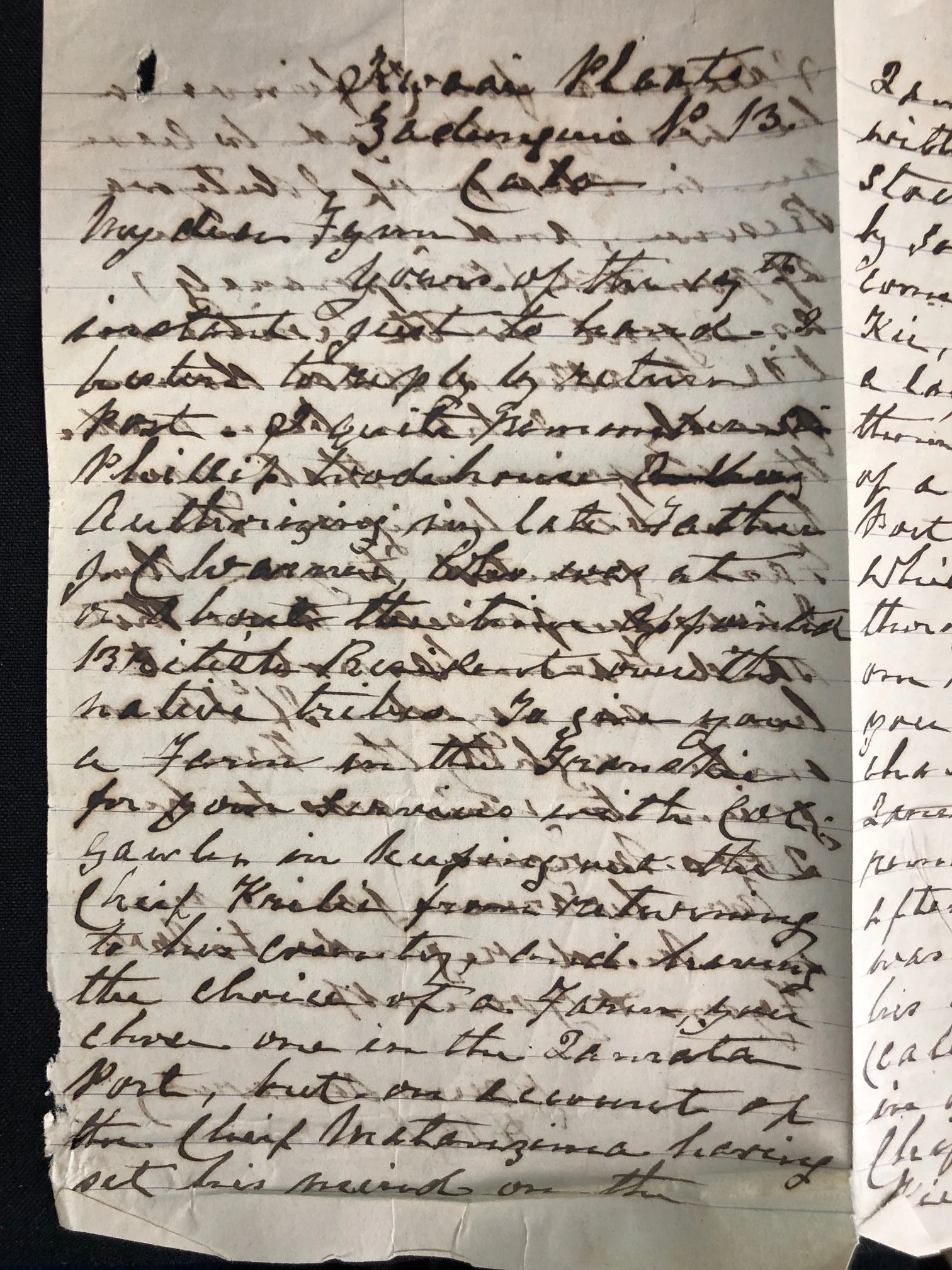
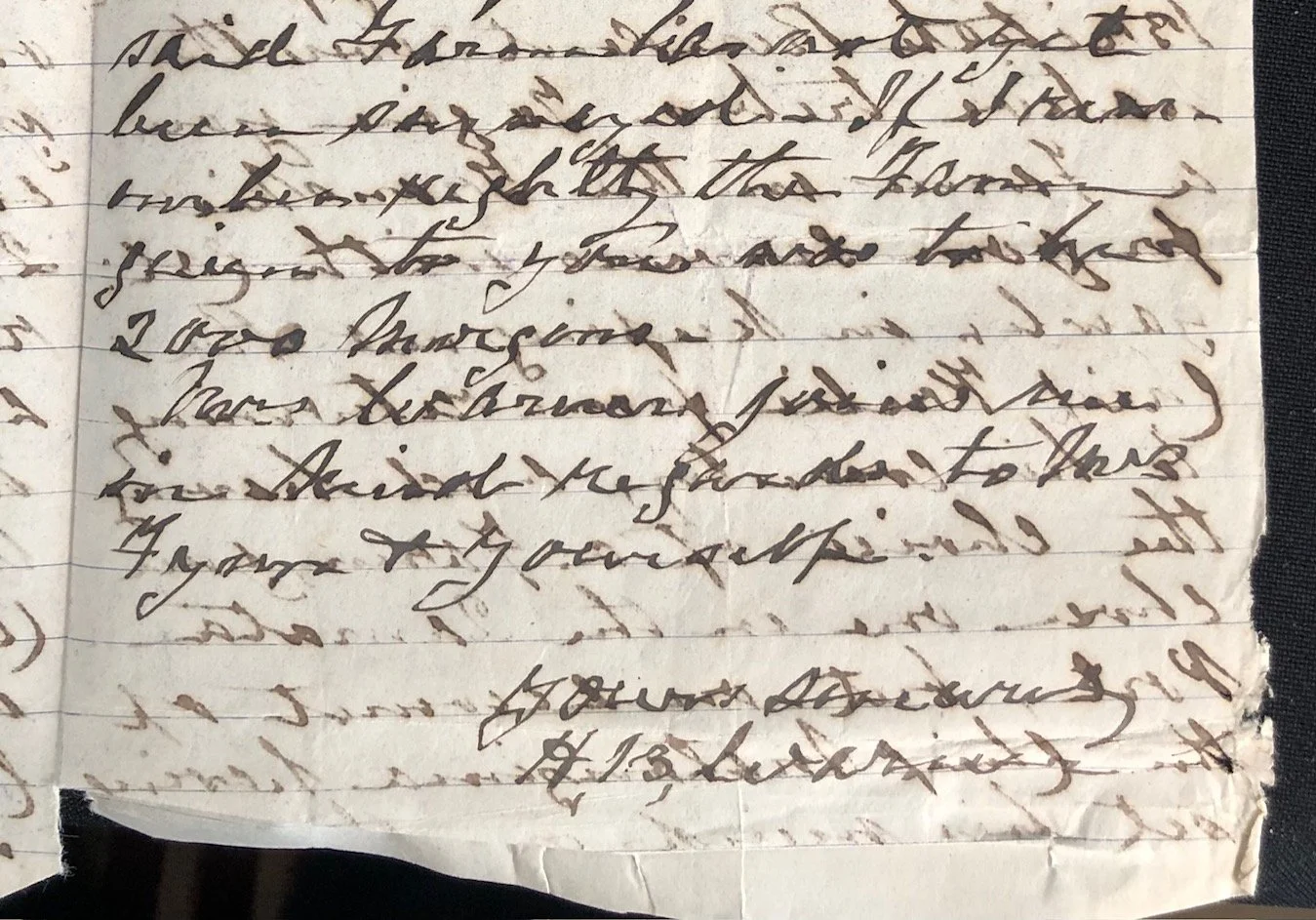
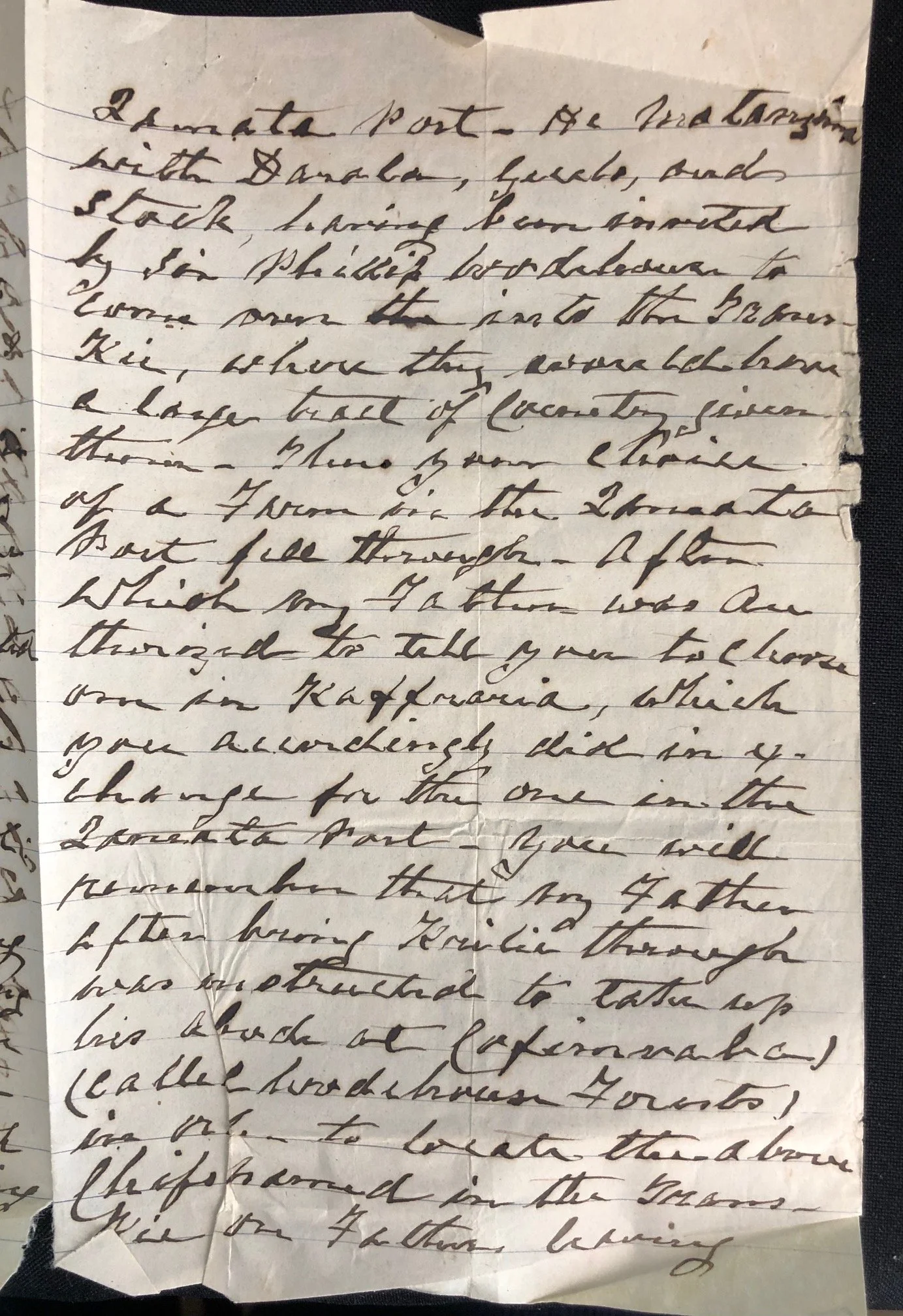
Transkei Land transaction - Possibly between Warner and Henry Francis Fynn jnr.
3 manuscript pages.
This letter appears to be a draft or a copy of correspondence addressed to Henry Francis Fynn (likely H.F. Fynn Jr., given the mid-to-late 19th-century context), discussing land grants and political arrangements involving high-ranking colonial officials and Xhosa and Thembu leaders.
The handwriting is a classic 19th-century cursive, written on lined paper. The mention of "Sir Philip Wodehouse" (Governor of the Cape Colony from 1862–1870) and specific geographical locations provides a clear window into the colonial administration of the Eastern Cape and "Kaffraria."
The letter is written by someone who is the son of a former colonial official (likely an agent or magistrate). He is clarifying the history of land "claims" or promises made to Fynn.
• The letter cites Sir Philip Wodehouse as the authority who authorized the writer’s late father to make specific land arrangements.
• The letter mentions keeping Chief Kreli (Sarhili) the paramount chief of the Gcaleka Xhosa from "returning to his country."
• Chief Matanzima, a prominent Thembu leader, is also mentioned.
• The "Trans-Kei," "Kaffraria," and "Wodehouse Forests" (an area near Cofimvaba) are also noted.
• The "Zwart-Kei" (Black Kei) Post was a farm or position that was intended for Fynn in exchange for services.
Summary of the Content:
1. The Promise: The writer notes that Sir Philip Wodehouse authorized his father (referred to as the "late Mr. Warner"—likely Joseph Christopher Warner, a well-known British Resident in the Transkei) to give Fynn a farm in the "Zwart-Kei" as a reward for his services.
2. The Conflict: Fynn had chosen a farm, but Chief Matanzima had "set his mind" on that same land.
3. The Exchange: To resolve the tension, Fynn was authorized to choose a different farm in Kaffraria instead.
4. The Purpose: The letter suggests these moves were strategic colonial maneuvers to "locate the above chiefs" and manage the movements of Chief Kreli during a period of high frontier tension.
If the writer is indeed the son of J.C. Warner, this letter is a direct link to the "Warner System" of colonial administration in the Eastern Cape.
Henry Francis Fynn (the recipient) came from a famous family of traders and diplomats; his father was one of the first Europeans to meet Shaka Zulu. Fynn Jr. followed in those footsteps, serving as a magistrate and "Resident" with various tribes. This letter acts as a formal record of how the colonial government used land grants to "pay" their agents while simultaneously trying to manage the territorial boundaries of the Xhosa and Thembu people.
The reference to Cofimvaba (called "Wodehouse Forests" in the text) is particularly interesting as it marks a specific moment in the mid-1860s when the colonial government was settling these areas.
125mm x 205mm
R5,000