Letter Regarding Hut Tax from the Governor of Natal Sir Arthur Elibank Havelock to Sir Theophilus Shepstone (1886)
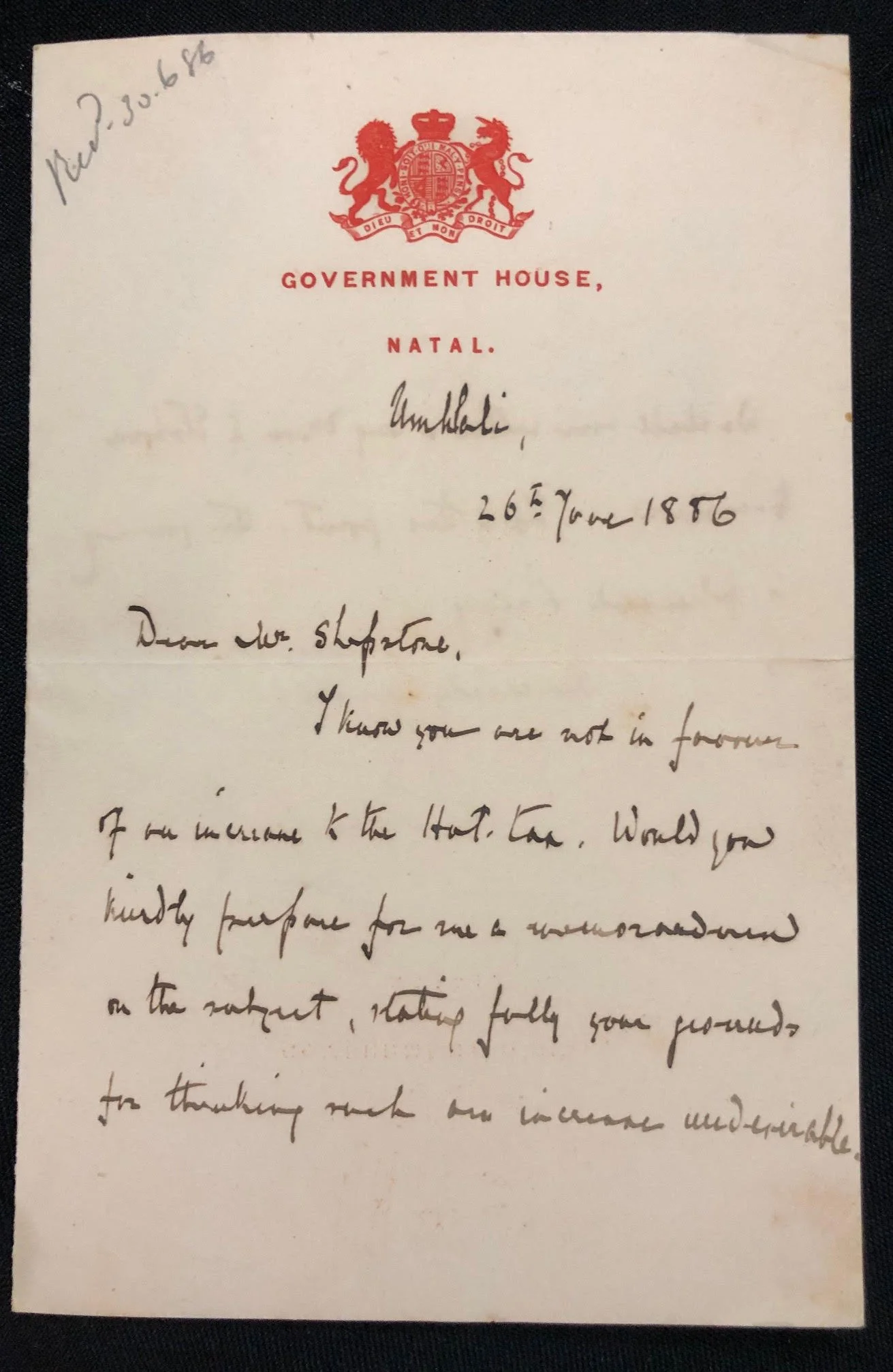
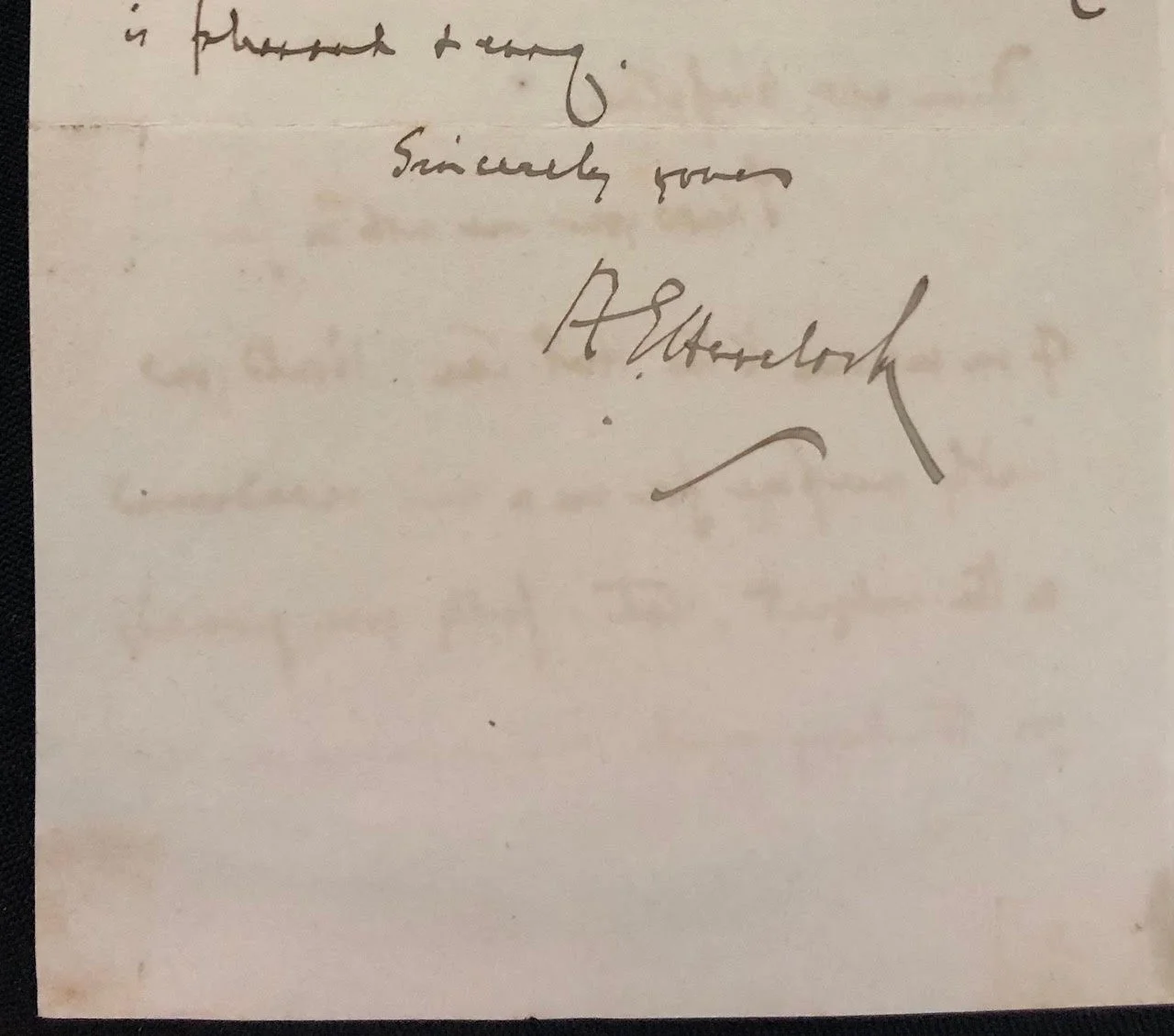
One and a half-page manuscript letter.
This is a historical letter written by Sir Arthur Elibank Havelock, who served as the Governor of Natal from 1886 to 1889.
The letter is particularly significant because it captures a moment of colonial policy debate regarding the "Hut Tax," a key mechanism used by the British to fund administration and compel local African labor.
Document Details
• Sender: Sir Arthur Havelock (signed A. E. Havelock)
• Recipient: "Dear Mr. Shepstone"—this refers to Sir Theophilus Shepstone, the highly influential Secretary for Native Affairs who essentially architected the "Shepstone System" of indirect rule in Natal.
• Date: 26 June 1886
• Location: Sent from Umhlali (as noted in the handwritten header) on official Government House, Natal stationery.
Transcription:
[Front Page]
Government House, Natal.
Umhlali,
26th June 1886
Dear Mr. Shepstone,
I know you are not in favour of an increase to the Hut Tax. Would you kindly prepare for me a memorandum on the subject, stating fully your grounds for thinking such an increase undesirable.
[Reverse Page]
We shall have rather a long drive to Eshowe tomorrow. Up to this point, the journey is pleasant + easy.
Sincerely yours,
A. E. Havelock
Historical Context
• The Hut Tax: Introduced in 1849, this was a tax of roughly 7 to 10 shillings per hut. It was controversial because it was often used as a "gentle stimulus" (as Cecil Rhodes later called it) to force Zulu men into the wage labor market to pay the tax.
• The Disagreement: At the time of this letter (1886), the colonial government was under financial pressure and looking to increase revenue. Interestingly, Shepstone—despite being the architect of the system—was often wary of sudden tax hikes that might destabilize the fragile peace with local Zulu chiefs or lead to rebellion. Havelock’s request for a formal memorandum shows he was taking Shepstone’s institutional knowledge and "native policy" expertise seriously before making a final decision.
• The Eshowe Reference: Eshowe was the administrative heart of Zululand. Havelock’s mention of the "long drive" there suggests he was on a tour of the territory, likely assessing the political climate following the 1884 death of King Cetshwayo and the ongoing unrest in the region.
Folded; some wear; minor offsetting.
250mm x 355mm
R8,000