The Abundant Herds: Standard edition. Signed (2003)
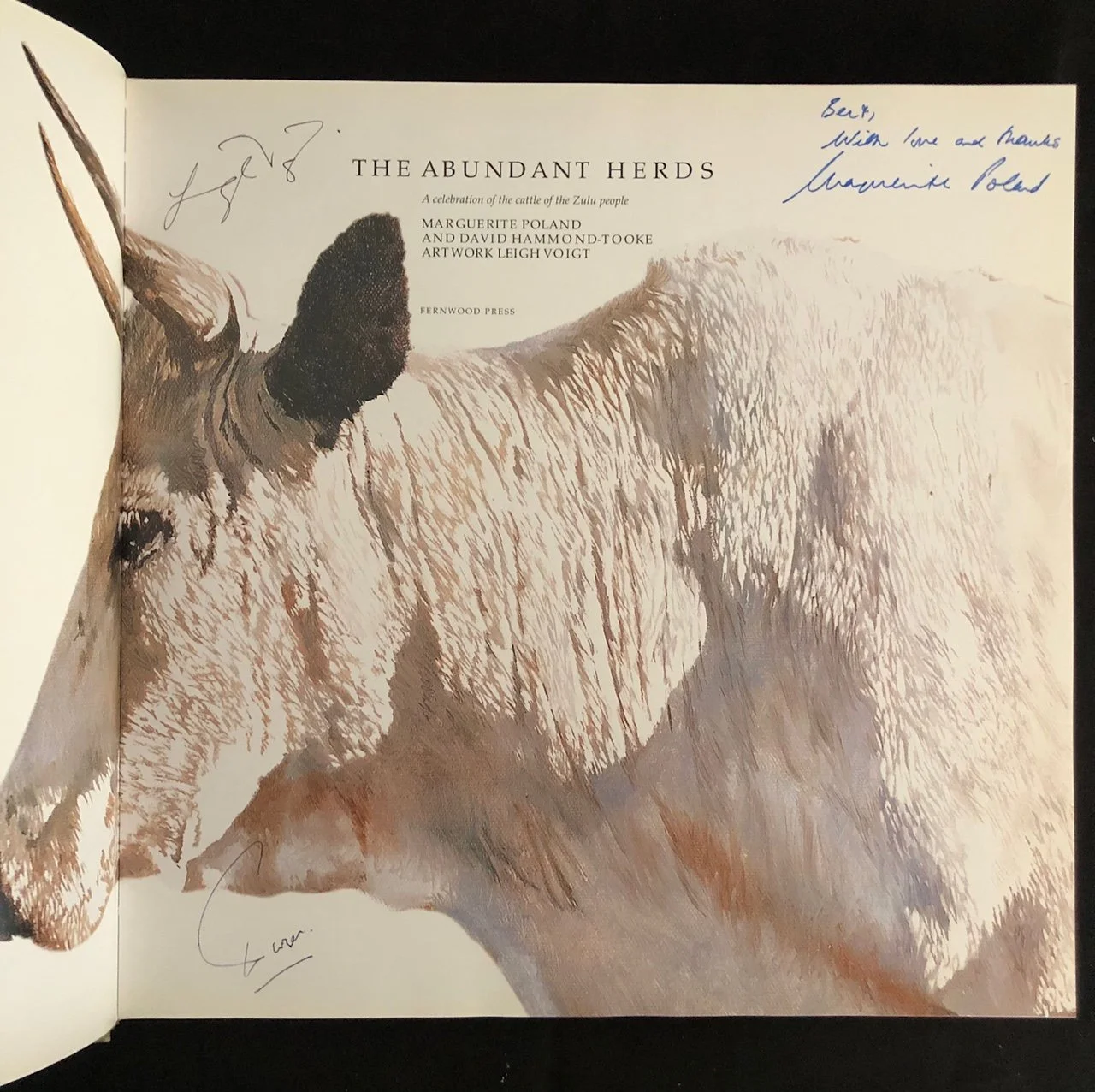
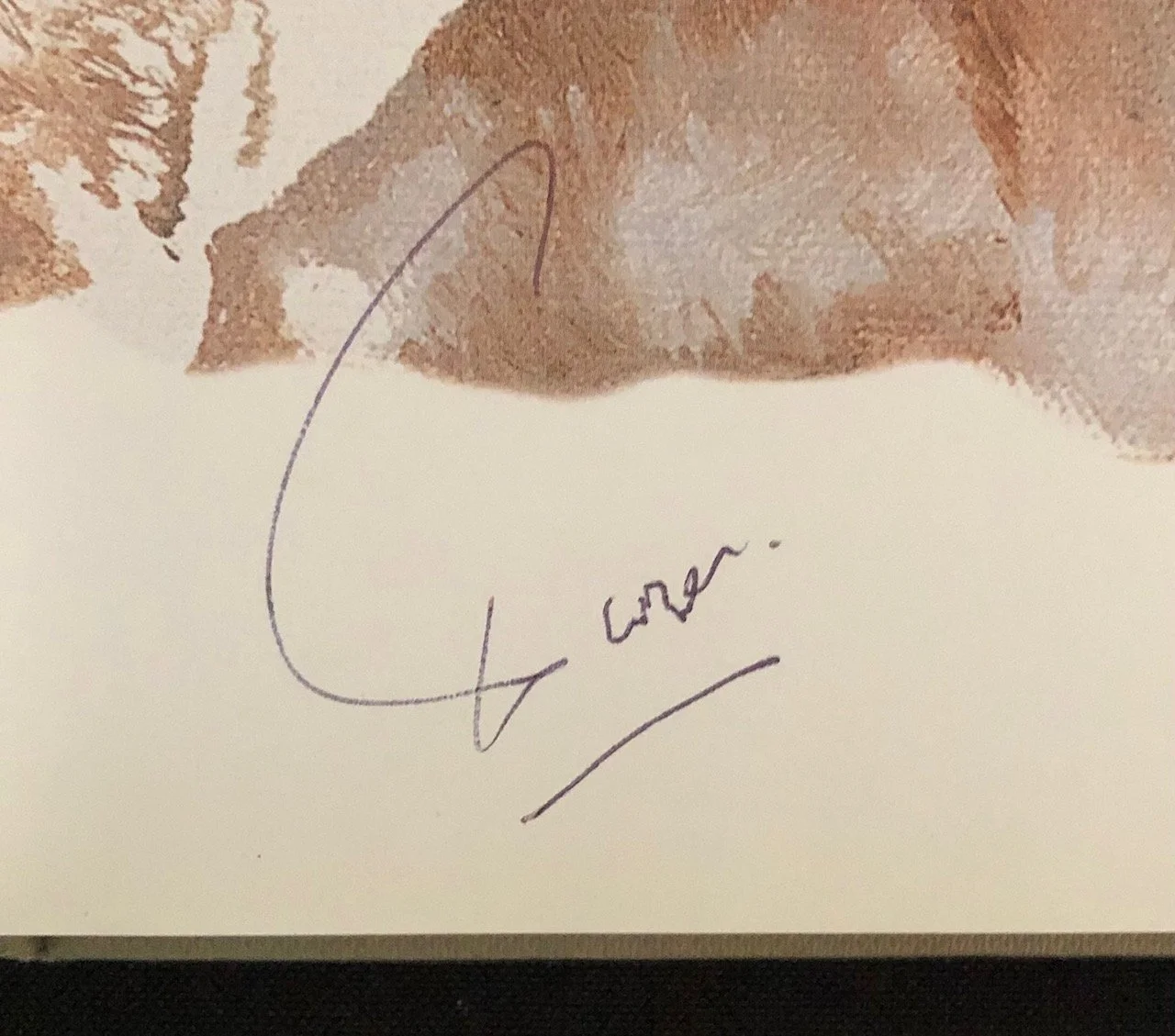
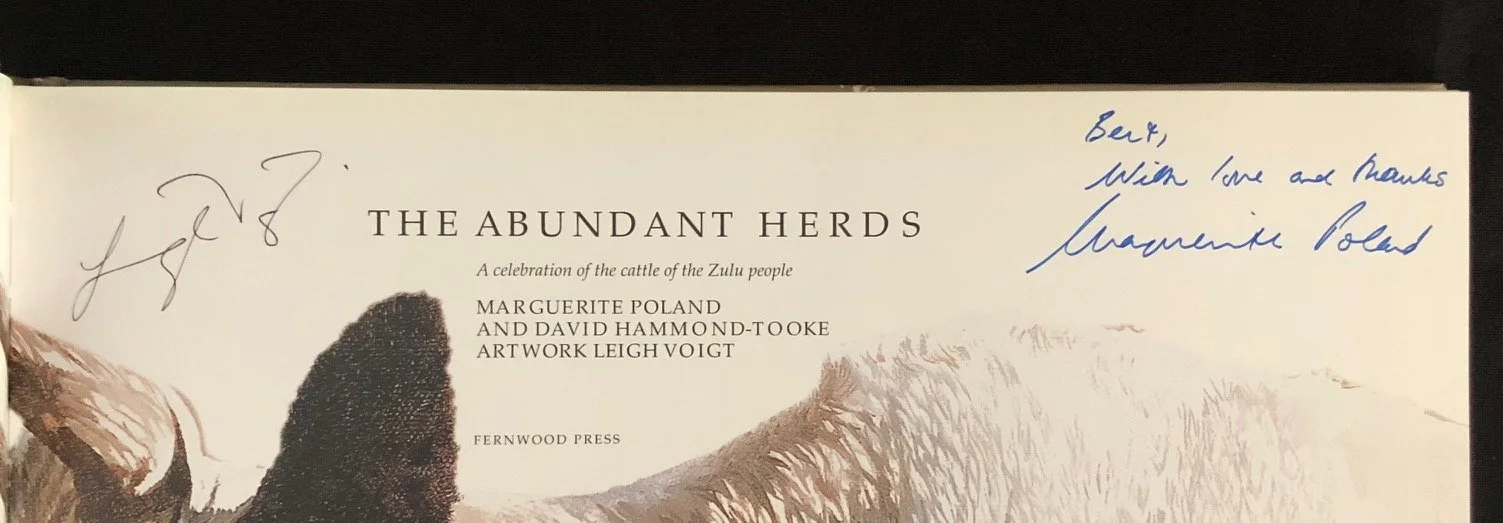
A Signed Association Copy: This copy is signed by all three contributors on the title spread: Leigh Voigt at top left, David Hammond-Tooke at bottom left, and Marguerite Poland at top right with a warm inscription ("Bert, With love and thanks, Marguerite Poland"). Because David Hammond-Tooke passed away in 2004, just a year after the book's 2003 publication, copies signed by all three creators are particularly scarce.
The Abundant Herds: A celebration of the cattle of the Zulu people (2003), created by Marguerite Poland, David Hammond-Tooke, and Leigh Voigt, is considered one of the modern milestones of South African natural history and ethnographic publishing.
The volume carries several notable historical and bibliographic details:
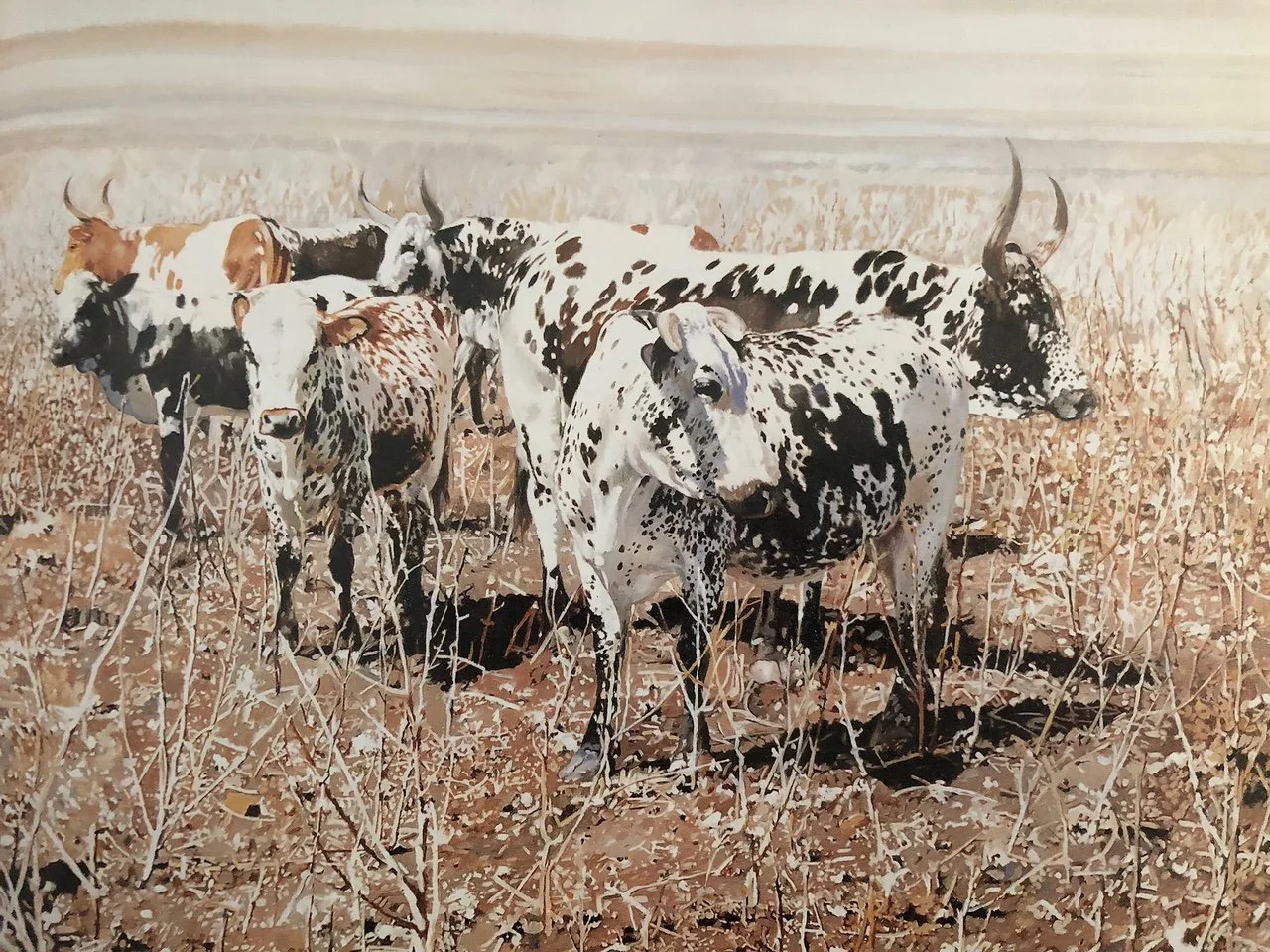
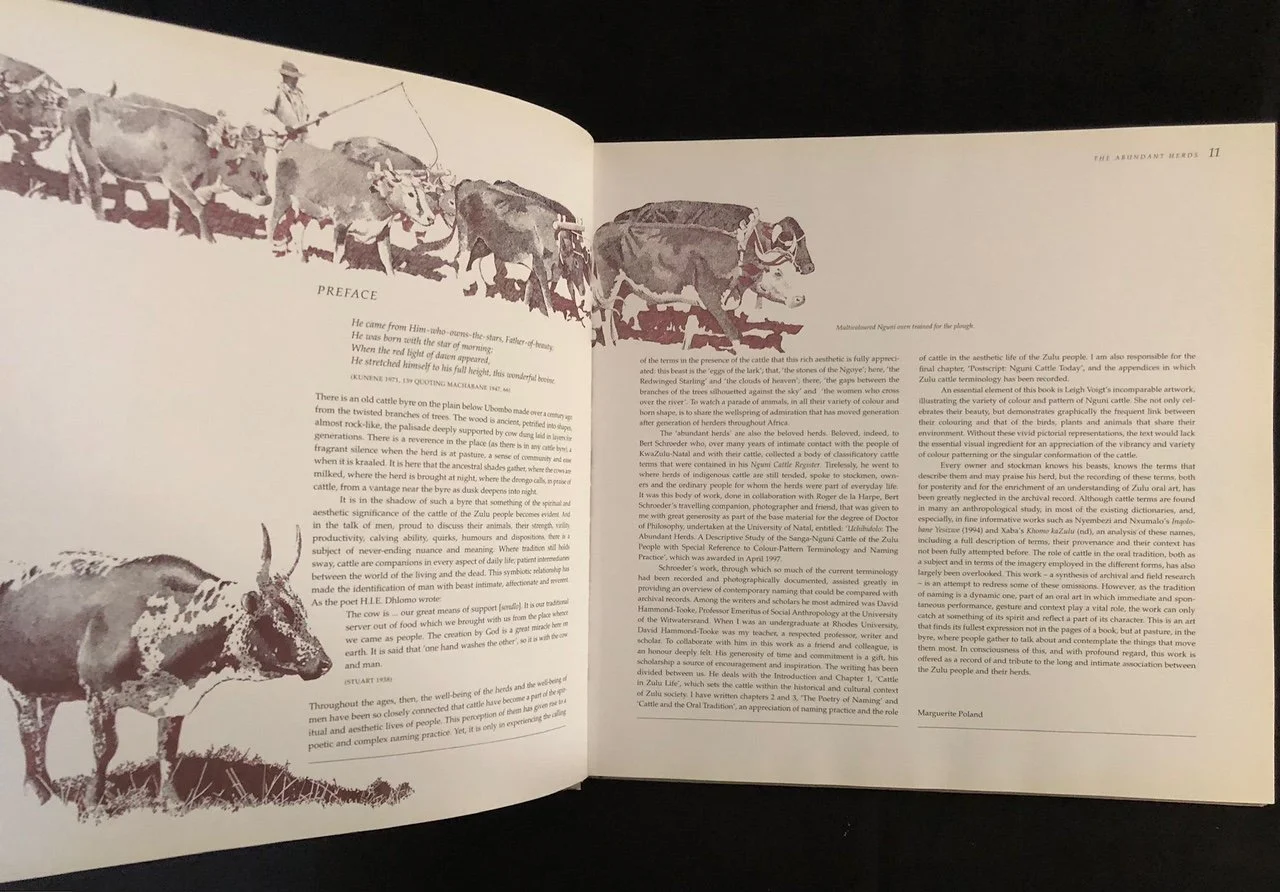
Preserving a Vanishing Linguistic World: The book originated from Marguerite Poland’s doctoral thesis in Zulu folklore and linguistics at the University of Natal. In traditional Zulu culture, Nguni cattle (izinkomo) are not classified merely by genetic breed, but through a vast, poetic taxonomy of coat patterns, colours, and horn shapes often drawing metaphors from birds, landscapes, and wild animals (such as inyoni kayiphumuli, "the bird that never rests," for pure white cattle, or patterns named after guinea fowl and swallows). As rural herding practices shifted in the late 20th century, much of this intricate vocabulary was at risk of being lost; the book serves as a vital linguistic and cultural archive.
The Royal Nguni Herd & Conservation: During the 19th century, King Shaka kaSenzangakhona maintained massive, strictly segregated royal herds (inyonikayiphumuli) sorted entirely by colour and pattern, which were used to outfit regiments with matching war shields. By the mid-20th century, aggressive cross-breeding with European cattle nearly wiped out purebred indigenous Nguni cattle. The revival of the breed, largely spearheaded by conservationists in KwaZulu-Natal like Ted Reilly and later formalized through the Nguni Cattle Breeders' Society, runs parallel to the research that made this book possible, as Leigh Voigt painted many of her life-studies from surviving pedigree herds in Zululand and the Natal Midlands.
Collaboration of Giants: The book brought together three major figures in South African arts and letters:
Marguerite Poland, celebrated novelist (Shades, The Keeper) and scholar of indigenous languages.
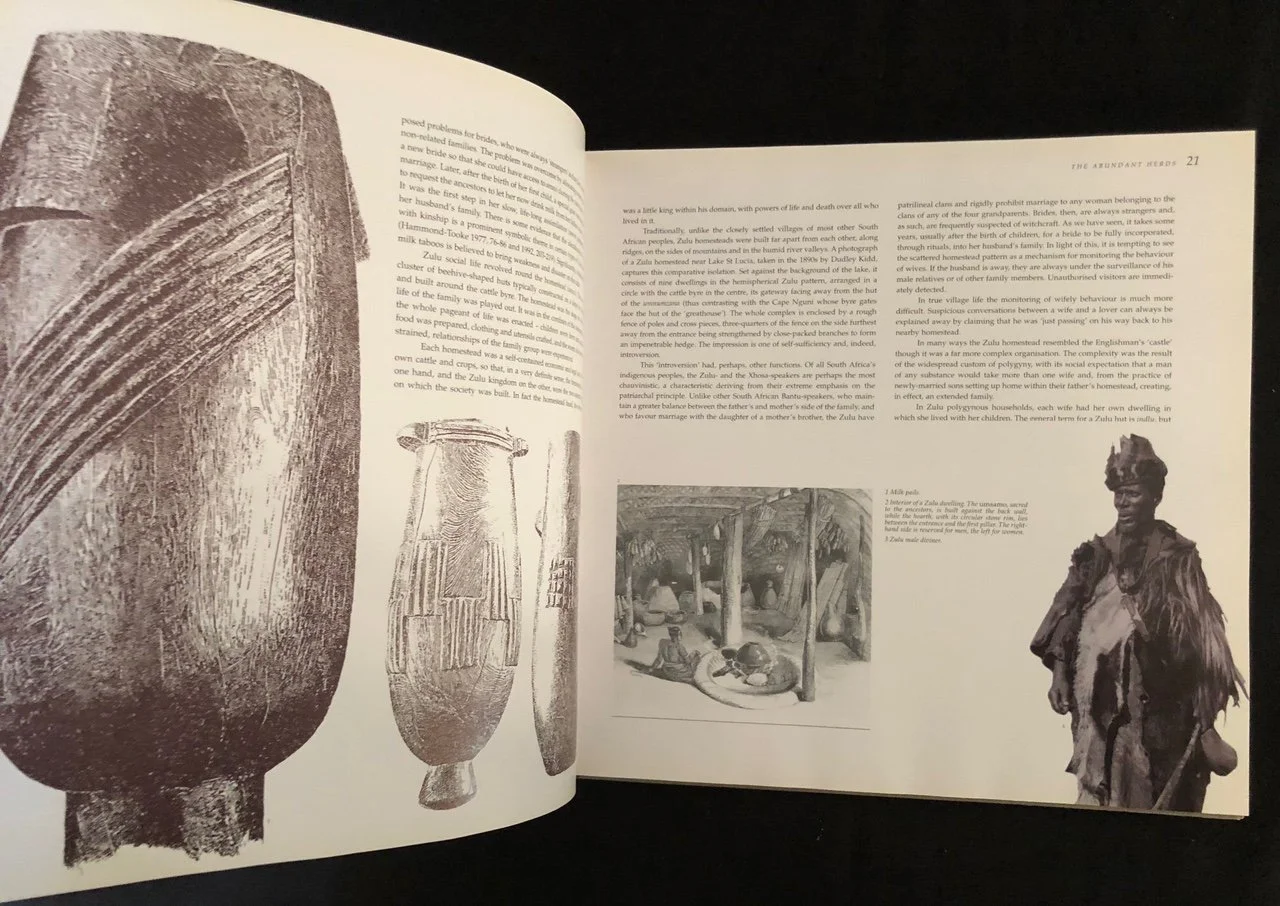
David Hammond-Tooke, one of South Africa’s most prominent social anthropologists, who contributed the deep ethnographic context on the spiritual and social centrality of cattle (such as ukubuyisa rituals and ilobolo).
Leigh Voigt, renowned natural history artist (and daughter of famed wildlife illustrator Dick Findlay), whose watercolours capture the anatomical and textural nuances of the animals.
Fernwood Press Craftsmanship: Published by Pieter Struik’s Fernwood Press—which set the gold standard for late-20th and early-21st-century South African fine-press Africana—the book was released in three tiers (Standard, Collectors', and Sponsors' editions), with the luxury editions bound by master bookbinder Peter Carstens in Johannesburg, and supported by The Ernest Oppenheimer Memorial Trust and The Everard Read Gallery.
290mm x 280mm
Standard edition in good condition, slight wear to dust jacket.
R3,000