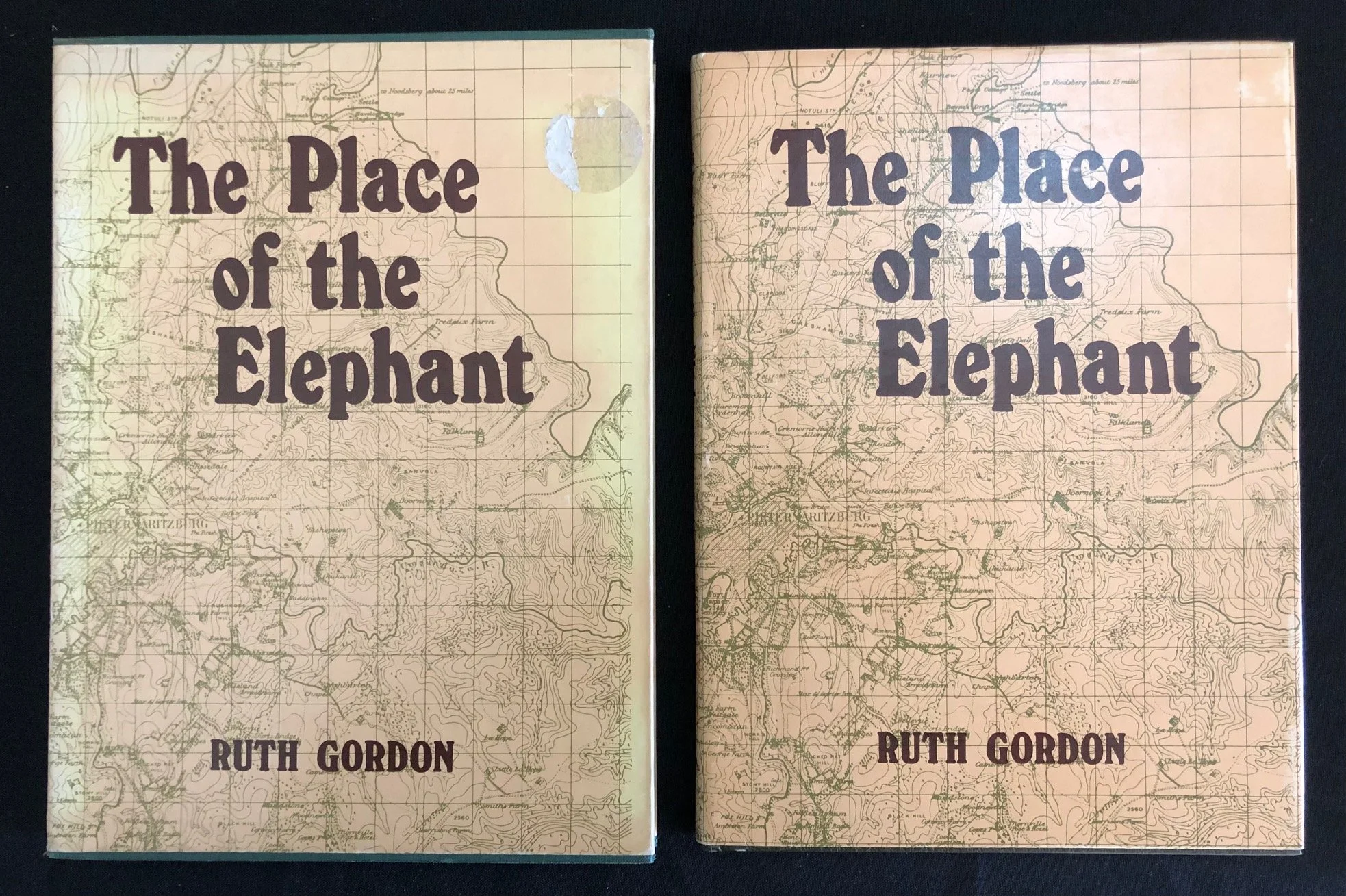
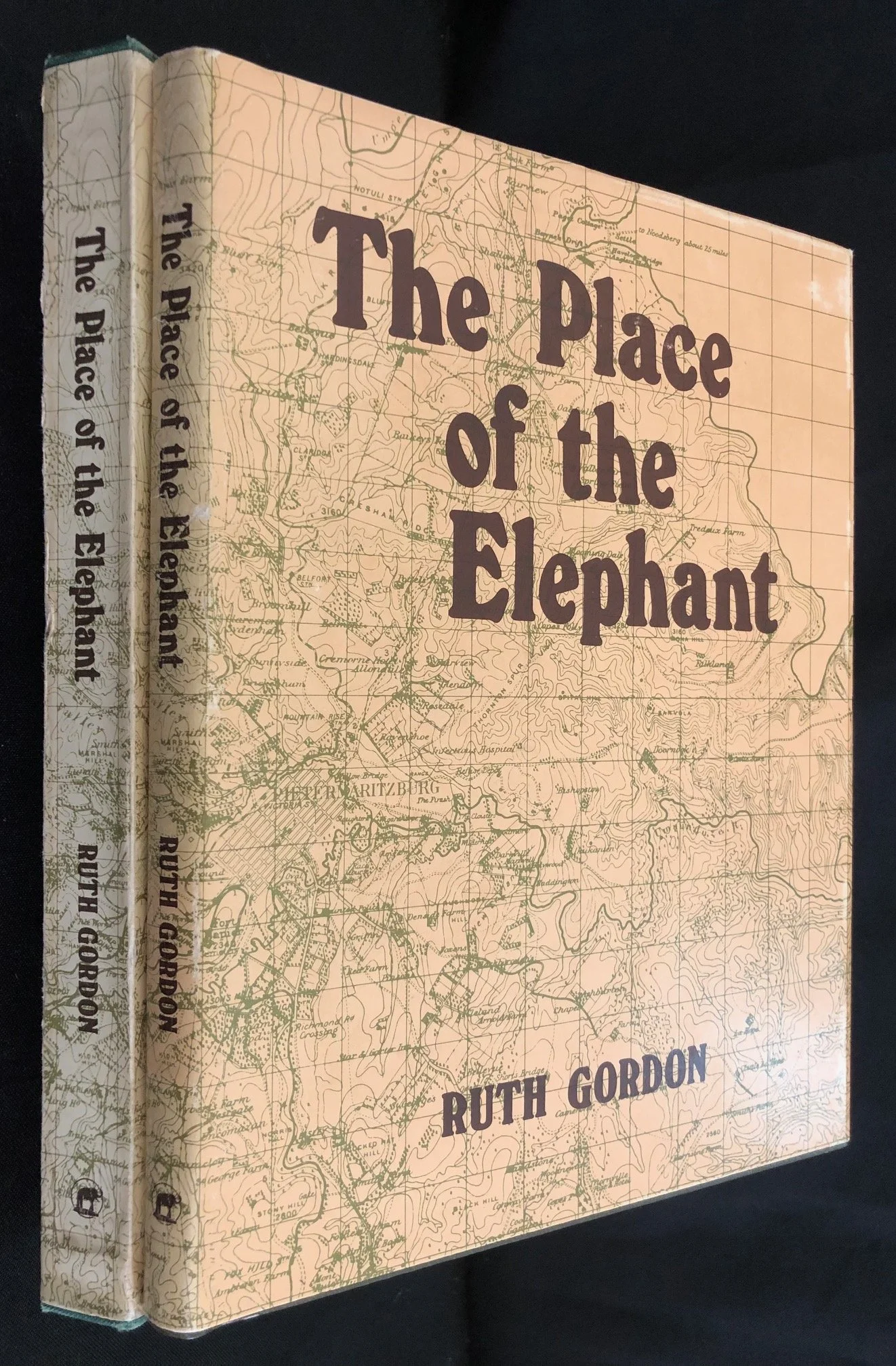
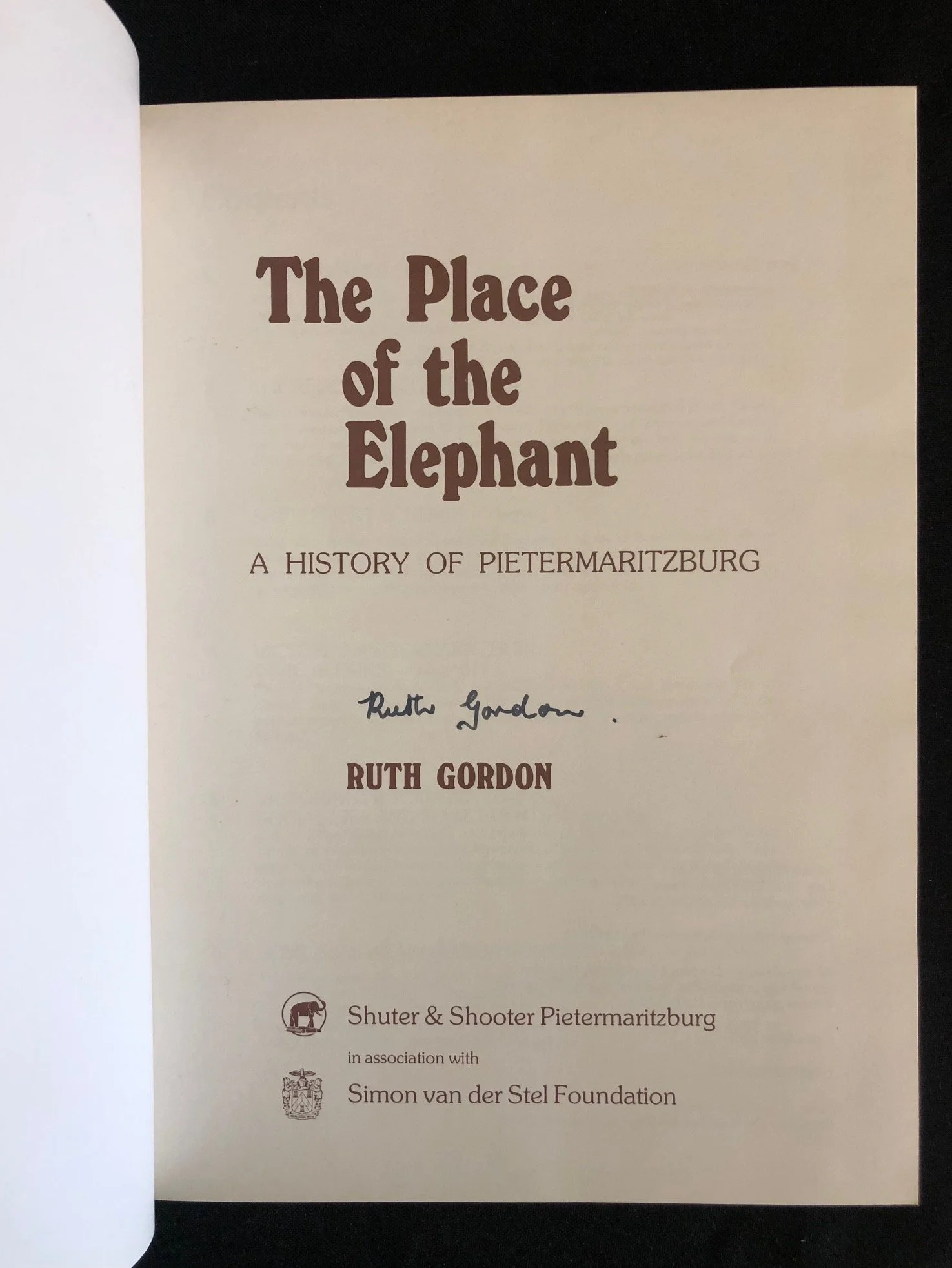
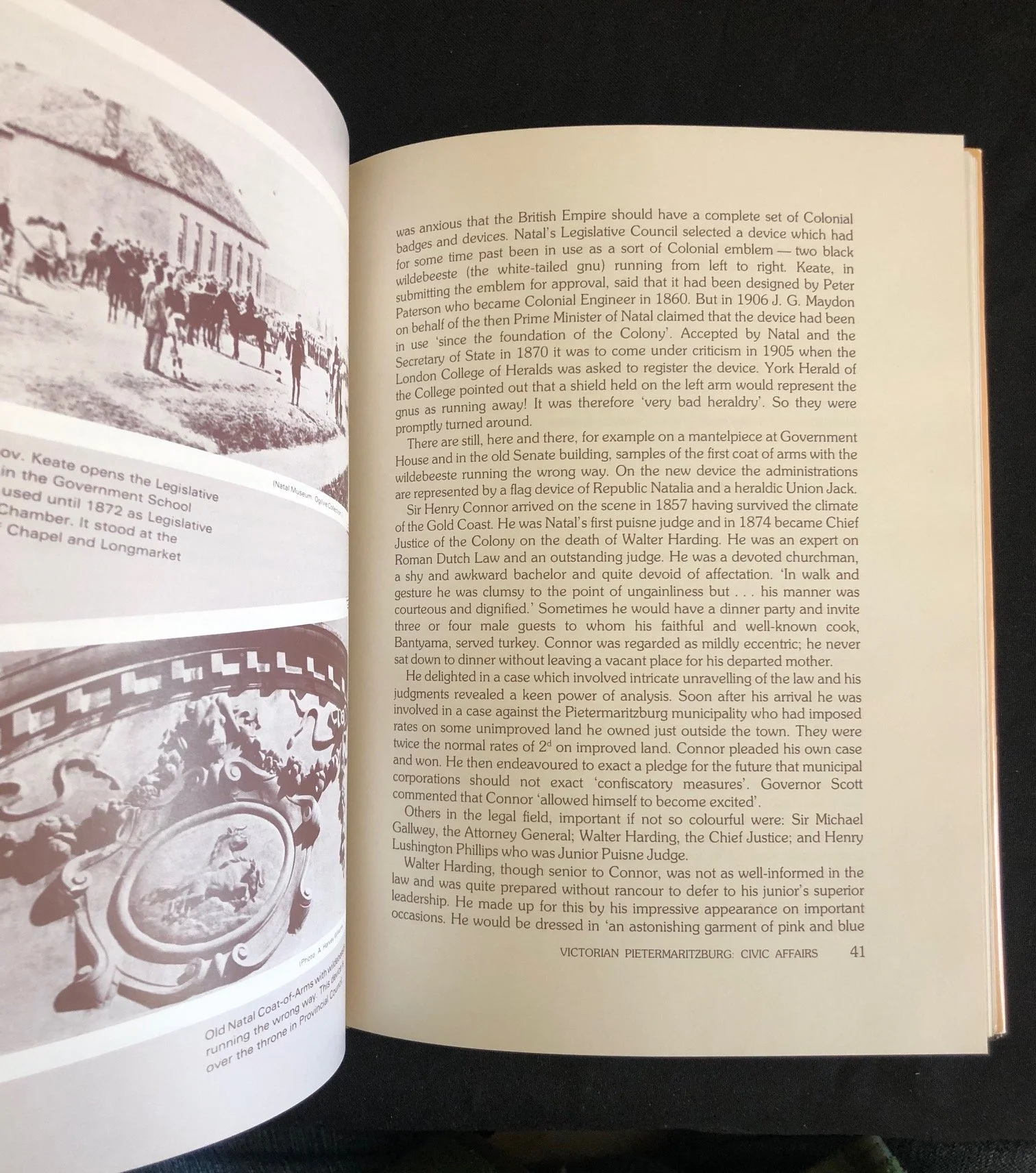
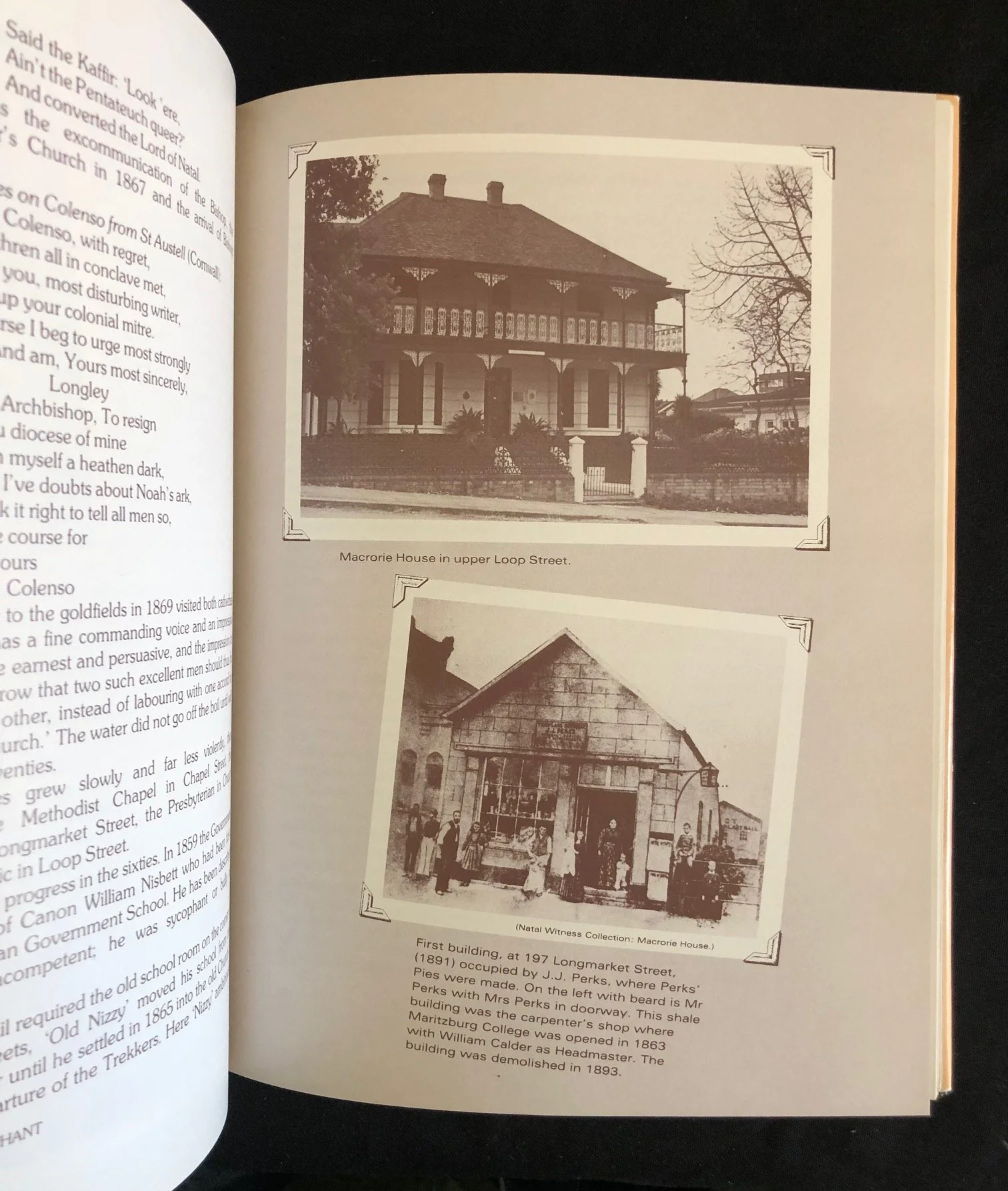
The Place of the Elephant: A History of Pietermaritzburg, by Ruth Gordon. Deluxe, signed edition (1981)
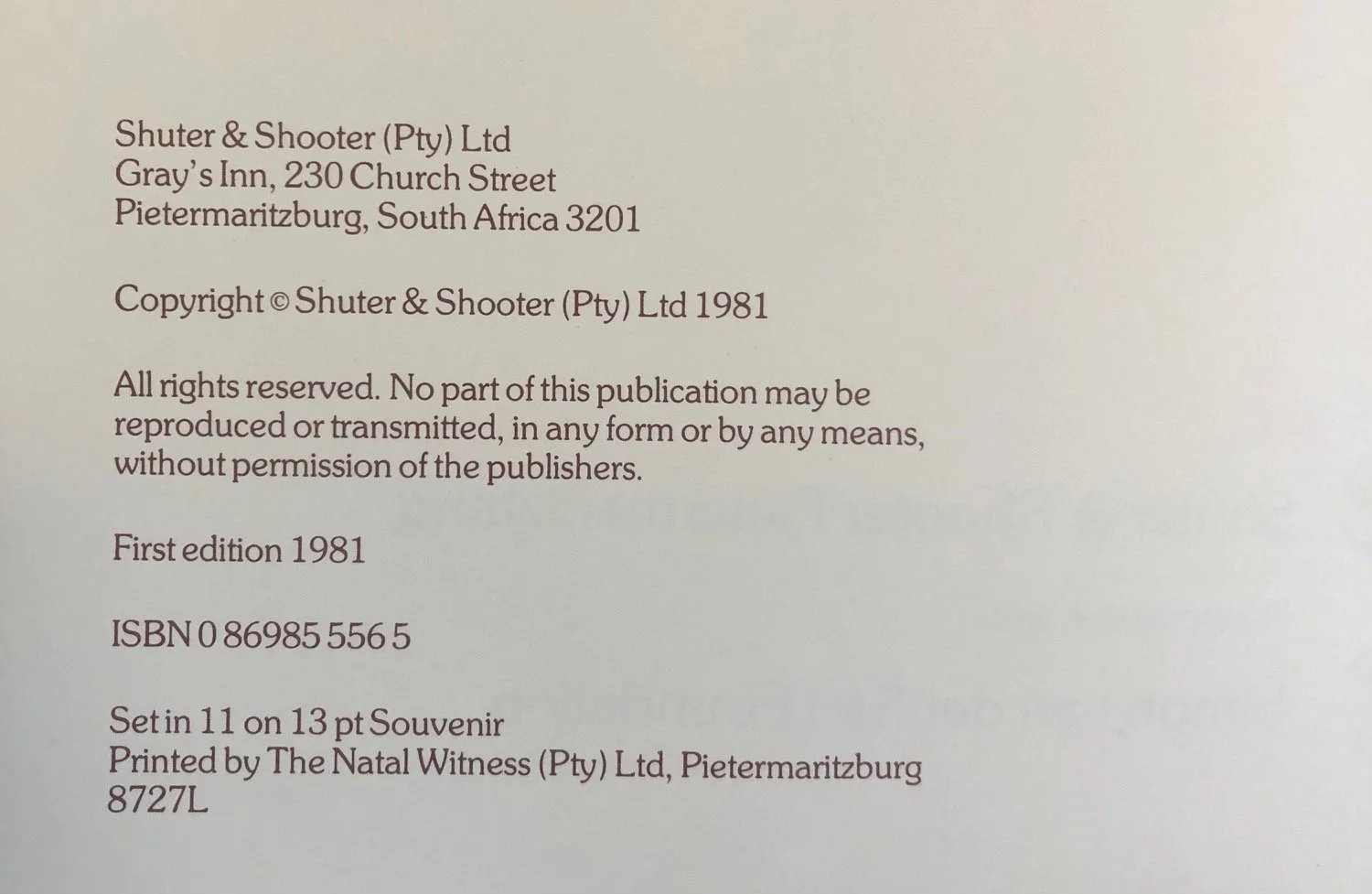
This is Ruth Gordon’s foundational 1981 local history, The Place of the Elephant: A History of Pietermaritzburg, published by Shuter & Shooter.
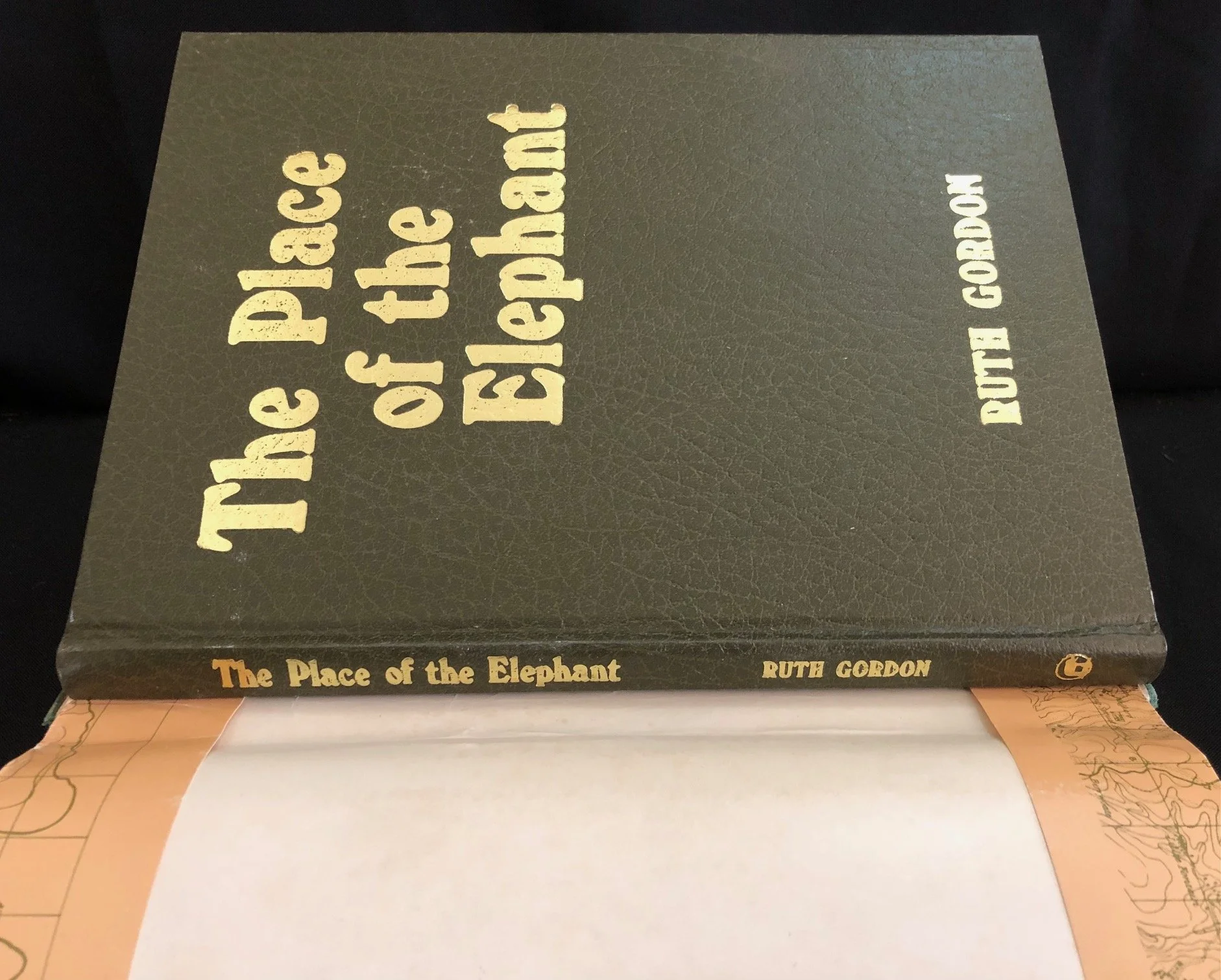
No. 93 of a First Edition print run, individually numbered and hand-signed by the author.
With slipcase.
The most compelling historical story behind this book lies right on its cover—specifically, the linguistic and political battle behind the title itself.
The Dual Identity of Natal’s Capital
While the Voortrekkers founded the town in 1838 and named it Pietermaritzburg (after their fallen leaders Piet Retief and Gert Maritz), the site already carried a heavy symbolic name among the Zulu people: uMgungundlovu.
The True Meaning of the Title
"The Place of the Elephant" is the literal, popular translation of uMgungundlovu. However, the historical nuances behind the name reveal a deeper story:
The Royal Metaphor: In the Zulu language, Indlovu (elephant) is a traditional honorific title exclusively reserved for the King.
The Secret Conclave: A more precise translation of the phrase ungungu we ndlovu is "the secret conclave of the elephant" or the place where the king meets privately with his inner circle of advisors to make monumental state decisions.
The Ghost Capital: King Dingane (Shaka’s half-brother and successor) built his grand royal capital in the eMakhosini Valley and named it uMgungundlovu. When that capital was destroyed following the conflicts of 1838, the regional Zulu population transferred the name uMgungundlovu to the new Voortrekker settlement of Pietermaritzburg, effectively superimposing their own geography over the colonial grid.
A Heraldic Compromise
The tension between these two names came to a fascinating head in 1861 when the Pietermaritzburg Borough Council design team sat down to create the town’s official coat of arms.
Rather than choosing one identity over the other, they opted for a striking heraldic compromise: they chose a large African Elephant as the central shield emblem, accompanied by the Latin motto Nova Jerusalem (New Jerusalem).
By putting the elephant on their official seal, the colonial authorities permanently enshrined the town's Zulu name and its royal history into the official municipal architecture of the British colony. Ruth Gordon’s book serves as the definitive chronicle of how these overlapping Zulu, Boer, and British histories managed to shape the city's unique identity.
190mm x 255mm
Spine faded; dust jacket and slipcase worn, slightly.
R800