Zulu Imbizo at Soccer City (FNB Stadium) in Johannesburg (1993)
A Collection of 5 items.
This collection of ephemera captures a pivotal, highly volatile moment in South Africa’s transition to democracy: the July 25, 1993 Zulu Imbizo at Soccer City (FNB Stadium) in Johannesburg.
High-Stakes Brinkmanship in the Transition Era
The documents date to the multi-party negotiations taking place at the World Trade Centre in Kempton Park (referenced in the isiZulu pamphlet).
At this moment, the Inkatha Freedom Party (IFP), led by Prince Mangosuthu Buthelezi, and the KwaZulu homeland government felt increasingly marginalized by the bilateral agreements being forged between Nelson Mandela’s ANC and F.W. de Klerk’s National Party ("amaNeshinale").
This Imbizo was a massive show of political strength, bringing tens of thousands of Zulu nationalists into the heart of the Witwatersrand—a region already plagued by intense, bloody political violence between ANC and IFP supporters.
The Rhetoric of Royal Autonomy vs. Centralized Power
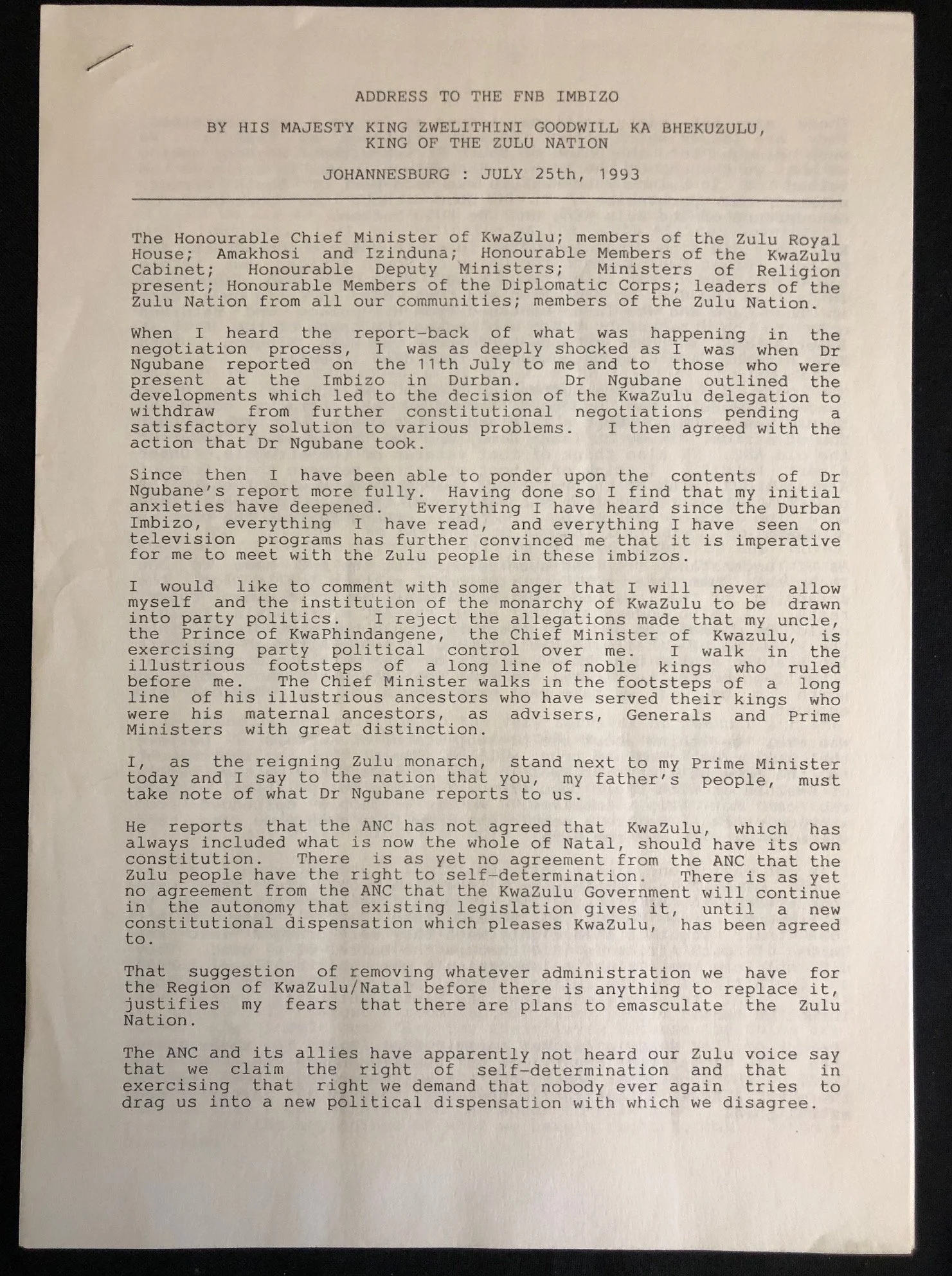
The English text of King Goodwill Zwelithini’s address explicitly outlines the core constitutional dispute of the era:
The Demand for Self-Determination: The King protests against the ANC and National Party's refusal to grant the KwaZulu region its own constitution and regional autonomy within a federal system.
The Monarchy as a Political Shield: While King Zwelithini claims he will never allow the monarchy "to be drawn into party politics" and rejects allegations of being controlled by his uncle, Prince Buthelezi, the joint branding of the event shows how seamlessly the Zulu royal identity and IFP political objectives were aligned to counter the ANC.
A Last-Minute Threat to the 1994 Elections
The pamphlet explicitly mentions the upcoming 1994 democratic elections. The rhetoric in these documents directly foreshadows the IFP's subsequent boycott of the constitutional process. This political standoff lasted until just days before the April 27, 1994 elections, when a last-minute international mediation effort and guarantees regarding the status of the Zulu Kingdom finally persuaded Buthelezi to enter the ballot.
Summary of the Artifacts
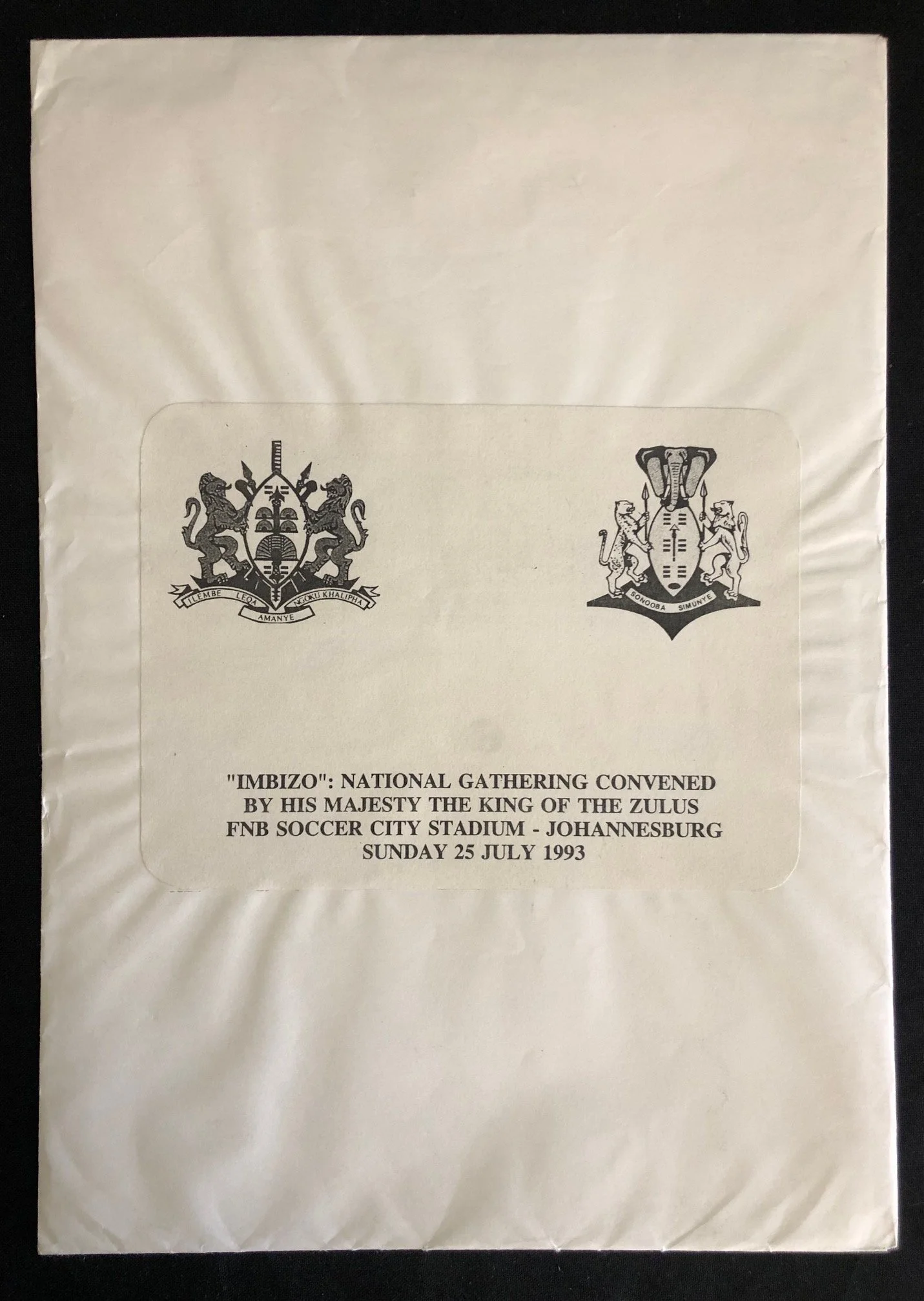
The official program cover, featuring both the coat of arms of the KwaZulu Government and the Zulu Royal emblem, symbolizes the institutional fusion of traditional leadership and homeland politics.
A political flyer rallying the public, criticizing the Kempton Park negotiations for ignoring the rights of the people of KwaZulu.
The opening address by Prince Mangosuthu Buthelezi in isiZulu, framing the gathering as a defense of traditional sovereignty.
The English transcript of King Goodwill Zwelithini's speech, serving as an official statement to the diplomatic corps and national media on the Zulu nation's terms for a new South Africa.
R900